 Barbra Streisand
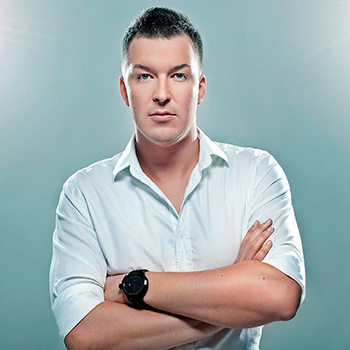
DJ Feel (real name — Filipp Belikov; born December 30, 1980) is a Russian DJ, music producer and radio host from Saint Petersburg, one of the central figures of the Russian trance scene of the 2000s and 2010s. The most important part of his career is associated with Radio Record and the Trancemission project, which developed from a radio show into a festival series, music brand and label. Feel first entered the international DJ Mag Top 100 DJs ranking in 2008 and reached his highest position — No. 30 — one year later.
DJ Feel belongs to a generation of Russian electronic musicians who were building their careers at a time when trance still had almost none of today's digital infrastructure in the country. Radio, club performances, specialist forums and physical media played a much greater role than streaming platforms. Belikov later recalled that during the early years, Trancemission on Radio Record effectively served as one of the few regular sources of new trance music for Russian listeners.
At the same time, Feel's own music has never been limited to classic uplifting trance. Over the years, his catalogue has included progressive trance, vocal trance, progressive house, more festival-oriented electronic music, Russian-language dance-pop and experiments with symphonic and piano arrangements. The artist himself described his ideal as a combination of large-scale, energetic sound with melody, lyricism and emotional depth.
Saint Petersburg, sports and no formal music school
Unlike the common biographical story of a future electronic musician who grew up surrounded by synthesizers, Filipp Belikov had no classical musical education. He has said that he began training seriously as a swimmer at the age of five and devoted around eleven years to sport. The lack of formal musical training became especially noticeable later when he began working with live instruments, as orchestral and piano projects required the help of professional arrangers and performers.
His interest in DJing emerged much later. In one of his early interviews, Feel recalled spending around two years watching DJs work at the Saint Petersburg club Mad Wave, without yet planning a career of his own. He then began teaching himself how to mix on a computer and received an offer to perform at the newly opened club La Plage. His first sets were not exclusively trance: the young DJ played pop and disco house — whatever music the venue required.
After a short period at La Plage, he returned to Mad Wave, first performing there for free and later receiving a permanent position. It was within this club environment that his interest in trance gradually developed from a personal passion into a professional direction.
Andrey Ilyin, Radio Record and the birth of Trancemission
A turning point was his meeting with radio host and DJ Andrey Ilyin. According to Feel, Ilyin had been told about him as a young DJ with a strong knowledge of trance. Belikov first appeared on the program as a guest, was then invited back, and the two eventually began working together.
This was how DJ Feel's connection with Radio Record was established, becoming fundamental to the rest of his career. The radio show Trancemission appeared around the turn of the millennium; in a 2012 DJ Mag feature, Feel stated directly that he launched the brand in 2000. By then, the project already included the radio program, a festival and its own label.
For the Russian electronic scene of the early 2000s, a regular specialist trance show had a very different significance from a music podcast in the Spotify and YouTube era. Access to international releases was limited, the internet had not yet become a universal channel for music consumption, and Beatport was only beginning to shape a new digital market. That is why DJ Mag, in its 2008 profile of Feel, specifically emphasized the role of Trancemission in spreading trance among Russian listeners.
Trancemission as a music community
Over time, Trancemission became much more than a single radio program. A community formed around it, communicating on specialist internet forums, exchanging music and meeting at events. Feel later said that during the early internet era, forums played an important role in building a stable audience around the project.
After the event series was relaunched in 2009, a distinctive tradition of pre-festival “tea parties” appeared. Instead of organizing a closed VIP event, the artist deliberately gathered regular listeners for tea so that people could meet one another and speak directly with organizers and musicians. The tradition outlived the forum era and became part of Trancemission's identity.
Trancemission Festival
By the end of the 2000s, the radio brand had developed into a major festival series. In 2010, Feel himself described the renewed Trancemission as his main project of the year. The events featured some of the biggest names on the global trance scene, including Armin van Buuren, Paul van Dyk and Ferry Corsten.
This was particularly important for the Russian market. Trancemission was not simply a touring platform for international stars: Feel deliberately included Russian musicians in its ecosystem. In an interview with DJ Mag, he named Alexander Popov and Eximinds among the artists who received this kind of support.
In 2010, a separate Trancemission Label was also launched, focused on progressive and trance producers. Feel explained to DJ Mag that he wanted to provide a platform for talented Russian artists who remained little known outside the country. Trancemission therefore functioned simultaneously as radio show, festival, community and A&R platform.
DJ Mag Top 100: from No. 55 to No. 30
The international visibility of Russian trance increased significantly in the second half of the 2000s. In 2008, DJ Feel entered the global reader-voted DJ Mag Top 100 DJs ranking for the first time at No. 55. Bobina also achieved a high position at the same time, and this period became important evidence that Russian trance DJs were capable of attracting meaningful international support.
Just one year later, Feel climbed 25 places to No. 30. This remained his highest-ever result in the Top 100 DJs. He ranked No. 41 in 2010, No. 57 in 2011, No. 56 in 2012 and No. 62 in 2013.
After a break, Feel returned to the ranking in 2016 at No. 100. It is therefore more accurate to cite the specific positions rather than repeat vague promotional claims about an unspecified number of “years in the Top 100.” The run from 2008 to 2013 and the later return provide a much clearer picture of the scale of his international recognition.
Yulia Pago: Russian-language vocal dance
One important side of DJ Feel's career was his collaboration with singer and radio host Yulia Pago. In the late 2000s, they created a series of Russian-language vocal dance tracks combining trance and progressive arrangements with a song format intended not only for clubs but also for radio audiences. Work with Pago was already mentioned among Feel's current projects in his 2008 DJ Mag profile.
Among the best-known recordings were «На облака» and «Осколки лета». TopHit lists «На облака» as a 2008 DJ Feel & Yulia Pago collaboration and «Осколки лета» as another joint release from the same period. «Виртуаль» followed later.
This part of the catalogue is important because it reveals another side of Feel. His international trance releases were aimed primarily at the club scene, while the songs with Pago combined electronic production with Russian-language pop structure. Years later, the material remained active: new remixes of «На облака» returned to digital catalogues in 2025.
The Concert: trance and symphonic music
In 2009, DJ Feel released his first studio album, The Concert. Its concept was highly unusual for Russian trance at the time: part of the electronic material was rearranged for classical instruments. Feel told DJ Mag that he recorded nine pieces with an orchestra in an attempt to combine electronic dance music with classical sound.
Professional musicians and arrangers were brought in for the orchestral side of the project. Belikov later explained that his lack of classical musical training made it especially important to work closely with people capable of correctly translating electronic parts to live instruments. Among his key collaborators, he named violinist Alexander Yakushev and arranger Alexey Maslov.
In December 2009, the material was performed at Trancemission with a string octet. The concept later developed into other concert formats, while DJ Mag noted that Feel had performed the album with a full string ensemble.
Dance4Life and Vladimir Pozner
Social themes also entered Feel's music. He served as a Russian ambassador for the international Dance4Life initiative, which focused on HIV/AIDS prevention and youth education. DJ Mag specifically noted this role.
As part of the project, he created Dance For Life Russia (The Anthem) — DJ Feel & Volmix featuring Vladimir Pozner. The track also became part of Feel's album history, combining electronic production with a social campaign built around club culture.
Red Square and Tiësto
One of the most notable live events of his career came in 2010. DJ Feel took part in the Russian tour of Tiësto, which included a major dance event on Red Square in Moscow. DJ Mag directly linked Feel to this performance and later again mentioned him as an artist who had played alongside Tiësto at one of Russia's most recognizable locations.
Some biographies incorrectly mention Paul van Dyk alongside Tiësto in the context of Red Square. Van Dyk was indeed an important figure in Trancemission history and performed in Russia many times, but the Red Square event in Feel's career was specifically connected with Tiësto.
A Day To Remember and the Russian production scene
In the early 2010s, Feel increasingly worked not only with vocalists but also with a new generation of Russian electronic producers. One notable example was A Day To Remember, created together with Matisse & Sadko and featuring vocals by Tina Smith. Feel later said that this track became part of one of the most important album periods of his career.
The same circle of projects included collaborations with Abstract Vision & Elite Electronic, Vadim Spark, Anatoly Kontsevich, Max Zolotov and other Russian artists. This approach matched the philosophy of Trancemission: Feel's own career developed alongside an attempt to create opportunities for producers who found it more difficult to reach the international market independently.
Remixes for Aly & Fila, Marcel Woods and Paul Oakenfold
By the beginning of the 2010s, Feel's remix work had moved far beyond the Russian market. In 2011, Armada Music released his remix of Aly & Fila feat. Denise Rivera — My Mind Is With You as part of the Rising Sun — The Remixes project.
In 2012, Marcel Woods — New Feeling (DJ Feel Remix) appeared.
One year later, he prepared his own version of Paul Oakenfold & Joyriders — Top of the World. The remix was officially released in 2013.
These works illustrate Feel's international position during that period particularly well. His recognition was not based solely on Russian DJ Mag voting or domestic festivals: his remixes genuinely appeared in the catalogues of artists and labels shaping the global trance scene.
Unlimited — the second studio album
On June 6, 2013, the second studio album Unlimited was released. Its creation took considerably longer than originally planned: many of the tracks had been signed to different international labels, so rights had to be negotiated separately in order to issue them together on one album.
The concept continued the idea behind The Concert, but in a different form. Unlimited consisted of two discs: the first contained electronic versions of the compositions, while the second presented the same works as piano interpretations. Feel explained that the title reflected his desire to show that club music did not have to exist only within conventional electronic sound.
The piano parts were recorded at the Melodiya studio in a Lutheran church in Saint Petersburg. Belikov himself was primarily responsible for the emotional direction of the arrangements, while professional musicians translated the material into the language of an acoustic instrument.
The album included collaborations with Melissa Loretta, Emma Lock, Matisse & Sadko, Tina Smith, Loona, Anatoly Kontsevich, Abstract Vision & Elite Electronic, Aelyn and other musicians.
Feel Unlimited — a seven-hour solo show
The album also received a large-scale concert continuation. In October 2013, the Feel Unlimited production was staged at A2 Arena in Saint Petersburg. DJ Mag described it as an approximately seven-hour solo show in which electronic music was combined with live vocalists, orchestral instruments and rock instrumentation. Feel himself called it his largest original production up to that point.
He later explained that the concert included grand piano, a small orchestra, live musicians, vocalists, dancers and 3D mapping. The idea was no longer simply to place strings over a DJ set, but to create a separate concert form built around his own music.
«Бой с тенью 3» and film music
The cinematic part of Feel's biography also requires precision. His music was connected not with an unspecified «Бой с тенью», but specifically with the film «Бой с тенью 3: Последний раунд». The film's music producer selected the track Shout, created by Feel together with Matisse & Sadko. A dance version of the film's main theme — «Я возвращаюсь на ринг» — was then produced together with Max Zolotov.
This period demonstrates another characteristic feature of Feel's work: he did not draw a rigid line between “pure trance” and more mainstream electronic production if a project allowed him to preserve a melodic and club-oriented element.
Your Love, I'll Find Myself and vocal trance
A significant part of his early-2010s catalogue was built around vocal trance. Notable tracks from the period include Your Love with Aelyn and I'll Find Myself with Loona. Both became part of the body of material that later formed Unlimited.
These tracks clearly demonstrate Feel's characteristic formula: an emotional vocal performance, long melodic development and a club rhythm that prevents the song from turning into conventional radio pop. This balance between trance-set dynamics and song form became one of the most consistent features of his production style.
Illuminate and Jan Johnston
Another notable international collaboration was Illuminate with British vocalist Jan Johnston, whose voice is closely associated with the history of vocal trance. The track appeared on international trance compilations and remains one of Feel's more prominent works in contemporary digital catalogues. Apple Music also highlights it among the artist's principal recordings.
One Life with Roger Shah and Zara Taylor
In 2014, Feel joined forces with German trance producer Roger Shah and vocalist Zara Taylor for One Life. The single was released on March 17 through Magic Island Records and included several club-oriented and more relaxed versions.
For Feel, working with Roger Shah was a natural continuation of the melodic side of his catalogue: both artists placed strong emphasis not only on trance energy, but also on harmony, vocal melody and the possibility of translating club material into more atmospheric forms.
Armada and support from A State of Trance
In the mid-2010s, Feel set himself another professional goal — to achieve regular support for his own music in A State of Trance and release material through the Armada ecosystem. In 2016, DJ Mag noted that Disappear with Adara and Not Alone had been played by Armin van Buuren for several consecutive weeks. During the same period, Bali and Not Alone (Three Friends) were released through Armada.
This stage is significant because, many years after his first DJ Mag success, Feel still viewed himself not only as a touring DJ with an established reputation, but as an active producer who needed to remain present within the international release market.
Work beyond classic trance
Feel's catalogue gradually expanded beyond the scene with which he is most commonly associated. He collaborated with Russian pop artists and in 2017 released Young Yummy Love together with SEREBRO. His digital discography also includes later Russian-language and crossover material.
This stylistic mobility does not mean abandoning trance. Rather, it reflects an approach Feel had already demonstrated at La Plage and Mad Wave: from the beginning, music as a profession was broader for him than one strictly defined subgenre, even though trance became the foundation of his name and audience.
What DJ Feel sounds like
In 2013, Feel described his musical direction quite precisely: he was interested in music that sounded large-scale and aggressive while remaining melodic, lyrical and emotional. In DJ Mag profiles of that period, his productions were characterized as melodic uplifting trance at around 138 BPM.
His DJ sets later became broader. In his 2016 DJ Mag profile, Feel described his style as progressive and trance. This is a more accurate description of his mature career: his programs and sets bring together progressive trance, vocal trance, uplifting, progressive house and more contemporary melodic electronic music.
His interest in classical music occupies a separate place. The Concert, the piano disc of Unlimited and later performances with live musicians show that the orchestral direction was not a decorative one-album experiment, but a recurring way for Feel to test whether the emotional structure of a trance composition could survive outside synthesizers and club rhythm.
Trancemission decades later
One of Feel's most revealing achievements remains the longevity of Trancemission. DJ Mag was already writing about the program's fifteen-year history in 2016, while archives from later years document hundreds of additional episodes. The radio show continued to air regularly in 2025–2026, including a special edition celebrating the 30th anniversary of Radio Record.
This is especially significant in electronic music, where many club brands are closely tied to a particular generation of listeners and disappear as trends change. Trancemission survived the transition from FM radio and forums to podcasts, streaming, social media and modern digital DJ promotion while retaining its original focus on melodic trance music.
New releases and the return of the older catalogue
Feel's musical activity also did not stop with the classic 2008–2016 period. In 2025, the digital catalogue added «Гудбай, Америка», Stereo Love, Never Go Away and new versions of his collaboration with Yulia Pago, «На облака».
In 2026, «Не дано» and Faded were released, followed on August 7 by the single Can't Get You Out of My Head. These recordings reveal a freer late-career catalogue model in which trance, dance covers, Russian-language songs and reinterpretations of material from earlier periods coexist.
For this reason, DJ Feel's later career is better not described as a “comeback” after a long absence. His radio show, performances and releases continued in parallel; what changed most were the methods of music distribution and the stylistic range of the material.
Main albums and important releases
- The Concert — 2009, first studio album, electronic compositions with a large-scale orchestral component;
- Dance For Life Russia (The Anthem) — with Volmix and Vladimir Pozner, Dance4Life project;
- Круги на воде — with Yulia Pago;
- На облака — with Yulia Pago, 2008;
- Осколки лета — with Yulia Pago, 2008;
- Виртуаль — with Yulia Pago, 2009;
- Feel — with Aurosonic feat. Ale Haze;
- A Day To Remember — with Matisse & Sadko feat. Tina Smith;
- My Mind Is With You (DJ Feel Remix) — Aly & Fila feat. Denise Rivera, 2011;
- Your Love — feat. Aelyn;
- I'll Find Myself — feat. Loona;
- New Feeling (DJ Feel Remix) — Marcel Woods, 2012;
- Unlimited — 2013, second studio album, consisting of electronic and piano discs;
- Illuminate — feat. Jan Johnston;
- Top of the World (DJ Feel Remix) — Paul Oakenfold & Joyriders, 2013;
- One Life — Roger Shah & DJ Feel feat. Zara Taylor, 2014;
- Disappear — with Adara;
- Not Alone / Not Alone (Three Friends) — from the A State of Trance and Armada support period;
- Bali — 2016, Armada;
- Young Yummy Love — with SEREBRO, 2017;
- Faded — 2026;
- Can't Get You Out of My Head — 2026.
In the main album discography, it is especially important not to mix original studio albums with the numerous compilations and radio-show releases. Feel's two key full-length original albums are The Concert and Unlimited. The latter was explicitly described in a 2013 interview as his second studio album.
DJ Feel's importance to the Russian trance scene
Calling DJ Feel the sole “founder of Russian trance” would be historically inaccurate. The Russian trance scene was shaped by an entire generation of DJs and producers, including Bobina, Fonarev, Moonbeam, Sensorica, Vadim Zhukov and, later, Alexander Popov, Eximinds, Abstract Vision and many other artists.
Feel's role was different and largely infrastructural. He was someone who worked simultaneously in four directions: performing music for mass audiences, presenting it regularly on radio, creating his own recordings and building a festival and label system around the genre. That is why DJ Mag, as early as 2008, emphasized not only his DJ career but also the influence of Trancemission on Russian listeners and young producers.
His international ranking did not exist separately from this activity. The rise from No. 55 to No. 30 in DJ Mag within a single year came during the period when Trancemission was expanding and The Concert was being created, at a time when Russian trance was gaining especially visible representation in the global DJ vote.
Equally important is Feel's ability to connect different audiences. For fans of international trance, his discography includes remixes for Aly & Fila, Paul Oakenfold and Marcel Woods, collaborations with Roger Shah and Jan Johnston, and releases through Armada. For a broader Russian audience, there are «На облака» and «Осколки лета» with Yulia Pago, film music and pop collaborations. For long-time electronic music listeners, his name is above all associated with the long-running Trancemission.
It is precisely this combination of directions that makes DJ Feel an important figure in Russian electronic music. His career cannot be reduced to one high DJ Mag position or one festival season: it spans the transition of Russian club culture from FM radio, compact discs and local clubs to international labels, major festivals, digital releases and streaming distribution.
At the same time, the central idea of the project has remained recognizable across decades: melodic electronic music should work both as an emotional composition and as music for a large dancefloor. From the first Saint Petersburg clubs and early Radio Record broadcasts to The Concert, Unlimited and modern episodes of Trancemission, it is this balance that defines DJ Feel's place in the history of the Russian trance scene.