


 Леонид Агутин
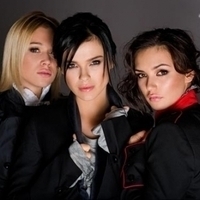
SEREBRO is a Russian female pop group founded by producer and composer Maxim Fadeev. The group made its debut at the Eurovision Song Contest in 2007, finishing third with Song #1. SEREBRO subsequently established itself on the Russian pop scene and gained recognition outside the country through English-language releases such as Mama Lover, Mi Mi Mi, Gun, Chocolate and other songs.
At different stages of its career, SEREBRO combined dance-pop, electropop, europop, house and elements of contemporary electronic music. Music videos, stage personas and provocative visual presentation also became important parts of the project’s identity.
Country: Russia
Formed: 2006
Years active: 2006–2019; 2024–present
Founder and producer: Maxim Fadeev
Genres: pop, dance-pop, electropop, europop
Current members: Daria Kuznetsova — Keiko, Aigul Valiullina — Aya, Diana Rak — Di
Formation of the group
The history of SEREBRO began with the collaboration between Maxim Fadeev and Elena Temnikova, who had gained widespread recognition after appearing in the second season of the Russian television talent show Star Factory. Temnikova later became the first confirmed member of the new female trio.
She was joined by Olga Seryabkina and Marina Lizorkina. Seryabkina had previously worked as a backing vocalist and dancer, while Lizorkina was selected through auditions for the new project. By the end of 2006, the original SEREBRO line-up had been formed.
The group’s first public appearance did not take place as part of a conventional promotional campaign, but at an international competition. Before Russia’s Eurovision entry was announced, the name SEREBRO and the identities of its members were largely unknown to the wider public.
Eurovision 2007 and Song #1
In 2007, Channel One Russia selected SEREBRO to represent the country at the Eurovision Song Contest in Helsinki. The group performed the English-language track Song #1, written by Maxim Fadeev and Daniil Babichev.
In the final on May 12, 2007, SEREBRO received 207 points and finished in third place, behind Serbian representative Marija Šerifović and Ukrainian performer Verka Serduchka. The performance served as the group’s official debut and immediately attracted attention from both Russian and European audiences.
Following the competition, Song #1 was released as a standalone single. The group later presented a Russian-language version of the song, along with the tracks Dyshi, Opium and Skazhi, ne molchi.
OpiumRoz
SEREBRO’s debut studio album, OpiumRoz, was released on April 25, 2009. The record combined Russian- and English-language songs recorded by the group’s original line-up.
The album included Song #1, Dyshi, Opium, Skazhi, ne molchi, Under Pressure, Dirty Kiss, Sound Sleep and other tracks. The single Sladko, which is sometimes incorrectly listed as part of the album, was released later and did not appear on the original edition of OpiumRoz.
The group’s early material combined dance-pop with elements of electropop, pop-rock and electronic music. More rhythmically aggressive tracks alternated with lyrical songs, among which the ballad Dyshi was particularly prominent.
Marina Lizorkina’s departure and the arrival of Anastasia Karpova
Marina Lizorkina left SEREBRO in the summer of 2009. She was replaced by Anastasia Karpova, who had previously studied singing and choreography.
The first major release by the new line-up was Sladko. The group later released Ne vremya, Davay derzhatsya za ruki and Like Mary Warner. The latter title is sometimes incorrectly shortened to Like Mary War, although the official discography uses Like Mary Warner.
It was the line-up of Elena Temnikova, Olga Seryabkina and Anastasia Karpova that recorded most of the material for the group’s second studio album.
Mama Lover and international recognition
In 2011, SEREBRO released the Russian-language song Mama Lyuba and its English-language version, Mama Lover. The track was built around an energetic dance rhythm, a repetitive chorus and a deliberately spontaneous vocal delivery.
The song received additional attention through its music video, which was filmed predominantly inside a car. Its apparent spontaneity distinguished it from conventional staged pop videos and helped it spread widely online.
Mama Lover entered the charts in several European countries. It reached number seven in Italy and was certified platinum there. The song also charted in Spain, Belgium and the Czech Republic, becoming one of SEREBRO’s most successful international releases.
The group’s second studio album, Mama Lover, was released in June 2012. It consisted primarily of English-language material, including Mama Lover, Gun, Paradise, Like Mary Warner, Angel Kiss and an updated version of Song #1. The international edition was distributed with the involvement of Sony Music and other overseas partners.
The success of this period enabled SEREBRO to perform more frequently outside Russia and firmly established the group as a project aimed at both Russian-speaking and international audiences.
Mi Mi Mi and international singles
In 2013, the group released the English-language single Mi Mi Mi. The song continued SEREBRO’s dance-pop direction but featured a more minimal electronic arrangement and a chorus based on the repetition of a short vocal phrase.
Mi Mi Mi entered the Italian chart, where it peaked at number 11. It later gained further popularity through user-generated videos, memes and short-form social-media clips. The track became one of the group’s most recognisable international releases, although its commercial performance varied considerably between countries.
Other songs associated with SEREBRO’s international period include Gun, Kiss, Chocolate and Blood Diamond, a collaboration with the Dutch electronic duo Yellow Claw.
Line-up changes between 2013 and 2016
In the autumn of 2013, Anastasia Karpova left the group to focus on a solo career. She was replaced by Daria Shashina. The new line-up recorded and released songs including Malo tebya, Ya tebya ne otdam, Ugar with DJ M.E.G. and other tracks.
Elena Temnikova left SEREBRO in May 2014. Anastasia Karpova temporarily returned to the group during the transition period, after which Polina Favorskaya became a permanent member.
In 2016, Daria Shashina left the group for health reasons. Following an open audition process, she was replaced by Katya Kishchuk. By the spring of 2016, SEREBRO consisted of Olga Seryabkina, Polina Favorskaya and Katya Kishchuk.
Sila Tryokh
On May 27, 2016, SEREBRO released its third studio album, Sila Tryokh. The record contained songs recorded over several years and by different line-ups of the group.
The track list included Malo tebya, Mi Mi Mi, Pereputala, Kiss, Chocolate, Ne nado bolnee, Ya tebya ne otdam, Ugar, Blood Diamond and other songs. It would therefore be inaccurate to describe Sila Tryokh as an album by one particular line-up, as its production covered several distinct periods in the group’s history.
Musically, the album brought together Russian-language pop, europop, club-oriented electronic music and English-language material intended for the international market.
The final years of the group’s first era
In 2017, Polina Favorskaya announced her departure from SEREBRO. After completing the group’s scheduled performances, she was replaced by Tatiana Morgunova. The line-up of Seryabkina, Kishchuk and Morgunova released songs including Mezhdu nami lyubov, V kosmose, Proydyot, Chico Loco, Pyatnitsa and a version of Prityazhenya bolshe net recorded with Maxim Fadeev.
At the end of 2018, it was announced that Olga Seryabkina would leave the group. At the same time, the production team decided to replace the entire line-up.
In February 2019, Elizaveta Kornilova, Marianna Kochurova and Irina Titova became the new members of SEREBRO. They released the single O, mama, but this line-up lasted for less than a year. The project ceased active operations in the autumn of 2019.
SEREBRO therefore did not end immediately after Seryabkina’s departure: the group continued for several months with a completely renewed line-up.
SEREBRO’s return
In July 2024, the group’s catalogue was expanded with the compilation 11, which contained 21 tracks. The release brought together well-known SEREBRO songs and material from the project’s archives.
SEREBRO officially returned on November 29, 2024. The new line-up was introduced alongside the release of Song #2:
- Daria Kuznetsova — Keiko;
- Aigul Valiullina — Aya;
- Diana Rak — Di.
The title Song #2 refers to SEREBRO’s debut track Song #1, although the new song is not a direct musical sequel. It marked the beginning of the next period in the project’s history.
In December 2024, the group released the EP LUML, whose title stands for Let Us Make Love. The release included several versions of Song #2, as well as reworked material from the group’s earlier catalogue.
The current era
Following the relaunch, SEREBRO returned to regular live and studio activity. In 2025, the group released Nadoelo 2.0, Day mne shans, Zvyozdy palyat and Sneg idyot.
In 2026, SEREBRO released Kto ya dlya tebya, Malo ognya, several new remixes and the single Smotri, no ne trogay, which arrived on July 10, 2026. SEREBRO is therefore once again an active group rather than a discontinued archival project.
The current line-up performs both new songs and material from earlier periods. At the same time, the relaunched version of the group retains its connection to Maxim Fadeev’s production system and the visual principles established by the original project.
Members of SEREBRO
Original line-up
- Elena Temnikova — 2006–2014;
- Olga Seryabkina — 2006–2019;
- Marina Lizorkina — 2006–2009.
Former members
- Anastasia Karpova — 2009–2013; temporary return in 2014;
- Daria Shashina — 2013–2016;
- Polina Favorskaya — 2014–2017;
- Katya Kishchuk — 2016–2019;
- Tatiana Morgunova — 2018–2019;
- Elizaveta Kornilova — 2019;
- Marianna Kochurova — 2019;
- Irina Titova — 2019.
Current line-up
- Daria Kuznetsova — Keiko, since 2024;
- Aigul Valiullina — Aya, since 2024;
- Diana Rak — Di, since 2024.
Studio albums
OpiumRoz — 2009
The debut album recorded by Elena Temnikova, Olga Seryabkina and Marina Lizorkina. It includes Song #1, Dyshi, Opium and Skazhi, ne molchi.
Mama Lover — 2012
A predominantly English-language album associated with the group’s international period. Its principal tracks include Mama Lover, Gun, Like Mary Warner and Paradise.
Sila Tryokh — 2016
An album bringing together Russian- and English-language hits from the first half of the 2010s, including Malo tebya, Mi Mi Mi, Pereputala, Kiss, Chocolate and other songs.
The compilation 11, released in 2024, is not a new studio album in the traditional sense, as it consists primarily of previously recorded material from the group’s catalogue.
Musical style
SEREBRO’s sound changed as the project developed. Its early songs combined pop-rock, electropop and dance music. During the Mama Lover era, the group moved towards europop and club-oriented pop intended for both Russian and international markets.
Most of the group’s songs were built around concise melodic ideas, prominent choruses and electronic rhythms. Its English-language tracks frequently relied on repeated phrases that could be understood and remembered regardless of the listener’s knowledge of the language. This approach was particularly evident in Mama Lover, Mi Mi Mi and Chocolate.
The lyrics of SEREBRO’s Russian-language songs addressed relationships, attraction, separation and emotional dependence. Olga Seryabkina wrote or co-wrote a substantial part of the group’s material, while also contributing lyrics to other artists associated with Maxim Fadeev’s production centre.
Music videos and visual identity
SEREBRO devoted as much attention to its visual presentation as to the music itself. The Mama Lover video was built around the appearance of amateur footage, while Mi Mi Mi used a deliberately bright summer aesthetic. Videos for Malo tebya, Ya tebya ne otdam, Pereputala and Chocolate continued the combination of dance choreography and a provocative pop image.
The group’s suggestive presentation periodically caused controversy, while also making its videos highly recognisable. Its visual style did not remain static: SEREBRO gradually moved from the comparatively restrained image of its Eurovision period towards the aesthetics of contemporary club-pop and internet video.
Legacy and significance
SEREBRO became one of the most prominent Russian female pop projects of the late 2000s and 2010s. Its history includes a successful Eurovision debut, sustained activity in the Russian market, the release of English-language albums and several songs that attracted audiences outside the country.
Particularly important tracks in the group’s catalogue include Song #1, Dyshi, Sladko, Mama Lover, Malo tebya, Mi Mi Mi, Ya tebya ne otdam, Pereputala and Chocolate. These songs reflect different periods in SEREBRO’s development, from a television-launched pop project of the mid-2000s to a dance group oriented towards the digital music market.
The group’s return in 2024 opened a new chapter in the history of SEREBRO. The current line-up is not a continuation of the original trio in terms of personnel, but it retains the project’s name, musical catalogue and production concept.