


 Фристайл
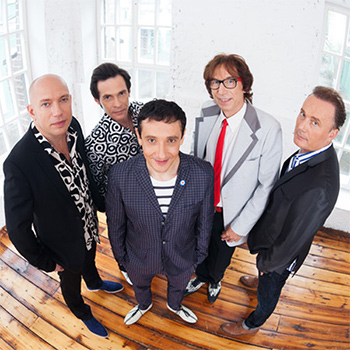
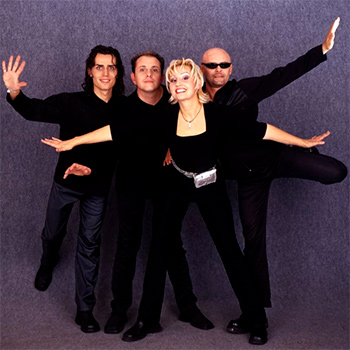
Bravo is a Russian rock and roll band founded in Moscow in the autumn of 1983 by guitarist and composer Evgeny Khavtan. Over the years, the band's vocalists have included Zhanna Aguzarova, Evgeny Osin, Irina Epifanova, Valery Syutkin and Robert Lenz. Despite numerous line-up changes, Khavtan has remained the band's permanent leader and principal composer.
Bravo's music combines rock and roll, rockabilly, beat, twist, swing, surf rock, new wave and pop music influenced by the 1950s and 1960s. Among the band's best-known songs are «Жёлтые ботинки», «Старый отель», «Ленинградский рок-н-ролл», «Вася», «Добрый вечер, Москва», «Я то, что надо», «Московский бит», «Дорога в облака», «Любите, девушки» and «Этот город».
Formation of the band and Zhanna Aguzarova
Evgeny Khavtan founded Bravo in 1983 after taking part in other Moscow music projects. The first vocalist of the new band was Zhanna Aguzarova, whose high, instantly recognisable voice and unusual stage image largely defined the band's early identity.
During the mid-1980s, Bravo recorded «Жёлтые ботинки», «Кошки», «Старый отель», «Верю я», «Медицинский институт», «Ленинградский рок-н-ролл» and other songs. At first, the recordings circulated mainly through cassette copies, before Bravo gained the opportunity to release music officially.
In 1987, the Melodiya label released the record «Ансамбль Браво». By this time, the band had already achieved widespread recognition and moved far beyond the Moscow rock scene.
After Aguzarova's departure
After parting ways with Zhanna Aguzarova, Bravo went through a period of frequent changes in vocalists. Evgeny Osin worked with the band, followed by Irina Epifanova. This phase became a transitional period between the original line-up and a new era of major popularity.
Some of the material created in the late 1980s was later given new arrangements and incorporated into the band's subsequent repertoire.
Valery Syutkin and «Стиляги из Москвы»
In 1990, Valery Syutkin became Bravo's vocalist. With him, the band noticeably refreshed both its stage image and its musical style: the retro aesthetic became more pronounced, while rock and roll was increasingly combined with swing, beat music and the urban fashion of the early 1960s.
The first major album by this line-up was «Стиляги из Москвы». It included «Вася», «Мне грустно и легко», «Король Оранжевое лето», «Добрый вечер, Москва» and «Я то, что надо».
In 1993, the band released «Московский бит». The Syutkin period became one of the most commercially successful chapters in Bravo's history and firmly established the band's characteristic retro image.
«Дорога в облака»
In 1994, the album «Дорога в облака» was released. The title track and «Любите, девушки» became major hits of the first half of the 1990s.
After this period, Valery Syutkin left the band and began a solo career.
Robert Lenz and «На перекрёстках весны»
In 1995, Robert Lenz became Bravo's new vocalist. With his arrival, the band retained its connection to rock and roll and retro pop while gradually broadening its musical palette.
In 1996, the album «На перекрёстках весны» was released. One of its main songs was «Этот город»: the music was written by Evgeny Khavtan, while the lyrics were written by Valery Zhukov, who later became known as the leader of the band «Жуки».
The album also included «Если бы на Марсе», «Останься ещё на час», «Это за окном рассвет» and «Ветер знает».
The late 1990s and «Евгеника»
In 1998, the album «Хиты про любовь» appeared, followed in 2001 by «Евгеника». On the latter, Evgeny Khavtan's own role as a vocalist became noticeably more prominent.
By this time, Bravo no longer existed as a band dependent on a single frontman, but rather as Khavtan's author-driven project, within which different voices and musical shades could coexist.
«Мода» and later albums
After a long break, the band released the album «Мода» in 2011. It preserved Bravo's characteristic retro foundation while using a more contemporary studio approach.
In 2015, the album «Навсегда» appeared, followed in 2018 by Unrealised. The latter brought together material that continued Khavtan's interest in rock and roll, surf music, beat music and vintage studio techniques.
Bravo continues to perform live, playing songs from different historical line-ups alongside more recent material.
Musical style
Bravo's retro aesthetic has never been a literal reconstruction of 1950s music. Evgeny Khavtan freely combines rockabilly, twist, swing, surf, beat, jazz, new wave and melodic pop rock.
At the same time, each of the band's main vocalists noticeably changed its character. Aguzarova brought eccentricity and new wave intonations, Syutkin strengthened the stilyagi image and the swing element, while Lenz shaped the calmer guitar-driven sound of the later period.
Main albums
- 1987 — «Ансамбль Браво»
- 1990 — «Стиляги из Москвы»
- 1993 — «Московский бит»
- 1994 — «Дорога в облака»
- 1996 — «На перекрёстках весны»
- 1998 — «Хиты про любовь»
- 2001 — «Евгеника»
- 2011 — «Мода»
- 2015 — «Навсегда»
- 2018 — Unrealised
Major songs
- «Жёлтые ботинки»
- «Старый отель»
- «Кошки»
- «Ленинградский рок-н-ролл»
- «Вася»
- «Добрый вечер, Москва»
- «Я то, что надо»
- «Московский бит»
- «Дорога в облака»
- «Любите, девушки»
- «Этот город»
The band's significance
Bravo occupies a distinct place in Russian rock music thanks to its consistent interest in rock and roll culture and mid-20th-century pop music. The band succeeded in turning retro aesthetics from a temporary stylistic device into the foundation of its own musical language.
The periods featuring Zhanna Aguzarova, Valery Syutkin and Robert Lenz differ noticeably from one another, but they are united by Evgeny Khavtan's melodic signature. Thanks to this, Bravo has retained its recognisable identity despite changes in vocalists, line-ups and musical eras.