
 DOROFEEVA
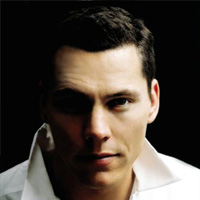
Tiësto (real name — Tijs Michiel Verwest) is a Dutch DJ, music producer and remixer, and one of the central figures of the global electronic music scene from the late 20th to the early 21st century. He was born on 17 January 1969 in Breda, the Netherlands.
Tiësto’s career spans several fundamentally different stages in the evolution of club music. In the late 1990s and first half of the 2000s, he became one of the artists who helped take trance from the club subculture to major festivals and stadium-scale venues. During the 2010s, Tiësto shifted his sound toward progressive house, electro house, big room and mainstream EDM, before achieving another wave of commercial success with dance-pop and house singles. At the end of 2025, the musician began a full-scale return to trance and progressive sounds, continuing this direction into 2026.
Tiësto ranked No. 1 in the DJ Mag Top 100 DJs for three consecutive years — 2002, 2003 and 2004. In 2011, he was named Greatest DJ of All Time in a Mixmag readers’ poll, while in 2013 DJ Mag readers voted him the best DJ of the previous twenty years. In 2015, Tiësto won his first Grammy.
Early years
Tijs Michiel Verwest was born and raised in Breda, a city in the south of the Netherlands. His interest in music began at around the age of twelve. Among the programmes that influenced his interest in DJing were Ferry Maat’s Soulshow and radio mixes by Ben Liebrand, one of the most important Dutch DJs of the previous generation.
At around fourteen, Verwest began playing music at school parties and small events. He later moved into club work and, by the late 1980s and early 1990s, was regularly performing at venues in Breda.
The club Spock became particularly important, giving Tiësto the opportunity to play extended sets. At the time, his selections centred on new beat, acid house and other styles of European electronic music from the late 1980s and early 1990s. These long club performances became his primary school of DJing.
The stage name Tiësto appeared in the 1990s. Verwest later explained that its origin was linked to a trend among Dutch DJs of the period for pseudonyms with a loosely Italian sound, often created by adding characteristic endings to a name or nickname. In this way, Tijs became Tiësto.
First recordings and Basic Beat
Tiësto’s professional discography began taking shape in the first half of the 1990s.
In 1994, he released harder electronic music through Noculan Records sublabels under several different aliases. At this early stage, his work included hardcore, gabber and techno — a significantly heavier sound than the trance with which his name would later become associated.
During the same period, Tiësto began working with Basic Beat Recordings, where he met Arny Bink. His own recordings and mix compilations were released through structures associated with Basic Beat.
One of the important early projects was the Forbidden Paradise series, which documented Tiësto’s gradual movement away from harder club electronics toward melodic trance and progressive sounds.
Black Hole Recordings
In 1997, Tiësto and Arny Bink founded the independent label Black Hole Recordings in Breda.
The division of roles was relatively natural: Tiësto focused primarily on music and DJing, while Bink handled much of the organisational and commercial work. Black Hole soon became one of Europe’s notable trance labels.
Black Hole and its divisions released not only Tiësto’s own work, but also music by other artists from the international trance scene.
The label was associated with the following imprints:
- SongBird
- In Trance We Trust
- Magik Muzik
The latter was launched later and became especially closely associated with Tiësto’s own releases.
The Magik series
One of the fundamental projects of Tiësto’s early career was the Magik mix compilation series.
The first instalment, Magik One: First Flight, appeared in 1997. A total of seven volumes were released by 2001:
- Magik One: First Flight
- Magik Two: Story of the Fall
- Magik Three: Far from Earth
- Magik Four: A New Adventure
- Magik Five: Heaven Beyond
- Magik Six: Live in Amsterdam
- Magik Seven: Live in Los Angeles
The series documents the evolution of his style from progressive and techno-oriented trance toward the more melodic sound of the turn of the millennium.
These compilations are also important in the history of trance because, before the era of mass streaming, DJ-mix CDs were one of the main ways new club music reached audiences outside nightclubs.
Kamaya Painters and Gouryella
The late 1990s were a period of numerous studio projects for Tiësto with other Dutch producers.
Together with Benno de Goeij, who later became widely known as a member of Rank 1, he created the project Kamaya Painters. One of the duo’s best-known tracks was Endless Wave.
Even more significant was Gouryella, a collaborative project between Tiësto and Ferry Corsten.
The project emerged in the late 1990s. The first single, Gouryella, was released in 1999 and reached the UK Top 15. It was followed by Walhalla and Tenshi.
Tiësto left Gouryella in the early 2000s, after which Ferry Corsten continued the project independently.
In Search of Sunrise
In 1999, Tiësto launched another series that would become historic — In Search of Sunrise.
The first instalment was released on SongBird / Black Hole Recordings on 22 November 1999. Unlike the more club-oriented Magik series, In Search of Sunrise gradually developed its own atmospheric aesthetic: progressive trance, balearic, melodic trance and tracks designed for long emotional progression.
Tiësto compiled the first seven volumes of the series, including editions dedicated to specific regions:
- In Search of Sunrise 4: Latin America
- In Search of Sunrise 5: Los Angeles
- In Search of Sunrise 6: Ibiza
- In Search of Sunrise 7: Asia
The series was later continued by other trance DJs.
Innercity and the international breakthrough
One of Tiësto’s most important performances of the late 1990s was Innercity at Amsterdam RAI. The show significantly increased his profile beyond the existing Black Hole audience and strengthened his position among the leading Dutch trance DJs.
At the same time, his international touring schedule expanded to the United Kingdom, Ibiza, Germany, the United States and other markets where trance was experiencing rapid growth.
Delerium — Silence
A key studio work on Tiësto’s path to an international audience was the Tiësto's In Search of Sunrise Remix of Silence by Canadian project Delerium, featuring vocals by Sarah McLachlan.
It was the trance remixes that radically changed the perception of what had originally been a more atmospheric composition.
In the United Kingdom, Silence reached No. 3 on the main UK Singles Chart in 2000 and topped the UK Dance Singles Chart.
The remix remains one of the best-known vocal trance remixes of its era and became an important bridge between Tiësto’s club reputation and wider international recognition.
Summerbreeze
Another important international compilation was Summerbreeze, released in 2000, not 1999 as is sometimes stated in biographies.
It included the remix of Silence, as well as music by BT, Armin van Buuren, Yahel, Kamaya Painters and other artists from the trance and progressive scene.
In My Memory
In 2001, Tiësto released his debut studio album In My Memory.
Unlike his mix compilations, it consisted primarily of his own original material.
Its key tracks include:
- Flight 643
- Lethal Industry
- Suburban Train
- In My Memory
- Obsession
- Battleship Grey
- Dallas 4PM
Vocalists on the album included Nicola Hitchcock, Kirsty Hawkshaw and Jan Johnston.
Flight 643, Lethal Industry and Suburban Train became central parts of Tiësto’s live repertoire in the early 2000s.
No. 1 in DJ Mag
By the beginning of the 2000s, Tiësto was already at the centre of the international trance scene.
In 2002, he reached No. 1 in the DJ Mag Top 100 DJs for the first time. He repeated the result in 2003 and 2004 — three consecutive victories.
At the time, the DJ Mag ranking had particular significance within the club industry, as social media and modern streaming metrics had not yet become the main global indicators of a DJ’s popularity.
Tiësto in Concert
On 10 May 2003, Tiësto staged Tiësto in Concert at GelreDome in Arnhem in front of an audience of more than 25,000 people.
The show was structured not as a conventional club night with several DJs, but as a large-scale production centred around a single DJ headliner, with visual staging, vocalists and live musicians.
The project became one of the early examples of DJ culture moving from the nightclub into the format of a major solo arena or stadium concert.
The concept continued with further Tiësto in Concert shows in 2004.
Traffic
In 2003, Tiësto released Traffic.
The track became a rare example of a fully instrumental club composition achieving major success on the Dutch national pop chart and remains one of the most recognisable works from Tiësto’s classic era.
Structurally, Traffic differs from the more emotional trance material of the period: it is built around a hard, repetitive synthesiser motif and makes almost no use of a traditional vocal or song structure.
Just Be
In 2004, Tiësto released his second studio album, Just Be.
The album included:
- Forever Today
- Love Comes Again with BT
- Traffic
- Sweet Misery
- Nyana
- UR
- Walking on Clouds
- Just Be
- Adagio for Strings
Love Comes Again with BT topped the UK Dance Singles Chart.
The title track Just Be, featuring vocals by Kirsty Hawkshaw, showed a more vocal and contemplative side of Tiësto, while Traffic and Adagio for Strings became staples of his major live sets.
Adagio for Strings
Adagio for Strings — an electronic interpretation of the work of the same name by American composer Samuel Barber — became one of Tiësto’s most recognisable recordings.
The track developed the idea of combining a classical melody with a trance arrangement and was released as a separate single after appearing on Just Be.
Over time, Adagio for Strings became one of the tracks most closely associated with Tiësto’s live identity during the 2000s.
Order of Orange-Nassau
On 20 May 2004, Tiësto was appointed an Officer of the Order of Orange-Nassau.
The state honour was presented in Breda in recognition of his professional achievements and international importance to Dutch music. The award is documented in the archives of the city of Breda.
Athens Olympic Games
One of the most famous moments of Tiësto’s entire career took place on 13 August 2004.
He performed during the opening ceremony of the Summer Olympic Games in Athens, providing the soundtrack to the athletes’ parade.
Tiësto became the first DJ invited to perform live at an Olympic Games opening ceremony. His performance lasted around an hour and a half.
For electronic music, the significance of the event extended far beyond the career of a single artist: a DJ was placed at the centre of one of the world’s largest television broadcasts.
Material associated with the Olympic performance was later released as Parade of the Athletes.
Elements of Life
In 2007, Tiësto released his third studio album, Elements of Life.
On the album, he continued developing trance while broadening the sound with rock, progressive and vocal elements.
Tracks included:
- Ten Seconds Before Sunrise
- Everything
- Do You Feel Me
- Carpe Noctum
- In the Dark
- Dance4Life
- Elements of Life
- Break My Fall
Christian Burns, Jes, Maxi Jazz, BT and other musicians contributed to the album.
The album was nominated for a 2008 Grammy in the Best Electronic/Dance Album category.
Dance4Life
In 2006, Tiësto became an international ambassador for the charity initiative dance4life, which focused on educating young people about HIV and AIDS.
For the project, he recorded the track Dance4Life with Maxi Jazz of Faithless.
This period illustrates how large Tiësto’s public platform had become by the mid-2000s: his activities were no longer limited to clubs, releases and festivals.
Club Life
On 6 April 2007, Tiësto launched his own radio show Tiësto's Club Life on the Dutch station Radio 538.
Over the years, the programme changed stations and formats, but remained one of the longest-running artist-led radio shows by a major EDM DJ.
Through Club Life, Tiësto presented his own new releases, music by emerging producers, club tracks and material from different areas of the electronic scene.
An important current clarification: Club Life is no longer running. At the end of 2025, after 978 episodes, Tiësto officially ended the show, closing the project after 18 years.
Kaleidoscope and the move away from classic trance
The album Kaleidoscope, released in 2009, became one of the most important turning points in Tiësto’s career.
On the record, Tiësto deliberately expanded his musical palette far beyond classic trance. Guest performers included:
- Jónsi
- Kele Okereke
- Tegan and Sara
- Nelly Furtado
- Calvin Harris
- Emily Haines
- Sneaky Sound System
Instead of long trance compositions, electro, progressive house, dance-rock and pop structures became increasingly prominent.
This was more than a change in the sound of a single album. Kaleidoscope marked the beginning of Tiësto’s multi-year transition from a trance artist into a more versatile DJ and producer on the global dance scene.
Departure from Black Hole and Musical Freedom
In 2009, Tiësto ended his long-standing partnership with Black Hole Recordings.
At the same time, a new structure emerged — Musical Freedom, founded by him in 2009 to release his own music as well as work by other producers.
The label became one of the key platforms of Tiësto’s EDM period and released music by young producers, many of whom later achieved international recognition.
Through Musical Freedom, Tiësto was also able to respond much more quickly to changes in the festival sound of the 2010s.
Club Life and the EDM era
During the first half of the 2010s, Tiësto moved increasingly further away from trance toward progressive house, electro house and big room.
This era was reflected particularly clearly in the compilation series:
- Club Life: Volume One Las Vegas
- Club Life: Volume Two Miami
- Club Life: Volume Three Stockholm
- Club Life: Volume Four New York City
- Club Life: Volume Five China
At the same time, he became one of the central figures of the rapidly growing American EDM market and a long-term resident at major clubs in Las Vegas.
A Town Called Paradise
In 2014, Tiësto released his fifth studio album, A Town Called Paradise.
The record definitively consolidated his transition toward EDM and dance-pop.
Its biggest singles included:
- Red Lights
- Wasted with Matthew Koma
In the United Kingdom, Red Lights reached No. 6, while Wasted reached No. 3, becoming Tiësto’s biggest UK pop hits at the time.
The album also featured Icona Pop, Ladyhawke, Zac Barnett, Krewella and other performers.
Grammy
In 2015, Tiësto won his first Grammy.
The award was presented in the category Best Remixed Recording, Non-Classical for:
John Legend — All of Me (Tiësto's Birthday Treatment Remix).
This distinction is important: the Grammy was awarded for a remix, not for one of his own albums or original singles.
AFTR
As his EDM period developed, Tiësto also continued working with deeper forms of house.
For this direction, the brand and label AFTR was created, focusing on deep house and related club sounds.
The project made it possible to separate more restrained house material from the large-scale festival repertoire of Musical Freedom.
Jackie Chan
In 2018, Jackie Chan, recorded by Tiësto and Dzeko with vocals from Preme and Post Malone, achieved major commercial success.
The song became one of the biggest streaming hits of his career up to that point and demonstrated Tiësto’s continuing convergence with the contemporary pop and hip-hop industry. In 2018, DJ Mag described it as the biggest hit of his career at the time.
Ritual
In 2019, Tiësto teamed up with Jonas Blue and Rita Ora for the single Ritual.
The track continued his dance-pop direction, in which the club producer increasingly provided the foundation for a complete radio song rather than a traditional instrumental DJ track.
The London Sessions
In the original biography, this release was incorrectly dated to 2018.
Tiësto’s sixth studio album, The London Sessions, was released on 15 May 2020.
The project was connected to a series of studio sessions in London and included:
- Jackie Chan
- Ritual
- God Is a Dancer with Mabel
- Nothing Really Matters with Becky Hill
- BLUE with Stevie Appleton
- Insomnia with Violet Skies
The album further strengthened Tiësto’s dance-pop and vocal-house direction.
VER
In 2020, Tiësto also introduced a separate alias, VER.
The project was created for deeper progressive and melodic house sounds, allowing him to return to longer club structures outside the radio-oriented format of his main project.
The first notable VER release was 5 Seconds Before Sunrise.
The Business
The Business was released on 25 September 2020.
The track became one of the biggest global hits of Tiësto’s later career and opened a new commercial phase following The London Sessions.
At the 2022 Grammy Awards, The Business was nominated in the category Best Dance/Electronic Recording. It was Tiësto’s third Grammy nomination of his career.
Don't Be Shy, The Motto and Hot in It
After The Business, Tiësto released a series of major vocal singles:
- Don't Be Shy with Karol G
- The Motto with Ava Max
- Hot in It with Charli XCX
- 10:35 with Tate McRae
These tracks firmly established Tiësto’s pop-house direction in the early 2020s: compact running times, strong vocal hooks and production designed simultaneously for streaming, radio and festival sets.
Drive
On 21 April 2023, Tiësto released his seventh studio album, Drive.
It included:
- The Business
- The Motto
- 10:35
- Hot in It
- Don't Be Shy
- All Nighter
- Lay Low
- Pump It Louder
Contributors to the album included Ava Max, Black Eyed Peas, Tate McRae, Charli XCX and Karol G. Drive reached No. 2 on Billboard Top Dance/Electronic Albums.
PRISMATIC
In 2024, Tiësto began developing the live concept PRISMATIC.
Unlike standard short festival sets, the format was built around longer performances in which Tiësto could combine current material, progressive house, trance and music from different periods of his own career.
In 2024, DJ Mag highlighted his new four-hour PRISMATIC set.
This concept later became one of the factors behind the artist’s return to trance.
Return to trance
In November 2025, Tiësto released Bring Me To Life with FORS.
The release was more than an isolated trance track: Tiësto officially presented it as the beginning of a new chapter and a return to the sound associated with his international career in the late 1990s and early 2000s.
DJ Mag described Bring Me To Life as Tiësto’s return to trance and reported that the track would precede a new album.
In November 2025, Tiësto also performed a trance set at Dreamstate SoCal.
The return does not mean an attempt to literally recreate the sound of In My Memory or Just Be. The new material combines trance progressions with modern production standards and the experience Tiësto accumulated over years of working with house and festival EDM.
PRISMATIC Radio
At the end of December 2025, Tiësto ended Club Life after 978 episodes.
In January 2026, a new weekly show, PRISMATIC, was launched, continuing the artist’s new musical concept.
The programme retains contemporary dance music, but places significantly greater emphasis on trance, progressive and melodic styles. Apple Podcasts lists PRISMATIC as Tiësto’s weekly show.
The new trance era in 2026
In 2026, Tiësto continued developing his return to trance.
After Bring Me To Life, he released Beautiful Places with Brieanna Grace and Don't Lose Your Head with Olivia Sebastianelli.
In July, Echo Sax Finale with Caleb Arredondo was released — a trance-oriented reworking of a saxophone composition that had gained wider recognition.
At the same time, Tiësto confirmed that he was working on his eighth studio album, intended to continue the trance direction of this new period. As of summer 2026, the album’s release date had not yet been announced.
Thus, after roughly fifteen years during which trance was no longer the main genre of the core Tiësto project, the musician once again made it a central part of his sound.
Musical evolution
Tiësto’s career is particularly notable because it cannot accurately be described through a single genre.
1990s
His early recordings included:
- hardcore
- gabber
- new beat
- acid house
- progressive
- early trance
Late 1990s — 2000s
The main foundations became:
- trance
- progressive trance
- tech trance
- vocal trance
- progressive house
This period produced Silence, Flight 643, Lethal Industry, Suburban Train, Traffic, Love Comes Again and Adagio for Strings.
2009–2010s
After Kaleidoscope, the sound gradually shifted toward:
- progressive house
- electro house
- big room
- festival EDM
- dance-pop
Late 2010s — early 2020s
The main styles became:
- house
- vocal house
- bass house
- deep house
- dance-pop
This was the period that produced Jackie Chan, The Business, The Motto, 10:35 and the material on Drive.
From 2025
Tiësto once again brought the following to the forefront:
- trance
- progressive trance
- melodic progressive
- modern forms of mainstage trance
This return makes his career unusual: an artist who had largely distanced himself from trance in the late 2000s made the genre central to his main project again more than fifteen years later.
Work with young producers
Throughout his career, Tiësto has repeatedly used his own labels and platforms to work with emerging artists.
This role became particularly visible during the Musical Freedom era, when Tiësto regularly supported tracks by young producers in his sets and signed music from new EDM artists.
His influence on the next generation is difficult to reduce to a single genre: artists who broke through during the EDM era of the 2010s already viewed Tiësto not only as a trance DJ, but also as an example of how to build an international career as an electronic artist.
Awards and recognition
Tiësto’s key professional achievements include:
- No. 1 DJ Mag Top 100 DJs — 2002
- No. 1 DJ Mag Top 100 DJs — 2003
- No. 1 DJ Mag Top 100 DJs — 2004
- Officer of the Order of Orange-Nassau — 2004
- first DJ to perform live at an Olympic Games opening ceremony — Athens, 2004
- Grammy nomination for Elements of Life — 2008
- Greatest DJ of All Time in the Mixmag readers’ poll — 2011
- DJ Mag Top 100 DJs Legend Award / best DJ of the previous twenty years — 2013
- Grammy — Best Remixed Recording, Non-Classical — 2015
- Grammy nomination for The Business — 2022
In the DJ Mag Top 100 DJs 2025 ranking, Tiësto placed No. 21, more than two decades after his three victories.
Main discography
Studio albums
- In My Memory — 2001
- Just Be — 2004
- Elements of Life — 2007
- Kaleidoscope — 2009
- A Town Called Paradise — 2014
- The London Sessions — 2020
- Drive — 2023
Main DJ compilation series
- Forbidden Paradise
- Magik
- In Search of Sunrise
- Club Life
Other significant releases
- Summerbreeze — 2000
- Nyana — 2003
- Parade of the Athletes — 2004
Selected tracks
Classic trance period
- Theme from Norefjell
- Sparkles
- Flight 643
- Lethal Industry
- Suburban Train
- Traffic
- Love Comes Again
- Just Be
- Adagio for Strings
- Dance4Life
- In the Dark
EDM and house period
- Maximal Crazy
- Red Lights
- Wasted
- Secrets
- Jackie Chan
- Ritual
- The Business
- Don't Be Shy
- The Motto
- Hot in It
- 10:35
- Lay Low
New trance era
- Bring Me To Life
- Beautiful Places
- Don't Lose Your Head
- Echo Sax Finale
Significance for electronic music
Tiësto did not create trance as a genre and is not literally the “founder of EDM” in the historical sense. His significance lies elsewhere.
He was one of the artists who changed the scale of the DJ profession.
In the late 1990s, Tiësto emerged from within the European club trance scene. Within only a few years, he was staging solo shows in front of tens of thousands of people, topping DJ Mag for three consecutive years and becoming the first DJ to perform at an Olympic Games opening ceremony.
In the 2010s, he managed a rare transition for an artist of his stature: moving away from the sound on which he had built his name and becoming one of the biggest figures of the new EDM era.
Later, The Business, The Motto and Drive gave him another commercial cycle in the era of streaming-driven dance-pop.
His return to trance in 2025–2026 brings the story full circle: Tiësto once again turned to the music that had made him an international figure, but now after three decades of professional work and several radical transformations of his own sound.
For this reason, Tiësto’s place in the history of electronic music cannot be defined by a single track or even a single genre. Black Hole Recordings, the Magik and In Search of Sunrise series, In My Memory, Tiësto in Concert, the 2004 Olympics, the Musical Freedom era, the transition to EDM, the Grammy, global dance-pop hits and the return to trance — these are different stages of one of the longest-running international careers in modern electronic music.