
 Paul Elstak
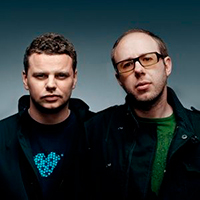
The Chemical Brothers are a British electronic duo consisting of Tom Rowlands and Ed Simons, formed in Manchester around the turn of the 1980s and 1990s. Their music combines big beat, breakbeat, acid house, techno, house, hip-hop, psychedelia and elements of rock music. Alongside several other British acts of the era, they played a key role in transforming the heavy breakbeat-driven electronic music of the 1990s from a club phenomenon into music capable of filling major festivals, topping album charts and working in large concert arenas.
The distinctive character of The Chemical Brothers is not limited to their trademark overloaded breakbeats. Over the decades, Rowlands and Simons have developed a much broader musical language — from hypnotic acid and instrumental techno to near-pop songs featuring Noel Gallagher, Q-Tip, Bernard Sumner, Beth Orton, Beck, Aurora and other vocalists. Their discography includes ten studio albums, six of which topped the UK chart, while the Recording Academy has awarded the group six Grammy Awards.
Manchester, university and music between hip-hop and rave
Tom Rowlands and Ed Simons met in 1989 at the University of Manchester, where both studied history. Manchester at the time was one of the key centres of the British club revolution: acid house and rave were already transforming the city’s nightlife, while Haçienda remained one of the main focal points of the new dance culture. Rowlands’ desire to be part of this musical environment was one of the reasons he chose Manchester.
The future Chemical Brothers were not united by just one specific style. They listened to American hip-hop, house, techno, acid and British alternative music, and were especially drawn to records where a powerful break or an unusual noise became the central event of the track.
In the early 1990s, Rowlands and Simons began DJing together. They mixed hip-hop with club electronics at a time when such a combination was still far from obvious. The lack of enough heavy instrumental records that suited their taste eventually pushed them to stop searching for the right music and start making it themselves.
The Dust Brothers and Song to the Siren
The musicians originally called themselves The Dust Brothers, after the American production duo known, among other things, for their work with Beastie Boys. Under that name, they recorded their first important track, Song to the Siren.
The track first appeared as an independent white label in 1992. To press the record, the musicians had to borrow around £300. The recording attracted the attention of Andrew Weatherall, who began playing it regularly in his sets. After that, Song to the Siren was picked up by Junior Boy's Own and reissued in 1993.
The duo’s early music already contained nearly all the elements that would define their later sound: hip-hop breaks, distorted low frequencies, acid synthesizers, samples, psychedelic effects and intentionally rough dynamics.
Song to the Siren was followed by the EPs Fourteenth Century Sky and My Mercury Mouth, while Chemical Beats became one of the defining tracks of their early period. At the same time, Rowlands and Simons became active remixers, working with Primal Scream, The Prodigy and other artists from the British scene.
Heavenly Sunday Social and the collision of club and rock culture
A special place in the duo’s history belongs to the London party Heavenly Sunday Social, where The Dust Brothers became residents in 1994. It developed into a meeting point between electronic music and British guitar culture. Members of Oasis, The Charlatans, Manic Street Preachers and other bands attended the parties, while Rowlands and Simons themselves gradually became sought-after remixers far beyond the purely club environment.
This ability to connect cultures that had previously existed largely apart became one of the reasons for the later success of The Chemical Brothers. Their music worked in a rave, but its heaviness and physical energy also made immediate sense to rock audiences.
Why The Dust Brothers became The Chemical Brothers
By the mid-1990s, using the name The Dust Brothers had become a legal problem. The American producers who already used that name threatened the British duo with legal action, forcing Rowlands and Simons to choose a new identity.
That is how The Chemical Brothers emerged. The name was connected with their already existing track Chemical Beats, while the debut album was given the ironic title Exit Planet Dust — a symbolic farewell to their former name.
Exit Planet Dust: from club underground to album format
The debut album Exit Planet Dust was released in June 1995. For dance music of that period, the very ambition to create a complete album rather than simply a sequence of club singles was significant.
The record placed Leave Home, Chemical Beats, Song to the Siren, Life Is Sweet featuring Tim Burgess alongside the atmospheric Alive Alone with Beth Orton. The first half of the album was an almost continuous flow of heavy club music, while the closing tracks revealed a much more melodic and psychedelic side of the duo.
Exit Planet Dust reached No. 9 on the UK Albums Chart. For a project that only a few years earlier had been pressing its own white labels, placing a debut electronic album inside the British Top 10 marked a major shift in status.
Setting Sun and Noel Gallagher
One of the most important developments between the first and second albums was the collaboration with Noel Gallagher of Oasis. Setting Sun was released in 1996 and reached No. 1 on the UK Singles Chart.
The collaboration became symbolic of its era. In the mid-1990s, British dance and rock existed as two of the country’s largest youth cultures, and The Chemical Brothers demonstrated that a hard border between them was not necessary.
Dig Your Own Hole and the first Grammy
The second album, Dig Your Own Hole, was released in 1997 and became the international breakthrough for The Chemical Brothers. It topped the UK Albums Chart, while its opening track Block Rockin' Beats also reached No. 1 on the UK Singles Chart. Following Setting Sun, the duo therefore achieved two consecutive UK No. 1 singles.
The album fully established the sound later associated with the term big beat: heavy breakbeats, aggressive synthesizers, acid, hip-hop sampling and the physical energy of rock.
At the same time, the album was far from monotonous. Elektrobank was built almost like a sample-driven sonic assault, Where Do I Begin with Beth Orton offered a much calmer progression, while the closing The Private Psychedelic Reel moved into extended electronic psychedelia.
Block Rockin' Beats brought The Chemical Brothers their first Grammy — unusually for an electronic group, in the category Best Rock Instrumental Performance. Dig Your Own Hole itself also received a Grammy nomination.
Surrender: Hey Boy Hey Girl and a new psychedelic electronics
After two heavy albums, the duo deliberately broadened their musical palette. Surrender was released in 1999 and once again topped the UK chart.
One of its central tracks, Hey Boy Hey Girl, became one of the most recognisable recordings by The Chemical Brothers. Instead of a dominant hip-hop break, the track placed greater emphasis on house, acid and a more direct club pulse.
Noel Gallagher returned for Let Forever Be, while Out of Control featured vocals from Bernard Sumner of New Order and Bobby Gillespie of Primal Scream. Hope Sandoval and Jonathan Donahue also appeared on the album. Working with vocalists therefore ceased to be an occasional feature of individual singles and became a stable part of The Chemical Brothers’ creative method.
In 2000, the duo won the Brit Award for Best British Dance Act. It was specifically an award for the best British dance act, not a prize for outstanding contribution to music.
Come with Us and Star Guitar
The fourth album, Come with Us, was released in 2002 and became the third consecutive Chemical Brothers studio album to top the UK chart.
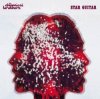
Among its best-known tracks are It Began in Afrika, Star Guitar, Come with Us and The Test featuring Richard Ashcroft.
Star Guitar holds a special place not only in the duo’s music but also in the history of music video. Director Michel Gondry built the clip around a train journey: houses, poles, railway cars and other objects outside the window visually synchronise with individual elements of the rhythm and arrangement.
This collaboration became part of the broader visual tradition of The Chemical Brothers. From very early in their career, the music video was not treated simply as an illustration of a finished composition, but as an independent way of revealing its structure.
Push the Button and Galvanize
In 2005, The Chemical Brothers released Push the Button. The lead single was Galvanize featuring rapper Q-Tip. The track combined the duo’s characteristic rhythm with a prominent Eastern string motif and rap vocals.
Galvanize earned the group a Grammy for Best Dance Recording, while Push the Button won Best Electronic/Dance Album.
The same album also included Believe with Kele Okereke, The Boxer with Tim Burgess and other tracks that confirmed The Chemical Brothers were no longer tied to the late-1990s big beat formula.
We Are the Night and another Grammy
We Are the Night was released in 2007 and again reached No. 1 on the UK Albums Chart. It was the duo’s fifth consecutive UK No. 1 studio album.
Among its best-known tracks are Do It Again with Ali Love, Das Spiegel, the title track We Are the Night and the deliberately absurd The Salmon Dance featuring Fatlip.
The album won a Grammy for Best Electronic/Dance Album. By this point, it was clear that The Chemical Brothers had outlived the era with which they were initially associated: the commercial peak of big beat had passed, while the duo continued to top charts within a transformed electronic scene.
Further: the album as an audiovisual work
In 2010, The Chemical Brothers released Further. Unlike albums built around guest vocalists, Rowlands and Simons focused primarily on their own studio language.
Its eight tracks form an almost continuous psychedelic journey — from the expansive Escape Velocity to Swoon and Another World. A corresponding visual film was created for each track, so Further was conceived as a unified audiovisual project.
This highlighted an approach that had by then become one of the defining characteristics of The Chemical Brothers: music, video and concert scenography were developed as interconnected parts of the same work.
Hanna: a full-length work for film
In 2011, The Chemical Brothers composed the score for director Joe Wright’s thriller Hanna. This was not simply the use of several of their existing tracks in a film, but a complete original soundtrack written specifically for the picture.
The music combines electronic rhythms with tense atmospheric passages, childlike motifs and more cinematic instrumental sections. The official soundtrack includes Hanna's Theme, Container Park, Escape 700, The Devil Is in the Details and other compositions.
Don't Think: the concert through the audience’s eyes
Another important project was the concert film Don't Think, directed by the group’s longtime visual collaborator Adam Smith. The footage was recorded during a performance at Fuji Rock in Japan and edited not as conventional stage documentation, but as an attempt to convey the sensation of being a spectator inside the crowd.
In 2013, Don't Think received a Grammy nomination in the Best Dance/Electronic Album category as a corresponding live release.
Born in the Echoes and Ed Simons’ temporary break from touring
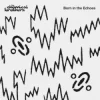
In 2015, the eighth studio album Born in the Echoes was released. It featured Q-Tip, St. Vincent, Beck, Cate Le Bon and Ali Love. The main singles included Go, Sometimes I Feel So Deserted, Under Neon Lights and Wide Open.
While making the album, The Chemical Brothers deliberately returned to some of their older equipment — Akai samplers, MPC units, analogue synthesizers and other tools used on earlier records. Rowlands explained that the aim was not to recreate the past, but to escape excessive technical perfection and restore an element of unpredictability to the music.
Born in the Echoes debuted at No. 1 on the UK Albums Chart and became The Chemical Brothers’ sixth UK No. 1 album. At the time, Official Charts described this as a record among dance acts for the number of studio albums that had topped the UK chart.
During the same period, Ed Simons temporarily withdrew from some touring commitments to focus on academic work. Longtime visual collaborator Adam Smith replaced him in the live setup, while Simons continued to work with Rowlands in the studio and take part in DJ appearances. He later returned to live performances.
No Geography: returning to the immediacy of the early records
The ninth studio album, No Geography, was released in 2019. During its creation, the duo again restricted their equipment setup and tried to work more spontaneously. Key tracks included Free Yourself, MAH, Got to Keep On, We've Got to Try and Eve of Destruction.
Aurora provided vocals on several tracks, while Japanese rapper Nene appeared on Eve of Destruction. The album retained the mechanical toughness of early Chemical Brothers while also moving into brighter psychedelic house music.
No Geography became one of the most decorated projects of the group’s later career. At the 2020 Grammy Awards, Got to Keep On won Best Dance Recording, while No Geography received Best Dance/Electronic Album. These two wins brought The Chemical Brothers’ total number of Grammys to six.
For That Beautiful Feeling
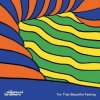
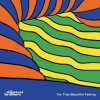
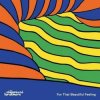
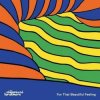
The tenth studio album, For That Beautiful Feeling, was released on 8 September 2023. Contrary to descriptions of it as a predominantly ambient work, it is primarily another version of the psychedelic club music characteristic of The Chemical Brothers, in which house, techno, breakbeat and unusual pop melodies constantly flow into one another.
The album includes Live Again with Halo Maud, No Reason, Goodbye, Fountains, The Weight, Feels Like I'm Dreaming and Skipping Like a Stone with Beck. Halo Maud also provided vocals for the title track.
The album received a Grammy nomination for Best Dance/Electronic Album at the 2024 ceremony, becoming another Chemical Brothers release recognised by the Recording Academy.
Why The Chemical Brothers outlived the big beat era
The term big beat remains useful when describing the periods of Exit Planet Dust and Dig Your Own Hole, but it has long ceased to cover the full range of The Chemical Brothers’ music.
Surrender already worked much more heavily with house and psychedelia; Further existed almost as an electronic concept album; No Geography combined acid, techno and pop inflections; and For That Beautiful Feeling again demonstrated how freely the duo handle their own musical history.
Rowlands has described the group’s creative principle quite simply: what interests them most are unusual sounds and the possibility of arranging them in a sequence that starts to work musically. In the studio, they continue to use both modern technology and older synthesizers, samplers, drum machines and self-recorded noises.
Vocalists and collaborations
A large part of The Chemical Brothers’ catalogue is instrumental or built around short samples, but working with guest vocalists has become one of the defining features of their albums.
Over the years, the duo have recorded with Beth Orton, Tim Burgess, Noel Gallagher, Bernard Sumner, Hope Sandoval, Richard Ashcroft, The Flaming Lips, Q-Tip, Kele Okereke, Ali Love, St. Vincent, Beck, Aurora, Halo Maud and other performers.
At the same time, The Chemical Brothers rarely use a guest voice simply for the value of a famous name. Rowlands has noted that collaboration usually begins with an interest in the artist and their distinctive manner, while the goal is for the result to transform the original idea of the composition.
The Chemical Brothers live show
The live side of the project developed alongside the music. Even in the early 1990s, Rowlands and Simons appeared before audiences with MPCs, analogue synthesizers and other studio equipment rather than limiting themselves to a conventional DJ set. Rowlands has recalled that The Chemical Brothers were already performing at major American raves in this way in 1994.
Later, the concerts evolved into large-scale audiovisual productions. Adam Smith and Marcus Lyall played an especially important role in shaping the visual language of the live show. The music is synchronised with original films, lighting, lasers and large physical objects on stage.
This is why a Chemical Brothers concert differs noticeably from a conventional DJ performance in front of a video wall. Visual sequences for Hey Boy Hey Girl, Galvanize, MAH, Wide Open and other tracks exist as independently recognisable elements of the show and evolve together with the live programme.
Music videos as part of the group’s history
The Chemical Brothers have one of the most recognisable music video catalogues in electronic music. The duo worked for many years with directors including Michel Gondry, Dom & Nic and other filmmakers.
Key videos include Let Forever Be, Star Guitar, Elektrobank, Believe, The Golden Path, Go, Wide Open, We've Got to Try and Live Again.
The collaboration with Dom & Nic became especially long-running: the Live Again video in 2023 was already their tenth joint video project with The Chemical Brothers.
Grammy Awards and other achievements
According to the Recording Academy, The Chemical Brothers have 6 wins from 15 Grammy nominations.
- Block Rockin' Beats — Grammy, Best Rock Instrumental Performance;
- Galvanize — Grammy, Best Dance Recording;
- Push the Button — Grammy, Best Electronic/Dance Album;
- We Are the Night — Grammy, Best Electronic/Dance Album;
- Got to Keep On — Grammy, Best Dance Recording;
- No Geography — Grammy, Best Dance/Electronic Album.
In the United Kingdom, the group won the 2000 Brit Award for Best British Dance Act.
The duo have topped the UK Singles Chart twice — with Setting Sun and Block Rockin' Beats. Six Chemical Brothers studio albums have also reached No. 1 on the UK Albums Chart: Dig Your Own Hole, Surrender, Come with Us, Push the Button, We Are the Night and Born in the Echoes.
The Chemical Brothers studio discography
- Exit Planet Dust — 1995
- Dig Your Own Hole — 1997
- Surrender — 1999
- Come with Us — 2002
- Push the Button — 2005
- We Are the Night — 2007
- Further — 2010
- Born in the Echoes — 2015
- No Geography — 2019
- For That Beautiful Feeling — 2023
For That Beautiful Feeling is the duo’s tenth studio album.
Other important releases
- Brothers Gonna Work It Out — 1998, DJ mix;
- Singles 93–03 — 2003, compilation;
- Brotherhood — 2008, compilation;
- Hanna — 2011, original soundtrack;
- Don't Think — 2012, live audiovisual project.
Major tracks
Among the most significant recordings by The Chemical Brothers are Song to the Siren, Chemical Beats, Leave Home, Setting Sun, Block Rockin' Beats, Elektrobank, Hey Boy Hey Girl, Let Forever Be, Out of Control, Star Guitar, The Golden Path, Galvanize, Believe, Do It Again, Swoon, Go, Wide Open, Free Yourself, Got to Keep On, No Geography, The Darkness That You Fear, No Reason and Live Again.
In 2026, the group’s catalogue received another unexpected demonstration of its longevity: Go, originally released in 2015, re-entered the UK chart and climbed significantly higher than its original peak following a renewed wave of popularity. The group’s official website noted its return to the upper reaches of international charts more than a decade after the original release.
The Chemical Brothers’ place in the history of electronic music
The Chemical Brothers emerged at a moment when British electronic culture was rapidly moving from small clubs and illegal raves towards festivals, radio and mass audiences. But their importance cannot simply be reduced to the idea that they “invented big beat”. The genre term itself grouped together several very different artists, while The Prodigy, Fatboy Slim, Underworld, Orbital and Daft Punk were all developing their own directions alongside Rowlands and Simons.
More important was the way The Chemical Brothers changed perceptions of what an electronic group could do. Their albums could compete in mainstream charts with major rock and pop releases; an instrumental club track could win a Grammy in a rock category; an electronic duo’s concert could become a complex audiovisual production; and guest rock and hip-hop vocalists could become part of an electronic composition without forcing it into the format of a conventional pop song.
Most importantly, the project outlived its own era. The peak of big beat has long remained in the 1990s, while The Chemical Brothers continued recording techno, house, acid, breakbeat and psychedelic electronic music without becoming a group sustained exclusively by its classic catalogue.
From the self-pressed Song to the Siren to No Geography and For That Beautiful Feeling, one principle remains consistent: Rowlands and Simons are continually searching for physically powerful, unusual sounds capable of working equally convincingly as a studio experiment and as a moment of collective energy on the dancefloor. It is this ability, rather than belonging to any single genre, that defines The Chemical Brothers’ place in the history of modern electronic music.