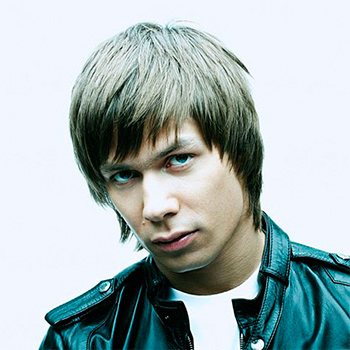
Stas Piekha is a Russian singer, songwriter, poet and television presenter. His full name is Stanislav Pyatrasovich Piekha, and he was born with the surname Gerulis. The artist was born on August 13, 1980, in Leningrad, now Saint Petersburg. He rose to national prominence in 2004 after taking part in the television project Star Factory 4, which led to a long-running collaboration with composer and producer Viktor Drobysh.
From the beginning, his name was associated with one of the best-known musical families in Soviet popular music. His grandmother is Edita Piekha, his grandfather was composer and Druzhba ensemble leader Alexander Bronevitsky, and his mother is singer Ilona Bronevitskaya. However, Stas Piekha’s own career did not develop as a simple continuation of the family tradition. His artistic image was built around romantic pop, restrained masculine lyricism, elements of pop rock, blues and Russian estrada chanson.
His best-known songs include One Star, You’re Sad, She’s Not Yours, A Line on the Palm, You and I, I Am a Leaf, An Old Story, I’m with You, Happiness and Without You. His discography includes three major album releases, numerous duets and a series of standalone singles issued after he moved away from the traditional album-based release model.
Quick Facts
Full name: Stanislav Pyatrasovich Piekha
Surname at birth: Gerulis
Date of birth: August 13, 1980
Place of birth: Leningrad, USSR
Occupations: singer, songwriter, poet, television presenter
Musical styles: pop, pop rock, estrada music
Breakthrough: Star Factory 4, 2004
Early-career producer: Viktor Drobysh
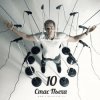
Main albums: One Star, Otherwise, 10
Mother: Ilona Bronevitskaya
Grandmother: Edita Piekha
Grandfather: Alexander Bronevitsky
Son: Pyotr
The Piekha and Bronevitsky Musical Dynasty
Stas Piekha was born into a family in which music was not a hobby, but the profession of several generations. His grandmother, Edita Piekha, became one of the most recognisable singers in Soviet popular music. His grandfather, Alexander Bronevitsky, was a composer, choral conductor and founder of the Druzhba ensemble, with which Edita Piekha began her stage career. Stas’s mother, Ilona Bronevitskaya, also chose a career in entertainment and worked as a singer and television presenter.
The artist’s father, Pyatras Gerulis, was a jazz musician and theatre director. His parents separated shortly after their son was born, and his father later lived in Vilnius. Stas was raised primarily by his mother, grandmother and other relatives.
The name Stanislav was not chosen by chance. Edita Piekha wanted to preserve the memory of her own father, who died when she was a child. Since she herself had a daughter, the name Stanislav was later given to her grandson. The surname followed a similar path: the boy was born Gerulis, but while still a child he began using his famous grandmother’s surname, continuing the Piekha family line.
Such a background might appear to have been a ready-made ticket to the stage. In reality, the famous surname opened doors while also creating pressure. Every success achieved by the young artist was attributed to family connections, while every setback was measured against Edita Piekha’s accomplishments. Stas later had to prove that he could have a place in popular music not only as a member of a dynasty.
Childhood Between Touring and Music School
A significant part of Stas’s childhood unfolded alongside the touring lives of the adults around him. His mother was actively building her career, while his grandmother performed extensively. The singer later said that because his relatives were so busy, he experienced loneliness and spent a considerable amount of time at a children’s home under Edita Piekha’s patronage. This was not a case of his family formally abandoning him: the adults were trying to ensure that he received supervision and regular contact with other children.
At his grandmother’s insistence, Stas entered the Choir School of the M. I. Glinka Leningrad State Academic Cappella. He studied choral singing and piano, receiving serious foundational training long before becoming known on television. He later continued his education in the pop and jazz department of the Gnessin State Musical College.
His classical training can be heard in his later performance style. Piekha does not build songs around displays of extremely high notes or elaborate vocal ornamentation. His strengths are timbre, clear diction, phrasing and the ability to sustain dramatic tension within a restrained pop composition.
At the same time, growing up in a musical family did not mean a harmonious childhood. In interviews, the artist has repeatedly spoken about the lack of a stable parental presence, an early sense of being unwanted and difficulties with emotional intimacy. He later linked these experiences to his addiction and his need to seek acceptance outside the family.
Youth and Addiction
Stas Piekha has spoken openly about beginning to use drugs and alcohol while still young. According to the singer, the addiction gradually became more severe, and during the worst period he used heroin, removed belongings from the family home and found himself in dangerous situations. His family discovered what was happening after a fire in the flat, when he fell asleep with a lit cigarette.
The artist underwent treatment more than once. In a 2025 interview, he said that between rehabilitation attempts he experienced a long period of remission, followed by a relapse that lasted a year. Piekha stresses that addiction cannot be considered overcome by a single decision: for him, maintaining sobriety remains a constant process involving therapy, discipline and changes in lifestyle.
This part of his biography matters not as a sensational episode, but because the experience influenced the subjects he discusses in interviews, his attitude towards sport, and his charitable and business activities. In 2008, the artist founded a project helping people with alcohol and drug addiction, which later developed into a private addiction clinic and rehabilitation programme.
Piekha himself opposes violence and unlawful detention in rehabilitation centres. He emphasises the importance of a medical licence, the involvement of psychiatrists, addiction specialists and clinical psychologists, institutional transparency, and the patient’s voluntary consent to treatment.
First Steps in Professional Music
Before appearing on television, Piekha tried working in several musical formats. In the early 2000s, he collaborated with Pelageya’s group. That period did not bring him widespread recognition, but it gave him experience of live performance and working with professional musicians.
His voice did not fit the image of a typical young pop singer of the early 2000s. It contained more lower and middle-register colour than bright, lightweight pop tonality. This quality later allowed Piekha to perform romantic ballads as confidently as songs incorporating blues or pop-rock elements.
The decisive event was the casting process for the fourth season of Star Factory. The project was produced by composer Viktor Drobysh, already known for his work with Valeriya, Kristina Orbakaite and other performers.
Star Factory 4
In 2004, Stas Piekha became a contestant on Star Factory 4 on Channel One. The project proved to be one of the franchise’s most successful seasons. Other participants included Irina Dubtsova, Timati, Dominik Joker, Anton Zatsepin, Alexa and several other future figures on the Russian music scene.
During the project, Piekha performed One Star, written by Viktor Drobysh. The song perfectly suited his image: a restrained verse, a dramatically rising chorus and a story of loneliness delivered without excessive vocal display.
Another important recording was the duet with Valeriya, You’re Sad. The contrast between the singer’s lighter timbre and Piekha’s more restrained voice made it one of the season’s defining hits. The track later won Best Song at the MTV Russia Music Awards.
During Star Factory, Stas also performed with guest artists. One of the most unusual numbers was a rendition of Uriah Heep’s July Morning with Ken Hensley. The performance served as a reminder that Piekha’s musical interests extended beyond conventional pop ballads.
He finished the project among the three finalists. His main professional prize was the production of a solo album and an ongoing collaboration with Viktor Drobysh.
The Album One Star
The debut album One Star was released in 2005. It contained 12 tracks, including One Star, You’re Sad, Where Will I Be, Street Fairy, Oh, God! and City of Childhood. Several songs were written by the performer himself, while much of the material was created by writers associated with Viktor Drobysh’s production centre.
One Star was a typical post-television album for its time, but it was noticeably more cohesive than many releases by graduates of similar talent shows. Its foundation consisted of melodic pop songs with elements of pop rock and adult-oriented estrada.
On City of Childhood, Stas sang with Edita Piekha. The duet highlighted the family connection while also revealing the difference between their performance styles. Edita Piekha brought her recognisable accent, clear theatrical delivery and the aesthetics of classic estrada, while her grandson offered a darker timbre and a more contemporary, intimate approach.
The commercial success of the album was secured by One Star and You’re Sad. At the same time, the debut created a limitation: Piekha began to be perceived primarily as a singer of romantic songs, even though he wanted to work with a broader range of musical material.
You’re Sad and His Creative Partnership with Valeriya
The duet You’re Sad became one of the defining songs of Piekha’s early career. The track is structured not as a vocal contest, but as a restrained conversation. The two voices move in parallel, creating a sense of emotional distance between the characters.
In 2005, the song received an MTV Russia Music Award. It was also recognised at the Song of the Year festival and remains among Piekha’s most popular recordings on digital platforms.
The singer later collaborated again with Valeriya on the song Let Me Go. Their duets helped shape one of Piekha’s principal stage personas: the mature romantic hero who does not overplay his emotions, but keeps them contained within the lyrics.
The Album Otherwise
The second studio album, Otherwise, was released in 2008. Compared with the debut, it was more varied in sound. The record included pop, blues rock, club-oriented electronic music, elements of French chanson and soul-funk influences.
The track list included:
- Otherwise;
- Write to Me;
- About You;
- I Will Give You;
- She’s Not Yours;
- Melting in a Cloud;
- A Line on the Palm.
The album title reflected the singer’s desire to move beyond the image of a television-made artist. While One Star continued the aesthetics of Star Factory, Otherwise attempted to present Piekha as an independent performer with a more mature musical voice.
The songs featured more live instrumentation, guitar elements and stylistic contrasts. However, the most important event connected with the album was a duet that initially seemed unexpected.
She’s Not Yours with Grigory Leps
Stas Piekha recorded She’s Not Yours with Grigory Leps. The song was built around the contrast between two male voices. Piekha delivered his parts with restraint and an almost cold tone, while Leps added his customary tension, rasp and dramatic force.
As a result, the track sounded like an argument between two perspectives on the same story. One character reasons, while the other appears to be trying to break through his own pain. The music video and extensive radio airplay turned She’s Not Yours into one of the biggest hits in both singers’ careers.
In 2009, the duet received a MUZ-TV Award and the God of the Airwaves prize. The song continues to rank among Piekha’s most-streamed recordings.
The success of She’s Not Yours firmly established him as a singer of mature, emotionally charged pop. At the same time, his image remained more restrained than Leps’s: Piekha rarely moved towards open emotional breakdown, preferring internal drama.
A Line on the Palm
A Line on the Palm became another key recording of the late 2000s. It combined elements of pop rock, the traditional estrada ballad and dramatic soundtrack music.
The song was used in the television series Two Sides of One Anna and received a Golden Gramophone award. It remains one of the performer’s most popular songs on digital platforms.
The track clearly demonstrates one of Piekha’s main vocal strengths: he begins in an almost conversational manner and gradually increases the emotional density without turning the finale into a display of sheer volume.
The Album 10
In 2013, Piekha released 10, marking a decade of his professional career. Different catalogues classify it in different ways. RBC and the singer’s official website describe 10 as an album, while Apple Music places it in the compilations section. The distinction is understandable: the release combined established hits with newer material and summarised the preceding stage of his career.
Songs associated with this period include:
- A Line on the Palm;
- You and I with Slava;
- An Old Story;
- My Fair Lady;
- I Am a Leaf;
- Girl on a Ball.
The singer described 10 as a retrospective and a collection of songs audiences most wanted to hear in concert. According to him, the material combined pop rock with philosophical lyricism.
After this release, Piekha stopped issuing large studio albums on a regular basis. His work gradually shifted towards standalone singles, duets and concert programmes.
You and I with Slava
The song You and I, recorded with Slava, continued the line of emotional dialogues in which Piekha was particularly convincing as a duet partner.
While You’re Sad was restrained and almost cool in tone, You and I was built around a more open rock drama. Slava’s raspy, emotionally intense delivery contrasted with Piekha’s steady voice. The track received a Golden Gramophone and became one of the most recognisable songs in both artists’ catalogues.
Duets in general occupy an important place in his career. In addition to Valeriya, Leps and Slava, Piekha has recorded with Irina Dubtsova, Guzel Khasanova, Elena Sever and other performers.
Solo Songs After the Album 10
After 2013, the artist concentrated on individual releases. Among the most notable recordings from this period were Happiness, Incompatible Love, Thinking of Her, Pride, Without You, White Snow, Until Morning, You’re Still Waiting and Children of Peter.
This format reflected changes in the music industry. Instead of releasing an album every few years, an artist could present one song, film a video, add it to the concert set and assess the audience response.
At the same time, Piekha’s later recordings did not attempt to radically alter his image. Relationships, loneliness, anticipation, memory and the effort to preserve a connection with another person remained at the centre. What changed was the production: arrangements became more electronic, compact and suited to streaming.
Between 2022 and 2024, he released Don’t Get on Your Knees, White Snow, Until Morning, the duet Dark Streak with Guzel Khasanova, You’re Still Waiting and Children of Peter.
Later Releases and Activities in 2025–2026
In 2025, the singer’s catalogue expanded with new songs and collaborations, including We Flew Above the Ground, Angry Crows, Pu-erh Leaves, The Love That Is No More and Together. In December, he released Mother, based on a work by Sevil Aliyeva.
In 2026, Piekha released the single Dress. The track continued his work in the format of concise, standalone pop songs designed simultaneously for radio, digital platforms and live performance.
At the same time, the artist continues to tour with a programme built around the defining songs from different stages of his career. His concert repertoire is not centred on a single current album, but on a recognisable catalogue supplemented by new singles. Promotional materials from recent years emphasise the use of a live band and a combination of older hits with fresh material.
Stas Piekha as a Poet
In addition to writing song lyrics, Piekha writes poetry. His poetry collection is titled Naked. Some of his work has been published on the Russian literary platform Stikhi.ru.
The title reflects the general principle of his poetry: an attempt to speak about loneliness, addiction, fear, love and inner contradictions without the protection of a stage persona. During concerts, the artist occasionally reads his own poems, using them to connect musical numbers.
At his anniversary concert in the Kremlin, marking 15 years of his career, he not only performed songs but also read poetry, including works dedicated to his mother.
His poetic work offers a better understanding of his musical persona. Even when Piekha performs songs written by other authors, he selects material in which the protagonist maintains outward composure while experiencing an internal crisis.
Television
After Star Factory, Stas Piekha regularly appeared in television music projects. In 2012, he took part in the show Two Stars with Maria Kozhevnikova. In 2017, he joined the jury of the children’s competition You Are Super! and later judged contestants on You Are Super! 60+.
In 2021, the singer competed in the second season of The Mask, performing in the Roly-Poly Doll costume and finishing in fifth place. He later became one of the regular judges on Superstar!, a project in which artists from previous decades perform classic and contemporary hits in new arrangements.
On Superstar!, Piekha developed the image of a calm and empathetic judge. He assesses not only technical precision but also the emotional impact of a performance. In 2026, he served on the jury of the Battle of the Seasons edition alongside Lera Kudryavtseva, Sergey Sosedov and Irina Ponarovskaya.
Television became a distinct area of his professional life. It keeps Piekha present in the public eye between music releases and introduces his repertoire to new audiences.
Film and Voice Acting
Stas Piekha has appeared in fictional and documentary productions, most often as himself. His song A Line on the Palm was used in the television series Two Sides of One Anna.
He has also worked as a voice actor. One of his most notable roles was Prince Naveen in the Russian-language version of Disney’s animated film The Princess and the Frog. His voice was also featured in the animated film Our Masha and the Magic Nut.
Screen acting never became Piekha’s main professional focus. His work in film and animation is better understood as an extension of his musical image, built around a recognisable voice and restrained charisma.
Voice and Musical Style
Stas Piekha has a male voice with a particularly pronounced middle and lower register. His timbre is easily recognised by its slightly muted, intimate colour.
He rarely relies on extremely high notes or complex melismas. The foundations of his performance style are:
- clear diction;
- restrained emotion;
- a gradual intensification of the chorus;
- close attention to the meaning of the lyrics;
- contrast between a calm verse and a dramatic climax;
- a light rasp in tense passages.
His early songs were based mainly on estrada pop rock. The album Otherwise broadened his stylistic range through blues, funk, club-oriented electronic music and French chanson. In his later singles, live instruments often coexist with contemporary electronic production.
Piekha is at his best in songs that do not require overt theatricality. His protagonist generally does not shout about his feelings, but tries to preserve dignity within a failed relationship. This gives even commercial pop songs a recognisable melancholic tone.
Why Duets Became an Important Part of His Career
Many of Piekha’s biggest hits were recorded with other performers. This is no coincidence. His voice works particularly well as a contrast:
- with Valeriya’s bright vocal tone in You’re Sad;
- with Grigory Leps’s dramatic rasp in She’s Not Yours;
- with Slava’s emotional force in You and I;
- with Irina Dubtsova’s more open delivery in Dependent;
- with Guzel Khasanova’s softer timbre in Dark Streak.
In these songs, Piekha does not try to overpower his partner. He becomes the duet’s internal centre — the voice against which the other performer’s emotional intensity sounds even stronger.
This ability helps explain the longevity of his collaborative recordings. They do not feel like arbitrary pairings of two famous names, but like compact musical dialogues with clearly distributed roles.
Concert Career
Stas Piekha continues to perform regularly with a live band. His concert programmes feature drums, guitars, keyboards, brass and string instruments.
In 2019, the artist gave a major concert at the State Kremlin Palace to mark the 15th anniversary of his professional career. Valeriya, Irina Dubtsova, Slava, Tatyana Bulanova and other colleagues joined him on stage. Viktor Drobysh accompanied several numbers on the piano.
A separate section of the programme was dedicated to Edita Piekha. Stas performed Our Neighbour, Manzherok and other songs from his grandmother’s repertoire. This presented the connection between generations not through biographical narration, but directly through music.
Unlike artists who completely rebuild older hits around contemporary electronic production, Piekha preserves the familiar melodies and dramatic structure. New arrangements usually strengthen the live sound without disrupting the audience’s established perception of the songs.
Awards
Stas Piekha’s songs have repeatedly received Russia’s Golden Gramophone music award. Over the years, recognised tracks have included One Star, You’re Sad, She’s Not Yours, A Line on the Palm, I Am a Leaf, You and I, An Old Story, I’m with You, Without You, White Snow and Dark Streak.
In 2005, You’re Sad was named Best Song at the MTV Russia Music Awards. In 2009, Piekha and Grigory Leps received a MUZ-TV Award for their duet She’s Not Yours.
However, the significance of his work is better measured not by the number of trophies, but by the durability of his repertoire. Songs from the first half of his career continue to rank among the leading tracks in his streaming catalogue and remain central to his live programme decades after their release.
Personal Life and Son
Stas Piekha tries not to turn his private life into a constant part of his public image. He was married to model and DJ Natalya Gorchakova. The couple met in the early 2010s, and their son Pyotr was born in March 2014. The marriage later ended.
The singer has not hidden the fact that it took him a long time to learn how to build a relationship with his child. His own experience of an emotionally difficult childhood made him particularly attentive to fatherhood, although after the parents separated he did not live permanently with his son.
Piekha rarely shares details about his relationships and does not use his family as a primary promotional tool. Reports about supposed romances should therefore be treated cautiously unless confirmed by the artist himself.
Health and Lifestyle Changes
The artist has spoken openly about the serious consequences of his former lifestyle. According to Piekha, he was admitted to intensive care on several occasions and also experienced heart problems. Over the years, there have been reports of hospital treatment for pancreatitis and cardiac symptoms.
Sport became an important part of his recovery. Piekha practises boxing, which he sees not only as physical exercise but also as a way to regulate aggression, anxiety and emotional tension.
When discussing his health, it is important to distinguish confirmed statements from sensational headlines. The artist has not announced his retirement and continues to release music, appear on television and perform live.
Rehabilitation Work
His personal experience led Piekha to create projects supporting people with addiction. A clinic bearing his name operates in Moscow and offers services in addiction medicine, psychiatry, psychotherapy and medical detoxification.
In interviews, the singer stresses that detoxification alone is not enough. Once the immediate physical condition has been stabilised, a person requires long-term psychological and social rehabilitation, work with relatives affected by codependency, and a gradual return to independent life.
He also warns against dishonest institutions that use coercion, religious pressure or staff without appropriate medical qualifications. Piekha advises people to check licences, doctors’ credentials, the availability of information about the centre and genuine patient reviews.
This work has become one of the most serious aspects of his public identity. He speaks about addiction not as an outside philanthropist, but as someone with first-hand experience of the illness and repeated attempts at recovery.
Public Position and Ukrainian Sanctions
Stas Piekha has performed in occupied Crimea and Donetsk. The singer has said that he tries to stay out of politics and regards such trips as fulfilling concert obligations to audiences. However, performances in occupied territories carry political and legal consequences regardless of how an artist explains them.
In 2015, he was denied entry to Ukraine. In January 2023, Stas Piekha was added to Ukraine’s sanctions list alongside a number of Russian cultural figures. The restrictions were imposed for a period of ten years.
Stas Piekha’s Essential Songs
One Star
His first major solo hit defined the artist’s early image. The song combines a theme of loneliness with a memorable chorus and an arrangement that gradually builds in intensity.
You’re Sad
A duet with Valeriya that became one of the defining songs of Star Factory 4. The track earned the performers an MTV Russia Music Award.
She’s Not Yours
A dramatic duet with Grigory Leps. The contrast between their vocal styles turned the song into one of the most recognisable Russian estrada hits of the late 2000s.
A Line on the Palm
A melodic pop-rock ballad that particularly showcases Piekha’s ability to build emotional tension gradually.
You and I
A collaboration with Slava. The song is harder and more openly dramatic in sound than the singer’s earlier duets.
I Am a Leaf
A song with philosophical imagery and Piekha’s characteristic theme of inner loneliness.
An Old Story
A composition about recurring relationships and the inability to leave the past behind completely.
I’m with You
One of his most successful recordings of the 2010s, combining romantic lyrics with contemporary electronic pop production.
Happiness
A melodic song from his later period that retains the classic estrada foundation of his work.
Without You
The song brought the artist back into active radio rotation in the early 2020s and received a Golden Gramophone award.
Discography
Studio and Major Album Releases
- One Star — 2005
- Otherwise — 2008
- 10 — 2013
10 is most accurately described as an anniversary album-compilation, combining established material with songs that were new at the time.
Selected Later Singles
- Happiness;
- Thinking of Her;
- Pride;
- Without You;
- Don’t Get on Your Knees;
- White Snow;
- Until Morning;
- Dark Streak;
- You’re Still Waiting;
- Children of Peter;
- Together;
- Mother;
- Dress.
Conclusion
Stas Piekha’s biography cannot be reduced to the phrase “the grandson of a famous singer.” His musical dynasty gave him an education, a surname and early familiarity with the stage, but it also created high expectations and a difficult emotional background.
A television project made him famous, Viktor Drobysh helped shape his first repertoire, and successful duets secured his place in mainstream pop music. Yet the longevity of his career has depended on his distinctive timbre, restrained stage presence and ability to choose songs in which personal drama is expressed without excessive theatricality.
Beyond the stage, his life has been shaped by addiction, treatment and repeated returns to sobriety. Over time, personal experience developed into a separate professional activity: helping people facing the same illness.
Stas Piekha remains an artist of a transitional era. He began within the television-centred music system of the early 2000s, released full-length albums, experienced the peak years of radio and music awards, and later adapted to a world of standalone digital singles and television entertainment. His defining songs, however, continue to sound exactly as intended: restrained, melodic and marked by a sense of hidden inner pain.