









 DEMO
DEMO
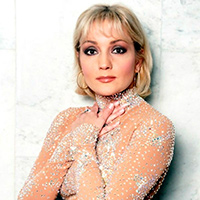
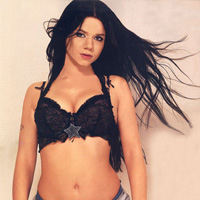
Tatyana Ivanovna Bulanova (born March 6, 1969, in Leningrad, USSR) is a Soviet and Russian pop singer and actress and an Honored Artist of the Russian Federation. She gained widespread fame in the early 1990s as the lead singer of the group «Летний сад» and later continued with a solo career. Her best-known songs include «Не плачь», «Старшая сестра», «Синее море», «Колыбельная», «Скажи мне правду, атаман», «Ясный мой свет», «Мой ненаглядный», «Мало не много», «Мой сон», «Ты не любила», «Белая черёмуха», «Не бойтесь любви» and «Один день».
Over several decades of work, Bulanova significantly changed her musical direction more than once. The early recordings of «Летний сад» combined synth-pop with dramatic ballads; in the second half of the 1990s, more traditional pop music and pop-rock appeared in her repertoire, while around the turn of the millennium she moved toward electronic dance music. In 2004, the singer was awarded the title of Honored Artist of the Russian Federation, and in 2025 she received the Medal «For Contributions to Culture and Art».
Childhood and family
Tatyana Bulanova was born in Leningrad into a military family. Her father, Ivan Petrovich Bulanov, served in the Soviet Navy, was a submarine officer and rose to the rank of Captain 1st Rank. After graduating from the Naval Academy, he continued working there. Her mother, Nina Pavlovna Bulanova, was a photographer by profession and also played guitar and sang. Tatyana’s older brother Valentin also chose a career connected with naval service.
As a child, Bulanova practiced rhythmic gymnastics, but music gradually became more important. She graduated from music school in piano. By around the age of fifteen, she had learned to play guitar and performed urban romances.
At the time, Tatyana did not intend to become a professional singer. Her early interests also included theater, although she was unable to receive acting training immediately.
Institute of Culture and first vocal studies
In 1987, Bulanova entered the evening division of the library faculty at the N. K. Krupskaya Leningrad State Institute of Culture, studying to become a librarian-bibliographer. At the same time, she worked at the library of the Naval Academy. The date of her enrollment is also confirmed by materials from the present-day Saint Petersburg State Institute of Culture.
In the autumn of 1989, after her third year, she left the institute and transferred to the vocal department of the school-studio at the Leningrad Music Hall.
It was there that she had the meeting that determined the beginning of her professional career. In December 1989, Bulanova met musician and leader of the group «Летний сад» Nikolai Tagrin. The band needed a vocalist, and soon Tatyana began recording with the group.
«Летний сад»
Tatyana Bulanova’s first concert performance with «Летний сад» took place on April 16, 1990, in the assembly hall of the Leningrad Technological Institute. The singer herself later repeatedly identified this date as her stage debut.
That same year, the first album «25 гвоздик» was released. The musical core of early «Летний сад» consisted of Nikolai Tagrin and keyboardist-composer Andrei Bogolyubov. Synthesizers, programmed rhythms, relatively simple melodic structures and Bulanova’s emotional vocals fit well with the aesthetics of the domestic pop scene of the early 1990s.
The real breakthrough came a year later.
«Не плачь»
In 1991, the album «Не плачь» was released. The title song by Andrei Bogolyubov became Bulanova’s first track to gain nationwide fame. For her performance of the song, she received the Grand Prix at the «Шлягер-1991» festival.
It was these early songs that formed the stage image with which mass audiences associated Bulanova for many years: a fragile heroine going through a breakup, loneliness or unrequited love.
This was not only a matter of repertoire. Her performance style itself was important — a slightly broken emotional tone, a recognizable timbre, strong attention to the words and an almost conversational sense of confession. Bulanova later expanded her stylistic range significantly, but this type of vocal delivery remained one of her distinguishing features.
«Старшая сестра», «Странная встреча» and «Измена»
The next major stage was the 1992 album «Старшая сестра». On it, Bulanova appeared not only as a performer but also as a composer, writing music for several songs. This period is associated with «Старшая сестра» and «Синее море»; the latter became one of the laureates of the television festival «Песня года-1992».
In 1993, the album «Странная встреча» appeared, continuing the lyrical direction of her early work. One of the best-known songs from this period was «Колыбельная» — «Спи, мой мальчик».
The album «Измена» was released in 1994. Bulanova again participated in the creation of the material as the composer of several songs. By the middle of the decade, her own name had already become significantly more recognizable than the name of the group with which she had begun her career.
Transition to a solo career
In the mid-1990s, Bulanova gradually began moving away from the previous working model with «Летний сад» and expanding the circle of songwriters with whom she collaborated.
In 1996, two important releases appeared at once — «Обратный билет» and «Моё русское сердце».
«Моё русское сердце» was especially significant and was created primarily in collaboration with composer Oleg Molchanov and lyricist Arkady Slavorosov. The album gave Bulanova one of the biggest hits of her entire career — «Ясный мой свет».
On December 14, 1996, the song brought Bulanova her first Golden Gramophone award.
This period also changed her stage image. Dramatic slow songs did not disappear, but her repertoire became much more diverse. There was more rhythmic pop music, while her vocal delivery gradually stopped being associated exclusively with the image of a «crying singer».
«Мой ненаглядный» and the late 1990s
Her collaboration with Oleg Molchanov and Arkady Slavorosov continued on the albums «Стерпится — слюбится» (1997) and «Женское сердце» (1998).
This period produced «Мой ненаглядный», «Ледяное сердце» and a number of other songs that became permanent parts of Bulanova’s concert repertoire.
«Мой ненаглядный» brought the singer her second Golden Gramophone award in 1997.
In 1999, «Стая» was released, one of the most unusual works in her discography. The arrangements featured noticeably more guitars, and the record moved closer to pop-rock. The album differed sharply from Bulanova’s familiar lyrical pop style and showed that by the end of the decade she was prepared to experiment quite freely with her own sound.
That same year, the song «Мало не много» received a Golden Gramophone award.
«Мой сон» and the electronic period
Another change of musical direction came in 2000.
Bulanova began working with Saint Petersburg-based DJ Tsvetkoff, while Oleg Popkov became one of the key writers of the new material. The album «Мой сон» was built around an electronic dance aesthetic.
This turned out to be more than a short-lived experiment. The title song became one of the singer’s biggest hits, while the recording itself fit well into the Russian dance-pop scene of the early 2000s.
The softer synthesizer arrangements of early «Летний сад» were replaced by denser electronic rhythms, club elements and vocal processing that was contemporary for its time. At the same time, Bulanova preserved her characteristic intonation, which meant that even her dance-oriented recordings remained instantly recognizable.
In November 2000, «Мой сон» received a Golden Gramophone award. A year later, «Ты не любила» received the same award.
Albums of the 2000s
During the first half of the 2000s, the singer released new material at a very high rate.
In 2001, «Золото любви» and «День рождения» appeared; in 2002, «Красное на белом» and «Это игра» followed. They were succeeded by «Любовь» (2003), «Белая черемуха» (2004), «Летела душа» (2005) and «Люблю и скучаю» (2007). This chronology is also reflected in the singer’s official discography.
Her sound gradually became less tied to any one style. Bulanova recorded contemporary pop music, lyrical estrada, as well as songs containing elements of chanson and urban romance.
A separate turn toward classical chamber lyricism came with the project «Романсы», released in 2010.
Music after 2010
After the period of almost annual albums, Bulanova began releasing large-scale programs less frequently, focusing more on individual songs and duets as well.
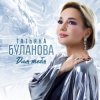
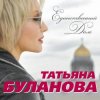
Her official discography includes «Это я» (2017) and «Единственный дом» (2020). In the 2020s, the catalog was expanded by «Таня, дыши!» (2023), «Камео» and «Припомним юность» (2024), and «Записная книжка», «Для тебя» and «Имею право быть счастливой» (2025).
At the same time, part of her later catalog consists not only of entirely new original material but also of digital album editions, compilations and reissues of previously recorded songs, so Bulanova’s modern discography is best considered with the specific type of each release in mind.
Duets became a particularly visible part of her later work. Bulanova recorded with performers from different generations and genres, which eventually led to a separate record.
On June 19, 2025, she was entered into the Russian Book of Records in the category «Largest number of songs by a performer recorded as duets in Russia». At the time the achievement was registered, the total included 114 collaborative songs.
Renewed popularity in the 2020s
In 2025, Bulanova experienced a new wave of mass interest. Clips from her concert performances, including videos featuring her dancers, began spreading widely on social media. Along with them, songs released many years earlier gained a new life.
The song «Один день» showed especially strong growth. According to research by the music service Zvuk, between March and September 2025 the number of streams increased by approximately 15 times.
Yandex Music published separate statistics. In August 2025, it was reported that Bulanova’s monthly audience on the service had reached 4.7 million listeners, almost doubling over the course of a year. About half of the singer’s most engaged younger audience was under the age of 35.
Thus, the renewed interest was not limited to a single viral video. Digital platforms brought «Ясный мой свет», «Мой ненаглядный», «Один день» and other songs from different stages of her career back into active circulation.
Recordings of 2026
Bulanova continued releasing new material after the surge of interest in her early catalog.
On February 13, 2026, she released the single «Первыми» with NILETTO through Zion Music. A music video premiered at the same time.
During 2026, the digital catalog also received «Чужие», «ДиКаприо», «Бесконечная история», «Рашн», «Москва — Санкт-Петербург» and other releases. On August 27, 2026, the single «Лёд» was released.
However, the digital release of «Бесконечная история» in 2026 should not be considered the first appearance of the song itself: the composition had existed much earlier and was among the laureates of «Песня года-2009».
Television and film
For many years, Bulanova combined her music career with television work.
She appeared in films and television series, both in cameo roles and as herself. Projects featuring her include «Улицы разбитых фонарей», «Бандитский Петербург» and «Осторожно, модерн!».
One of her most notable television projects was «Танцы со звёздами». In 2011, Bulanova won the season of the show. This achievement is also listed in the official record of her awards.
Musical style
Russian pop music forms the foundation of Tatyana Bulanova’s work, although her catalog cannot be reduced to a single genre.
Early «Летний сад» was melodic synth-pop and ballads. In the mid-1990s, traditional estrada songs became more important. «Стая» demonstrated an interest in rock arrangements. «Мой сон» placed Bulanova’s voice in an electronic dance environment. In later years, urban romance, chanson and contemporary pop also appeared in her repertoire.
The connecting element throughout all these periods is her voice.
Bulanova rarely built her songs around complex vocal technique or demonstrative virtuosity. Her strength lies in her recognizable intonation. In early ballads, she sounds deliberately vulnerable; in dance recordings, more restrained and rhythmic, while her timbre and characteristic way of delivering the lyrics remain the same.
That is why «Не плачь» and «Мой сон», recorded in completely different musical contexts, are still perceived as parts of the same performing story.
Personal life
Tatyana Bulanova’s first husband was musician, sound engineer and leader of «Летний сад» Nikolai Tagrin. They married in 1992. In 1993, their son Alexander was born. The marriage ended in 2005, although after the divorce Tagrin continued to participate in the singer’s professional activities.
In October 2005, Bulanova married footballer Vladislav Radimov. Their son Nikita was born in 2007. The couple divorced in 2016.
On June 2, 2023, businessman Valery Rudnev became the singer’s third husband.
Main awards and achievements
Tatyana Bulanova has received a number of state and music awards. Among the most significant are:
- 1991 — Grand Prix at the «Шлягер-1991» festival for the song «Не плачь»;
- 1994 — Ovation Award, «Discovery of the Year» category;
- 1996 — Golden Gramophone for «Ясный мой свет»;
- 1997 — Golden Gramophone for «Мой ненаглядный»;
- 1999 — Golden Gramophone for «Мало не много»;
- 2000 — Golden Gramophone for «Мой сон»;
- 2001 — Golden Gramophone for «Ты не любила»;
- 2004 — title of Honored Artist of the Russian Federation;
- 2011 — winner of the television show «Танцы со звёздами»;
- 2015 — anniversary Golden Gramophone for «Ясный мой свет»;
- 2025 — Medal «For Contributions to Culture and Art»;
- 2025 — entry into the Russian Book of Records for the largest number of songs by a performer recorded as duets in Russia — 114 compositions at the time the record was established.
Bulanova was awarded the title of Honored Artist of Russia on August 24, 2004, while the Medal «For Contributions to Culture and Art» was awarded on April 16, 2025 for her contribution to cultural development and many years of creative activity.
Main discography
Albums of the 1990s
- «25 гвоздик» — 1990
- «Не плачь» — 1991
- «Старшая сестра» — 1992
- «Странная встреча» — 1993
- «Измена» — 1994
- «Обратный билет» — 1996
- «Моё русское сердце» — 1996
- «Стерпится — слюбится» — 1997
- «Женское сердце» — 1998
- «Стая» — 1999
Albums of the 2000s–2020s
- «Мой сон» — 2000
- «Золото любви» — 2001
- «День рождения» — 2001
- «Красное на белом» — 2002
- «Это игра» — 2002
- «Любовь» — 2003
- «Белая черемуха» — 2004
- «Летела душа» — 2005
- «Люблю и скучаю» — 2007
- «Романсы» — 2010
- «Это я» — 2017
- «Единственный дом» — 2020
- «Таня, дыши!» — 2023
- «Камео» — 2024
- «Припомним юность» — 2024
- «Записная книжка» — 2025
- «Для тебя» — 2025
- «Имею право быть счастливой» — 2025
Modern digital platforms may classify some of these releases differently — as albums, compilations or other album-format releases. The chronology above follows Tatyana Bulanova’s official catalog.
More than three and a half decades after her debut with «Летний сад», Bulanova continues both concert and studio activity. Her repertoire spans several distinct eras of Russian popular music — from the synth-based estrada of the early 1990s and dramatic ballads to pop-rock, electronic dance-pop, romance and contemporary digital releases.
A new audience that discovered her songs through streaming services and social media in the mid-2020s made Bulanova’s early catalog relevant again without changing its historical context: the core recordings on which her reputation is based were created back in the 1990s and early 2000s.