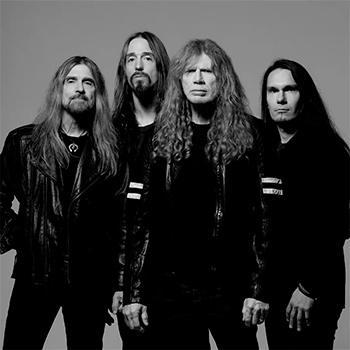
Megadeth is an American thrash metal band founded by Dave Mustaine in Los Angeles in 1983 after his departure from Metallica. Along with Metallica, Slayer and Anthrax, the band is commonly regarded as part of the so-called “Big Four” of American thrash metal.
Megadeth developed one of the most technically complex forms of the genre: its music is built around Mustaine’s fast and rhythmically dense guitar playing, the interaction of two lead guitars, prominent bass parts, and frequent changes in tempo and structure. The band’s lyrics regularly address war, politics, religion, nuclear threats, social instability and human self-destruction.
Over the course of its career, Megadeth released 17 studio albums, sold around 50 million records worldwide, received 13 Grammy nominations and one win — for the song Dystopia in 2017. In January 2026, the band released its officially final studio album, Megadeth, which became the first album in its history to top the Billboard 200.
Dave Mustaine and the formation of Megadeth
The band’s prehistory is directly connected with Metallica. In the early 1980s, Dave Mustaine was the lead guitarist of the young group and contributed to some of its early material.
In April 1983, Mustaine was dismissed from Metallica. His songwriting ideas remained in several tracks from the debut album Kill 'Em All: among the officially credited works featuring his contribution are The Four Horsemen, Jump in the Fire, Phantom Lord and Metal Militia.
After returning to Los Angeles, Mustaine decided to form his own band. In June 1983, he met bassist David Ellefson. The early lineup also included guitarist Greg Handevidt and drummer Dijon Carruthers.
At first, the musicians searched for a separate vocalist, but after several unsuccessful auditions Mustaine decided to handle the vocals himself.
First concerts
Megadeth’s first official performance took place on February 17, 1984, at Ruthie's Inn in Berkeley, California.
For the band’s first five concerts, the second guitarist was Kerry King of Slayer. He then returned to his main band.
During 1984, Megadeth’s lineup changed. Gar Samuelson joined on drums, while Chris Poland became the second guitarist.
Poland and Samuelson had backgrounds in jazz and fusion, which had a noticeable influence on Megadeth’s early sound. Even its most aggressive compositions featured complex rhythms, unconventional accents and fluid instrumental transitions.
Killing Is My Business... and Business Is Good!
In November 1984, Megadeth signed with the independent label Combat Records. The debut album Killing Is My Business... and Business Is Good! was released on June 12, 1985.
Despite the limited recording budget, the album already contained the main characteristics of the band’s future style: extremely fast riffs, complex rhythm guitar, Mustaine’s abrasive vocals and frequent structural changes.
The album included Last Rites/Loved to Deth, Killing Is My Business... and Business Is Good!, The Skull Beneath the Skin, Rattlehead, Looking Down the Cross and Mechanix.
Mechanix has particular historical significance. Mustaine wrote an early version of the track while still in Metallica; the same original musical material was later reworked into The Four Horsemen.
Vic Rattlehead
Megadeth’s early history is also closely associated with its mascot Vic Rattlehead — a skeletal character whose eyes, ears and mouth are covered by metal elements.
The image is based on the phrase “see no evil, hear no evil, speak no evil” and became a permanent part of the band’s visual identity. Vic appears on album covers, concert graphics, merchandise and Megadeth video material.
Peace Sells... But Who's Buying?
The second album, Peace Sells... But Who's Buying?, was released on September 19, 1986.
The material was initially recorded for Combat Records, but during the sessions the band signed with Capitol Records, which acquired the rights to the album.
On this record, Megadeth’s early aggression became more structured. The speed remained, but complex rhythms, expressive bass parts and political lyrics became much more prominent.
The main tracks include Wake Up Dead, The Conjuring, Peace Sells, Devil's Island, Good Mourning/Black Friday and My Last Words.
The opening bass line of Peace Sells became one of the most recognizable in the band’s history. A fragment of it was used for many years by MTV News.
Peace Sells... But Who's Buying? later received Platinum certification in the United States and established Megadeth among the leading representatives of American thrash metal.
So Far, So Good... So What!
After the 1987 touring cycle, Chris Poland and Gar Samuelson left the band. They were replaced by guitarist Jeff Young and drummer Chuck Behler.
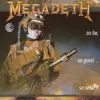
With this lineup, Megadeth recorded its third album, So Far, So Good... So What!, released on January 19, 1988.
It included Into the Lungs of Hell, Set the World Afire, Mary Jane, In My Darkest Hour, Hook in Mouth and a cover of the Sex Pistols’ Anarchy in the U.K.
The album reached No. 28 on the Billboard 200 and later received Platinum certification in the United States.
Mustaine wrote In My Darkest Hour after learning of the death of Metallica bassist Cliff Burton in September 1986. However, the lyrics themselves are not directly about Burton.
After Megadeth’s appearance at Monsters of Rock in Donington in 1988, Jeff Young and Chuck Behler left the band.
The classic Megadeth lineup
In July 1989, Nick Menza became Megadeth’s drummer. In February 1990, former Cacophony member Marty Friedman joined as second guitarist.
This formed the band’s best-known lineup:
- Dave Mustaine — vocals, guitar;
- David Ellefson — bass guitar;
- Marty Friedman — guitar;
- Nick Menza — drums.
The quartet recorded four studio albums — Rust in Peace, Countdown to Extinction, Youthanasia and Cryptic Writings.
A defining feature of this lineup was the contrast between the two guitarists. Mustaine was primarily responsible for complex rhythmic constructions and the aggressive foundation, while Friedman used unusual melodic ideas, unconventional intervals and his own highly recognizable approach to soloing.
Rust in Peace
Rust in Peace was released on September 24, 1990 and became one of the central works in Megadeth’s catalog and in technical thrash metal as a whole.
The album included Holy Wars... The Punishment Due, Hangar 18, Take No Prisoners, Five Magics, Poison Was the Cure, Lucretia, Tornado of Souls, Dawn Patrol and Rust in Peace... Polaris.
The material is characterized by constant changes in tempo and structure, complex riffs and active interaction between the two guitars.
Tornado of Souls became one of the most famous demonstrations of Marty Friedman’s guitar style, while Holy Wars... The Punishment Due combined high-speed thrash, complex rhythms, an acoustic transition and an extended instrumental climax.
Rust in Peace reached No. 23 on the Billboard 200, later went Platinum in the United States and earned Megadeth one of its first Grammy nominations.
The “Big Four” of thrash metal
Around the turn of the 1980s and 1990s, Metallica, Slayer, Megadeth and Anthrax began to be informally grouped under the term Big Four.
The name primarily reflected the scale of their international audiences and their influence on American thrash metal rather than any official status or a claim that no other important bands existed within the genre.
In 2010, all four bands performed together on the same concert bill for the first time. One of the shows was recorded and released as The Big Four: Live from Sofia, Bulgaria.
Countdown to Extinction
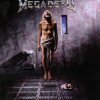
The fifth studio album, Countdown to Extinction, was released in 1992.
The record reached No. 2 on the Billboard 200 and remained Megadeth’s biggest commercial success in the United States until 2026. In the U.S., the album received multi-Platinum certification.
It included Skin o' My Teeth, Symphony of Destruction, Architecture of Aggression, Foreclosure of a Dream, Sweating Bullets, This Was My Life, Countdown to Extinction and Ashes in Your Mouth.
Compared with Rust in Peace, the song structures became more compact, while mid-tempo pacing and large choruses gained greater importance.
Symphony of Destruction became one of Megadeth’s most recognizable songs and demonstrated that the band’s character could remain intact even with a much simpler riff foundation.
Youthanasia
Youthanasia was released in 1994 and reached No. 4 on the Billboard 200.
On the album, tempos became generally more measured, while the production grew denser and heavier.
Among the main tracks are Reckoning Day, Train of Consequences, Addicted to Chaos, À Tout le Monde, Elysian Fields, The Killing Road, Blood of Heroes, Youthanasia and Victory.
À Tout le Monde stands out for its French-language chorus and melodic structure. In 2007, Megadeth recorded a new version of the song with Cristina Scabbia of Lacuna Coil.
Youthanasia received Platinum certification in the United States.
Cryptic Writings
The next album, Cryptic Writings, was released in 1997.
Dann Huff served as producer, while the sound continued moving toward more compact hard rock and melodic metal.
The record included Trust, Almost Honest, Use the Man, Mastermind, She-Wolf, A Secret Place and FFF.
Trust became one of the band’s biggest American rock-radio hits and received a Grammy nomination.
Cryptic Writings was the final studio album fully recorded by the classic Mustaine — Ellefson — Friedman — Menza lineup.
Risk and the end of the Marty Friedman era
In 1998, Nick Menza left Megadeth. He was replaced by Jimmy DeGrasso.
On August 31, 1999, the band released Risk — one of the most experimental albums in its discography.
Megadeth moved significantly away from thrash metal, incorporating alternative rock, electronic elements and more radio-oriented production.
The album featured Crush 'Em, Breadline, Insomnia, Prince of Darkness, Ecstasy and the two-part piece Time: The Beginning / Time: The End.
At the end of 1999, Marty Friedman announced his departure. His final performance with Megadeth took place in January 2000. Al Pitrelli became the new guitarist.
The World Needs a Hero
In 2001, Megadeth released The World Needs a Hero. After the experiments of Risk, the band brought more traditional heaviness and Mustaine’s characteristic rhythm guitar back into its music.
Key tracks include Disconnect, The World Needs a Hero, Moto Psycho, 1000 Times Goodbye, Dread and the Fugitive Mind, Return to Hangar and When.
Return to Hangar continued the storyline of Hangar 18.
Dave Mustaine’s injury and the breakup of the band
In early 2002, Mustaine suffered severe nerve damage in his left arm after falling asleep in an awkward position and compressing the limb for an extended period.
He temporarily lost the ability to play guitar properly, and in April the end of Megadeth’s activities was announced.
After extensive rehabilitation, Mustaine regained mobility in his arm and effectively had to relearn his guitar technique.
The System Has Failed
The comeback took place in 2004 with the album The System Has Failed.
The recording was built around Mustaine with the participation of guest musicians. Chris Poland returned to play solos on several tracks. Vinnie Colaiuta played drums, while Jimmie Lee Sloas handled bass.
The album reached No. 18 on the Billboard 200.
The main tracks include Blackmail the Universe, Die Dead Enough, Kick the Chair, The Scorpion, Tears in a Vial, Back in the Day and Of Mice and Men.
For the subsequent touring cycle, Mustaine once again assembled a permanent live lineup for Megadeth.
Gigantour
In 2005, Dave Mustaine organized his own touring metal festival, Gigantour.
The first tour featured Megadeth, Dream Theater, Fear Factory, Nevermore, The Dillinger Escape Plan, Symphony X, Life of Agony, Dry Kill Logic, Bobaflex, and Anthrax on part of the schedule.
The festival concept emphasized heavy bands with a high level of instrumental musicianship.
United Abominations
In 2007, Megadeth released United Abominations.
The lineup at the time included guitarist Glen Drover, bassist James LoMenzo and drummer Shawn Drover.
The main tracks included Sleepwalker, Washington Is Next!, Never Walk Alone... A Call to Arms, Gears of War, United Abominations and a new version of À Tout le Monde.
Endgame
By the time of the 2009 album Endgame, Chris Broderick had taken over as second guitarist.
The record brought fast riffs and technically complex guitar interplay back to the foreground.
It included Dialectic Chaos, This Day We Fight!, 44 Minutes, Head Crusher, Bodies, Endgame and The Right to Go Insane.
Head Crusher received a Grammy nomination in the Best Metal Performance category.
The return of David Ellefson
In February 2010, co-founder David Ellefson returned to Megadeth, replacing James LoMenzo.
This happened before the anniversary performances dedicated to Rust in Peace and the Big Four concerts.
TH1RT3EN
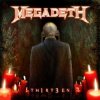
In 2011, the thirteenth studio album TH1RT3EN was released.
It featured Sudden Death, Public Enemy No. 1, Whose Life (Is It Anyways?), Never Dead, Guns, Drugs & Money and New World Order.
Some of the material had existed in earlier versions before work on the album began. Public Enemy No. 1 and Whose Life (Is It Anyways?) received Grammy nominations.
Super Collider
The album Super Collider was released in 2013 and reached No. 6 on the Billboard 200.
Musically, it leaned more heavily toward hard rock and melodic mid-tempo songs than traditional thrash.
The record included Kingmaker, Super Collider, Burn!, Dance in the Rain, Forget to Remember and a cover of Thin Lizzy’s Cold Sweat.
At the end of 2014, Chris Broderick and Shawn Drover left Megadeth.
Kiko Loureiro and Dystopia
In 2015, Brazilian musician Kiko Loureiro, known for his work with Angra, became the new guitarist.
For the recording of the next album, Megadeth was also joined by drummer Chris Adler of Lamb of God.
Dystopia was released in 2016. The album brought fast riffs, political themes and technical guitar work back to the center of the band’s sound.
It included The Threat Is Real, Dystopia, Fatal Illusion, Death from Within, Bullet to the Brain, Poisonous Shadows and the instrumental Conquer or Die!
First Grammy win
In 2017, the song Dystopia won in the category Best Metal Performance.
It became Megadeth’s first Grammy victory after many years of nominations.
In total, the Recording Academy lists the band with 13 nominations and one win.
Dirk Verbeuren
During the Dystopia tour, Dirk Verbeuren, formerly of Soilwork, took over on drums.
In 2016, he became a permanent member of Megadeth and remained in the lineup through the following studio and touring periods.
Dave Mustaine’s illness
In 2019, Dave Mustaine announced that he had been diagnosed with throat cancer.
Some touring plans were cancelled while he underwent treatment. Mustaine later announced that therapy had been completed successfully and returned to live performances.
Departure of David Ellefson
In May 2021, Megadeth announced the end of its collaboration with David Ellefson.
The bass parts that had already been recorded for the new album were replaced. Steve DiGiorgio, known for Testament and Death, was brought in for the studio work.
James LoMenzo returned for touring, and in 2022 he once again became a permanent member of the band.
The Sick, the Dying... and the Dead!
The sixteenth studio album, The Sick, the Dying... and the Dead!, was released in 2022.
The main recording lineup included Dave Mustaine, Kiko Loureiro and Dirk Verbeuren, while the bass parts were performed by Steve DiGiorgio.
The album included The Sick, the Dying... and the Dead!, Life in Hell, Night Stalkers, Dogs of Chernobyl, Soldier On!, Célebutante, Mission to Mars and We'll Be Back.
Rapper Ice-T appears on Night Stalkers.
We'll Be Back received a Grammy nomination in the Best Metal Performance category.
Marty Friedman returns to the stage
In February 2023, Megadeth performed at Tokyo’s Budokan, where Marty Friedman played with the band again for the first time in more than two decades.
Later that same year, he joined Megadeth at Wacken Open Air to perform several classic songs.
Friedman did not return to the permanent lineup; these appearances were special live reunions.
Teemu Mäntysaari
In the autumn of 2023, Kiko Loureiro temporarily stopped touring with Megadeth for family reasons. He suggested Finnish guitarist Teemu Mäntysaari, known for Wintersun and Smackbound, as his replacement.
Mäntysaari’s first performance with Megadeth took place in September 2023. Gradually, the temporary substitution became permanent, and Teemu became the band’s new guitarist.
Megadeth’s final studio album
On January 23, 2026, the band released its seventeenth studio album, titled Megadeth.
Back in August 2025, Dave Mustaine had announced that the record would become Megadeth’s final studio album and would be accompanied by a multi-year world farewell tour.
The standard version of the album includes:
- Tipping Point;
- I Don't Care;
- Hey, God?!;
- Let There Be Shred;
- Puppet Parade;
- Another Bad Day;
- Made to Kill;
- Obey the Call;
- I Am War;
- The Last Note.
As a bonus track, the band recorded its own version of Ride the Lightning.
Mustaine contributed to the creation of the original Metallica composition together with James Hetfield, Lars Ulrich and Cliff Burton. He explained the inclusion of the song on Megadeth’s final album as a tribute to the period in which his professional career began.
The album was recorded by the lineup of Dave Mustaine, Teemu Mäntysaari, James LoMenzo and Dirk Verbeuren.
No. 1 on the Billboard 200
In February 2026, the self-titled Megadeth debuted at No. 1 on the Billboard 200.
It became the first album in the band’s history to top the main U.S. albums chart. Previously, the band’s best result had been No. 2 with Countdown to Extinction in 1992.
In its first week, the new release earned 73,000 equivalent album units in the United States, including 69,000 album sales.
The record also became Megadeth’s first album to reach No. 1 on Australia’s national chart.
Megadeth farewell tour
The release of the final studio album does not mean an immediate end to the band’s live activity.
Megadeth embarked on a multi-year world farewell tour. During 2026, the band is performing in North and Latin America, Europe, Australia and other regions, and is also taking part in the North American leg of Iron Maiden’s Run for Your Lives tour.
A European leg titled Breakout: Hibernation of the Nations has been announced for 2027. The 24-show run begins on March 9 in Belfast and concludes in April in Lisbon. Black Label Society and Testament are also scheduled to appear on the tour with Megadeth.
Thus, 2026 brought Megadeth’s studio discography to a close, but not the history of the band as a live act.
Megadeth lineup
Over four decades, a large number of musicians have passed through the band. Dave Mustaine remains the only permanent member throughout its entire history.
Lineup of the final studio era:
- Dave Mustaine — vocals, lead, rhythm and acoustic guitar;
- Teemu Mäntysaari — lead, rhythm and acoustic guitar;
- James LoMenzo — bass guitar;
- Dirk Verbeuren — drums.
Among the most important former members are David Ellefson, Marty Friedman, Nick Menza, Chris Poland, Gar Samuelson, Kiko Loureiro, Chris Broderick, Shawn Drover, Al Pitrelli and Jimmy DeGrasso.
Why Megadeth’s lineup changed so often
Personnel instability accompanied the band throughout almost its entire career. The reasons included addictions, personal and creative conflicts, health problems, family circumstances and the desire of individual musicians to pursue their own projects.
At the same time, different lineups had a noticeable impact on Megadeth’s sound.
Chris Poland and Gar Samuelson brought elements of jazz and fusion into the early material. Marty Friedman shaped the distinctive melodic guitar side of the classic era. Nick Menza provided a flexible and technically rich rhythmic foundation. Kiko Loureiro added a modern virtuoso approach, while Teemu Mäntysaari became part of the final studio phase.
Megadeth’s musical style
The foundation of the band’s music remains thrash metal, but Megadeth developed its own distinctive form of the genre.
Dave Mustaine’s rhythm guitar is especially important. His parts are often built on chromatic sequences, rapid transitions between riffs, syncopation and unconventional accents.
A second defining characteristic is the interaction between two guitarists. Megadeth’s strongest lineups were not built around copying Mustaine’s style, but on the contrast between two different players.
Chris Poland used a more jazz-oriented and improvisational vocabulary, Marty Friedman favored unusual melodic ideas and characteristic exotic intervals, while Kiko Loureiro brought a modern technical approach.
Bass guitar has also traditionally played an important role. On the early albums, it occupies a prominent place in the mix, while the opening of Peace Sells became one of the most recognizable bass passages in thrash metal.
Mustaine’s vocal style also differs from traditional heavy metal. His sharp, sarcastic and at times almost spoken delivery matches the sardonic character of many of the lyrics.
Political and social themes
From its earliest albums, Megadeth regularly addressed real-world issues.
Peace Sells deals with social and political systems; Set the World Afire with the threat of nuclear destruction; Holy Wars... The Punishment Due with war, religious conflict and fanaticism; Foreclosure of a Dream with economic instability; and Symphony of Destruction with power and manipulation of society.
Later albums maintained an interest in war, political institutions, technology and social contradictions.
At the same time, Mustaine’s lyrics are often built around sarcasm, provocation and figurative exaggeration rather than an attempt to provide neutral political analysis.
Megadeth studio discography
- Killing Is My Business... and Business Is Good! — 1985;
- Peace Sells... But Who's Buying? — 1986;
- So Far, So Good... So What! — 1988;
- Rust in Peace — 1990;
- Countdown to Extinction — 1992;
- Youthanasia — 1994;
- Cryptic Writings — 1997;
- Risk — 1999;
- The World Needs a Hero — 2001;
- The System Has Failed — 2004;
- United Abominations — 2007;
- Endgame — 2009;
- TH1RT3EN — 2011;
- Super Collider — 2013;
- Dystopia — 2016;
- The Sick, the Dying... and the Dead! — 2022;
- Megadeth — 2026.
Key albums
Peace Sells... But Who's Buying? fully established the band’s early musical language and brought Megadeth to the international level.
Rust in Peace became the most concentrated expression of the band’s technical side and one of the landmark albums of thrash metal.
Countdown to Extinction demonstrated that Megadeth’s complex guitar music could be adapted to a more compact form without abandoning its own identity.
Dystopia marked a successful return to a technical thrash-oriented sound and brought the band its first Grammy.
The self-titled Megadeth holds a special place as the band’s final studio album and its first release to top the Billboard 200.
Grammys and commercial achievements
The Recording Academy lists Megadeth with 13 Grammy nominations and one win.
The band’s only victory came at the 2017 ceremony, when Dystopia won Best Metal Performance.
The most recent nomination to date was We'll Be Back in the Best Metal Performance category at the 2023 Grammys.
Official Megadeth materials cite worldwide sales of around 50 million records.
The band’s first five studio albums released through Capitol Records — from Peace Sells... But Who's Buying? through Youthanasia — received Platinum or multi-Platinum certification in the United States.
Megadeth and Metallica
The connection between Megadeth and Metallica remains an important part of both bands’ histories, because Dave Mustaine’s dismissal from Metallica was the direct circumstance that preceded the formation of Megadeth.
However, by the end of the 1980s Megadeth had already developed an independent musical language. Peace Sells... But Who's Buying? and especially Rust in Peace shaped a form of thrash metal more strongly focused on complex rhythm guitar, technical interaction between two guitarists and Mustaine’s distinctive vocal style.
In 2010–2011, the Big Four concerts brought the former bandmates back onto the same stage. Many years later, Megadeth’s final album symbolically returned to the beginning of Mustaine’s career through a new version of Ride the Lightning.
Megadeth’s significance
Megadeth became one of the bands that defined the technical side of thrash metal. While speed was characteristic of the genre as a whole, Mustaine made complex rhythm guitar one of the central elements of composition and turned the interaction of two guitarists into a permanent part of the band’s musical language.
Rust in Peace had a noticeable influence on technical thrash and progressive metal, while Countdown to Extinction demonstrated that complex heavy music could be combined with the mainstream album market.
Megadeth’s longevity is also connected with its ability to survive radical lineup changes. From Chris Poland and Marty Friedman to Kiko Loureiro and Teemu Mäntysaari, each lead guitarist brought an individual style without disrupting the core system built by Mustaine.
Over more than forty years, Megadeth evolved from an underground Los Angeles thrash metal band into one of the most recognizable acts in heavy music. Seventeen studio albums, a Grammy, tens of millions of records sold, membership in the “Big Four” and decades of influence on guitarists across generations made its significance far broader than the original story of Dave Mustaine’s conflict with Metallica.