

 Ария
Ария
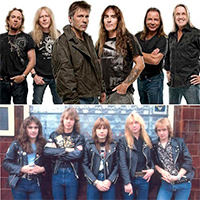
Iron Maiden are a British heavy metal band founded by bassist and songwriter Steve Harris in East London in late 1975. One of the defining bands of the New Wave of British Heavy Metal (NWOBHM), Iron Maiden have released 17 studio albums over five decades, sold more than 100 million records and played almost 2,500 concerts in more than 60 countries.
The band developed a highly recognizable musical language: fast harmonized guitars, Steve Harris’s distinctive «galloping» bass, long compositions with changing dynamics, Bruce Dickinson’s high-register vocals and lyrics drawing on history, literature, war, mythology and science fiction. Among Iron Maiden’s best-known songs are «The Number of the Beast», «Run to the Hills», «Hallowed Be Thy Name», «The Trooper», «Aces High», «2 Minutes to Midnight», «Wasted Years», «Fear of the Dark» and «The Wicker Man».
Steve Harris and the formation of Iron Maiden
Iron Maiden founder Steve Harris was born on March 12, 1956, in Leyton, East London. As a young man he was deeply interested in football and for a time considered a sporting career, but music gradually became his main passion.
Harris taught himself to play bass and performed with several local bands, including Gypsy's Kiss and Smiler. Even at that stage he was writing original compositions that were more complex than standard pub-rock material, using extended instrumental passages, tempo changes and harmonized guitar parts.
In late 1975, Harris left Smiler and formed his own band, naming it Iron Maiden. The name is associated with the image of the medieval torture device known as the «iron maiden», although it later came to be understood primarily as the independent name of the band itself.
The first years were marked by constant lineup changes. Several singers, guitarists and drummers passed through Iron Maiden before the core of the early band took shape.
London underground
In the second half of the 1970s, the British music scene was heavily influenced by punk. Iron Maiden, however, consciously avoided becoming a punk band. Steve Harris drew on 1970s heavy rock, progressive rock and melodic guitar bands while absorbing the energy of the new club scene.
The band performed in pubs and small clubs around East London, gradually building its own audience. One of the most important venues was the Ruskin Arms in Manor Park.
By the end of the decade, bassist Steve Harris and guitarist Dave Murray had become permanent figures in the band. Murray first joined Iron Maiden in 1976 and later became one of the longest-serving members in its history.
Paul Di’Anno
In 1978, Paul Di’Anno became Iron Maiden’s vocalist. His rough, streetwise style differed from the classic high-register singing of many hard-rock bands of the era and suited Maiden’s early, more aggressive material.
With Di’Anno, the group recorded its first two studio albums and firmly established its reputation as one of the leading bands of Britain’s new heavy metal movement.
Paul Di’Anno died on October 21, 2024, at the age of 66. In an official statement, Iron Maiden specifically acknowledged his contribution to the band’s early years.
The Soundhouse Tapes
In late 1978, Iron Maiden recorded a demo at Spaceward Studios in Cambridge. It contained «Prowler», «Invasion», «Iron Maiden» and «Strange World».
A copy reached DJ Neal Kay, who played heavy music at London’s Bandwagon Soundhouse club. «Prowler» quickly rose to the top of his club chart, greatly increasing interest in the band.
In November 1979, Iron Maiden independently released the EP The Soundhouse Tapes. Five thousand copies were pressed. The release included «Iron Maiden», «Invasion» and «Prowler» and is now regarded as one of the key documents of early NWOBHM history.
EMI contract
By the end of 1979, the band had attracted the attention of manager Rod Smallwood, who would become one of the most important figures in Iron Maiden’s entire career.
In December 1979, the band signed with EMI. The lineup for the debut album consisted of Paul Di’Anno, Steve Harris, Dave Murray, guitarist Dennis Stratton and drummer Clive Burr.
Iron Maiden
The debut album Iron Maiden was released on April 14, 1980, and reached number four on the UK Albums Chart.
The record includes «Prowler», «Remember Tomorrow», «Running Free», «Transylvania», «Phantom of the Opera» and the title track «Iron Maiden».
«Phantom of the Opera» became especially important for the band’s future development. Its extended multi-section structure and tempo changes showed that Iron Maiden had no intention of limiting themselves to short-form NWOBHM material and were already capable of building complex epic compositions.
Eddie
The character Eddie has been associated with the band since its early concerts. At first, a simple mask was used onstage, but before the release of the first records, manager Rod Smallwood came across the work of artist Derek Riggs.
Riggs’s gaunt, long-haired monster became the visual embodiment of Eddie. The character appeared on the cover of the debut album and in different forms went on to accompany almost the entire history of Iron Maiden.
On Killers, Eddie became an axe-wielding killer; on Powerslave, an Egyptian pharaoh; on Somewhere in Time, a cyborg; on Seventh Son of a Seventh Son, a surreal figure. Later his appearance continued changing according to each album or tour concept.
Eddie became not only the band’s mascot but also part of its stage shows, video games, comics, merchandise and overall visual identity.
Killers and the arrival of Adrian Smith
After the debut album, Dennis Stratton left the band. He was replaced by Dave Murray’s longtime friend, guitarist Adrian Smith.
The second album, Killers, was released in 1981. It was produced by Martin Birch, who had previously worked with Deep Purple, Rainbow and Black Sabbath. He would remain Iron Maiden’s principal studio partner throughout their classic 1980s period.
The album included «Wrathchild», «Murders in the Rue Morgue», «Killers», «Purgatory» and other tracks. Iron Maiden began touring extensively outside the United Kingdom, including their first trips to Japan and North America.
Paul Di’Anno leaves
Despite the success of the first two albums, by the end of the Killers tour it had become clear that the band needed a vocalist capable of handling an increasingly demanding touring schedule and more complex new material.
In 1981, Paul Di’Anno left Iron Maiden. He was replaced by Samson vocalist Bruce Dickinson.
Bruce Dickinson
Bruce Dickinson was born on August 7, 1958. Before joining Iron Maiden, he had gained recognition as the singer of Samson, where he performed under the stage name Bruce Bruce.
Dickinson’s powerful tenor significantly expanded the band’s possibilities. He could handle both fast heavy material and lengthy epic compositions requiring a wide vocal range.
The Number of the Beast
Iron Maiden’s first album with Bruce Dickinson was The Number of the Beast, released in 1982.
The record topped the UK Albums Chart and brought the band to a new international level. It includes «The Number of the Beast», «Run to the Hills», «Children of the Damned», «22 Acacia Avenue» and «Hallowed Be Thy Name».
The title and artwork prompted protests from some religious organizations in the United States, although Iron Maiden have never been a Satanist band. «The Number of the Beast» uses the imagery of a nightmare and references to literature and film rather than religious propaganda.
Clive Burr and Nicko McBrain
Drummer Clive Burr played on Iron Maiden’s first three albums: Iron Maiden, Killers and The Number of the Beast.
At the end of 1982 he was replaced by Nicko McBrain. The new drummer was already familiar to the band through touring and officially joined before the recording of the next album.
McBrain quickly became one of the defining elements of Iron Maiden’s classic sound. His technical style and ability to perform extremely fast parts with a single bass drum distinguished him from many other metal drummers of the era.
Piece of Mind
Piece of Mind was released in 1983 and became the first album with Nicko McBrain.
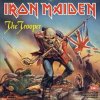
The record includes «Where Eagles Dare», «Flight of Icarus», «The Trooper», «Revelations» and «To Tame a Land».
Historical and literary themes became especially prominent here. «The Trooper» refers to the Charge of the Light Brigade during the Crimean War, while «To Tame a Land» was inspired by Frank Herbert’s novel Dune.
Powerslave
In 1984, Iron Maiden released Powerslave.
The album opens with two classics, «Aces High» and «2 Minutes to Midnight». The title track uses Ancient Egyptian imagery, while the closing «Rime of the Ancient Mariner» is based on Samuel Taylor Coleridge’s poem of the same name.
The extended «Rime of the Ancient Mariner» became one of Steve Harris’s most characteristic works: complex structure, instrumental transitions and a literary narrative are combined into a form of metal epic.
World Slavery Tour
The tour in support of Powerslave was called the World Slavery Tour and ran through 1984–1985. Iron Maiden played around 190 concerts, visiting Europe, North America, Japan, Australia, South America and countries of the Eastern Bloc.
In January 1985, the band performed at the inaugural Rock in Rio festival in Brazil.
Shows at London’s Hammersmith Odeon and the Long Beach Arena in California formed the basis of the celebrated live album and concert film Live After Death, released in 1985.
Somewhere in Time
After the exhausting World Slavery Tour, the band took a break and returned in 1986 with Somewhere in Time.
Iron Maiden made extensive use of guitar synthesizers for the first time, giving the music a futuristic character while retaining the band’s recognizable guitar foundation.
The album includes «Wasted Years», «Caught Somewhere in Time», «Sea of Madness», «Heaven Can Wait», «Stranger in a Strange Land» and «Alexander the Great».
«Wasted Years», written by Adrian Smith, became one of the band’s most famous songs not composed by Steve Harris.
Seventh Son of a Seventh Son
In 1988, Iron Maiden released Seventh Son of a Seventh Son, a conceptual album unified by themes of prophecy, mysticism and fate.
The album contains «Moonchild», «Can I Play with Madness», «The Evil That Men Do», «Infinite Dreams», «The Clairvoyant» and the title track.
Synthesizers had now become a full part of the arrangements, while still being combined with Maiden’s traditional guitar harmonies and rhythmic approach.
In 1988, Iron Maiden also headlined Monsters of Rock at Donington, performing before an audience of around 107,000.
Adrian Smith leaves
After the end of the 1980s, the musical views of the members began to diverge. Before recording the next album, Adrian Smith left Iron Maiden.
He was replaced by Janick Gers, who had previously worked with Ian Gillan and had played on Bruce Dickinson’s first solo album, Tattooed Millionaire.
No Prayer for the Dying
No Prayer for the Dying was released in 1990. After the elaborate arrangements of Somewhere in Time and Seventh Son of a Seventh Son, the band deliberately returned to a more direct and raw sound.
The album includes «Holy Smoke», «Tailgunner» and «Bring Your Daughter... to the Slaughter». The latter became Iron Maiden’s first and, so far, only single to reach number one in the UK.
Fear of the Dark
In 1992, Iron Maiden released Fear of the Dark.
In addition to the title track, the album includes «Be Quick or Be Dead», «From Here to Eternity», «Afraid to Shoot Strangers» and «Wasting Love».
«Fear of the Dark» eventually became one of the central numbers in Iron Maiden’s live shows. Audiences traditionally sing the main guitar melody together with the band before the vocals even begin.
Bruce Dickinson leaves
In 1993, Bruce Dickinson announced his departure from Iron Maiden in order to concentrate on his solo career.
The final concerts of his first period with the band were presented as the television production Raising Hell.
Blaze Bayley
After auditions, Blaze Bayley, formerly the frontman of Wolfsbane, became the new vocalist.
His lower, darker voice significantly changed Iron Maiden’s character. Two studio albums were recorded with Bayley: The X Factor and Virtual XI.
The X Factor
The X Factor was released in 1995. It is one of the darkest albums in the band’s catalog.
The centerpiece is «Sign of the Cross», which runs for more than eleven minutes. The album also includes «Man on the Edge», «Lord of the Flies» and «The Edge of Darkness».
The mood and subject matter of the material reflected, to a significant extent, a difficult period in Steve Harris’s life involving family changes and the death of his father.
Virtual XI
In 1998, Iron Maiden released Virtual XI. Its songs include «Futureal», «Lightning Strikes Twice», «The Clansman» and «The Angel and the Gambler».
Both albums with Blaze Bayley received a more modest commercial response than the classic releases of the 1980s. After the 1998 tour, the collaboration with the vocalist ended.
The return of Bruce Dickinson and Adrian Smith
In 1999, both Bruce Dickinson and Adrian Smith returned to Iron Maiden.
Janick Gers remained in the band. For the first time, Iron Maiden had a permanent three-guitar lineup: Dave Murray, Adrian Smith and Janick Gers.
This created the lineup that would remain unchanged for more than two decades:
- Bruce Dickinson — vocals;
- Steve Harris — bass guitar, keyboards, principal songwriter;
- Dave Murray — guitar;
- Adrian Smith — guitar, vocals;
- Janick Gers — guitar;
- Nicko McBrain — drums.
Brave New World
The reunited lineup released Brave New World in 2000.
The album includes «The Wicker Man», «Ghost of the Navigator», the title track «Brave New World», «Blood Brothers», «Dream of Mirrors» and «The Thin Line Between Love and Hate».
The three-guitar setup expanded the band’s arranging possibilities. In addition to traditional twin-guitar harmonies, Iron Maiden could now use rhythm guitar alongside two independent melodic parts.
The tour concluded with a major performance at Rock in Rio in January 2001, later released as a live album and video.
Dance of Death
Dance of Death was released in 2003.
The album includes «Wildest Dreams», «Rainmaker», «No More Lies», the title track «Dance of Death» and «Paschendale», an expansive composition about the Battle of Passchendaele during the First World War.
A Matter of Life and Death
In 2006, Iron Maiden released A Matter of Life and Death.
Military history, religion, violence and the value of human life became central themes. The album includes «Different World», «These Colours Don't Run», «Brighter Than a Thousand Suns», «The Longest Day» and «For the Greater Good of God».
During the first leg of the tour, the band made an unusual decision for an act of its scale: the new album was performed in full, from the first track to the last.
Ed Force One
By the end of the 2000s, Iron Maiden’s touring activity had gained another recognizable symbol: the aircraft Ed Force One.
In addition to his music career, Bruce Dickinson is a professional pilot. During the Somewhere Back in Time World Tour in 2008, a specially configured Boeing 757 carried the band, crew and equipment between continents, with Dickinson himself serving as pilot.
The first leg covered around 50,000 miles and 23 concerts on five continents in 45 days. The journey became the basis for the documentary film Iron Maiden: Flight 666.
Later, during The Book of Souls tour, the group used a Boeing 747-400.
The Final Frontier
Iron Maiden’s fifteenth studio album, The Final Frontier, was released in 2010.
It reached number one in the charts of dozens of countries. The album includes «Satellite 15... The Final Frontier», «El Dorado», «Coming Home», «The Talisman» and «When the Wild Wind Blows».
In February 2011, «El Dorado» earned Iron Maiden their first Grammy, in the Best Metal Performance category.
Bruce Dickinson’s illness
At the end of 2014, Bruce Dickinson was diagnosed with a tumor at the back of his tongue. The singer underwent chemotherapy and radiation therapy.
In May 2015, doctors officially confirmed that he was free of cancer. Touring activity was postponed until he had fully recovered.
The Book of Souls
The Book of Souls was released on September 4, 2015. The material had been recorded before Dickinson’s treatment, but the band postponed the release so the singer could recover.
The album runs for around 92 minutes, making it Iron Maiden’s first double studio album.
Its tracks include «If Eternity Should Fail», «Speed of Light», «The Red and the Black», the title track «The Book of Souls» and «Empire of the Clouds». The latter runs for more than 18 minutes and remains the longest studio song in the band’s catalog.
Legacy of the Beast
In 2018, Iron Maiden launched the Legacy of the Beast World Tour. Its concept was linked to the Iron Maiden video game of the same name and allowed the band to build the show around different historical and visual periods of its career.
The production included elaborate sets, a Spitfire aircraft suspended above the stage, multiple versions of Eddie and themed sections devoted to war, religion and hell.
The COVID-19 pandemic interrupted the tour, but when concerts resumed the set was expanded with new material.
Senjutsu
On September 3, 2021, Iron Maiden released their seventeenth studio album, Senjutsu. It was the band’s first new album in six years.
It includes «Senjutsu», «Stratego», «The Writing on the Wall», «Days of Future Past», «Darkest Hour», «Death of the Celts», «The Parchment» and «Hell on Earth».
The album continued Iron Maiden’s later tendency toward lengthy compositions: six of its ten tracks exceed seven minutes, while the final three together run for almost 35 minutes.
Senjutsu reached number one in the charts of 27 countries.
The Future Past Tour
In 2023, Iron Maiden launched The Future Past Tour. The set combined material from Senjutsu with songs from the 1986 album Somewhere in Time.
This brought «Caught Somewhere in Time», «Stranger in a Strange Land» and «Heaven Can Wait» back into the live repertoire, while «Alexander the Great» was performed onstage for the first time in the band’s history.
The tour continued into 2024 and ended after 81 concerts attended by more than 1.4 million people.
Nicko McBrain ends his touring career
In 2023, Nicko McBrain suffered serious health problems affecting movement on the right side of his body. After rehabilitation, he was able to return to the drum kit and take part in both legs of The Future Past Tour.
On December 7, 2024, following a concert in São Paulo, McBrain ended his touring career with Iron Maiden. He had spent 42 years behind the band’s drum kit.
He did not announce a complete break with the band and remained part of the Iron Maiden family, contributing to projects outside permanent world touring.
Simon Dawson
For live performances, the new drummer became Simon Dawson, a longtime member of Steve Harris’s other project, British Lion.
Dawson has worked with Harris since 2012 and took part in both studio and touring activities with British Lion. In December 2024, Iron Maiden officially announced that he would take over the drum seat for the 2025 tour.
Iron Maiden’s 50th anniversary
In 2025, Iron Maiden marked 50 years since the band’s formation. The central event of the anniversary celebrations was the Run For Your Lives World Tour.
The program was deliberately limited to the first period of the band’s history and built around material from nine studio albums, from Iron Maiden in 1980 through Fear of the Dark in 1992.
The concerts featured «Murders in the Rue Morgue», «Killers», «The Number of the Beast», «Hallowed Be Thy Name», «The Trooper», «Aces High», «2 Minutes to Midnight», «Powerslave», «Wasted Years», «The Clairvoyant», «Fear of the Dark» and other songs from the early era.
Iron Maiden in 2026
The anniversary Run For Your Lives World Tour continued in 2026. After the European shows, the band began a North American leg, followed by performances in Latin America, Australia, New Zealand and Japan.
The final concerts of the two-year tour are scheduled for November 24 and 25, 2026, in Yokohama. After that, Iron Maiden intend to take a break from touring in 2027.
The 2026 touring lineup is:
- Bruce Dickinson — vocals;
- Steve Harris — bass guitar, backing vocals;
- Dave Murray — guitar;
- Adrian Smith — guitar, backing vocals;
- Janick Gers — guitar;
- Simon Dawson — touring drums.
After ending regular touring, Nicko McBrain continues to remain connected with Iron Maiden outside the live lineup.
Burning Ambition
In May 2026, the official feature-length documentary Iron Maiden: Burning Ambition, devoted to the band’s fifty-year history, was released in cinemas.
The film uses archival footage and interviews with Iron Maiden members from different periods. Musicians and prominent fans, including Lars Ulrich and other figures from rock culture, also discuss the band’s influence.
Partnership with Pophouse
In July 2026, Iron Maiden announced a strategic partnership with Swedish company Pophouse. The collaboration concerns the further development of the band’s catalog, visual legacy and projects built around Iron Maiden and Eddie.
Among the areas being developed are archival projects and the museum concept Infinite Dreams, dedicated to the history of the band.
Musical style
Iron Maiden’s classic sound was formed at the intersection of 1970s British heavy rock and NWOBHM. The band rarely relied on a blues foundation to the same degree as many earlier hard-rock groups, instead favoring fast diatonic melodies and harmonized twin-guitar lines.
One of the defining features remains Steve Harris’s bass playing. His parts often move to the foreground and use the characteristic rapid triplet-based pattern widely known among listeners as the «gallop».
The guitars of Dave Murray and Adrian Smith established Maiden’s classic twin-harmony system. When Smith returned in 1999, Janick Gers remained in the lineup, and the band adopted an unusual permanent configuration of three lead guitarists.
Bruce Dickinson brought a high dramatic tenor and theatrical performance style. At the same time, Iron Maiden’s music is rarely built around displays of vocal or instrumental technique for their own sake: the individual elements generally serve the development of the song and its narrative.
Epic compositions
Long-form songs became one of Iron Maiden’s defining characteristics as early as the late 1970s. «Phantom of the Opera» established this direction on the debut album, followed by «Hallowed Be Thy Name», «Rime of the Ancient Mariner», «Seventh Son of a Seventh Son», «Sign of the Cross», «The Clansman», «When the Wild Wind Blows», «The Red and the Black», «Empire of the Clouds» and «Hell on Earth».
Such tracks may contain multiple introductions, instrumental sections, tempo changes and recurring musical themes. Their structure is often closer to a short narrative than to a standard verse-chorus song.
History and literature in the songs
Steve Harris and Iron Maiden’s other songwriters have consistently drawn on historical events and literature.
«The Trooper» is connected with the Crimean War; «Aces High» with the aerial Battle of Britain; «Alexander the Great» tells the story of Alexander the Great; «Paschendale» deals with the First World War; and «The Longest Day» concerns the Allied landings in Normandy.
The literary strand includes «Rime of the Ancient Mariner» after Coleridge, «To Tame a Land» inspired by Frank Herbert’s Dune, and numerous works influenced by historical novels, mythology, cinema and science fiction.
Concert shows
Iron Maiden turned the concert itself into an independent part of their art at an early stage. Eddie appears onstage in different sizes and forms, sets change to match a particular album or historical period, and the productions use moving scenery, pyrotechnics and large mechanical constructions.
At the same time, the band preserves the essential principle of live performance: the music is played by a full concert lineup rather than turning the show into a production in which visual effects replace the musicians’ playing.
One of the most recognizable concert elements remains Bruce Dickinson’s traditional command «Scream for me!», addressed to a specific city or country.
An independent career model
Iron Maiden achieved enormous international success while remaining comparatively independent of hit radio and music television. For decades, their career has been built around albums, touring and an exceptionally loyal global audience.
Manager Rod Smallwood and the infrastructure developed around the band played an important role in this. Iron Maiden treated touring, merchandising, the fan club, visual branding and later digital projects as interconnected parts of one system.
Awards and achievements
- more than 100 million records sold;
- 17 studio albums;
- almost 2,500 concerts in more than 60 countries;
- Grammy for «El Dorado» — Best Metal Performance, 2011;
- BRIT Award — British Live Act, 2009;
- multiple number-one albums in the United Kingdom and dozens of other countries;
- a dedicated series of Royal Mail commemorative stamps issued in 2023.
Studio discography
- Iron Maiden — 1980
- Killers — 1981
- The Number of the Beast — 1982
- Piece of Mind — 1983
- Powerslave — 1984
- Somewhere in Time — 1986
- Seventh Son of a Seventh Son — 1988
- No Prayer for the Dying — 1990
- Fear of the Dark — 1992
- The X Factor — 1995
- Virtual XI — 1998
- Brave New World — 2000
- Dance of Death — 2003
- A Matter of Life and Death — 2006
- The Final Frontier — 2010
- The Book of Souls — 2015
- Senjutsu — 2021
Key members through the years
- Steve Harris — founder, bass guitar, principal songwriter, 1975–present;
- Dave Murray — guitar, since 1976 with a brief early interruption;
- Paul Di’Anno — vocals, 1978–1981;
- Dennis Stratton — guitar, 1979–1980;
- Clive Burr — drums, 1979–1982;
- Adrian Smith — guitar, 1980–1990; since 1999;
- Bruce Dickinson — vocals, 1981–1993; since 1999;
- Nicko McBrain — drums, 1982–2024; after 2024 remains connected with the band outside regular touring;
- Janick Gers — guitar, since 1990;
- Blaze Bayley — vocals, 1994–1999;
- Simon Dawson — touring drums since 2025.
Iron Maiden after 50 years
Iron Maiden progressed from the pubs of East London and the independently released The Soundhouse Tapes to stadiums across multiple continents without abandoning heavy music, long-form compositions or their own visual universe. Changes in musical fashion had little effect on the band’s direction: rather than adapting to each new era, Maiden spent decades developing the same foundation — melodic heavy metal, historical and literary themes, intricate guitar parts and large-scale concerts.
In 2026, that story continues without Nicko McBrain in the touring lineup, but with Steve Harris, Bruce Dickinson, Dave Murray, Adrian Smith and Janick Gers still onstage. The anniversary Run For Your Lives deliberately returns to material from 1980–1992, the period in which the songs, sound and visual identity of Iron Maiden took shape and went on to influence several generations of heavy metal.