 Анастасия Букина

«Lyapis Trubetskoy» is a Belarusian rock band founded by Sergey Mikhalok in Minsk. The group emerged in 1989–1990 and radically changed its sound several times over the course of its history: from ironic pop rock, urban song and ska to punk rock, alternative rock and harder material built around social and political satire. Among its best-known songs are «Ау», «Ты кинула», «В платье белом», «Евпатория», «Яблони», «Сочи», «Капитал», «Харэ», «Манифест», «Я верю», «Грай», «Рабкор» and «Воины света».
The central figure throughout the history of «Lyapis Trubetskoy» has been vocalist and principal songwriter Sergey Mikhalok. Another long-standing member was guitarist Ruslan Vladyko, who played with the band from its formation until the breakup in 2014. After an eight-year hiatus, Mikhalok revived «Lyapis Trubetskoy» in 2022 with a different lineup. The project resumed touring and, as of 2026, continues its concert activity.
Formation of the band
The history of «Lyapis Trubetskoy» began in Minsk. According to the band’s archival biography, in February 1990 Sergey Mikhalok decided to assemble his own group. The first lineup included bassist Dmitry Sviridovich, drummer Alexey Lyubavin, guitarist Ruslan Vladyko and other musicians. Some reference sources list 1989 as the founding year, although the formation of the first stable lineup and the beginning of rehearsals belong to early 1990.
The name was borrowed from the novel «The Twelve Chairs» by Ilya Ilf and Yevgeny Petrov. Nikifor Lyapis-Trubetskoy is a minor character in the book, an unsuccessful poet who sells essentially the same text to different editorial offices while changing only a few details.
During its first years, the band existed irregularly: concerts were infrequent, the lineup changed and rehearsals took place only occasionally. Even then, Sergey Mikhalok had already written early versions of «Кинула», «Ау», «Буфетчица Ася» and material that later developed into «Золотые яйцы». Active concert work began around 1994.
First recordings and «Ранетое сердце»
In late 1994 and early 1995, «Lyapis Trubetskoy» held one of its first studio sessions. Among the songs recorded at the time were «Ау» and «Эстрадная».
In 1995, a limited-edition live cassette titled «Любови капец! Live '95» appeared, recorded during a performance at Minsk’s Alternative Theatre. The band’s full-length studio debut was «Ранетое сердце», released in the summer of 1996. The album gained considerable popularity in Belarus, and that same year the group performed successfully at the Belarusian Rock Coronation awards.
During this period, the sound of «Lyapis Trubetskoy» combined rock, popular song, ska, folk and deliberately exaggerated courtyard romance. Sergey Mikhalok built his lyrics around grotesque love stories and everyday characters, while the band’s stage image relied heavily on self-irony.
«Ты кинула» and popularity in the late 1990s
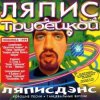
The band’s real breakthrough beyond Belarus came with the album «Ты кинула». It was released by the company «Soyuz» in January 1998, rather than in 1997 as is often stated in shorter biographies. Many songs from the early period were re-recorded for the album.
The major hits were «Ау», «Ты кинула», «В платье белом» and «Евпатория». Their videos received heavy rotation on Russian music television, and the band began giving larger concerts and touring across the former Soviet Union.
In 1999, the album «Красота» was released. Its best-known song became «Яблони». It was followed by «Тяжкий» in 2000 and «Юность» in 2001. By this point, «Lyapis Trubetskoy» was no longer dependent on the success of a single album: the group had developed its own audience and a large concert repertoire.
«Тяжкий», «Юность» and the search for a new sound
Around the turn of the 1990s and 2000s, the group gradually began moving away from the formula of «Ау» and «Ты кинула». «Тяжкий» sounded rougher than the early recordings, while «Юность» continued genre experiments with rock, pop punk and ska.
This period produced songs such as «Спорт прошёл», «Дружбан», «Сочи», «Голуби», «Юность» and other compositions that differed noticeably in mood and arrangement from the debut-era discography.
In 2004, the album «Золотые яйцы» appeared. The satirical foundation remained, but musically the group was becoming heavier. During the second half of the 2000s, these changes would lead to what was effectively a new version of «Lyapis Trubetskoy».
«Капитал» — the turning-point album
The main stylistic shift occurred not in 2010, but earlier, with the album «Капитал», released in the spring of 2007.
Punk rock, ska punk, heavy guitar riffs and political satire moved to the foreground. Songs from this period include «Капитал», «Харэ», «Андрюша», «Гойко Митич», «Золотая антилопа» and «Товарищ». «Капитал» is generally regarded as the beginning of the band’s openly social period.
The animated video for the title track, directed by Alexey Terekhov, became particularly famous. Sergey Mikhalok was depicted as a multi-armed deity with a piggy bank in place of a heart. The video received several professional awards, including RAMP in the «Video of the Year» category.
The success of «Капитал» effectively relaunched the band’s career. The music became faster and more aggressive, much of the earlier variety-pop manner disappeared, and Sergey Mikhalok also changed his stage image significantly.
Manifest and «Культпросвет»
The next stage was the album Manifest, released on September 25, 2008. It included «Манифест», «Рок-пупсы», «Галактика», «Жлоб», «12 обезьян», «Belarus Freedom», «Зорачкі» and other songs. It was among the first albums in the group’s discography to be officially made available online for free distribution.
In 2009, «Культпросвет» followed — an even harder record featuring «Буревестник», «Анархо-турист», «Пульс эпохи», «Нигилист», «Свежий ветер» and other compositions.
«Капитал», Manifest and «Культпросвет» are usually treated as an informal trilogy known as «Agitpop». Importantly, the album Agitpop, released in Germany in 2010, is not a separate numbered studio album by the band: it is a compilation of material from those three records, intended primarily for the European market.
«Весёлые картинки»: «Я верю» and «Грай»
In March 2011, the album «Весёлые картинки» was released. The songs «Я верю» and «Грай» belong to this album, despite often being incorrectly attributed to Agitpop. The record also included «Зевс», «Африка», «Нафта», «Принцесса», «Шут», «Зоопарк», «Космонавты» and «Священный огонь».
«Грай» was recorded in Belarusian and became one of the most recognizable songs from the band’s later period. On «Весёлые картинки», the political intensity of the preceding albums existed alongside more personal and emotional lyrics.
That same year, several «Lyapis Trubetskoy» concerts in Belarus were canceled. Media reports linked this to an unofficial «blacklist» of musicians and cultural figures following the events surrounding the 2010 presidential election. Belarusian authorities officially denied the existence of such lists.
«Рабкор»
On May 1, 2012, the album «Рабкор» was presented. While «Весёлые картинки» had allowed room for lyrical detours, here the band returned to direct punk-rock force and slogan-like choruses.
The album included «Не быть скотом», «Путинарода», «Lyapis Crew», «Рабкор», «Цмок ды арол» and other songs. Music publications at the time particularly noted the hard-driving rhythm section and the almost rally-like form of many compositions.
«Матрёшка» and «Воины света»
The final studio album of the band’s classic period was «Матрёшка», released on March 1, 2014. It included «Матрёшка», «Танцуй», «Танк», «Телевизор», «Молох», «Котлован», «Государство», «Клоуна нет» and «Воины света».
«Воины света» gained particular prominence in Ukraine during Euromaidan and was widely used in videos devoted to the protests of 2013–2014. The song came to be described as one of the unofficial musical symbols of the Maidan.
This meaning emerged after the song had already been written: «Воины света» was not created specifically for the events in Ukraine, but its lyrics resonated with what was happening and acquired a new social significance.
The breakup of «Lyapis Trubetskoy»
On March 17, 2014, Sergey Mikhalok announced that the group would cease to exist. Its final concert cycle was called the Happy End Tour, and on August 31, 2014, the history of the former lineup officially came to an end.
At the time of the breakup, the band consisted of:
- Sergey Mikhalok — vocals, guitar, accordion, percussion;
- Ruslan Vladyko — guitar, keyboards, accordion, backing vocals;
- Pavel Bulatnikov — vocals, percussion;
- Denis Sturchenko — bass guitar;
- Ivan Galushko — trombone, backing vocals;
- Vladislav Senkevich — trumpet, backing vocals;
- Denis Shurov — drums.
Some earlier versions of the lineup incorrectly identify Ivan Galushko as the bassist: he played trombone, while Denis Sturchenko was the bass guitarist.
BRUTTO, Trubetskoy and «Ляпис-98»
After the breakup, the members went in different directions.
Sergey Mikhalok almost immediately founded the band BRUTTO. Pavel Bulatnikov, Ruslan Vladyko and former «Lyapis» drummer Alexander Storozhuk launched the project Trubetskoy.
In 2016, Mikhalok organized another group, «Ляпис-98». Its repertoire focused primarily on early «Lyapis Trubetskoy» hits from the 1990s and early 2000s.
Ruslan Vladyko died in January 2020. He had been one of the few musicians to remain through almost the entire first history of the band alongside Sergey Mikhalok — from the original lineup through 2014.
The return of the band in 2022
In March 2022, Sergey Mikhalok announced the revival of the name «Lyapis Trubetskoy». The decision came after the beginning of Russia’s full-scale invasion of Ukraine. The first concerts by the revived band were announced as a charity European tour in support of Ukraine.
The initial lineup of the new version included Sergey Mikhalok, drummer Alexander Storozhuk, bassist Ales-Frantsishek Myshkevich, guitarist Pavel Velichko and saxophonist Andrey Barilo. This was not a reunion of the 2014 lineup: Pavel Bulatnikov continued his own work, while Ruslan Vladyko had already died.
The band released a Ukrainian version of «Воїни світла», followed later by Ukrainian-language versions of «Евпатория» and other songs. «Lyapis Trubetskoy» toured across Europe, the United States and Canada. The official website continues to publish concert and release news, and the group performed throughout 2025–2026.
Musical style
The history of «Lyapis Trubetskoy» can be divided into several sharply contrasting periods.
In the 1990s, its foundation was pop rock, ska, urban folk and stylized variety music. Mikhalok deliberately used simple rhymes, caricatured characters and everyday storylines. «Ау», «Ты кинула» and «В платье белом» are structured very differently from the later «Капитал» and «Рабкор».
During the first half of the 2000s, the band searched for a heavier sound. The guitars became denser, the brass section played a larger role, and the music gradually shifted toward ska punk.
The sharpest transformation began with «Капитал». The irony remained, but the targets of satire were no longer primarily relationships and everyday characters; instead, the songs addressed power, consumerism, mass culture, propaganda and social passivity. The music became significantly faster and more aggressive.
On Manifest, «Культпросвет» and especially «Рабкор», the group moved closer to punk rock and agit-punk. At the same time, the brass section remained and continued to be one of the most recognizable features of its arrangements.
The Belarusian language in the band’s work
Although most of the «Lyapis Trubetskoy» repertoire was written in Russian, Belarusian-language songs occupy an important place in the later discography. They include «Рамонкі», «Зорачкі», «Ружовыя акуляры», «Грай» and «Цмок ды арол».
Switching between Russian and Belarusian was not a one-off experiment for the band: Belarusian-language songs regularly appeared on numbered albums and in concert programs.
Main discography of «Lyapis Trubetskoy»
- «Ранетое сердце» — 1996
- «Ты кинула» — 1998
- «Красота» — 1999
- «Тяжкий» — 2000
- «Юность» — 2001
- «Золотые яйцы» — 2004
- «Капитал» — 2007
- Manifest — 2008
- «Культпросвет» — 2009
- «Весёлые картинки» — 2011
- «Рабкор» — 2012
- «Матрёшка» — 2014
In addition to the numbered albums, the discography includes early live recordings, archival compilations, maxi-singles and collections. In particular, the 2010 release Agitpop represents material from the period of «Капитал», Manifest and «Культпросвет» and is not an independent studio album.
Awards and notable achievements
«Lyapis Trubetskoy» received numerous Belarusian and Russian music awards. The late 2000s were especially successful. The video for «Капитал» received the RAMP award for «Video of the Year» and other honors. At the 2009 Rock Coronation awards, the band won three prizes: «Band of the Year», «Album of the Year» for Manifest and «Song of the Year» for «Зорачкі».
At the same time, the significance of the group is difficult to measure by awards alone. The two halves of its history are almost opposites: mass-audience ironic pop rock in the 1990s and politically charged ska punk in the late 2000s and early 2010s. «Lyapis Trubetskoy» managed to completely reshape its musical language while retaining much of its existing audience and gaining a new one.
After the breakup in 2014, the group’s songs continued to exist independently of the former lineup. «Воины света» acquired its own history in Ukraine, early songs such as «Ау», «Ты кинула» and «В платье белом» remained in Sergey Mikhalok’s concert repertoire, while the return of the name «Lyapis Trubetskoy» in 2022 effectively opened another chapter in the history of the project.