








 Ay Yola
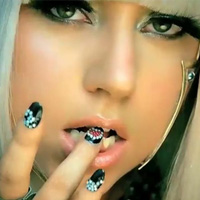
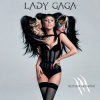
Lady Gaga is the stage name of American singer, songwriter, music producer and actress Stefani Joanne Angelina Germanotta, born on March 28, 1986, in New York City. She became one of the defining figures of 21st-century global pop music by combining pop, dance, electronic, house, rock and traditional jazz with theatrical performance, high fashion and a carefully developed visual aesthetic. Alongside music, Gaga built an independent acting career, winning a Golden Globe for American Horror Story: Hotel and an Academy Award as a co-writer of Shallow from the film A Star Is Born.
Among her best-known works are Just Dance, Poker Face, Paparazzi, Bad Romance, Telephone, Alejandro, Born This Way, Judas, The Edge of Glory, Applause, Million Reasons, Shallow, Always Remember Us This Way, Rain on Me, Die With a Smile, Disease and Abracadabra. Yet Lady Gaga’s career cannot be reduced to a single musical style: within a relatively short historical period, she moved from New York club electro-pop to large-scale stadium pop, jazz standards, country and rock influences, film soundtracks and, eventually, back to darker electronic pop.
Stefani Germanotta: Music and Theatre Before Lady Gaga
Stefani grew up in Manhattan in the family of Joseph and Cynthia Germanotta. Her father worked in the internet technology business, while her mother later became one of the key figures in her daughter’s charitable initiatives. Stefani began playing piano at the age of four, learned to pick out music by ear and gradually started writing her own songs. During her teenage years, music developed alongside a serious interest in acting.
From the age of eleven, she attended the private Catholic school Convent of the Sacred Heart in Manhattan. Stefani appeared in theatre productions, studied singing and received acting training at the Lee Strasberg Theatre and Film Institute. While still a teenager, she landed a small role in an episode of The Sopranos, long before the stage name Lady Gaga existed.
At seventeen, Germanotta gained early admission to New York University’s Tisch School of the Arts, where she studied drama and continued writing music. In 2005, she left the university to focus on building her own career. NYU would later continue to identify her with its Tisch Drama alumni community.
The Lower East Side and the Formation of Her Stage Persona
After leaving university, Stefani became active on the Lower East Side club scene. She performed with her own band, played small New York venues and gradually moved away from traditional piano-based singer-songwriter material toward a more provocative blend of electro-pop, glam rock and performance art. This New York period became the laboratory for the future Lady Gaga: music, costume, choreography and visual presentation were already being treated as parts of one unified work.
In 2006, producer Rob Fusari became an important collaborator. He is usually credited with helping create the name Lady Gaga, inspired by Queen’s song Radio Ga Ga, although accounts differ on the details. Rather than repeating the doubtful story about an automatic text-message correction, it is more accurate to say that the name emerged during their collaboration and was inspired by the Queen track.
In September 2006, Gaga signed with Def Jam Recordings, but the label ended the relationship only a few months later. She continued performing in New York, including appearances with performance artist Lady Starlight. Their show combined music, burlesque, glam rock and stage theatre and eventually reached Lollapalooza in 2007.
Streamline, Interscope and the Road to The Fame
The next key figure was producer and executive Vincent Herbert, who signed Gaga to Streamline Records, an Interscope imprint. At the same time, she secured a publishing deal with Sony/ATV and wrote material for other performers. That experience became an important professional education: even before her own international breakthrough, Gaga was learning how commercial pop songs were constructed from the inside.
Gaga’s vocal recordings attracted the attention of Akon, who helped accelerate the development of her own artist project. Her main studio partner during the early period became Moroccan-Swedish producer RedOne. Their collaboration shaped the characteristic sound of her first hits: direct four-on-the-floor rhythms, bright synthesizers, concise vocal hooks and an unusually theatrical vocal delivery.
The Fame: When Club Electro-Pop Went Global
Her debut album The Fame was released in 2008. Its concept explored fame simultaneously as reality, fantasy and lifestyle. The album blended dance-pop, electro-pop and glam-rock influences, while Gaga deliberately built a complete visual universe around it, from futuristic eyewear to choreography and music-video characters. Her official website describes the themes of The Fame through fame, love and self-expression.
Her first international breakthrough came with Just Dance featuring Colby O'Donis, followed by Poker Face. Both songs reached number one on the Billboard Hot 100. The Fame itself climbed to number two on the Billboard 200 and transformed a New York performer who had been largely unknown only a few years earlier into an international pop star.
The importance of the debut, however, was not limited to chart positions. Paparazzi and the videos surrounding the album established Lady Gaga as an artist for whom a pop song did not end with the studio recording. Costume, photography, choreography, video and live performance were all treated as extensions of the same idea.
The Fame Monster and the Creation of “Mother Monster”
In 2009, Gaga expanded the debut era with the eight-track project The Fame Monster. It was released both independently and as an expanded edition of The Fame, which is why it is more accurate to treat it as a separate EP rather than simply calling it her next standard studio album.
This project introduced Bad Romance, Telephone with Beyoncé, Alejandro, Dance in the Dark and Monster. While The Fame focused on the appeal of celebrity, the new work explored its darker side — fear of loneliness, addiction, sex, death and loss of control.
Bad Romance became one of the defining pop singles of its era, while the accompanying video solidified the visual language of early Gaga: high fashion, grotesque imagery, futurism, sexuality and deliberately uncomfortable visuals. At the 2010 MTV Video Music Awards, the video won Video of the Year.
The Monster Ball: Concert as Theatre
After the cancellation of her planned joint tour with Kanye West, Gaga quickly rebuilt the live concept and launched her own The Monster Ball Tour. Running from 2009 to 2011, it gradually evolved from a relatively conventional theatrical tour into a major production featuring elaborate staging, a narrative structure, numerous costumes and the concept of a journey toward the “Monster Ball.” According to Billboard Boxscore, roughly 200 shows drew around 2.5 million spectators and grossed $227.4 million, which at the time became a record for a debut headlining tour.
This era fully established the distinctive type of pop star Gaga represented: she could perform an electronic club hit, sit alone at the piano minutes later, and then transform the concert into an avant-garde theatrical number.
First Grammys
Gaga won her first two Grammy Awards at the 2010 ceremony: Poker Face won Best Dance Recording, while The Fame won Best Dance/Electronic Album. A year later, her collection grew with awards for Bad Romance and The Fame Monster. This is why references to a “2009 Grammy” for Poker Face are incorrect: the nominations may have related to recordings from the previous eligibility period, but the actual win came at the 52nd Grammy Awards in 2010.
Born This Way: From Fame to Identity
In May 2011, Gaga released Born This Way, an album that significantly expanded both her musical range and lyrical themes. Dance-pop was combined with industrial, electro-rock, synth-pop, house and heavier guitar elements. Instead of fame, the central subjects became identity, religion, sexuality, equality and the right of individuals to define themselves.
The title track Born This Way became one of the defining anthems of her career. It was followed by Judas, The Edge of Glory, Yoü and I and Marry the Night. The album debuted at number one on the Billboard 200 with approximately 1.108 million copies sold in its first week in the United States, one of the biggest debuts of the SoundScan era.
Born This Way also strengthened Gaga’s relationship with the audience she called Little Monsters. The idea of a community built around music gradually became more practical: together with her mother Cynthia, she established the Born This Way Foundation, focused on youth wellbeing, mental health and the development of kinder social environments. The organisation began operating in 2012 and continues as an independent foundation.
ARTPOP: Maximalism, EDM and One of Her Most Divisive Eras
After the huge success of Born This Way, Gaga moved toward an even more aggressive electronic aesthetic. ARTPOP was released in 2013 and combined EDM, synth-pop, electro house, hip-hop elements and ideas drawn from contemporary art. Its producers included Zedd, Madeon, DJ White Shadow and other figures from the electronic scene of that period.
The lead single was Applause, while G.U.Y., Venus and Do What U Want also held prominent places on the album. The latter track originally featured R. Kelly and was later removed from digital reissues of the album.
ARTPOP debuted at number one on the Billboard 200. The era, however, was accompanied by serious difficulties: before the album’s release, Gaga underwent surgery after a hip injury that forced the Born This Way Ball to end early, and changes later occurred within her management team. As a result, ARTPOP was long viewed as one of the most controversial periods of her career, although it later developed a strong and dedicated following.
Tony Bennett and a Return to Jazz Roots
Rather than immediately trying to replicate the scale of her previous pop project, Gaga unexpectedly changed direction. Together with legendary singer Tony Bennett, she recorded the jazz standards album Cheek to Cheek, released in 2014.
The project was important for her reputation as a vocalist. Behind the electronic arrangements and elaborate costumes of the earlier albums, it was sometimes easy to overlook the fact that Gaga possessed a powerful voice and could perform effectively without her characteristic dance-pop production. Cheek to Cheek allowed her to sing works by Irving Berlin, Cole Porter and other composers accompanied by a traditional jazz ensemble.
The album won the Grammy for Best Traditional Pop Vocal Album at the 2015 ceremony and began a long creative friendship between Gaga and Bennett.
American Horror Story and an Independent Acting Career
Gaga’s acting ambitions existed long before her musical success, but her first major dramatic role came in the 2015–2016 season of American Horror Story: Hotel. She played the Countess Elizabeth, owner of the mysterious Hotel Cortez.
In 2016, the role earned her a Golden Globe for Best Actress in a Miniseries or Television Film. The award provided important confirmation that her acting career was not merely an extension of her musical persona.
Joanne: Gaga Without the Futuristic Armour
In 2016, Gaga released Joanne, named after her father’s sister, who died at a young age. After ARTPOP, the sound became substantially less electronic, introducing country, soft rock, folk, soul and more traditional singer-songwriter pop.
The production team included Mark Ronson, BloodPop, Kevin Parker and other musicians. The best-known songs were Perfect Illusion and Million Reasons. On this project, Gaga deliberately reduced the distance between her stage persona and Stefani Germanotta: instead of the elaborate fantasy structures of ARTPOP, the central images became a pink hat, a guitar and personal family themes.
Super Bowl LI
In February 2017, Lady Gaga headlined the Super Bowl LI halftime show. The thirteen-minute performance included Poker Face, Born This Way, Telephone, Just Dance, Million Reasons and Bad Romance. According to Fox, the television audience reached approximately 117.5 million viewers.
What made the performance especially notable was Gaga’s near-total absence of guest stars: the entire show was built around her own catalogue, live vocals, piano and choreography. The Super Bowl was followed by the Joanne World Tour, which grossed roughly $95 million from 49 Billboard-tracked shows.
A Star Is Born and Shallow
A new level of Gaga’s acting career began in 2018 with Bradley Cooper’s film A Star Is Born. Gaga played aspiring singer Ally and also became one of the key writers of the film’s music. Cooper and Gaga aimed for maximum musical authenticity, with many of the concert scenes filmed during real festival performances.
The film’s signature song became Shallow, written by Lady Gaga, Mark Ronson, Anthony Rossomando and Andrew Wyatt. It won the Academy Award for Best Original Song at the 2019 ceremony. Gaga was also nominated for an Oscar for Best Actress for her performance as Ally.
Shallow also marked an important musical turning point. After years in which the general public associated Gaga primarily with electronic music, the song presented her as a rock and pop vocalist capable of building a worldwide hit almost entirely around voice, piano and guitar.
Las Vegas: Two Different Lady Gagas on One Stage
After A Star Is Born, Gaga began an extended period of performances in Las Vegas. The residency was divided into two concepts: Enigma presented a technological version of her pop catalogue, while Jazz & Piano focused on jazz standards and more intimate versions of her own songs.
This format captured the duality of her entire career particularly well: the same artist could perform as an electronic pop star and as a traditional vocalist backed by a jazz orchestra without turning either side into a parody of the other.
Chromatica: Returning to the Dance Floor
Chromatica was released in May 2020 and returned Gaga to large-scale electronic pop music. Thematically, however, the album was far heavier than its dance-oriented surface suggested: the lyrics dealt with psychological pain, trauma, loneliness and attempts to keep living through them. The official description of the record emphasised the idea of “dancing through the pain.”
The main singles were Stupid Love and Rain on Me with Ariana Grande. The album also included Sour Candy with BLACKPINK and Sine from Above with Elton John. Rain on Me topped the Billboard Hot 100 and earned Gaga and Ariana Grande the Grammy for Best Pop Duo/Group Performance.
Because of the pandemic, the full tour had to be postponed. The Chromatica Ball finally took place in 2022 and was considerably more compact than her previous tours, but extremely successful: Billboard reported grosses of more than $112 million.
In 2024, the concert film Gaga Chromatica Ball was released, filmed at a sold-out Dodger Stadium performance in Los Angeles before 52,000 people. It is specifically a film, not a separate studio or live album from 2024.
House of Gucci
In 2021, Gaga played Patrizia Reggiani in Ridley Scott’s crime drama House of Gucci. The role separated her acting career even further from A Star Is Born: instead of portraying a singer whose life had obvious parallels with her own professional experience, she played a character drawn from the real history of the Gucci family.
For House of Gucci, Lady Gaga received a Golden Globe nomination for Best Actress in a Motion Picture — Drama.
The Final Recording with Tony Bennett
Love for Sale, Gaga and Tony Bennett’s second collaborative album, was released on October 1, 2021. Dedicated to the songs of Cole Porter, it became Bennett’s final studio recording. The material was recorded between 2018 and 2020.
At the 2022 Grammys, the album won Best Traditional Pop Vocal Album. Gaga’s discography therefore includes two fundamentally different jazz projects with one of America’s most respected traditional vocalists — Cheek to Cheek and Love for Sale.
Hold My Hand and Top Gun: Maverick
In 2022, Gaga released Hold My Hand for the film Top Gun: Maverick. The song was nominated for both an Academy Award and a Grammy and continued her work in film music after A Star Is Born.
Joker: Folie à Deux and Harlequin
Her next major acting role was Lee Quinzel in the 2024 musical psychological drama Joker: Folie à Deux, in which Gaga starred alongside Joaquin Phoenix. Music was fundamental to the film, so her involvement naturally extended to the soundtrack. Her official discography lists Joker: Folie à Deux (Music From The Motion Picture) as a separate 2024 soundtrack release.
At the same time, Gaga unexpectedly released her own album Harlequin. It is not a conventional soundtrack, but an independent companion project inspired by her character and the film’s musical world. It includes reinterpretations of standards such as Get Happy, That's Entertainment, Smile, The Joker, That's Life, as well as original songs Folie à Deux and Happy Mistake. Gaga’s official website describes Harlequin as a theatrical, genre-blending jazz album.
Die With a Smile: Another Global Peak
In August 2024, Lady Gaga and Bruno Mars released Die With a Smile. Unlike most of Gaga’s early hits, the song is not built around dance-pop but around a large-scale vocal ballad with soft rock and soul influences.
The track reached number one on the Billboard Hot 100 and spent five weeks there, later becoming one of the biggest global singles of the following year. At the 2025 Grammys, Gaga and Bruno Mars won Best Pop Duo/Group Performance for the song.
Disease, Abracadabra and the Return of “Dark Gaga”
In autumn 2024, Gaga introduced Disease, the first solo single of a new pop cycle. The production brought a harder industrial/electro-pop texture back into her music, while the visual aesthetic again approached the darker theatricality of The Fame Monster and Born This Way.
In February 2025, she followed it with Abracadabra. The song and video were first presented widely during the Grammy broadcast and became one of the central elements of the new era. Abracadabra later won the Grammy for Best Dance Pop Recording.
MAYHEM: Returning to Pop Foundations Without Repeating the Past
On March 7, 2025, Lady Gaga released MAYHEM, which Universal Music officially presented as her seventh studio album. Gaga described the project as an attempt to confront again the kind of pop music her early fans had loved without simply copying her previous work.
Her main production partners were Andrew Watt and Cirkut, while French electronic musician Gesaffelstein worked on part of the material. The album combines electro-pop, synth-pop, house, funk, industrial elements and references to rock and disco. Among its key tracks are Disease, Abracadabra, Garden of Eden, Perfect Celebrity, Killah, Zombieboy, How Bad Do U Want Me and Die With a Smile.
MAYHEM debuted at number one on the Billboard 200 with 219,000 equivalent album units in the United States. At the same time, ten songs from the album appeared on the Billboard Hot 100.
At the 2026 Grammy Awards, MAYHEM won Best Pop Vocal Album, while Abracadabra won Best Dance Pop Recording. By that point, Lady Gaga’s official Recording Academy profile listed 16 wins and 45 Grammy nominations.
Copacabana: A Concert for 2.1 Million People
One of the biggest live events of the MAYHEM era was Gaga’s free concert on Copacabana Beach in Rio de Janeiro on May 3, 2025. Guinness World Records recorded an audience of 2.1 million people and recognised it as the largest free concert by a solo female artist.
The concert also had special significance for Gaga herself: it was her first performance in Brazil in thirteen years. The set combined new MAYHEM material with Poker Face, Paparazzi, Born This Way, Bad Romance and other songs from across her career.
The Mayhem Ball
The new album was followed by The Mayhem Ball, another major theatrical tour by Gaga. Rather than a conventional sequence of hits, the show was structured as a dark stage narrative divided into acts, characters and reimagined songs from different eras.
The North American leg alone grossed more than $100 million, while subsequent dates made The Mayhem Ball one of the biggest touring projects of her career.
The Dead Dance and the Continuation of MAYHEM
In 2025, Gaga’s official catalogue was expanded with the single The Dead Dance. It was later included in an expanded digital edition of MAYHEM alongside additional material from the era. Gaga’s official discography lists The Dead Dance as a standalone single.
RUNWAY and Music for The Devil Wears Prada 2
After the main MAYHEM campaign, Gaga returned once again to film music. In April 2026, together with Doechii, she released RUNWAY, the first track unveiled from the film The Devil Wears Prada 2. Bruno Mars, Andrew Watt, Cirkut and D'Mile were among those involved in creating the song.
The full soundtrack included three original Lady Gaga songs: Shape of a Woman, RUNWAY and Glamorous Life. Her work in cinema therefore continued in a different form — not primarily through an acting role, but through original songwriting and performance for film.
Why Lady Gaga’s Music Keeps Changing
Gaga’s career is sometimes described as a sequence of dramatic reinventions, but beneath them lies a relatively stable musical foundation. Many of her songs depend on piano-based harmony, a large melodic chorus and a strong dramatic climax. The electronic production may change completely — from RedOne to BloodPop, Andrew Watt or Cirkut — but the compositional logic remains recognisable.
This is why Shallow and Poker Face, despite their almost opposite sound, do not feel like works by two entirely different artists. In both cases, the vocal line is built around a very clear melodic idea and gradually moves toward a large emotional release.
The second constant is her love of theatre. Lady Gaga rarely performs a song as a neutral musical number. Every album receives its own costumes, system of symbols, stage design and style of movement. In this sense, her early acting education was not an isolated biographical detail, but one of the central tools of her musical career.
Fashion as Part of the Work
One of Gaga’s defining qualities has been the transformation of fashion into a complete language of pop music. At different stages, she has worked with Alexander McQueen, Nicola Formichetti, Brandon Maxwell, Versace, Valentino and many other designers, but the costumes rarely existed only for red-carpet appearances.
The meat dress at the 2010 MTV Video Music Awards, the elaborate facial prosthetics of the Born This Way era, the pink Joanne hat and the gothic aesthetic of MAYHEM all served the same purpose as an album cover or music video: they visually expressed a specific idea associated with the project.
Lady Gaga as a Songwriter
Despite the enormous role played by producers, Gaga is a writer or co-writer on virtually all of the key works in her catalogue. She contributed to the writing of Just Dance, Poker Face, Paparazzi, Bad Romance, Born This Way, The Edge of Glory, Applause, Million Reasons, Shallow, Rain on Me, Disease, Abracadabra and much more.
The Academy Award for Shallow was awarded specifically to its songwriters — Lady Gaga, Mark Ronson, Anthony Rossomando and Andrew Wyatt. The Grammys have likewise repeatedly recognised her as a songwriter, not only as a performer.
Vocals
Behind Lady Gaga’s visual image, one of the clearest reasons for her longevity can sometimes be overlooked: her ability to work convincingly in completely different vocal environments. Her voice can cut through the dense electronic production of Poker Face, deliver the rock climax of Shallow, perform a jazz standard beside Tony Bennett or inhabit the near-cabaret world of Harlequin.
Equally important is her ability to keep live performance at the centre of the concert experience. Piano versions of Poker Face, The Edge of Glory, Million Reasons and other songs are often presented as standalone performances rather than merely as pauses between choreographed sections.
Born This Way Foundation
Gaga’s social activism gained an institutional form through the Born This Way Foundation, founded by her together with her mother, Cynthia Germanotta. The foundation’s mission focuses on supporting young people’s mental health, building kinder communities and providing youth with tools for mutual support.
This work connects naturally with part of her songwriting catalogue. Themes of alienation, identity, self-acceptance and psychological survival run from Born This Way and Hair through 911, Replay and a significant portion of MAYHEM.
Lady Gaga’s Main Discography
Main solo studio albums and projects:
- The Fame — 2008
- The Fame Monster — 2009, standalone EP / expansion of The Fame
- Born This Way — 2011
- ARTPOP — 2013
- Joanne — 2016
- Chromatica — 2020
- Harlequin — 2024, companion album to Joker: Folie à Deux
- MAYHEM — 2025
Lady Gaga’s official catalogue currently identifies The Fame, The Fame Monster, Born This Way, ARTPOP, Joanne, Chromatica, Harlequin and MAYHEM as her principal solo album projects.
Jazz Albums with Tony Bennett
- Cheek to Cheek — 2014
- Love for Sale — 2021
Both albums won the Grammy for Best Traditional Pop Vocal Album, while Love for Sale became Tony Bennett’s final studio recording.
Main Soundtracks and Film Music Projects
- A Star Is Born — 2018, with Bradley Cooper
- Joker: Folie à Deux (Music From The Motion Picture) — 2024
- The Devil Wears Prada 2 (Music From The Motion Picture) — 2026, featuring three original Lady Gaga songs
Her soundtrack work has therefore become an independent part of her discography rather than a one-off success built around Shallow.
Key Lady Gaga Songs
- Just Dance — 2008
- Poker Face — 2008
- Paparazzi — 2009
- Bad Romance — 2009
- Telephone — 2010, with Beyoncé
- Alejandro — 2010
- Born This Way — 2011
- Judas — 2011
- The Edge of Glory — 2011
- Yoü and I — 2011
- Applause — 2013
- Million Reasons — 2016
- Shallow — 2018, with Bradley Cooper
- Always Remember Us This Way — 2018
- Rain on Me — 2020, with Ariana Grande
- Hold My Hand — 2022
- Die With a Smile — 2024, with Bruno Mars
- Disease — 2024
- Abracadabra — 2025
- The Dead Dance — 2025
- RUNWAY — 2026, with Doechii
Awards
Lady Gaga belongs to the rare group of artists whose major honours span recorded music, film and television. Her most important achievements include 16 Grammy wins from 45 nominations as of the 2026 ceremony, an Academy Award for Shallow and two Golden Globes — for American Horror Story: Hotel and Shallow.
Rather than building an excessively long table of dozens of less significant awards, an encyclopedic biography is better served by highlighting the honours that reflect the different sides of her work: Grammys in pop, dance and traditional pop; an Academy Award as a songwriter; and a Golden Globe as an actress.
Why Lady Gaga Holds a Special Place in Contemporary Pop Music
Lady Gaga did not invent electronic pop, performance-based music or the use of high fashion in popular culture. Before her, those ideas had been developed by David Bowie, Madonna, Grace Jones, Prince, Queen and many other artists. Her significance lies in the way she combined those traditions into a new system that fit perfectly with the age of social media, YouTube and global digital pop culture.
The Fame showed how quickly club electro-pop could become international mainstream music; The Fame Monster turned horror and haute couture into the language of a mass-market pop star; Born This Way connected stadium pop with questions of identity; ARTPOP pushed electronic maximalism to its limits; Cheek to Cheek and Love for Sale demonstrated her strength as a traditional vocalist; A Star Is Born gave her a fully developed film career; Chromatica returned her to dance music after several years of stylistic experimentation; and MAYHEM brought different versions of Lady Gaga together within one album.
Another defining feature of her career is the rare ability to outlive her own images. The persona that made Gaga famous in 2008–2010 could easily have become a limitation, yet she repeatedly refused to rely on safe repetitions of the Poker Face or Bad Romance formula — sometimes with enormous commercial success, sometimes with more divisive results.
That is why Lady Gaga matters not only as the performer behind a series of global hits. Her discography shows how a pop artist can exist simultaneously as a songwriter, dance performer, pianist, jazz vocalist, actress and director of her own visual universe without turning those roles into separate, disconnected projects.
From small clubs on the Lower East Side to an audience of more than two million people on Copacabana Beach, her career has developed around one enduring idea: pop music can be more than a song — it can be a space where sound, theatre, fashion, cinema and the artist’s own personality become parts of a single work. It is this ability to constantly rebuild the form while preserving a recognisable creative core that defines Lady Gaga’s place among the most significant pop artists of her generation.