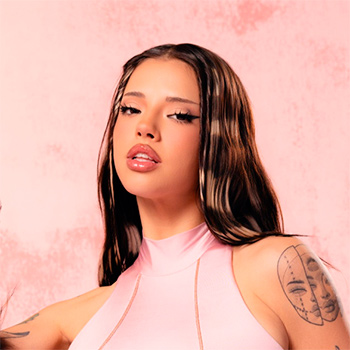
DARA (real name — Darina Nikolaeva Yotova, Bulgarian: Дарина Николаева Йотова; born 9 September 1998, Varna, Bulgaria) is a Bulgarian singer and songwriter, and one of the most prominent representatives of the contemporary Bulgarian pop scene. Her music combines pop, R&B, electronic dance music and synthpop, while choreography and visual staging remain important parts of her artistic image.
DARA began her professional career after taking part in the Bulgarian version of X Factor in 2015. Over the following decade, she released two full-length albums, scored several major national hits, became a coach on The Voice of Bulgaria and gradually expanded her international activities.
The defining event of her career was her victory at the Eurovision Song Contest 2026 in Vienna with the song Bangaranga. DARA brought Bulgaria its first victory in the country’s history at the contest, scoring 516 points and winning both the professional jury vote and the televote.
Childhood and musical education
Darina Yotova was born on 9 September 1998 in Varna. She graduated from the National School of Arts “Dobri Hristov” in her hometown. Bulgarian television channel bTV also confirms that the future singer studied traditional folk singing from childhood.
According to SBS, DARA began performing traditional Bulgarian folklore at around the age of seven and later gradually shifted toward contemporary pop music.
Her early interests were not limited to singing. Darina also studied dance, drew and was interested in acting. In an interview with “The Faces of the City,” she said that before X Factor she had not received professional pop-vocal training, and that participating in the television project forced her out of her familiar environment, taught her how to work with a team and helped her define her musical direction.
This broad interest in stage disciplines later became a noticeable part of her professional image: DARA’s performances are built not only around vocals but also around movement, choreography, costumes and visual storytelling.
X Factor
In 2015, DARA took part in the fourth season of the Bulgarian X Factor.
She reached the final and finished in third place. Her mentor during the project was Bulgarian rapper Krisko. After the show ended, DARA signed a contract with Virginia Records, which became the main label for both the early and later stages of her career.
X Factor was the project that moved her from Varna’s local music scene to a national audience. However, her full solo career began only after the television show.
K’vo ne chu and the first major success
On 15 July 2016, DARA released her debut single K’vo ne chu (“К'во не чу”) through Virginia Records.
The result was far bigger than that of an ordinary debut release.
Just three weeks after its premiere, K’vo ne chu topped the official ranking of the most-played Bulgarian songs on radio and television.
By the end of 2016, the song had become the most-played Bulgarian track of the year according to PROPHON and the BMAT monitoring system. It remained at No. 1 on the chart for 12 consecutive weeks.
An English-language adaptation titled Onto You followed the Bulgarian version, already showing at the very beginning of DARA’s career that her team intended to work beyond the domestic market.
Rodena takava, Nedei and the development of her own style
In 2017, DARA released Rodena takava (“Родена такава”), which became one of her most recognisable early singles. It was followed by Nedei. In 2018, her discography was expanded with Vse na men.
It was during this period that DARA’s early musical model fully took shape: contemporary pop with R&B phrasing, dance rhythms, a strong vocal melody and a visually oriented stage image.
In 2018, she received the Best Female Artist award at the BG Radio Music Awards.
The following years brought songs such as BTW (Bye Bye), Darbie, Ella Ella, Ai Ai, Mamacita and other releases that helped the singer maintain a stable presence on Bulgarian radio.
International songwriters and producers
From the early stage of her solo career, DARA worked with songwriters and producers from outside Bulgaria.
Her official website and Virginia Records list the following musicians among those who have collaborated with her:
- Chris Young, who has worked with Rod Stewart and Kylie Minogue;
- Jungleboi, whose catalogue includes work with ZAYN and Rihanna;
- Yoad Nevo;
- Romanian producer Monoir;
- Matteo and other European songwriters.
These collaborations became part of DARA’s gradual transition from an exclusively Bulgarian repertoire toward music aimed at a broader European market.
Ai Ai, Cold as Ice and Thunder
In 2020, DARA released Ai Ai, followed in 2021 by Cold as Ice and Thunder.
Thunder was particularly successful: the song topped Bulgaria’s official airplay chart and later played another important role in DARA’s biography — it was the song she performed in the national selection for Eurovision 2026.
By the beginning of the 2020s, DARA was no longer perceived as simply a participant from a television talent show and had established herself as an independent pop artist with her own discography and a stable radio audience.
The Voice of Bulgaria
In 2021, DARA became a coach on the eighth season of The Voice of Bulgaria — “Гласът на България”.
At the time, she became the youngest coach in the history of the Bulgarian version of the show.
Her work on the programme proved successful. In 2022, DARA team member Zhaklin Tarakchi won the ninth season of the show.
In 2024, a second contestant from her team, Slaveya Ivanova, also won.
In 2026, bTV announced that DARA would return to the programme for a fifth consecutive season. Coaching therefore became a permanent part of her professional activities alongside her own music career.
Television projects
DARA has also repeatedly appeared in entertainment television formats.
In 2020, she participated in the Bulgarian version of Your Face Sounds Familiar — Kato dve kapki voda — where she finished in third place.
In 2024, the singer took part in Dancing Stars Bulgaria with professional partner Dimitar Georgiev. The pair reached the final and finished in second place.
These projects highlighted one of DARA’s defining characteristics as a performer: stage movement and choreography are full elements of her performances rather than merely additions to the vocals.
First album “Родена такава”
On 25 March 2022, Virginia Records released DARA’s first full-length album, “Родена такава”.
The label officially presented it as the singer’s first album, bringing together 13 tracks created over the previous years of her career.
The release included the key works from DARA’s first period — from her early national hits to later dance-pop material.
The album title returned the singer to one of her defining early singles while also summarising roughly six years of solo career development after X Factor.
Call Me and Mr. Rover
In 2022, DARA continued her internationally oriented period with Call Me, recorded with Matteo, and the solo single Mr. Rover.
Mr. Rover later had an unusual continuation beyond the European market.
In 2023, South Korean singer KAI, a member of EXO, released the song Rover, a new K-pop version of DARA’s track. The fact that Rover originated from the Bulgarian singer’s original composition has been noted in materials about her international career.
For DARA, this became one of the clearest examples of the international movement of her songwriting material: a song initially released for Bulgarian and European audiences gained an independent life within the South Korean pop industry.
New hits of 2023–2024
In 2023, DARA released several new tracks, including Boginya, In My Head and Zaminavam.
In My Head and Zaminavam reached the upper positions of the Bulgarian airplay chart, continuing the singer’s run of radio success. During the same period, she recorded the collaboration Veche nyama kak with Lubo Kirov.
In 2024, she released Samo moi, Zmiya and Kradets na mechti.
In September 2025, DARA also performed before Robbie Williams’ concert in Sofia — another notable event in her live career shortly before her international breakthrough.
ADHDARA
On 19 September 2025, DARA released her second studio album, ADHDARA.
The record contains 13 tracks and was released by Virginia Records / DARA.
The label itself described it as the singer’s most personal and daring project up to that point. The title plays on the stage name DARA and ADHD; the album is directly connected to the artist’s personal experiences and themes of intense inner activity, anxiety, emotional overload and the transformation of these states into creative energy.
The material was created with Denis Popstoev, Dexter, Dara Ekimova, Emil TRF, Venci Venc’, Preyah, Nicka, D-ZastA, Anne-Judith Stokke Wik, Martin Kleveland and other writers.
The album includes:
- Нищо повече
- Нито звук
- Да не можем
- Онче бонче
- and other songs from DARA’s new period.
The singer’s official website describes ADHDARA as a transition toward a more cohesive international musical identity.
Bulgaria’s return to Eurovision
Bulgaria returned to the Eurovision Song Contest in 2026 after several years of absence.
The process of selecting the representative consisted of several stages. On 31 January 2026, DARA performed Thunder in the national selection.
She won both the professional jury vote and the public vote, earning the right to represent Bulgaria at the contest in Vienna. Eurovision officially described the result as a unanimous choice by the two components of the national vote.
However, Thunder was not the future Eurovision entry. After the performer was selected, a separate stage was held to determine the song for the contest.
Selecting Bangaranga
On 1 March 2026, DARA presented three potential Eurovision entries:
- This Is Me
- Curse
- Bangaranga
The winner was again chosen by a professional jury and the public.
Bangaranga received the highest scores in both parts of the voting and became Bulgaria’s official entry for Eurovision 2026.
The song was written by Anne Judith Wik, Cristian Tarcea (Monoir), Darina Nikolaeva Yotova and Dimitris Kontopoulos.
DARA therefore participated not only as the performer but also as one of the co-writers of her own Eurovision song.
The meaning and sound of Bangaranga
Bangaranga is an energetic contemporary pop/dance track with electronic production and a strongly choreographed performance component.
At the same time, the concept of the song is connected to traditional Bulgarian culture. DARA has spoken about the influence of the kukeri — participants in an ancient Bulgarian ritual who wear elaborate costumes and masks and perform ritual dances intended symbolically to drive away evil forces.
The singer connected the meaning of Bangaranga with inner strength and liberation from the constant desire to conform to an ideal image. This theme was also linked to her public discussions of anxiety.
The folkloric influence therefore appears not as a literal stylisation of a traditional song, but primarily through the concept, visual symbols, ritual energy and stage movement.
Eurovision Song Contest 2026
The 70th Eurovision Song Contest took place in Vienna.
DARA successfully advanced through the semifinal stage and performed Bangaranga in the Grand Final on 16 May.
The result was historic for Bulgaria.
DARA won the Eurovision Song Contest 2026 with 516 points.
The result consisted of:
- 204 points from the professional juries
- 312 points from the televote
- 516 points in total.
DARA also finished first separately with both the juries and the televoters.
It was the first time since Eurovision 2017 in Kyiv that one entry had won both parts of the voting.
Bulgaria’s first victory
DARA’s victory became Bulgaria’s first win in the history of the Eurovision Song Contest.
Before that, the country’s best result had been Kristian Kostov’s second place with Beautiful Mess in 2017.
Israel’s representative finished second in 2026 with 343 points. The gap between first and second place was therefore 173 points.
This became the largest winning margin in Eurovision history, surpassing the previous record set by Alexander Rybak, who won the 2009 contest by 169 points.
International success of Bangaranga
The success did not end with the contest itself.
After the final, Bangaranga quickly grew on international streaming platforms. On the day after the Grand Final, the track received more than three million streams worldwide and climbed to No. 12 on Spotify’s Global Daily Chart.
The song later debuted at No. 90 on the Billboard Global 200.
In the United Kingdom, Bangaranga reached No. 21 on the main Official Singles Chart, becoming DARA’s first significant UK chart result.
Eurovision therefore gave the singer her first major measurable commercial success beyond the Bulgarian and regional markets.
Return to Bulgaria
After her victory, DARA returned to Bulgaria with the Eurovision trophy.
At Sofia Airport, she was welcomed by hundreds of fans carrying Bulgarian flags, while her arrival was broadcast by the country’s major national television channels.
Speaking to journalists, the singer described the victory as the beginning of the next international stage of her career and expressed hope that the result would help bring more attention to Bulgarian performers.
The victory also had consequences for the country’s entire music industry: Bulgaria earned the right to host the Eurovision Song Contest 2027. On 13 August 2026, the EBU and BNT announced that the next contest would take place in Burgas.
Musical style
Defining DARA simply as a traditional pop singer would be too narrow.
At different stages, her music has included:
- pop
- R&B
- dance-pop
- electronic pop
- synthpop
- individual elements of Balkan and folkloric musical culture.
Her early training in folk singing does not mean that folklore forms the basis of her contemporary discography. On the contrary, most of DARA’s commercial recordings are oriented toward current European pop/R&B. Her folkloric roots appear selectively — through vocal techniques, rhythmic thinking, specific motifs and visual concepts.
Bangaranga demonstrates this model especially well: contemporary international pop production is combined not with literal quotations from traditional songs, but with imagery and ideas drawn from Bulgarian tradition.
Stage image
Stage movement remains one of DARA’s key professional characteristics.
Even before beginning her music career, she was interested in dance and acting, and these skills later became part of her concert performances and music videos.
Her participation in Kato dve kapki voda and second place in Dancing Stars Bulgaria further demonstrated that stage movement is a separate performance tool for DARA rather than merely an addition to singing.
At Eurovision, this side of her work became especially visible: AP specifically noted the tightly choreographed performance as one of the central elements of the winning Bangaranga staging.
DARA as a songwriter
As her career developed, DARA’s role in creating her own material became increasingly visible.
She participates in writing songs and lyrics, while her second album ADHDARA was built much more strongly around her personal experiences and authorial identity.
An especially important confirmation of this side of her career was her co-writing credit on Bangaranga: the official Eurovision credits list Darina Nikolaeva Yotova among the four writers of the winning song.
This makes it possible to describe DARA not only as a vocalist and performer, but also as a songwriter who has gradually increased her own involvement in creating her repertoire.
Main discography
Studio albums
- Родена такава — 2022
- ADHDARA — 2025
Virginia Records officially identifies “Родена такава” as DARA’s first album and ADHDARA as her second studio album.
Selected songs
- K’vo ne chu
- Onto You
- Rodena takava
- Nedei
- Vse na men
- Darbie
- Ella Ella
- Ai Ai
- Mamacita
- Cold as Ice
- Thunder
- Call Me
- Mr. Rover
- Boginya
- In My Head
- Zaminavam
- Kradets na mechti
- Nishto poveche
- Nito zvuk
- Da ne mojem
- Onche bonche
- This Is Me
- Curse
- Bangaranga
Main achievements
DARA’s key career milestones and achievements include:
- third place on X Factor Bulgaria — 2015;
- K’vo ne chu — the most-played Bulgarian song of 2016 and 12 consecutive weeks at No. 1 on the national airplay chart;
- Best Female Artist at the BG Radio Music Awards — 2018;
- the youngest coach in the history of The Voice of Bulgaria at the time she joined the programme;
- wins by members of her team on The Voice of Bulgaria — 2022 and 2024;
- second place on Dancing Stars Bulgaria — 2024;
- two studio albums — Родена такава and ADHDARA;
- victory in Bulgaria’s national selection for Eurovision 2026 with both the jury and the public;
- victory at the Eurovision Song Contest 2026;
- Bulgaria’s first victory in the history of the contest;
- 516 points — 204 from the juries and 312 from viewers;
- victory in both the jury vote and the televote;
- the largest winning margin in Eurovision history — 173 points;
- Bangaranga — No. 90 on the Billboard Global 200;
- Bangaranga — No. 21 on the UK Official Singles Chart.
DARA’s career clearly illustrates the changing scale of the contemporary Bulgarian pop industry.
She began with a national television competition but did not remain an artist defined only by the talent-show format. K’vo ne chu gave her an independent commercial start, subsequent radio hits established her position on the Bulgarian market, while work with international songwriters and producers gradually prepared the transition to an international stage.
Her first album, “Родена такава”, collected material from her formative period, while ADHDARA marked a more author-driven and conceptual phase. The story of Mr. Rover and KAI’s later version demonstrated the export potential of her repertoire even before Eurovision.
Her victory with Bangaranga in 2026 radically changed the scale of her career. DARA became the first performer to bring Bulgaria a Eurovision victory, won both the jury and public votes, and set a new contest record for the winning margin over second place. The subsequent results on the Billboard Global 200 and the UK Official Singles Chart gave her solo music measurable international chart success for the first time.
DARA therefore occupies a notable place not only in contemporary Bulgarian pop music. Her path from folk-vocal training and X Factor to original songwriting, international studio collaborations and a Eurovision victory became one of the most significant examples of a Bulgarian pop artist breaking through to the wider European stage in the 2020s.