



 DOROFEEVA
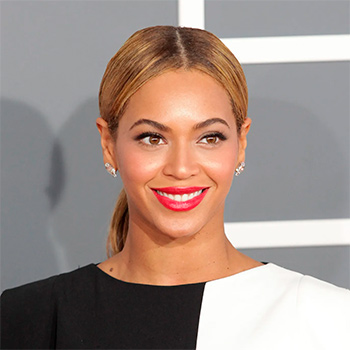
Beyoncé (full name — Beyoncé Giselle Knowles-Carter; born September 4, 1981, Houston, Texas, USA) is an American singer, songwriter, music producer, actress and director. She first achieved worldwide fame as the lead vocalist of Destiny's Child, and after the release of Dangerously in Love in 2003 began a solo career spanning R&B, pop, dance, rock, country and other areas of contemporary popular music.
Beyoncé's music has never been limited to a single genre. R&B and pop remain at its core, but at different stages she has worked with funk, hip-hop, soul, rock, gospel, electronic dance music, house, disco, bounce, country, blues, folk and African musical traditions. One of the most distinctive features of her mature period has been the tendency to treat genre not as a rigid category but as part of the history of American music and the African diaspora. This principle lies at the heart of Lemonade, Renaissance and Cowboy Carter.
Beyoncé has won 35 Grammy Awards from 99 nominations, making her both the most awarded and the most nominated artist in Grammy history. All eight of her solo studio albums debuted at No. 1 on the Billboard 200.
Houston and the first performances
Beyoncé Giselle Knowles was born in Houston to Tina Knowles, the owner of a hair salon, and Mathew Knowles, who worked in sales. She studied music and dance from childhood. While still in elementary school, Beyoncé took part in talent competitions and school performances, and by the age of nine she had joined a girl group that would later become known as Girl's Tyme.
Girl's Tyme performed in local competitions and appeared on the television show Star Search in the early 1990s, but lost. Beyoncé would later refer to the experience repeatedly as an early lesson in failure within an industry where vocal talent alone was not enough to guarantee professional success.
Her father, Mathew Knowles, gradually took over management of the group and reorganized its line-up and professional training. After several name changes and attempts to secure a recording contract, the group eventually signed with Columbia Records and became known as Destiny's Child.
Destiny's Child: from Girl's Tyme to worldwide fame
The Destiny's Child line-up that recorded the debut album consisted of Beyoncé Knowles, Kelly Rowland, LaTavia Roberson and LeToya Luckett. The album Destiny's Child was released in 1998, while the group's major commercial breakthrough came a year later with The Writing's on the Wall.
The album included Bills, Bills, Bills, Say My Name, Bug a Boo and Jumpin', Jumpin'. Bills, Bills, Bills and Say My Name became the group's first No. 1 singles on the Billboard Hot 100. Destiny's Child won their first Grammys for Say My Name — Best R&B Song and Best R&B Performance by a Duo or Group with Vocals.
The success was accompanied by major line-up changes. Roberson and Luckett left the group; after a brief period with Farrah Franklin, the definitive configuration emerged as the trio of Beyoncé, Kelly Rowland and Michelle Williams. It was this line-up that recorded and performed much of Destiny's Child's best-known later material.
At the end of 2000, Independent Women Part I, recorded for the film Charlie's Angels, became the group's biggest US chart success, while the 2001 album Survivor cemented their status among the leading R&B and pop acts of the era. The title track won a Grammy.
After a period devoted to solo projects, the members reunited for the 2004 album Destiny Fulfilled, which included Lose My Breath, Soldier, Girl and Cater 2 U. During their 2005 tour, the group announced the end of regular activity together. Beyoncé, Rowland and Williams later reunited several times for individual performances, most notably at the Super Bowl in 2013 and Coachella in 2018.
Dangerously in Love: the solo breakthrough
While still a member of Destiny's Child, Beyoncé began developing an independent career. Her first full-length solo studio album, Dangerously in Love, was released on June 24, 2003 and debuted at No. 1 on the Billboard 200. The album marked the beginning of the independent solo phase of her discography.
The lead single was Crazy in Love featuring Jay-Z — a track built around a striking horn loop sampled from The Chi-Lites and combining R&B, funk and hip-hop. The next major hit, Baby Boy featuring Sean Paul, also reached No. 1 on the Billboard Hot 100. The album included Me, Myself and I, Naughty Girl and a reworked solo version of Dangerously in Love, which had previously appeared on a Destiny's Child album.
At the 2004 Grammy Awards, Beyoncé won five awards, including Best Contemporary R&B Album for Dangerously in Love, as well as Best R&B Song and Best Rap/Sung Collaboration for Crazy in Love. That same night she opened the ceremony with a joint performance alongside Prince.
B'Day and Dreamgirls
The second solo album, B'Day, was released in September 2006. Its sound was noticeably harder and more rhythm-driven: funk, R&B, live horns and percussion were given more space than on the debut. Beyoncé took part in the writing, production and arrangement of the material, working with The Neptunes, Rodney Jerkins, Swizz Beatz and other producers.
Key songs from the period included Déjà Vu, Ring the Alarm, Get Me Bodied, Upgrade U and above all Irreplaceable, which became one of the biggest hits of her early solo career. B'Day won the Grammy for Best Contemporary R&B Album.
At the same time, Beyoncé expanded her acting career. After Austin Powers in Goldmember and other films, her most significant role came in the 2006 musical Dreamgirls, in which she played Deena Jones and performed Listen. Her later filmography included Cadillac Records, in which she portrayed Etta James, and the thriller Obsessed.
I Am... Sasha Fierce: pop scale and Single Ladies
The third album, I Am... Sasha Fierce, was released in 2008 and built around a dual concept: the more intimate I Am... side was contrasted with the stage persona Sasha Fierce. Its best-known songs included If I Were a Boy, Halo and Single Ladies (Put a Ring on It).
Single Ladies became especially significant thanks to its minimalist black-and-white video and choreography, which developed into a cultural phenomenon in its own right. At the 2010 Grammy Awards, Beyoncé won six awards in a single night, including Song of the Year for Single Ladies, Best Female Pop Vocal Performance for Halo and Best Contemporary R&B Album.
4 and the transition to full creative control
Before making her fourth album, Beyoncé ended her professional relationship with her father as her manager. 4, released in 2011, became her first major studio project created under this new level of managerial independence.
Instead of trying to repeat Single Ladies, the album emphasized soul, R&B, funk and a more traditional vocal approach. Love on Top, Countdown, End of Time, Best Thing I Never Had and Run the World (Girls) represented different sides of the record. Love on Top proved especially enduring, built around a sequence of key changes and showcasing Beyoncé's vocal technique.
In the same year, 2011, Beyoncé became the first female solo artist in more than two decades to headline the main Pyramid Stage at Glastonbury. The performance became one of the key live events of the 4 era.
Beyoncé: an album without a traditional pre-release campaign
On December 13, 2013, Beyoncé unexpectedly released her fifth album, Beyoncé, without a traditional advance promotional campaign or previously released singles. The music arrived together with 17 visual works, which led the singer herself to describe the project as a visual album.
The release strategy became one of the most widely discussed music-industry events of the 2010s and significantly strengthened the model of the surprise digital release for major albums. Musically, the record was considerably darker and more experimental than her earlier work, combining alternative R&B, hip-hop, electronic music and more minimalist production. Key tracks included Drunk in Love, Partition, XO, Pretty Hurts, Flawless and Mine.
From this period onward, visual storytelling definitively became an equal component of Beyoncé's album language: video ceased to function simply as an addition to an individual single and became a way of experiencing the entire album as a connected work.
Formation and Lemonade
In February 2016, Beyoncé released Formation without prior announcement. The song and video directly engaged with themes of Southern Black identity, police violence, New Orleans, beauty and cultural memory. The following day, Beyoncé performed the song during Super Bowl 50 alongside Coldplay and Bruno Mars.
A few months later came Lemonade — her sixth studio album and one of the most conceptually cohesive projects of her career. It was presented together with an hour-long film and structured as a movement through infidelity, anger, loss, reconciliation, family history and restoration.
Musically, Lemonade deliberately broke through conventional R&B boundaries. Don't Hurt Yourself used heavy rock with Jack White, Daddy Lessons turned toward country, Hold Up combined reggae and pop, Freedom with Kendrick Lamar blended gospel, blues and hip-hop, while Formation retained a connection to Southern rap and bounce.
The album received nine Grammy nominations and won two awards, including Best Urban Contemporary Album. In the Album of the Year category, Adele won with 25; Beyoncé's first victory in the category would later come with Cowboy Carter.
Coachella and Homecoming
In April 2018, Beyoncé became the first Black woman to headline Coachella. The production, informally known as “Beychella,” was built around the aesthetics of historically Black colleges and universities in the United States: marching band, drumline, majorettes, step choreography and the traditions of fraternities and sororities.
The show incorporated material from across her solo career, fragments of Southern hip-hop and a brief Destiny's Child reunion. Beyoncé's preparation for the concert and her return to the stage after giving birth to twins were documented in the film Homecoming, released alongside a live album in 2019. The film won the Grammy for Best Music Film.
Jay-Z, marriage and family
Beyoncé and rapper Jay-Z (Shawn Carter) met in the late 1990s, and their relationship began around the early 2000s.
On April 4, 2008, Beyoncé and Jay-Z married in a private ceremony in New York. For many years, the couple tried to keep family life separate from public life, although their relationship gradually became an important part of their shared creative work.
In 2012, their daughter Blue Ivy Carter was born. In 2017, Beyoncé and Jay-Z became parents to twins — daughter Rumi and son Sir Carter. Motherhood has repeatedly appeared in Beyoncé's music, films and concert projects, while Blue Ivy later began appearing in her creative work and on stage herself.
The mid-2010s became a difficult period in the marriage. Themes of infidelity, distrust and eventual reconciliation formed the basis of a significant part of the 2016 album Lemonade. Jay-Z later spoke publicly about his own infidelity and addressed the same events on his 2017 album 4:44. In that sense, the two albums effectively present different sides of the same marital crisis.
The Carters, Everything Is Love and the Louvre
In June 2018, Beyoncé and Jay-Z unexpectedly released the collaborative album Everything Is Love under the name The Carters. The central visual work of the project was the video for APESHIT, filmed inside the Louvre in Paris among canonical works of Western European art. The album won the Grammy for Best Urban Contemporary Album.
The Lion King: The Gift and Black Is King
In 2019, Beyoncé voiced Nala in Disney's new version of The Lion King. In addition to her work on the film, she curated the album The Lion King: The Gift, created with extensive participation from artists of African origin and combining pop, R&B, Afrobeats and other styles.
In 2020, the music received an independent visual continuation in the film Black Is King, which Beyoncé co-wrote and co-directed. The project explored the African diaspora through costumes, locations, choreography and symbolic imagery and is not a separate studio album within her main discography.
Renaissance: Act I
After a six-year gap between solo studio albums, Beyoncé released Renaissance on July 29, 2022. At the time of release, she announced that it was the first act of a three-part project recorded over three years during the pandemic.
Instead of the narrative structure of Lemonade, the album was built around movement and club space. House, disco, ballroom, bounce, funk, dancehall and other styles flow into one another with almost no pauses, creating the effect of an extended DJ mix. An important part of the concept is connected to the history of Black and queer communities that played fundamental roles in the development of house, ballroom and contemporary club culture.
Key tracks included Break My Soul, Cuff It, Alien Superstar, Virgo's Groove, Heated, Pure/Honey and Summer Renaissance. Break My Soul topped the Billboard Hot 100, while the album became Beyoncé's seventh solo No. 1 on the Billboard 200.
At the 2023 Grammy Awards, Beyoncé won four awards. Renaissance winning Best Dance/Electronic Music Album brought her career total to 32 Grammys and made her the most awarded artist in the history of the ceremony.
Renaissance World Tour
In 2023, Beyoncé transformed the club structure of the album into the large-scale Renaissance World Tour. The tour travelled across North America and Europe, included 56 concerts and, according to Billboard Boxscore, grossed approximately $579 million.
The concert program combined new material with songs from across her solo career, while the technological stage production — giant screens, mechanical structures, lighting and costumes — was integrated directly into the musical dramaturgy. The tour also became the basis for Renaissance: A Film by Beyoncé, which the singer wrote, directed and produced.
Texas Hold 'Em and the turn toward country
In February 2024, Texas Hold 'Em and 16 Carriages appeared, announcing the beginning of the second act. Texas Hold 'Em debuted at No. 1 on Billboard Hot Country Songs, making Beyoncé the first Black woman in the history of the chart to reach No. 1. The song subsequently topped the main Billboard Hot 100 as well.
The release of the songs sparked a broad discussion about the presence of Black musicians in the history of country and about the boundaries of genre classification. For Beyoncé, however, the direction did not emerge suddenly: country elements had already been clearly present in Daddy Lessons on Lemonade.
Cowboy Carter: Act II
Cowboy Carter was released on March 29, 2024 and became the second act of the announced three-part project. Despite its obvious connection to country and Western culture, the album's structure extends far beyond a single genre: it incorporates gospel, rock, blues, folk, psychedelic soul, pop, hip-hop and other forms of American music.
Different generations of performers appear on the album both directly and symbolically, including Dolly Parton, Willie Nelson, Linda Martell, Miley Cyrus, Post Malone, Shaboozey, Tanner Adell, Brittney Spencer, Tiera Kennedy and others. Beyoncé recorded her own reinterpretation of Jolene and a version of The Beatles' Blackbird titled Blackbiird.
Cowboy Carter debuted at No. 1 on the Billboard 200, becoming Beyoncé's eighth consecutive solo studio album to top the chart. At the same time, she became the first Black woman to top Billboard Top Country Albums.
The first Album of the Year
Eleven nominations from the Cowboy Carter era brought Beyoncé's career total to 99 Grammy nominations — an all-time record for the awards. At the 2025 ceremony, Cowboy Carter gave her her first victory in the Album of the Year category.
She also became the first Black woman to win Best Country Album, while II Most Wanted with Miley Cyrus won Best Country Duo/Group Performance. Following three victories that night, Beyoncé's total number of Grammys reached 35.
Before Cowboy Carter, several Beyoncé albums had been nominated for Album of the Year, but she won the main album category for the first time in 2025.
Cowboy Carter Tour
The Cowboy Carter Tour began in April 2025. The concert production expanded on the album's themes — American mythology, Western imagery, the history of Black music and reflections on national identity — while also incorporating songs from earlier parts of her discography. The official concert run concluded in July 2025.
According to Billboard Boxscore, the tour's 32 concerts grossed $407.6 million and drew approximately 1.6 million spectators. Billboard described Cowboy Carter Tour as the highest-grossing country tour in the history of its box-office reporting.
Act III
When Renaissance was released, Beyoncé defined the series as a three-act project. Renaissance became the first act, while Cowboy Carter became the second.
As of August 2026, the official title, musical direction and release date of the third act have not been announced. Beyoncé's publicist denied reports that appeared in spring 2026 claiming that an immediate launch of the project was being prepared. Speculation that Act III will be predominantly rock-oriented remains unconfirmed.
Beyoncé's visual language
Beginning at least with the 2013 album Beyoncé, visuals became one of the main methods through which her major projects were constructed. The seventeen videos released simultaneously with the self-titled album, the film Lemonade, the documentary Homecoming, Black Is King and Renaissance: A Film by Beyoncé demonstrate a consistent shift from traditional music videos toward long-form visual work.
At the same time, the visual projects differ significantly from one another. Lemonade uses a unified narrative between songs; Homecoming combines a concert film with a story about the preparation process; Black Is King develops the material of The Gift through its own visual mythology. Calling all of these works simply “music videos” would therefore be too narrow.
Live performance approach
Beyoncé belongs to the category of artists for whom a live performance is an independent part of the creative project. In her shows, music is closely connected with choreography, a live band, lighting, costumes, visual interludes and carefully structured dramaturgy. This principle was especially clear at Coachella 2018, during the Renaissance World Tour and on the Cowboy Carter Tour.
At the same time, the vocal performance itself remains central. Beyoncé combines melismatic R&B technique, a powerful chest register, falsetto, rhythmically precise declamation and multilayered vocal arrangements. Her ability to move between full singing, rap-like phrasing and demanding stage choreography has become one of the defining features of her live style.
Musical evolution
Beyoncé's solo discography is especially revealing in the way nearly every major period changes the balance between genres. Dangerously in Love developed the R&B and pop language of the early 2000s; B'Day strengthened funk and live rhythmic energy; I Am... Sasha Fierce expanded her pop audience; 4 turned toward soul and traditional R&B; Beyoncé moved into more minimalist and experimental contemporary R&B; and Lemonade deliberately crossed multiple American genres.
Renaissance shifted the centre of gravity toward the history of dance, house, disco, bounce and ballroom, while Cowboy Carter turned toward country and the broader history of American folk and popular music. The two albums are united by the framework of the three-act project, but they are fundamentally different musically.
Beyoncé studio discography
- Dangerously in Love — 2003
- B'Day — 2006
- I Am... Sasha Fierce — 2008
- 4 — 2011
- Beyoncé — 2013
- Lemonade — 2016
- Renaissance — 2022
- Cowboy Carter — 2024
All eight studio albums topped the Billboard 200. Cowboy Carter is her eighth solo studio album, while the expected third act should not be included in the official studio discography until it is actually released.
Other important album projects
Everything Is Love (2018) is a collaborative studio album by Beyoncé and Jay-Z under the name The Carters. Homecoming: The Live Album (2019) documents the Coachella performance. The Lion King: The Gift (2019) is an album produced and curated by Beyoncé as a companion to the film The Lion King, not her ninth solo studio album. The visual continuation of The Gift was the 2020 film Black Is King.
Main songs
Different stages of Beyoncé's career are represented by Crazy in Love, Baby Boy, Irreplaceable, Déjà Vu, Single Ladies (Put a Ring on It), Halo, If I Were a Boy, Run the World (Girls), Love on Top, Countdown, Drunk in Love, Partition, Flawless, Formation, Hold Up, Freedom, Sorry, Break My Soul, Cuff It, Texas Hold 'Em, 16 Carriages and II Most Wanted. In the history of Destiny's Child, central tracks include No, No, No, Bills Bills Bills, Say My Name, Independent Women Part I, Survivor, Bootylicious, Lose My Breath and Cater 2 U.
Grammys and records
Grammy statistics are among the clearest quantitative measures of her career. Following the 2025 ceremony, Beyoncé has 35 wins from 99 nominations. She ranks first in the history of the awards for both victories and nominations.
Her Grammys span R&B, pop, dance/electronic, rap, music film, music video and country. The awards cover different phases of her career — from Destiny's Child and Dangerously in Love to Renaissance and Cowboy Carter.
Why Beyoncé occupies a special place in contemporary pop music
Beyoncé's significance is difficult to explain through commercial figures or award totals alone. Her career demonstrates a transformation in the very model of a major pop artist: from frontwoman of a successful group and performer of radio singles to an artist who controls musical concept, visual language, film, concert production and even the way an album is distributed.
The release of Beyoncé changed expectations about how a major artist could release an album; Lemonade combined music and cinema into a unified narrative; Coachella demonstrated the possibilities of a festival performance as a cultural and historical statement; Renaissance turned toward the origins of club music, while Cowboy Carter applied the same principle of historical exploration to country and Americana.
For that reason, Beyoncé is more accurately understood as more than simply a pop or R&B singer. Her catalogue over the past decades has consistently explored the boundaries of musical categories and demonstrated how closely the histories of pop, country, rock, dance and R&B are connected to African American musical traditions. At the same time, she has preserved qualities already evident during the Destiny's Child era: meticulous work with vocal arrangement, rhythm and song form.
From Say My Name and Crazy in Love to Formation, Break My Soul and Texas Hold 'Em, her career spans several substantially different eras of popular music. The Grammy record, eight consecutive No. 1 albums on the Billboard 200 and the scale of her concert productions document the commercial side of that trajectory, but Beyoncé's enduring place in music history is defined above all by her ability to continually reshape the form of her own work without breaking the connection between new material and the musical culture from which it emerged.