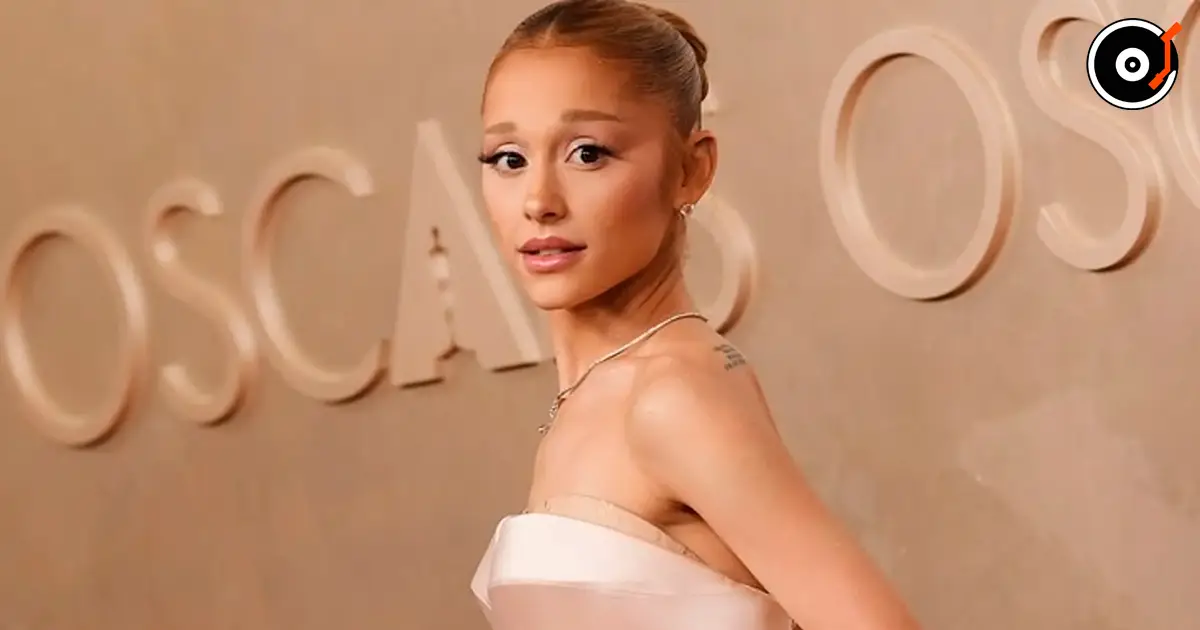
Ariana Grande is suing unidentified hackers over the leak of unreleased music, photos and videos. What was stolen, how the files were sold and what the singer is demanding.
Ariana Grande has launched legal proceedings against unidentified hackers whom she accuses of stealing and distributing her unreleased music, photographs and behind-the-scenes video materials over a period of several years. According to the lawsuit, 45 officially unreleased songs by the singer appeared online in 2023 alone, while some of the stolen content was sold through private platforms.
American singer and actress Ariana Grande has filed a lawsuit against unidentified individuals allegedly involved in hacking the digital accounts of her creative partners. The complaint was filed on July 27, 2026, in the Superior Court of Los Angeles County. The defendants are listed in the documents as John Doe 1 and John Does 2–100 — standard placeholder names used when the identities of alleged offenders have not yet been established.
Grande accuses the defendants of invasion of privacy, unauthorised access to computer data and the wrongful appropriation of materials belonging to her. The singer has also requested a jury trial. At this stage, these are civil allegations made by the artist: the defendants have not been identified, and no court has yet determined their guilt.
What was allegedly stolen
According to the lawsuit, the perpetrators gained access not only to completed songs, but also to materials documenting the singer’s creative process. These allegedly included:
- unreleased master recordings and demos;
- audio and video from studio sessions;
- materials from music video shoots;
- behind-the-scenes photographs and footage;
- images not used in album photo shoots;
- personal and professional photographs that were not intended for publication.
Grande’s lawyers claim that the stolen files were distributed and sold in separate packages, including through PayPal and Cash App. Some buyers subsequently uploaded the acquired content to various online platforms.
The court documents reportedly refer to data being sold on the dark web for “substantial sums”, although the specific prices, the sellers’ total revenue and the amount of compensation being sought have not been disclosed in published summaries of the complaint.
Forty-five songs leaked in 2023
One of the central episodes in the case is the large-scale leak that occurred in 2023. According to the singer’s legal team, 45 unreleased Ariana Grande songs were stolen and published during that year.
Her lawyers describe the incident as part of a much longer-running problem. The complaint claims that hundreds of similar leaks have occurred since Grande began her music career in 2011. This may refer not only to different songs, but also to demos, early edits, recording fragments, photographs and other files. It would therefore be inaccurate to describe the case as involving “hundreds of leaked songs”: the document reportedly refers to hundreds of incidents or materials, while 45 songs are specifically mentioned in relation to 2023.
How the hackers may have obtained the materials
The complaint describes several alleged methods used to obtain the files. Notably, the main targets of the attacks, according to the documents, were not necessarily Ariana Grande herself, but people who had worked with her, including photographers, producers and technical specialists.
In 2019, the perpetrators allegedly obtained login credentials for the Dropbox account of a photographer who had previously worked with the singer and downloaded unpublished images from it.
In 2020, the mobile phone of one of her producers was reportedly hacked. Unfinished master recordings, demos and videos from studio sessions were allegedly copied from the device.
Two further incidents reportedly occurred in January and February 2024. According to Grande’s account, the perpetrators created a Gmail address and domain name that imitated the contact details of a real photographer. They then contacted one of his technical employees and persuaded that person to transfer private materials belonging to the singer.
The case therefore does not concern a single breach of one archive, but an alleged long-term scheme involving stolen credentials, access to devices and impersonation-based phishing.
The leaks allegedly affected Ariana Grande’s releases
The singer’s legal team claims that the unlawful distribution of the files caused economic and reputational damage, disrupted professional relationships and interfered with her creative process.
In some cases, Grande was allegedly forced to re-record material and change the dates of future releases in order to protect unfinished projects and avoid officially releasing music in a form that had already appeared online without her consent. Her team also spent resources investigating the leaks and attempting to remove unlawfully published content.
For a musician, the leak of a demo is different from the unauthorised distribution of an already released track. Listeners receive an unfinished work without the final mix, approved arrangement or album context. An early version may then begin to be perceived as a complete song by the artist and can influence the public response to the official release.
The story of Fantasize
The best-known example was the song Fantasize, which appeared online in 2023 and went viral on TikTok. Ariana Grande later explained that the song had been created for a television project and was never intended to be released as one of her own singles.
During an interview in 2024, the singer directly described the song’s appearance online as theft and jokingly warned those responsible that she would see them “in jail”. She also acknowledged that the audience response to Fantasize influenced the direction of some songs on the album Eternal Sunshine, although the material ultimately included on the record was substantially reworked.
The episode illustrates the contradictory effects of a leak. An unofficial song may become popular, but viral success does not change the fact that the creator has been deprived of the right to decide whether the work should be released at all and how it should be presented to listeners.
What Ariana Grande is seeking
The main immediate purpose of the lawsuit is to establish the identities of the individuals currently listed as John Does. The singer is seeking to hold them accountable and stop the further distribution of the files.
The requested remedies reportedly include:
- an injunction prohibiting any further use or publication of the materials;
- the return of private files held by the defendants;
- compensation for the damage suffered;
- the identification of those involved in the hacking and sale of the content;
- a jury trial on the claims raised in the complaint.
The use of the designation John Does 2–100 does not mean that Grande has already identified and sued 100 specific hackers. These are procedural placeholders that allow real names to be added later if they can be established through data obtained from platforms, payment services and other intermediaries.
Which laws are cited in the lawsuit
The case is not based solely on copyright law. The stated causes of action reportedly include invasion of privacy, wrongful appropriation of property and violations of California’s Comprehensive Computer Data Access and Fraud Act.
Section 502 of the California Penal Code prohibits knowingly accessing computers or data without permission, copying information and using it to unlawfully obtain money, property or control over data. The law also allows for civil recovery of damages and, where intent, fraud or malice is proven, additional punitive damages.
Grande’s legal strategy therefore addresses several alleged violations at once: the hacking itself, the copying of files, the invasion of her private sphere, the subsequent sale of the materials and their continued distribution.
Why the case matters to the music industry
Ariana Grande’s lawsuit concerns a problem faced by many artists in the digital era. It is not always necessary to hack a star’s personal phone to obtain valuable files: attacking one of the dozens of people involved in production — such as a producer, engineer, photographer, editor or studio employee — may be enough.
A modern music project is stored in several locations at once. Master recordings, vocal tracks, cover artwork, music videos and promotional materials are exchanged between team members through cloud services. The security of a release is therefore determined not by the best-protected account, but by the most vulnerable link in the entire production chain.
A source close to the singer told People that the lawsuit should serve as a warning not only to those targeting Grande, but also to anyone stealing the work of other artists. According to the source, artists must retain the right to decide for themselves how and when their work is presented to the public.
What happens next
At the initial stage, Grande’s legal team will have to try to identify the alleged offenders. Until that happens, it will be difficult for the court to fully consider the claims against specific defendants.
If digital evidence is uncovered, the group of people involved in the case may change. It could eventually include the direct hackers, sellers of the files or other individuals who knowingly participated in distributing the stolen content. For now, however, no confirmed names or final list of defendants has been made public.
It is also important to note that all the actions described remain allegations set out in the lawsuit. No court has yet issued a decision on the substance of the claims.
Conclusion
Ariana Grande filed the lawsuit following what she describes as a years-long series of leaks involving unreleased songs, demos, studio recordings, photographs and video materials. The complaint specifically mentions 45 compositions allegedly stolen and published in 2023 alone.
The case goes beyond an ordinary attempt to remove individual files from the internet. The singer intends to identify the alleged organisers of the leaks and hold them accountable for the hacking, sale of content and interference with her creative work.
The success of the proceedings will depend on whether anonymous accounts, payment transactions and digital traces can be connected to specific individuals. Regardless of the eventual outcome, the lawsuit has already raised an important question for the music business: who controls a work before its official release — its creator or the person who first gains unlawful access to it?