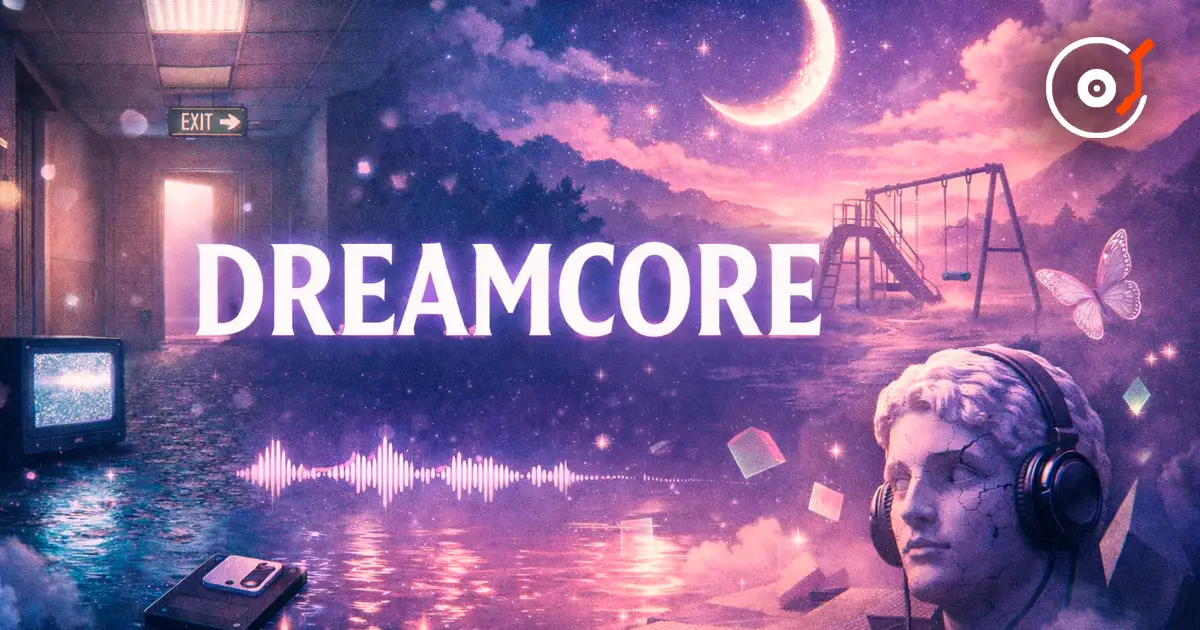
Dreamcore — an atmospheric internet-born style blending ambient, lo-fi, and vaporwave. Discover the history of Dreamcore, its characteristics, and listen to new music online in high quality on Minatrix.FM.
The music platform Minatrix.FM continues to expand its music encyclopedia. Our goal is to create one of the largest and most comprehensive databases of music genres on the internet. At the moment, the project catalog already includes more than 270 music genres and subgenres, and work on the encyclopedia is ongoing.
According to estimates by music researchers and catalogs such as Every Noise at Once, Discogs, and other archives, there are more than 6,300 music genres and microgenres in the world. Many of them are extremely niche, experimental, or exist only within internet communities. Adding every such style to the main catalog is not always practical; however, we believe it is important to pay attention to every interesting phenomenon in music culture. That is why today we will talk about an unusual direction called Dreamcore.
What is Dreamcore
Dreamcore is an aesthetic and musical direction associated with the atmosphere of dreams, nostalgia, and a sense of “unreality.” The genre emerged from internet culture and is closely connected with the visual aesthetic of liminal spaces — empty, strange, and slightly unsettling environments that resemble scenes from forgotten dreams.
Musically, Dreamcore is not always a strictly defined genre. More often it represents an atmospheric style or mood created through a combination of several musical directions:
- ambient
- lo-fi
- vaporwave
- downtempo
- experimental electronic
Dreamcore music often sounds as if it comes from memories or dreams: muted synthesizers, blurred melodies, echo effects, and slowed rhythms create a unique immersive feeling.
Today listeners can listen to Dreamcore online, discover new music, find atmospheric compositions, and explore the best tracks in high quality on music platforms and internet radio.
The Origins of Dreamcore
Dreamcore emerged in the late 2010s within internet communities, particularly on platforms such as YouTube, TikTok, Tumblr, and Discord.
Users began creating videos and music compilations that conveyed the feeling of dreams, strange nostalgia, and a subtle sense of unease. These videos often featured images of empty corridors, nighttime streets, old game rooms, or school interiors — the so-called liminal spaces.
The music accompanying these visuals gradually formed a distinct atmosphere that came to be known as Dreamcore.
Musical Characteristics of Dreamcore
Although Dreamcore does not follow strict musical rules, it has several recognizable elements.
Atmosphere
The main goal of Dreamcore is to create a dream-like or memory-like feeling.
Music may include:
- blurred synthesizers
- slow melodies
- long atmospheric sounds
- echo and reverb effects
Tempo and Rhythm
The tempo is usually slow or moderate. In some cases, compositions may even exist without a clear rhythmic structure.
Sound Design
Dreamcore tracks often use:
- field recordings
- ambient environmental noise
- old recordings or audio samples from films
- slowed musical fragments
This enhances the feeling of a strange and slightly unreal space.
Dreamcore and Internet Culture
Dreamcore cannot be viewed solely as a musical style. It is part of a broader internet aesthetic that combines music, visual art, and atmosphere.
Dreamcore is often associated with aesthetic movements such as:
- Weirdcore
- Liminal Space
- Traumacore
- Nostalgiacore
In these projects, music serves as an emotional background that enhances the feeling of dreams or memories.
Where to Listen to Dreamcore
Today Dreamcore spreads mainly through the internet. Listeners can listen to Dreamcore online, discover new music, explore the best atmospheric tracks, and find experimental compositions.
On the Minatrix.FM platform, we also follow the development of such directions and talk about unusual genres emerging within digital music culture.
Interesting Facts About Dreamcore
1. Dreamcore often exists without strict boundaries
It is more an atmosphere and aesthetic than a strictly defined genre.
2. The genre was born on the internet
Unlike traditional music genres, Dreamcore emerged primarily through online communities.
3. Dreamcore is not only about music
Visual imagery and aesthetics play almost as important a role as sound.
4. Many tracks are created by independent artists
Dreamcore often spreads through independent platforms and experimental projects.
Editorial Opinion of Minatrix.FM
Dreamcore is an interesting example of how modern internet culture continues to create new musical forms and aesthetics. This style demonstrates that music can be not only a genre but also an emotional atmosphere combining sound, visual imagery, and mood.
Such directions may remain niche, but they often become a source of new ideas for future music scenes. That is why the Minatrix.FM team continues exploring even the most unusual genres in order to gradually build one of the most detailed music encyclopedias on the web.