 Ace of Base

The Beatles were a British rock band from Liverpool whose classic line-up consisted of John Lennon, Paul McCartney, George Harrison and Ringo Starr. The history of the group in its final configuration spans less than eight years of recording activity — from the first single Love Me Do in 1962 to the break-up in 1970 — yet the influence of The Beatles on popular music proved vastly disproportionate to the relatively short period in which the band existed.
During that time, The Beatles evolved from a Liverpool rock & roll group playing American cover songs in Hamburg clubs into a studio-based band experimenting with magnetic tape, Indian instruments, orchestration, psychedelia, electronic processing and the very form of the popular album. Their music encompasses rock & roll, beat, rhythm & blues, folk rock, psychedelia, hard rock, country, music hall, Indian classical music and early forms of experimental rock. The Rock & Roll Hall of Fame describes The Beatles as a group that fundamentally changed what a pop or rock artist could do; the band was inducted into the Hall of Fame in 1988.
The classic story of The Beatles centres on four musicians, but their success cannot be explained without several other important figures. Manager Brian Epstein transformed a strong regional band into a professionally organised project and helped them gain access to the London recording industry. Producer George Martin became the group’s principal studio partner, helping translate increasingly unusual musical ideas into arrangements and recordings. Abbey Road engineers — above all Norman Smith, Geoff Emerick and Ken Townsend — helped create the technical side of a sound that, from the second half of the 1960s onward, became inseparable from the songs themselves.
John Lennon and The Quarrymen
The story of the group began long before the name The Beatles existed. In mid-1950s Liverpool, teenager John Lennon formed the skiffle group The Quarrymen. Skiffle — a British mixture of American folk, blues and early rock & roll — allowed young musicians to start with minimal equipment and became a training ground for an entire generation of British rock performers.
On 6 July 1957, at a church fête at St Peter's in the Liverpool district of Woolton, Lennon met fifteen-year-old Paul McCartney. McCartney demonstrated his knowledge of chords, lyrics and rock & roll repertoire and was subsequently invited to join The Quarrymen. That meeting became the starting point of one of the most productive songwriting partnerships of the twentieth century.
McCartney soon introduced Lennon to his younger school friend George Harrison. Harrison was noticeably younger than the others but considerably more confident technically on guitar. By 1958, the core of the future Beatles — Lennon, McCartney and Harrison — was already in place.
Stuart Sutcliffe and the emergence of the name The Beatles
In the early 1960s, Lennon’s close friend from art college, Stuart Sutcliffe, joined the group. He was primarily a talented artist rather than an experienced musician, but he bought a bass guitar and became part of the band during a period when it was going through several different names.
After The Quarrymen, various transitional names were used, including forms featuring Silver Beatles. By the summer of 1960, The Beatles gradually became established — a play on the word beat and on the tradition of names such as The Crickets, Buddy Holly’s group. The exact origin of the name has several versions, but Lennon and Sutcliffe are usually given important roles in its development. By the time of the band’s first extended trip to Hamburg, they were already performing as The Beatles.
Hamburg — the real school of The Beatles
A crucial stage in the band’s development took place not in a studio but in Hamburg. In August 1960, the group was given the opportunity to perform in clubs in Hamburg’s St. Pauli district. A permanent drummer was required for the trip, and Pete Best joined the line-up. In Germany, The Beatles were a five-piece: Lennon, McCartney, Harrison, Sutcliffe and Best.
The Hamburg performances were extraordinarily long. The musicians had to play for hours almost every day, constantly expanding their repertoire and learning how to hold the attention of noisy club audiences. It was there that the group developed endurance as live performers, a heavier playing style and the confidence they had lacked in their early Liverpool period.
In Hamburg, the musicians met artist and photographer Astrid Kirchherr, artist Klaus Voormann and other members of the local artistic community. Their influence was less musical than visual: clothing, photography and hairstyles gradually replaced the image of an ordinary Liverpool club band with something far more distinctive.
Sutcliffe eventually chose painting over music and remained in Hamburg. After his departure, Paul McCartney permanently took over the bass guitar. Sutcliffe died in April 1962 from a brain haemorrhage at the age of 21, shortly before his former bandmates returned to Germany.
Tony Sheridan and the first professional recording
Hamburg also gave The Beatles their first studio experience. In 1961, the group backed British singer and guitarist Tony Sheridan on a series of recordings for Polydor. The best known of these was My Bonnie. On the German release, the group was initially credited as The Beat Brothers, but the record became an important part of the later Beatles story.
According to the group’s official history, interest in My Bonnie was one of the circumstances that led Liverpool record-store owner Brian Epstein to The Beatles. In November 1961, he saw the group during a lunchtime performance at The Cavern Club.
The Cavern Club and Brian Epstein
By this point, The Beatles had become one of the most prominent groups on the Liverpool scene. Their regular performances at the Cavern Club created a loyal local following and firmly established the stage confidence they had developed in Hamburg.
Brian Epstein saw potential in the band that extended far beyond regional club popularity. His contribution is sometimes oversimplified as merely having “put the Beatles in suits”. In reality, it involved professionalising the entire operation: organising concerts, negotiating with promoters, enforcing discipline, presenting the group to the press and, most importantly, persistently searching for a recording contract. John Lennon later confirmed that Epstein did indeed insist on a more polished stage appearance.
Securing a contract proved far more difficult than the later story of rapid success might suggest. In January 1962, The Beatles failed their famous Decca audition. Epstein continued presenting the group’s recordings to different companies until the material reached Parlophone producer George Martin.
George Martin, EMI and the replacement of Pete Best
On 6 June 1962, The Beatles arrived at EMI Studios on Abbey Road to work with George Martin. Pete Best was still on drums. The recordings included Love Me Do, P.S. I Love You, Ask Me Why and Besame Mucho. Best left the band soon after this session.
In August 1962, he was replaced by Ringo Starr — real name Richard Starkey — who had previously played with Rory Storm and the Hurricanes and was already known to The Beatles from the Hamburg scene. This created the final line-up that would enter history as the “Fab Four”.
The relationship between The Beatles and George Martin became one of the most productive artist-producer partnerships in recording history. Martin had a classical musical education and experience not only with popular music but also with comedy, orchestral and experimental recordings. In the early years, he was clearly the more experienced studio figure, but over time The Beatles increasingly arrived with specific ideas of their own, forcing the producer and engineers to find ways of creating sounds that did not yet exist within their normal technical vocabulary.
Love Me Do and the beginning of the professional discography
On 5 October 1962, The Beatles’ first British single, Love Me Do / P.S. I Love You, was released. It reached No. 17 in the UK chart — not yet a phenomenal result, but high enough for a young Liverpool group that was still almost unknown outside north-west England.
The next single, Please Please Me, became a genuine national breakthrough in early 1963. It was followed by From Me to You and She Loves You. During 1963, the phenomenon that became known as Beatlemania emerged around the group. By the end of the year, The Beatles dominated the British singles, EP and album charts.
Please Please Me: a debut album recorded in one day
The first album, Please Please Me, was released on 22 March 1963. Most of the material was recorded during the famous session of 11 February 1963, when the group completed ten album tracks in a single day. The aim was to capture the energy of their club performances as directly as possible on record. The album subsequently spent 30 weeks at No. 1 in the UK before being replaced at the top by the next Beatles LP.
At this stage, the group still recorded many songs written by others — from Twist and Shout to Anna (Go to Him) and Baby It's You. But with the rapid growth of Lennon and McCartney’s own catalogue, The Beatles began changing the conventional pop-group model in which performers did not necessarily write most of their material themselves.
Lennon–McCartney: the songwriting centre of the group
Throughout the existence of The Beatles, most songs by John Lennon and Paul McCartney were published under the joint credit Lennon–McCartney, regardless of whether a particular composition had been written together or primarily by one of them.
In the early period, they genuinely did often work side by side, developing songs line by line. Later, they increasingly brought in nearly completed compositions, although the other partner could still add sections, alter lyrics, harmony or structure. The differences in their personalities gave the partnership a constant internal tension: Lennon’s directness and verbal sharpness could coexist with McCartney’s melodic and arranging instincts, although reducing either of them to a single role would be overly simplistic.
With The Beatles and the full emergence of Beatlemania
The second album, With The Beatles, appeared in November 1963 and immediately continued the success of the debut. For the first time in the group’s album discography, a George Harrison composition appeared — Don't Bother Me. By the end of 1963, the band’s popularity in Britain had reached a scale that made international expansion almost inevitable.
Epstein and the group were not limiting themselves to records: concerts, BBC radio, television and constant touring created an extraordinarily demanding schedule. That pace helps explain the difference between the early Beatles and the band of the second half of the decade: in just a few years, the musicians gained experience that most groups accumulate over a much longer period.
I Want to Hold Your Hand and the conquest of the United States
The main key to the American market was I Want to Hold Your Hand. The song was released in the UK in November 1963 and became The Beatles’ first single to top the Billboard Hot 100 in the United States.
On 7 February 1964, the group arrived in New York. Two days later, The Beatles made their first live appearance on The Ed Sullivan Show. According to the group’s official figures, around 73 million people watched the broadcast — a record television audience for the time.
The American success became almost unprecedented. On 4 April 1964, Beatles songs simultaneously occupied all five top positions on the Billboard Hot 100. During 1964 alone, the group had six No. 1 singles in the United States.
The success of The Beatles became the main catalyst for the so-called British Invasion — the mass arrival of British performers on the American market. After them, the doors to the United States opened much wider for The Rolling Stones, The Animals, The Kinks, The Who and many other British groups.
A Hard Day's Night: The Beatles write an album entirely themselves
In July 1964, the third British album A Hard Day's Night and the film of the same name, directed by Richard Lester, were released. On the British version of the record, every song was written by Lennon and McCartney — an important indication of how quickly The Beatles had developed from a club band with a large number of cover versions into a fully self-writing group.
The film itself also became a significant cultural phenomenon. Instead of a conventional musical with an artificial plot, Lester used rapid editing, a documentary-like camera style, absurd humour and the image of The Beatles constantly running from their own fame. This approach had a noticeable influence on later music films and on the language of music videos.
Beatles for Sale: exhaustion behind the success
By the end of 1964, constant touring, television appearances, interviews and studio work were beginning to affect the music itself. Beatles for Sale retained several rock & roll covers, but original songs such as I'm a Loser, No Reply and Baby's in Black had a noticeably different emotional tone from the carefree early Beatlemania period.
The influence of American folk and especially Bob Dylan gradually increased Lennon and McCartney’s interest in more personal lyrics. That development would become especially apparent on the next two albums.
Help!, Yesterday and the expanding possibilities of the pop song
In 1965, The Beatles made their second feature film, Help!, and released an album of the same name. Although the title song had an energetic arrangement, Lennon’s lyrics were far more vulnerable than those of the group’s earlier love singles.
The second side of the album contained Yesterday. Of the four Beatles, only Paul McCartney took part in the recording: his vocal and acoustic guitar were accompanied by a string quartet suggested by George Martin. This was unusual for a band that had previously been associated primarily with two guitars, bass and drums, and it established an important principle for future albums: a song no longer had to sound as though the four musicians could reproduce it on stage.
Shea Stadium and the limits of Beatlemania
On 15 August 1965, The Beatles performed at New York’s Shea Stadium before more than 55,000 spectators. The concert became one of the key moments in the transformation of rock music into a stadium spectacle.
Yet the scale of the audience also revealed a problem. Existing concert equipment was not designed for stadiums of that size, and the screams of the audience often nearly drowned out the band. Ringo later recalled that the musicians frequently felt the audience had come more to see The Beatles than to hear them play.
Rubber Soul: the beginning of a new phase
In December 1965, Rubber Soul was released — the album from which the story of The Beatles increasingly becomes one of studio evolution. The group broadened the subject matter of its lyrics and greatly expanded its instrumental language.
On Norwegian Wood (This Bird Has Flown), George Harrison played sitar, marking the beginning of a deeper interest in Indian music. The album also included Drive My Car, Nowhere Man, Michelle, Girl, In My Life and If I Needed Someone. Rubber Soul became an important transition from the early model of the pop album towards a more unified studio work in which songs, lyrics and arrangements could be heard as parts of a single artistic phase.
In July 2026, Apple Corps and Universal Music announced an expanded special edition of Rubber Soul, scheduled for release on 2 October 2026. The album was given a new stereo mix by Giles Martin and Sam Okell, a Dolby Atmos version, the original mono mix, the American Capitol configuration and previously unreleased studio recordings and home demos.
Revolver: the studio becomes a musical instrument
If Rubber Soul marked the transition, then Revolver, released on 5 August 1966, made it irreversible. The Beatles began using the studio not merely as a place to document performance, but as an independent compositional instrument.
Tomorrow Never Knows was especially radical. The recording was built around an almost unchanging harmonic centre, Ringo’s drum pattern, an Indian drone, Lennon’s processed voice, reversed parts and several tape loops. The vocal was passed through a rotating Leslie speaker, while sounds from the tape loops were manually fed from several tape machines. As a result, studio processing was no longer an addition to the performance but one of the main compositional elements of the recording.
At the same time, Revolver cannot be reduced to psychedelia alone. Eleanor Rigby exists almost entirely without a traditional rock band and is built on voices and a string ensemble; For No One combines chamber pop with French horn; Got to Get You into My Life uses a brass section; and Taxman, Love You To and I Want to Tell You greatly strengthened Harrison’s position as a songwriter. For the first time, a Beatles album contained three of his compositions.
Why The Beatles stopped touring
By 1966, the contradiction between the studio and live sides of The Beatles had become obvious. The music was becoming too complex to reproduce adequately with four musicians through the concert systems then available, while touring itself was accompanied by hysteria, security threats and political controversy.
The Beatles’ final conventional ticketed concert took place on 29 August 1966 at Candlestick Park in San Francisco. After that, the group abandoned touring and concentrated on the studio.
This decision radically changed their subsequent music. The Beatles no longer had to consider whether they could perform a new composition in front of an audience using only four instruments. The studio became a space in which any sound was possible.
Strawberry Fields Forever, Penny Lane and the world of childhood memories
The first results of that new freedom came from recordings made in late 1966 and early 1967. Lennon’s Strawberry Fields Forever and McCartney’s Penny Lane referred to real Liverpool locations but transformed them into completely different musical worlds.
Both songs were originally created during work on the next album, but EMI released them separately as a double A-side single. This is one of the best-known examples of The Beatles’ British release practice, in which major singles were often deliberately kept off studio LPs.
Sgt. Pepper's Lonely Hearts Club Band
On 1 June 1967, Sgt. Pepper's Lonely Hearts Club Band was released. The album adopted the conceptual frame of a fictional band, allowing The Beatles temporarily to distance themselves from their own public image. Not every song is connected by a single narrative, so calling Sgt. Pepper the first or a fully narrative concept album would be an oversimplification. Nevertheless, it had an enormous influence on the idea of the pop LP as an independent artistic work.
Here, the studio experiments of Revolver were expanded on an even larger scale. Lucy in the Sky with Diamonds, Being for the Benefit of Mr. Kite!, Within You Without You and especially A Day in the Life use editing, tape-speed manipulation, orchestral parts, Indian instruments and complex layering of four-track recordings.
George Martin and engineer Geoff Emerick were crucial participants in this process. The limitations of four-track technology meant that already recorded tracks constantly had to be mixed down onto new tapes to free space for further elements. The technological limitation itself ultimately became part of the character of the record.
Sgt. Pepper won the Grammy for Album of the Year, becoming the first rock album to receive the Recording Academy’s main album award.
All You Need Is Love and global television
On 25 June 1967, The Beatles performed All You Need Is Love live on the international satellite programme Our World. According to Apple Corps, the broadcast reached approximately 400 million viewers worldwide. The song became one of the most recognisable expressions of the idealism of the Summer of Love era.
The death of Brian Epstein
On 27 August 1967, Brian Epstein died unexpectedly at the age of 32. For The Beatles, this was more than a personal loss. The group had lost the person who had managed a large part of the business side of the operation throughout its period of global fame.
After his death, the musicians increasingly had to make business decisions themselves — an area in which they were far less prepared than they were for studio work. The resulting management vacuum later became one of the factors contributing to internal conflict.
Magical Mystery Tour
At the end of 1967, The Beatles released the television film Magical Mystery Tour. Unlike the professionally directed A Hard Day's Night and Help!, the new project was largely created by the musicians themselves. Its television premiere received a much colder reaction than their earlier films.
The musical side of the project proved far more durable. It included Magical Mystery Tour, The Fool on the Hill, I Am the Walrus, Your Mother Should Know and Blue Jay Way. The American LP version additionally included the singles from the period — Strawberry Fields Forever, Penny Lane, All You Need Is Love, Baby You're a Rich Man and Hello, Goodbye. This configuration was later incorporated into the main international Beatles catalogue.
George Harrison and Indian music
At the same time, George Harrison was developing independently as a songwriter. After his first experiment with sitar on Norwegian Wood, he began seriously studying Indian music and learned from Ravi Shankar. Love You To appeared on Revolver, followed by the expansive Within You Without You on Sgt. Pepper.
This was not simply decorative use of an “exotic” instrument. Through Harrison, The Beatles introduced a vast Western audience to elements of the Indian classical tradition while also expanding their own understanding of rhythm, drone, improvisation and the spiritual function of music.
Rishikesh and the songs of the future White Album
In early 1968, John, Paul, George and Ringo travelled to Rishikesh, India, where they attended a course in Transcendental Meditation taught by Maharishi Mahesh Yogi. Despite the later conflict between some of the musicians and the Maharishi, the trip was extraordinarily productive creatively.
A substantial amount of the material for the future double album The Beatles was written there. After returning, the musicians gathered at Harrison’s home in Esher and recorded acoustic demo versions of 27 songs.
Apple Corps: an attempt to create their own creative system
In 1968, the group launched Apple Corps — an organisation intended to support musical, film, publishing and other creative projects. The single Hey Jude became one of the first major releases on Apple Records; the group’s subsequent original releases appeared under its own label while being distributed by EMI.
However, the business side of Apple quickly encountered financial and management problems. Disagreements over the administration of the company and its finances later intensified the personal and creative tensions already existing among the members.
The Beatles — the “White Album”
The double album The Beatles, almost immediately given the unofficial name White Album, was released on 22 November 1968. It contains 30 tracks and is probably the most stylistically diverse album in the group’s catalogue.
It places the acoustic Blackbird alongside the heavy Helter Skelter, the blues-based Yer Blues, the experimental Revolution 9, the chamber-like Julia, the ironic Back in the U.S.S.R., Harrison’s rock composition While My Guitar Gently Weeps featuring Eric Clapton, and Ringo Starr’s first original Beatles song, Don't Pass Me By.
The diversity was both a strength and a symptom of changes within the group. George Martin recalled that during these sessions the musicians could be working simultaneously in different studios, forcing him to move between them. Instead of a single unified band, four increasingly independent writers and personalities were becoming visible.
Hey Jude
In August 1968, Hey Jude, written by McCartney, was released. The seven-minute song, with its extended closing coda, was unusually long for a mainstream pop single of its time but became one of The Beatles’ biggest commercial successes.
The same period also produced different versions of Lennon’s Revolution — a rare case in which a political theme was expressed so directly in the group’s catalogue. Through The Beatles, the social and cultural processes of the late 1960s were increasingly entering mainstream pop music.
Get Back: an attempt to become a live band again
In January 1969, The Beatles began a project under the working title Get Back. The idea was to move away from the complex, multi-layered studio production of previous years: the new songs would be rehearsed in front of cameras and eventually performed live.
Work began at Twickenham Film Studios in an atmosphere that sometimes became tense. George Harrison left the group for several days before returning after discussions over the conditions under which they would continue working. The project then moved to the more comfortable studio in the Apple building on Savile Row.
There, American keyboard player Billy Preston joined The Beatles. His electric piano can be heard on Get Back, Don't Let Me Down, I've Got a Feeling and other recordings. The single Get Back was officially credited to The Beatles with Billy Preston — an exceptionally rare case of a guest performer’s name appearing alongside the band’s name on one of their singles.
The rooftop concert
On 30 January 1969, The Beatles and Billy Preston went up to the roof of Apple headquarters at 3 Savile Row and played a concert without any advance public announcement.
The performance lasted around 42 minutes until police, responding to complaints, brought it to an end. The final song played was Get Back. It was the last public live performance by The Beatles as a group.
Footage from these sessions formed the basis of Michael Lindsay-Hogg’s film Let It Be. Half a century later, dozens of hours of unused material were reprocessed by Peter Jackson for the documentary project The Beatles: Get Back, which presented January 1969 as a far more complex period than the older myth of three weeks of uninterrupted conflict.
Abbey Road: the last album they recorded together
After the difficult experience of Get Back, the group returned to George Martin and recorded Abbey Road in the summer of 1969. It was the final Beatles album recorded as a new album, although Let It Be, based largely on the January sessions, was released later.
Abbey Road demonstrates a high level of studio organisation despite already serious internal disagreements. The first side contains Come Together, Something, Maxwell's Silver Hammer, Oh! Darling, Octopus's Garden and I Want You (She's So Heavy). The second begins with Here Comes the Sun and Because before moving into the famous sequence of shorter pieces known as the Abbey Road medley.
On this album, George Harrison finally ceased to be perceived merely as the group’s third songwriter. Something and Here Comes the Sun became two of the best-known compositions in the entire Beatles catalogue. Something also became the first Harrison song released as the A-side of a Beatles single.
The closing section of the medley ends with The End — a rare recording in which Ringo plays a drum solo while Lennon, McCartney and Harrison take turns exchanging short guitar solos. In historical context, the title became almost symbolic.
Why The Beatles broke up
It is inaccurate to reduce the break-up of The Beatles to a single cause. The group dissolved gradually under the influence of several processes at once: the musicians were becoming independent songwriters, their musical interests were diverging, tension surrounded the management of Apple, and after Brian Epstein’s death there was no universally accepted manager capable of representing all four members.
Conflict over financial management became especially serious. Lennon, Harrison and Starr supported American manager Allen Klein, while McCartney preferred lawyers Lee and John Eastman. The dispute concerned not only personal relationships but also legal control of the group’s business.
John Lennon’s relationship with Yoko Ono also changed the internal dynamic, but the widespread explanation that “The Beatles broke up because of Yoko” does not withstand serious historical analysis. By the end of the decade, the band already faced a complex combination of creative, business and personal disagreements.
Lennon had effectively told the others of his intention to leave the group in the autumn of 1969, but the decision was not publicly announced for some time. In April 1970, Paul McCartney’s answers in press material accompanying his first solo album were interpreted as public confirmation of the Beatles’ break-up. At the end of the year, he went to court seeking the legal dissolution of the partnership.
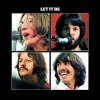
Let It Be — the final album released
Let It Be was released on 8 May 1970, when joint Beatles activity had effectively already ended. Most of the material came from the January 1969 sessions. After several album versions prepared by Glyn Johns were not released, producer Phil Spector was brought in to work on the recordings. His production, especially the orchestral treatment of The Long and Winding Road, later became the subject of major disagreement — particularly from McCartney.
The album included Two of Us, Across the Universe, Let It Be, I've Got a Feeling, One After 909, The Long and Winding Road, Get Back and other songs.
It is important to distinguish the chronology: Let It Be was the last Beatles studio album to be released, but Abbey Road was the last album the four musicians recorded together as a complete new LP.
The role of each member
John Lennon was one of the group’s founders, a songwriter, vocalist and rhythm guitarist. At different stages, he wrote both direct rock & roll songs and increasingly personal or experimental works — from Help! and In My Life to Strawberry Fields Forever, A Day in the Life, Revolution and Come Together.
Paul McCartney became the principal bass guitarist after Stuart Sutcliffe’s departure while remaining a vocalist, songwriter, pianist, guitarist and one of the main arranging forces of the group’s later period. His range stretched from Yesterday and Eleanor Rigby to Penny Lane, Hey Jude, Helter Skelter, Let It Be and the Abbey Road medley.
George Harrison joined as the youngest member and lead guitarist but gradually developed into an independent songwriter. Beyond Something and Here Comes the Sun, his Beatles catalogue includes Taxman, Love You To, Within You Without You, While My Guitar Gently Weeps, If I Needed Someone and other works.
Ringo Starr became the permanent drummer in 1962. His style was characterised by economy and an ability to build drum parts around the personality of the song rather than technical display. He also sang lead vocals on With a Little Help from My Friends, Yellow Submarine, Boys, Act Naturally and other songs, and wrote Don't Pass Me By and Octopus's Garden for The Beatles.
George Martin — producer, not a “secret member”
George Martin is often called the “fifth Beatle”, but from an encyclopaedic perspective it is more accurate to describe him as the group’s principal producer and musical intermediary between their ideas and the possibilities of the studio.
He wrote and adapted orchestral parts, helped shape the form of compositions and understood how to translate the musicians’ abstract requests into technical solutions. At the same time, his role changed as the band developed: whereas in 1962–1963 Martin had far greater experience and authority in the studio, by Revolver The Beatles themselves were actively demanding unusual sounds and pushing the studio team to find fundamentally new methods.
How The Beatles changed recording
Not every technique used by The Beatles was literally invented by them, but the group played an enormous role in bringing experimental studio methods into mainstream popular music.
Their recordings used tape-speed manipulation, reversed sound, tape loops, artificial double tracking of vocals, Leslie speakers, unusual microphone techniques, editing between different performances, repeated track reductions, Indian instruments, classical ensembles and large orchestras. Tomorrow Never Knows remains one of the clearest examples of these methods being transformed directly into composition.
Equally important was the transition from the model of “recording a live performance” to that of “creating a work that exists only as a recording”. Once touring stopped, The Beatles could release music that the original four-man line-up could not reproduce live, and this principle became normal for a vast amount of subsequent rock and pop music.
The Beatles films
The group’s film career is an important part of its cultural legacy. The main projects are:
- A Hard Day's Night — 1964;
- Help! — 1965;
- Magical Mystery Tour — 1967;
- Yellow Submarine — 1968, an animated film in which the real Beatles had limited involvement;
- Let It Be — 1970, a documentary about the Get Back sessions.
A Hard Day's Night proved especially influential, while the animation style of Yellow Submarine became an independent part of the group’s visual legacy.
After the break-up
All four members began or continued solo work during the final years of the group’s existence.
John Lennon developed Plastic Ono Band with Yoko Ono and recorded the albums John Lennon/Plastic Ono Band, Imagine, Mind Games, Walls and Bridges and Double Fantasy. His solo work was closely connected with political and pacifist activism.
Paul McCartney released the solo album McCartney and then formed the group Wings. Over the following decades, he continued his solo career, regularly recording new music and touring.
George Harrison released the triple album All Things Must Pass almost immediately after the break-up, drawing heavily on material for which there had been insufficient space within The Beatles. In 1971, he organised the Concert for Bangladesh — one of the most important early examples of a large-scale charity rock concert.
Ringo Starr built an independent career as a singer and drummer, recording a number of successful singles and later creating the concert project Ringo Starr & His All-Starr Band.
The deaths of John Lennon and George Harrison
The possibility of a full Beatles reunion disappeared permanently after the murder of John Lennon on 8 December 1980 in New York.
George Harrison died on 29 November 2001 after a prolonged battle with cancer.
Paul McCartney and Ringo Starr continued their solo careers and occasionally perform or record together, but they have never attempted to use the name The Beatles for a new permanent group.
Anthology: The Beatles work again on Lennon’s music
In the first half of the 1990s, McCartney, Harrison and Starr reunited for the major project The Beatles Anthology — a documentary series, a book and three double albums of archival material.
Yoko Ono gave the surviving Beatles several home demos recorded by Lennon. With producer Jeff Lynne, they used these recordings to create new group versions of Free as a Bird and Real Love, released in 1995 and 1996 respectively.
Free as a Bird later earned The Beatles two Grammys, while the Anthology series received another Recording Academy award.
New mixes and the return of the archives
In the twenty-first century, the Beatles legacy has developed not through the creation of a new repertoire but through work with original tapes and archival material. Producer Giles Martin, George Martin’s son, together with engineer Sam Okell, prepared new mixes of Sgt. Pepper's Lonely Hearts Club Band, The Beatles, Abbey Road, Let It Be and Revolver.
Peter Jackson’s 2021 documentary series The Beatles: Get Back proved especially important. To restore difficult mono material, the WingNut Films team developed MAL technology, capable of separating individual voices and instruments from within a combined recording. It later became crucial to a new stage of work on the Beatles catalogue.
Now and Then — the final Beatles song
In 2023, the group’s story received an unexpected continuation. John Lennon’s home demo Now and Then had been known since the Anthology period. In 1995, Paul, George and Ringo attempted to complete the song, but the quality of the cassette recording did not allow Lennon’s voice to be separated cleanly enough from the piano. The project was shelved.
After the development of MAL technology, Lennon’s voice could finally be isolated with sufficient precision. The completed version incorporated guitar recorded by George Harrison in 1995, a new drum part by Ringo Starr, and bass, guitars, keyboards and vocals by Paul McCartney. McCartney also recorded a slide-guitar solo as a deliberate stylistic tribute to Harrison.
Now and Then was released on 2 November 2023. The B-side of the physical single featured Love Me Do — The Beatles’ first British single from 1962 — symbolically closing the chronology of the group’s official singles.
The song became The Beatles’ 18th UK No. 1 single. Fifty-four years had passed between the group’s previous chart-topper, The Ballad of John and Yoko in 1969, and Now and Then. Official Charts also recorded a span of more than 60 years between the group’s first and final UK No. 1 singles.
Grammy for Now and Then
In 2025, Now and Then won the Grammy for Best Rock Performance and was nominated for Record of the Year. Following this victory, The Beatles’ Recording Academy total stood at 8 wins from 25 nominations.
Winning a new Grammy more than six decades after the band’s earliest awards became a rare example of archival technology doing more than simply reissuing old material: it enabled the completion of a work featuring, in practical terms, all four Beatles.
Anthology 4
In 2025, the Anthology archive project received a full continuation. A new collection, Anthology 4, prepared by Giles Martin, was released. It includes previously unreleased studio recordings from 1963–1969, Now and Then, and updated versions of Free as a Bird and Real Love, for which Jeff Lynne worked again with Lennon’s vocals after they had been isolated using modern audio-separation technology.
At the same time, the documentary series The Beatles Anthology was restored and a new ninth episode was added. Thus, a project originally created in the mid-1990s itself became a historical archive that received a continuation thirty years later.
Main discography of The Beatles
The British and American Beatles discographies differed significantly during the 1960s: Capitol Records for many years created its own US albums from British singles and LP tracks. After the catalogue was standardised, the following releases became the basis of the international discography. The group’s official catalogue today also includes the American LP configuration of Magical Mystery Tour, which was originally released in Britain as a double EP.
- Please Please Me — 1963
- With The Beatles — 1963
- A Hard Day's Night — 1964
- Beatles for Sale — 1964
- Help! — 1965
- Rubber Soul — 1965
- Revolver — 1966
- Sgt. Pepper's Lonely Hearts Club Band — 1967
- Magical Mystery Tour — 1967
- The Beatles — 1968
- Yellow Submarine — 1969
- Abbey Road — 1969
- Let It Be — 1970
Yellow Submarine occupies a special place: the first side of the original LP contains Beatles songs, while much of the second side consists of George Martin’s orchestral score for the animated film.
Main songs by The Beatles
Reducing the Beatles catalogue to only a handful of hits is almost impossible, but the following recordings are especially important for understanding the group’s development:
- Love Me Do — the beginning of the official discography;
- Please Please Me — the first major British breakthrough;
- She Loves You — one of the symbols of early Beatlemania;
- I Want to Hold Your Hand — the song that opened the American market;
- A Hard Day's Night — a concentrated example of the early Lennon–McCartney songwriting style;
- Yesterday — an expansion of the instrumental possibilities of the pop song;
- In My Life — a transition towards more personal lyrics;
- Norwegian Wood — an important point in introducing Western pop audiences to the sitar;
- Eleanor Rigby — a chamber-like composition created almost entirely without a conventional rock band;
- Tomorrow Never Knows — one of the central studio experiments of the 1960s;
- Strawberry Fields Forever — a psychedelic work by Lennon and George Martin;
- Penny Lane — McCartney’s musical portrait of Liverpool;
- A Day in the Life — the culmination of Sgt. Pepper;
- All You Need Is Love — a global television symbol of 1967;
- While My Guitar Gently Weeps — one of Harrison’s key compositions;
- Hey Jude — one of the group’s biggest late-period singles;
- Come Together — one of Lennon’s central compositions from the Abbey Road period;
- Something — Harrison’s definitive assertion as a songwriter;
- Here Comes the Sun — one of the most enduring Beatles songs in modern streaming culture;
- Let It Be — a late McCartney classic;
- Now and Then — the group’s final song, completed decades later.
Awards and records
The Beatles were inducted into the Rock & Roll Hall of Fame in 1988; Mick Jagger presented the group at the ceremony.
The Recording Academy credits the group with 8 Grammy wins from 25 nominations. The awards include Best New Artist, Album of the Year for Sgt. Pepper's Lonely Hearts Club Band, awards connected with the Anthology project and Best Rock Performance for Now and Then.
In the United Kingdom, The Beatles have 18 No. 1 singles; the most recent was Now and Then in 2023.
In the United States, the Beatles catalogue has one of the largest totals of certified record sales in recording history.
Guinness World Records recognises The Beatles as the best-selling group in history. Exact worldwide sales figures vary according to the methodology used to count physical formats, albums, singles and other releases, so presenting one universal sales estimate without specifying the methodology would be misleading.
Why the influence of The Beatles became so enormous
The historical importance of The Beatles does not lie in a single invention. They did not create rock & roll, were not the first performers to write their own songs, and did not invent multitrack recording, psychedelia or the concept album. Their contribution lies elsewhere: in an extraordinarily short period, the group brought together many existing ideas and greatly expanded expectations of what a popular music group could actually do.
At an early stage, they demonstrated that a group could simultaneously be a mass pop phenomenon and write a substantial part of its own repertoire. They then showed that an artist associated with hit singles could develop through full-length albums. After giving up touring, they transformed the studio from a place for documenting performances into a space for creating music that physically could not exist on stage in its original form.
The Beatles also changed the relationship between rock music and other cultures. A string quartet could exist alongside electric guitars, an Indian sitar alongside British pop melody, avant-garde tape collage alongside a song on a mainstream album, and a children’s song alongside heavy proto-metal or a chamber ballad.
Finally, the group’s development happened almost entirely in public. Less than four years passed between Love Me Do and Tomorrow Never Knows, and only a little more than four years between Please Please Me and Sgt. Pepper. Listeners in the 1960s therefore witnessed not merely a succession of albums but an extraordinarily rapid maturation of the language of popular music itself.
The Beatles after The Beatles
Another unusual aspect of the group’s history is that its cultural life did not effectively end in 1970. New generations successively discovered The Beatles through the compilations 1962–1966 and 1967–1970, the 1987 CDs, the 1990s Anthology project, the compilation 1, digital services, anniversary remixes, films, Get Back, Now and Then and a new wave of archival editions. In 2025, Anthology 4 was added to this process, and in July 2026 an expanded special edition of Rubber Soul was announced for release on 2 October.
This distinguishes The Beatles from many historical groups whose legacy exists mainly as an unchanged catalogue from the past. Beatles recordings continue to be technically reinterpreted, restored and studied without any attempt to replace the original history with a new line-up.
The place of The Beatles in music history
The Beatles existed as an international recording group for a surprisingly short time, but within that period they passed through several phases, each of which could have constituted a complete career in itself: Liverpool rock & roll, the Hamburg club school, Beatlemania, the British Invasion, mid-1960s songwriter-driven pop, psychedelia, studio experimentation and the mature rock of the final albums.
Their strength lay in the combination of four distinct musical personalities. Lennon–McCartney provided the main songwriting tension; Harrison gradually developed from lead guitarist into a songwriter of international stature; Starr gave the group its rhythmic individuality. George Martin and the Abbey Road team helped transform the ideas of the four musicians into recordings that significantly expanded the technical vocabulary of popular music.
The Beatles therefore matter not because every album or song must automatically be declared “the greatest in history”. Their importance is more concrete: after The Beatles, expectations of rock and pop groups were different. Artists were increasingly expected to write their own material, develop from album to album, treat the LP as an artistically coherent work, experiment with the studio, build a visual identity and change along with the culture around them.
The story that began with John Lennon’s teenage skiffle group and his meeting with Paul McCartney in 1957 ultimately led to Rubber Soul, Revolver, Sgt. Pepper's Lonely Hearts Club Band, The Beatles and Abbey Road — records that continue to serve as reference points in discussions about the development of popular music. The appearance of Now and Then more than half a century after the break-up demonstrated the unusual durability of the phenomenon itself: The Beatles remain not only part of music history but also an active cultural catalogue that continues to be rediscovered by new generations of listeners and through new technologies.