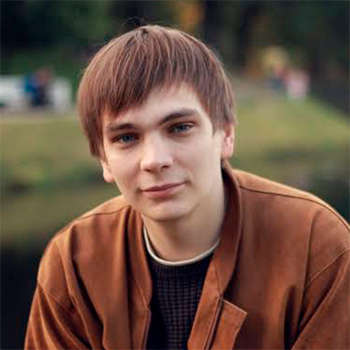
Slava KPSS (real name — Vyacheslav Valeryevich Mashnov; born May 9, 1990, Khabarovsk, Russia) is a Russian rapper, poet, battle MC and streamer, also known under the aliases Gnoyny, Sonya Marmeladova, Valentin Dyadka, Buter Brodsky, Vorovskaya Lapa and a number of other stage names. He is one of the most prominent figures of Russian-language battle rap of the 2010s and a member of the «Антихайп» collective.
Mashnov became widely known after defeating Oxxxymiron in a joint Versus Battle and #SlovoSPB event in August 2017. Long before that, he had already built an extensive underground discography, participated in the group «Ежемесячные», won the first season of Saint Petersburg’s Slovo league and experimented with grime, punk, trap, spoken word and singer-songwriter music.
Slava KPSS’s work combines battle-rap technique, cultural and literary references, crude humor, satire, post-irony and autobiographical lyricism. Behind deliberately absurd aliases and parody projects, his catalog also contains deeply serious works — «Солнце мёртвых», «Чудовище, погубившее мир», «Россия34». Among his most notable later releases are also «Россия24», «Оттенки барда 2» and the album «Единственный рэпер», released in 2026.
Childhood and youth in Khabarovsk
Vyacheslav Mashnov was born on May 9, 1990, in Khabarovsk. During his teenage years, his interests were connected more with punk culture, rock music and independent art than with professional hip-hop.
During his school years, Mashnov was interested in drawing and experimented with amateur animation together with friends. Later, he worked part-time selling compact discs containing psychological materials and tests, and also worked in mobile communications and at a water park.
After school, he studied within the structure of the Khabarovsk Institute of Infocommunications, in a field connected with communications and information technologies.
Mashnov’s early musical tastes were strongly influenced by Russian punk and alternative rock. Among the artists he mentioned in interviews were Yegor Letov and «Гражданская оборона», as well as various Russian rock and underground groups.
His interest in rap grew stronger in the early 2010s. Russian internet rap and projects that deliberately worked with provocation, absurdity and marginal aesthetics made a significant impression on him. Among the important reference points of this period were Бабангида, «Ленина Пакет» and Sasha Skul.
«Ежемесячные» and the first recordings
One of Mashnov’s first long-running musical projects was the group «Ежемесячные».
As early as 2012, the group was releasing early recordings and mini-releases, and in 2013 the work «Проснулась с ежемесячными» appeared. The project existed within an internet-underground aesthetic where serious rap lyrics could coexist with deliberately primitive humor, provocative titles and parody of genre clichés.
Later, «Ежемесячные» remained an important part of Mashnov’s creative environment. Through this project, he developed connections with other members of the underground scene and a working model in which the sheer number of aliases, characters and side projects became part of the artistic method.
Buter Brodsky
The alias Buter Brodsky holds a special place in Mashnov’s early solo discography.
Under this name, Mashnov released darker, more melancholic and literary-oriented material. The name itself combined everyday absurdity with the surname of Joseph Brodsky — a characteristic device in which the author clashes “high” culture with deliberately low or comic contexts.
In 2013, the EP «Пих-пох» appeared, followed by «КатафалкА» in 2014. In 2016, «Русское поле» was released.
The Buter Brodsky persona later returned several times in the discography. In 2019, Slava KPSS released the self-titled EP «Бутер Бродский», and at the end of 2022 — «Бутер Бродский 2».
These works contain less battle-rap bravado and more existential, self-destructive and reflective intonation. Buter Brodsky became one of Mashnov’s most enduring alternative personas.
Gnoyny and the beginning of the battle career
For battles, Vyacheslav chose the name Gnoyny.
In 2013, he applied to the Saint Petersburg battle league Slovo. During the first season of #SlovoSPB, he progressed through the tournament bracket and reached the final in 2014.
His opponent was Den Cheney, who later became one of the key organizers of the Saint Petersburg platform. Gnoyny won and became the champion of the first season of SlovoSPB.
This period established the main features of his battle style: a high density of punchlines, deliberate harshness, numerous references, mockery of the opponent’s personality and a constant attack not only on the immediate rival but also on their cultural image.
Gnoyny deliberately positioned himself against the more commercial side of Russian rap. He could simultaneously attack popular artists, battle organizers, the music press and the underground environment to which he himself belonged.
Slava KPSS
If the name Gnoyny became associated primarily with battles, then Slava KPSS became the main alias for original music.
Mashnov himself explained the origin of the name as a family joke: his father suggested the phrase «Слава КПСС», playing at once on Vyacheslav’s first name and the famous Soviet slogan.
The alias proved to be an accurate reflection of his later work. It sounds simultaneously like a person’s name, a political slogan and a parody of a stage brand.
Under the name Slava KPSS, Mashnov gained the freedom not to limit himself to a single battle-MC role. His songs include social satire, autobiography, deliberately absurd trap, literary references, punk, political grotesque and dark lyricism.
Sonya Marmeladova and battles over beats
Another important persona was Sonya Marmeladova — an alias especially closely associated with grime and battles performed over instrumentals.
In 2016, Sonya Marmeladova participated in one of the first notable episodes of the 140 BPM Battle format, performing against Edik_Kingsta.
Later, under this name, Mashnov faced Rickey F on Versus BPM.
While classic Gnoyny built his performances around a cappella battles, Sonya Marmeladova allowed him to work with fast flow, grime rhythms and a more improvisational sense of text.
The different aliases were not completely isolated musical projects. Rather, they represented separate modes of the same author that could overlap within songs, concerts and battles.
Zamay and Hype Train
One of Slava KPSS’s main creative partners became Zamay.
Their collaboration went far beyond a handful of guest verses. In 2015, the project «#Немимохайпамикстейп: Вход в рэп игру» appeared, and in September 2016 Slava KPSS and Zamay released the enormous mixtape Hype Train.
The release consisted of 30 tracks and ran for approximately two and a half hours. Its contributors represented different segments of underground rap and the emerging internet scene.
Hype Train clearly demonstrated a principle that would become characteristic of Mashnov’s later discography: the sheer volume of material itself becomes an artistic device. Instead of a carefully constructed commercial album, the listener receives a stream of tracks, characters, diss songs, internal jokes and cultural references.
«Антихайп»
In the second half of the 2010s, the collective «Антихайп» formed around Slava KPSS, Zamay and their associates.
At different times, СД, Замай, Booker and other figures from the battle and internet-rap scenes were connected with it.
The name reflected the collective’s ironic ideology. Its members mocked the industry’s obsession with popularity while simultaneously making active use of hype, conflicts and internet memes as tools for their own promotion.
For Slava KPSS, this contradiction became one of his central creative themes. He could publicly criticize the commercialization of rap and then, several months later, appear on a major television show — not hiding the contradiction but turning it into part of his persona.
Ernesto Zatknites and the challenge to Oxxxymiron
In the summer of 2016, attention around Gnoyny grew sharply after his battle against Ernesto Zatknites as part of the confrontation between Versus and #SlovoSPB.
A significant part of his performance was directed not so much against his immediate opponent as against Oxxxymiron, Versus Battle and Miron Fyodorov’s position within Russian rap.
Gnoyny accused him of contradicting his underground image with his status as a major star, mocked his cultural erudition and public seriousness.
Oxxxymiron responded to the performance and challenged Gnoyny to a battle.
The wait lasted about a year.
Oxxxymiron vs. Gnoyny
The battle took place on August 6, 2017, in Saint Petersburg as part of the second joint event between Versus Battle and #SlovoSPB. The video was published on August 13.
By that point, Oxxxymiron was one of the most famous Russian rappers and had never previously lost a major judged Versus battle. Gnoyny represented #SlovoSPB and a much more underground part of the scene.
All five judges awarded the victory to Slava KPSS. The final score was 5:0.
The video became one of the biggest events in Russian-language internet culture in 2017, gaining millions of views within the first day and pushing discussion of battle rap far beyond its core audience.
Across three rounds, Gnoyny attacked primarily Oxxxymiron’s image as an intellectual and culturally significant rapper. Rather than being merely a competition in rhymes, the battle became an argument about an artist’s position, sincerity, underground status and the ability of a popular rapper to retain freedom over his own image.
The victory became the main point of Slava KPSS’s mass recognition, but it was not the beginning of his career: by the time of the battle, he already had several years of recordings, SlovoSPB appearances, numerous aliases and a large underground discography behind him.
After the battle: television and mass recognition
After the battle was released, Mashnov found himself at the center of mainstream media culture for the first time.
He gave a major interview to Yuri Dud, participated in television and internet programs and became one of the most discussed rappers in the country.
In the autumn of 2017, Gnoyny joined the jury of the musical show «Успех» on STS alongside Philipp Kirkorov and other representatives of the industry.
The transition from radical underground culture to national television did not destroy the concept of «Антихайп». On the contrary, the mismatch between his former image and new opportunities became another subject for the artist’s self-irony.
«Чай вдвоём»
Even before the battle with Oxxxymiron, in April 2017, Slava KPSS released the album «Чай вдвоём» together with rapper and sound engineer AUX.
The release included the songs «Модный звук», «Фенобарбитал», «Инди», «Сам тебя кинул», «Ночью», «Ниагара» and others.
The material mocked current trends in Russian rap and already showed the artist as a musician capable of existing independently of battles.
«Солнце мёртвых»
In October 2017, several months after the most famous battle of his career, Slava KPSS released the album «Солнце мёртвых».
The album included:
- «Соечка»;
- «Мышка-норушка»;
- «Смерти и вина»;
- «Солнце мёртвых»;
- «В замогильной стороне»;
- «Шатуны»;
- «Пусть»;
- «Следы на снегу»;
- «Опять надо жить»;
- «Волки да вороны».
Instead of making an obvious attempt to monetize the victory over Oxxxymiron through a series of diss tracks or commercial singles, Mashnov recorded a dark album about death, loneliness, meaninglessness and the necessity of continuing to live.
The titles of the tracks and the overall atmosphere referenced Russian punk, and above all the legacy of Yegor Letov.
«Солнце мёртвых» became one of the first works that led part of the audience to perceive Slava KPSS not only as a battle provocateur but also as an independent author.
«Взрослая танцевальная музыка»
In April 2018, the album «Взрослая танцевальная музыка» was released.
Dark and absurdist lyrics were placed over more energetic electronic instrumentals.
The tracklist included:
- «Криминальная Россия»;
- «Тёлки, снэки, алкоголь»;
- «Олимпос»;
- «Пацанский флекс»;
- «Фартомёт 2002»;
- «В рыгаловке»;
- «Забычкуем»;
- «Манекены»;
- «Ка-Пэкс».
«Пацанский флекс» became one of the most recognizable tracks of this period.
The album demonstrated Mashnov’s ability to rapidly change musical form without abandoning his familiar lyrical approach.
«Оверхайп»
In 2018, the collaboration between Slava KPSS and Zamay developed into the «Оверхайп» series.
Over a relatively short period, «Оверхайп», «Оверхайп 2» and «Оверхайп 3» appeared.
The series pushed the «Антихайп» aesthetic to its extreme: enormous volumes of material, commentary on current events in the rap scene, intentionally trivial themes, diss tracks, self-quotation and a constant game between seriousness and parody.
«Оттенки барда»
In 2019, the mixtape «Оттенки барда» appeared.
The project became another example of deliberately oversized form in Mashnov’s discography. Instead of a traditional album with a small number of carefully selected songs, the listener was offered a prolonged stream of rap, references and improvisational energy.
The title simultaneously played on the singer-songwriter tradition and Slava KPSS’s tendency to view contemporary hip-hop as a continuation of bard music — the most accessible possible form of individual expression.
«Бутер Бродский»
In March 2019, Mashnov returned to one of his older aliases and released the EP «Бутер Бродский».
The release was noticeably more serious than many of Slava KPSS’s works from that period. Themes of loneliness, hopelessness and self-destruction returned, having already appeared in the persona’s early recordings.
The project emphasized the contrast between two sides of the author: the public trickster capable of turning any event into a joke, and the person who uses rap to speak directly about his own inner state.
«Чудовище, погубившее мир»
In November 2020, the album «Чудовище, погубившее мир» was released — one of the most personal works in Slava KPSS’s discography.
The album was created during a difficult period in the musician’s life and was connected with a personal crisis. Mashnov himself described the work as a kind of way to move through that state.
Among the most notable tracks are «Чучело», «Я убью себя», «Мальчиш-плохиш» and the title track.
On the album, battle bravado moves into the background. At the center are guilt, emotional dependence, loneliness, fear of death and an attempt to rebuild one’s life.
Before the release, Mashnov spoke about his intention to leave rap and called «Чудовище, погубившее мир» the last major album under the name Slava KPSS. In practice, the statement did not mark the end of his music career.
Farewell to «Антихайп»
In July 2021, Slava KPSS and Zamay released Antihypetrain, announced as the final release of «Антихайп».
The project was deliberately hypertrophied: 101 tracks and around six hours of music.
The concluding section of the release summarized the collective’s long history, recalling concerts, conflicts, battles, friends and opponents.
The formal end of «Антихайп» did not end Mashnov’s collaboration with its longtime participants. Zamay and other members of his circle continued to appear in his music and public activity.
Lil Бутер and the return after “retirement”
In March 2021, the five-track EP Lil Бутер appeared, once again connected with the aesthetic of Buter Brodsky.
The release continued the personal line of «Чудовище, погубившее мир». The songs contain noticeably fewer conventional punchlines and more themes of loss, relationships and emotional dependence.
The continued existence of new releases gradually turned the announced “retirement from rap” into another chapter of the biography rather than a final endpoint.
«Бутер Бродский 2»
On December 30, 2022, «Бутер Бродский 2» was released.
The release continued the line of the project of the same name and once again combined reflection, social observation and Mashnov’s characteristic mixture of high and mass culture.
«Горгород 2»
One of the most discussed projects of 2023 was «Горгород 2», released on June 9.
The title directly references Oxxxymiron’s 2015 concept album «Горгород».
Slava KPSS constructed his own work as a kind of rap fan fiction, parody and alternative continuation of the original album’s universe. A significant part of the material was created publicly on streams together with viewers.
The lyrics contain numerous references not only to the narrative elements of «Горгород», but also to Oxxxymiron’s real biography, public image and the long-running conflict between the two artists.
Despite its obvious parody nature, the album became a notable streaming release and reached the upper part of the Russian Apple Music chart during its first week.
«Любимые песни настоящих людей»
In September 2023, the album «Любимые песни настоящих людей» appeared.
The title plays on Husky’s album «Любимые песни (воображаемых) людей».
The release itself is a collection of reworked older songs. Some of the tracks had previously existed only in early publications and had not been available in official streaming catalogs.
The project became a way to bring part of the enormous and chaotic early discography into a more accessible form.
Valentin Dyadka
The alias Valentin Dyadka has existed alongside Mashnov’s main work since the mid-2010s.
Under this name, he released experimental, parody-oriented and stylistically free recordings in which rap could coexist with post-punk, electronic music, singer-songwriter traditions and deliberately amateur aesthetics.
Among the early releases are «Детская танцевальная музыка» and «Моим евреям».
In 2024, Valentin Dyadka released the album «Застольные психоделические песни». The work continued the line of genre absurdity while also demonstrating Mashnov’s enduring interest in music outside the boundaries of conventional rap.
«Россия34»
On October 18, 2024, Slava KPSS released «Россия34» — one of the central albums of his later period.
The number 34 refers to the author’s age at the time of release, while the title simultaneously plays on the Russian TV channel «Россия 24».
Mashnov called the release his “Russian album,” contrasting this idea with the tradition of the “русский альбом” in domestic music.
While many previous works were built around characters, parody and deliberate uncertainty between joke and seriousness, «Россия34» uses a direct autobiographical voice much more frequently.
At the center are growing older, Khabarovsk, his own path through battles and internet culture, relationships with people, the changing position of the author within rap and observations on contemporary Russian life.
The album received high marks from specialist music media and became one of the most significant stages in Slava KPSS’s return to serious narrative rap.
«Россия24»
Already on December 13, 2024, the next album appeared — «Россия24».
The recording featured OG Buda, Грязный Луи, Metox and RSAC.
Compared with «Россия34», the release contains more of Slava KPSS’s familiar shit-talking, parody and absurdity, while also retaining serious narrative tracks.
Both albums were among the highest-rated Russian rap releases of 2024 according to The Flow.
«Россия14»
In the spring of 2025, the cycle received another continuation — «Россия14».
The release was assembled primarily from Mashnov’s older verses that had previously appeared as part of material by the group «Ежемесячные», but it received new music.
The production for the project was created by Oglocgangbeats.
«Россия14» is closer to a compilation and creative reworking of archival material than to a completely new studio album.
«Оттенки барда 2»
On November 28, 2025, Slava KPSS released «Оттенки барда 2» — a continuation of the 2019 mixtape.
The project was once again deliberately enormous: 31 tracks and around an hour and a half of music.
The recording featured Booker, Lida, Пазнякс, Palmdropov, Мукка, Пошлая Молли, Тёмный Принц and other performers.
«Оттенки барда 2» combines battle technique, literary references, internet memes, everyday observations and the author’s traditional contrast between intellectual and deliberately lowbrow imagery.
The release entered Russian streaming charts and became one of the notable domestic rap albums of 2025.
«Единственный рэпер»
On July 31, 2026, the album «Единственный рэпер» was released.
The title originated from a meme within Slava KPSS’s audience: an old photograph of the artist began circulating with the caption «Единственный рэпер». Mashnov turned the fan joke into the concept of a full-length release.
The album consists of 12 tracks and deliberately returns to a more straightforward mid-2010s aesthetic.
Among the tracks are PSP-FLOW, «Диктатор и Клара», «Робобродяга», «Во все принцы», «Греть гоев» and others.
The recording featured МЦ Лучник, Metox, 163onmyneck, Овсянкин, Maladoy Prince and mm44 turbo shitpost machine.
The material combines historical narratives, storytelling, battle punchlines and contemporary internet culture. In «Диктатор и Клара», Mashnov turns to the story of Benito Mussolini and Clara Petacci, while «Робобродяга» combines criminal folklore with the theme of artificial intelligence.
After release, the album rose to number three on the VK Music chart, confirming sustained interest in the artist almost a decade after his major battle breakthrough.
Slava KPSS’s aliases
The large number of stage names is not an accidental detail but one of Mashnov’s main artistic methods.
Gnoyny is associated primarily with classic battle rap and the most aggressively competitive style of delivery.
Sonya Marmeladova is associated with grime, fast flow and battles performed over beats.
Buter Brodsky represents darker, more literary and existential material.
Valentin Dyadka is used for genre experiments, parodies and music beyond the conventional rap format.
Vorovskaya Lapa develops another grotesque side of the artist, connected with criminal and underground stylization.
There have also been other short-lived characters and names — Ptichy Pepel, Gleb Minyokhin, Big Baby Prilepin and numerous local aliases.
This division allows Mashnov to release fundamentally different works without having to subordinate them to a single stage persona.
Literature and cultural references
One of the most consistent features of Slava KPSS’s work is his use of other texts and cultural codes.
His songs regularly contain references to Russian and foreign literature, philosophy, Soviet culture, rock, contemporary rap, internet memes, cinema and political history.
At the same time, literary references are rarely used as a demonstration of academic erudition. In Mashnov’s work, high culture is constantly placed next to slang, everyday details and deliberately crude imagery.
Brodsky can appear next to a meme, a historical figure next to internet slang, and a quotation from classical poetry next to a typical battle punchline.
In 2025, official catalogs included, among other things, musical works based on texts by Alexander Blok and Alexander Pushkin.
Musical style
Hip-hop remains the foundation of Slava KPSS’s work, but his discography extends far beyond a single direction.
Across different projects, one can find:
- battle rap;
- underground hip-hop;
- grime;
- trap;
- electronic dance music;
- post-punk;
- pop-punk;
- spoken word;
- lo-fi;
- experimental rap;
- elements of singer-songwriter music.
His technique is built less around melodic singing than around language. Mashnov is characterized by dense rhyme schemes, rapid shifts in semantic register, wordplay, unexpected combinations of cultural layers and the deliberate destruction of the seriousness of his own text.
A single line can function simultaneously as a punchline, political joke, literary reference and mockery of the author himself.
Post-irony and serious lyricism
Slava KPSS is often associated with post-irony, although this definition covers only part of his music.
The early and battle periods are indeed characterized by constant uncertainty between a statement and its parody. The author may defend a position and then destroy it with his own joke only a few lines later.
On his most personal works, this mechanism becomes noticeably weaker.
«Солнце мёртвых» explores death and existential despair, «Чудовище, погубившее мир» deals with a personal emotional crisis, while «Россия34» uses autobiography without the constant need to hide it behind a new character.
It is precisely the coexistence of these two methods — the provocative trickster and the serious lyrical author — that makes Mashnov’s catalog more complex than his early reputation as “the rapper who defeated Oxxxymiron.”
Streams and internet culture
In the 2020s, streams became an important part of Slava KPSS’s creative process.
Mashnov uses livestreams not only as a way to communicate with his audience. New songs are discussed there, lyrics are written, release concepts take shape and internal community memes are created.
«Горгород 2» was created to a significant extent with the direct participation of stream viewers, while the idea behind «Единственный рэпер» grew out of a fan meme.
This model continues the principle of Mashnov’s early internet career: the boundary between the music itself and the environment in which it is discussed remains deliberately blurred.
Slava KPSS and battle rap
Although Slava KPSS’s main discography has long become much broader than battles, his place in the history of Russian-language rap cannot be separated from this format.
Winning the first season of SlovoSPB gave him the reputation of a strong underground battle MC. His performances in 2016 made him one of the main representatives of the confrontation between #SlovoSPB and Versus.
The battle with Oxxxymiron transformed a local battle story into an event of nationwide scale.
Mashnov’s distinctive feature was not only the number of punchlines. His battles often functioned as analyses of the opponent’s public image: career, social position, aesthetics and contradictions became just as much material as appearance or conventional battle insults.
Main Slava KPSS discography
Because of the large number of aliases, mixtapes and parallel projects, Mashnov’s discography is significantly broader than a standard list of studio albums. His main full-length and major solo works include:
- «Солнце мёртвых» — 2017;
- «Взрослая танцевальная музыка» — 2018;
- «Чудовище, погубившее мир» — 2020;
- «Бутер Бродский 2» — 2022;
- «Горгород 2» — 2023;
- «Любимые песни настоящих людей» — 2023;
- «Россия34» — 2024;
- «Россия24» — 2024;
- «Оттенки барда 2» — 2025;
- «Единственный рэпер» — 2026.
Main collaborative projects and mixtapes
- «#Немимохайпамикстейп: Вход в рэп игру» — 2015, with Zamay;
- Hype Train — 2016, with Zamay;
- «Чай вдвоём» — 2017, with AUX;
- «Оверхайп» — 2018, with Zamay;
- «Оверхайп 2» — 2018, with Zamay;
- «Оверхайп 3» — 2018, with Zamay;
- «Оттенки барда» — 2019;
- Antihypetrain — 2021, with Zamay;
- «Ангельское True» — 2022;
- «Россия14» — 2025, a reworking of archival material.
Releases under other aliases
Buter Brodsky
- «Пих-пох» — 2013;
- «КатафалкА» — 2014;
- «Русское поле» — 2016;
- «Бутер Бродский» — 2019;
- Lil Бутер — 2021;
- «Бутер Бродский 2» — 2022.
Valentin Dyadka
- «Детская танцевальная музыка» — 2015;
- «Моим евреям» — 2015;
- «ВИДЬМА» — 2019;
- «Застольные психоделические песни» — 2024.
Other projects
Over the years, Mashnov also released music under the names Vorovskaya Lapa, Ptichy Pepel, Gleb Minyokhin, Big Baby Prilepin and other aliases, and also participated in the groups «Ежемесячные», «Солома» and numerous short-lived collaborations.
Slava KPSS’s place in Russian rap
Slava KPSS entered music through the internet underground and for a long time existed outside the traditional model of a music career. His early recognition was built on battles, small communities, files and publications on VKontakte, numerous aliases and the constant production of new material.
The victory over Oxxxymiron in 2017 made Gnoyny part of mainstream pop culture, but his subsequent discography did not become an attempt to repeat that success. Instead of a series of commercial battle hits came «Солнце мёртвых», the electronic «Взрослая танцевальная музыка», multi-volume projects with Zamay, the deeply personal «Чудовище, погубившее мир» and the later autobiographical «Россия» series.
His influence is also connected with his approach to artistic identity. For Mashnov, an alias does not have to be a single carefully constructed artist persona. He constantly creates new masks, destroys old ones and moves material between them. Gnoyny can be the aggressive battle performer, Buter Brodsky the dark lyricist, Valentin Dyadka the experimenter, while Slava KPSS unites these lines within the main discography.
By the mid-2020s, Slava KPSS had definitively ceased to be merely the figure associated with one famous battle. «Россия34», «Россия24», «Оттенки барда 2» and «Единственный рэпер» presented an artist with an already fully developed, long-standing authorial system in which battle rap, literature, absurdity, internet folklore and personal biography exist on equal terms. It is precisely this ability to turn his own life, cultural erudition and the surrounding informational noise into material for rap that defines Vyacheslav Mashnov’s place in the Russian-language hip-hop scene.