
 Мюслі UA
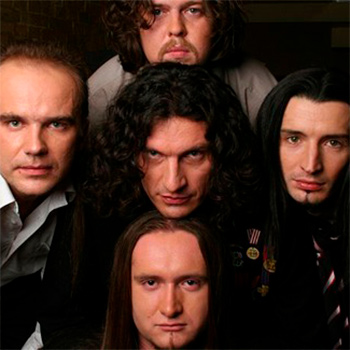
«Скрябин» (Скрябін) is a Ukrainian music group formed in 1989 in Novoiavorivsk, Lviv Oblast. Over the years, the band evolved from synthesizer-based electronic music, synth-pop, new wave and post-punk influences toward rock, pop-rock and pop music. The only permanent member from the group’s foundation until 2015 was Andriy Kuzmenko — Kuzma Skryabin, the vocalist, songwriter and one of the most recognizable figures in Ukrainian popular culture.
Early «Скрябин» cannot be reduced to Kuzma alone. The group’s sound was shaped by Rostyslav Domishevskyi (Roy), Serhiy Hera (Shura), Oleksandr Skryabin and other musicians from the Novoiavorivsk scene. In the early 2000s, the original line-up broke apart, after which a new band formed around Kuzmenko and recorded many of the best-known songs from the later period.
Novoiavorivsk and the formation of «Скрябин»
The history of the group began within the musical community of Novoiavorivsk in the second half of the 1980s. Andriy Kuzmenko and Rostyslav Domishevskyi had known each other since their school years, and later the musicians gathered around the local Palace of Culture and the «Sпати» studio — «Студія патологічної тиші».
In the summer of 1989, Andriy Kuzmenko, Rostyslav Domishevskyi, Serhiy Hera, Oleksandr Skryabin and Ihor Yatsyshyn, who had previously played in different line-ups, began recording material together. One of the first songs was «Чуєш біль», which also existed in an English-language version titled Feel the Pain.
The name «Скрябін» appeared on July 6, 1989, when the musicians needed a name for video footage they had recorded. The group was named after Oleksandr Skryabin, who was known among friends as Skriaba.
The earliest recordings were made in almost home-studio conditions using whatever tape and recording equipment was available. It was in this environment that the character of early «Скрябин» took shape: synthesizers and electronic rhythms were combined with new-wave melancholy, post-punk intonations and a lyrical style unusual for the Ukrainian scene of the time.
«Мова риб», «Технофайт» and the search for a distinctive sound
In the early 1990s, the group gained the opportunity to work at Lviv’s «Студія Лева». One of the main results of this period was «Мова риб», recorded at the beginning of the decade and released in 1993.
The album already clearly displays the main elements of early «Скрябин»: synth-pop, electronic rhythms, post-punk drums and basslines, neo-romantic melodies and the influence of the European electronic scene. At the same time, the band was still searching for its own musical language, so the songs differed noticeably from one another.
During the same period, a large body of material titled «Технофайт» was created. The first versions were recorded in 1992–1993, although a fully reworked edition appeared much later, in 1999. These recordings were characterized by synthesizer-driven production and the influence of new romanticism, post-punk and European electronic music.
«Птахи» and the first major success
The real breakthrough came after the recording of «Птахи». The album was created in Kyiv at Nova studio during several overnight recording sessions and was released in 1995.
«Птахи» became the most pronounced techno experiment in the band’s early discography. Synth-pop melodies and the characteristic lyricism of «Скрябин» remained at the core, but dance rhythms and electronic production took on a much greater role, partly inspired by Berlin’s musical life in the early 1990s.
This release helped the band move beyond the western Ukrainian scene. Their songs began receiving radio and television exposure, while «Скрябин» started performing regularly in cities across Ukraine.
«Казки» and «Хробак»
In 1997, the double album «Казки» was released, combining new material with reworked songs from previous years. Among them were «До смерті і довше», «Татко хворий», «Коралі», «Той прикрий світ», «Train» and «Нікому то не треба».
After the more direct dance-oriented electronics of «Птахи», the band returned to a more melancholic synthesizer-based sound. «Казки» strongly reflects new wave, synth-pop and post-punk influences, combined with themes that were characteristic of Kuzma’s writing: loneliness, death, sleep, alienation and the absurdity of everyday life.
The 1999 album «Хробак» was even darker. It retained the synthesizer foundation of early «Скрябин» while adding harder guitars, mechanical textures and industrial elements. Tracks such as «Клей», «Ми як машини», «Не треба» and «Фото / Брудна як ангел» belong to the darkest part of the group’s catalogue.
«Хробак» effectively marked the end of the period when electronic music defined the band’s main sound.
The turn toward rock and the break-up of the original line-up
The changes were already obvious on the 2000 album «Модна країна». Guitars became far more prominent, the songs grew shorter and more direct, and the sound moved closer to rock and pop-rock. Guitarist Oleksii Zvolinskyi took part in the recording and later became one of the group’s key musicians.
The albums «Стриптиз» (2001), «Озимі люди» (2002) and «Натура» (2003) followed. At the same time, the line-up continued to change: Rostyslav Domishevskyi left the group, and Serhiy Hera departed after «Натура».
This brought the history of the Kuzma — Roy — Shura core line-up to an end. «Скрябин» retained its name but transformed into a project with a different musical model and a new line-up built around Andriy Kuzmenko.
«Натура», «Танго» and the defining songs of the 2000s
«Натура» became an important dividing line between two eras of the group. It featured «Мовчати», «Спи собі сама», «Відстань» and «Я сховаю тебе (Любов)». The song «Мовчати», recorded with Iryna Bilyk, became one of the best-known Ukrainian duets of its time.
By the middle of the decade, the core live line-up consisted of Oleksii Zvolinskyi on guitar, Kostiantyn Hlitin on bass and Vadym Kolisnychenko on drums, while various other musicians also worked with the band over the years.
In 2005, the album «Танго» was released, featuring «Люди, як кораблі», «Старі фотографії», «Танго», «Телефони» and «Бути маленьким». By this point, pop-rock had definitively become the main musical form of «Скрябин», although synthesizers and electronic elements never disappeared completely.
While the band’s early songs often relied on abstract and surreal imagery, Kuzma increasingly began writing in conversational language about friendship, love, growing older and everyday life. «Старі фотографії» became a song about memory and youth, while «Люди, як кораблі» became one of Kuzma’s most recognizable reflections on human relationships.
«Гламур», «Про любов?» and «Моя еволюція»
On «Гламур» in 2006, the satirical side of Kuzma’s songwriting became more pronounced. The songs mocked conspicuous wealth, fashion and the habits of mass culture, while musically the group continued to work primarily within pop-rock.
In 2007, the album «Про любов?» followed, combining romantic songs with social irony. Conversational Ukrainian, everyday details and the ability to shift suddenly from humour to serious subjects became defining features of the band’s later period.
«Моя еволюція», released in 2009, reflected the band’s position particularly well: from the electronic underground of the late 1980s, «Скрябин» had evolved into mainstream Ukrainian pop-rock without losing Kuzma’s recognizable authorial voice.
«Радіо Любов», «Мам» and the final albums with Kuzma
In 2012, the album «Радіо Любов» was released. Rock was once again noticeably combined with synthesizers, recalling the band’s electronic roots. The album included «Говорили і курили», «Не думай про завтра», «Місця щасливих людей», «Сліди», «Мам» and the title track.
«Місця щасливих людей» connected Kuzma’s recurring theme of travel with memories of people and places left behind. «Мам», dedicated to his mother Olha Kuzmenko, became one of the best-known ballads of the later «Скрябин» period.
In 2013, the band released «Добряк», followed in 2014 by the album «25», created to mark the group’s 25th anniversary. It became the final full-length studio album by «Скрябин» to be released during Andriy Kuzmenko’s lifetime.
Kuzma Skryabin outside the group
Andriy Kuzmenko was born on August 17, 1968, in Sambir, Lviv Oblast, and spent a significant part of his childhood and youth in Novoiavorivsk. He graduated from the dentistry faculty of the Lviv Medical Institute, although music ultimately became his main profession.
During the 2000s, Kuzma also became enormously popular as a television presenter. One of the most successful projects featuring him was the music show «Шанс». Television made him recognizable far beyond the audience of the band itself.
In 2006, he published the book «Я, “Побєда” і Берлін», a road story based on Kuzma’s own adventures during a journey to Germany in an old car. He later published other literary works as well.
The death of Andriy Kuzmenko
On the morning of February 2, 2015, Andriy Kuzmenko was killed in a car crash near the village of Lozuvatka in Kryvyi Rih District, Dnipropetrovsk Oblast. He was returning from a concert in Kryvyi Rih when his car collided with a truck. The musician died at the scene.
After his death, large memorial concerts were held across Ukraine, while songs by «Скрябин» received numerous new interpretations by Ukrainian artists.
«Скрябин» after 2015
After Kuzma’s death, the group was not officially disbanded. Its core was retained by musicians who had worked with him during the final years: Oleksii Zvolinskyi, Kostiantyn Hlitin and Vadym Kolisnychenko.
The band continued performing with guest vocalists and officially represents Andriy Kuzmenko’s song catalogue under a licensing agreement governing the use of the copyrights.
How the sound of «Скрябин» changed
Musically, the history of the group can most clearly be divided into two major periods.
Early «Скрябин» of the late 1980s and 1990s was built primarily around synthesizers, electronic rhythms and new-wave aesthetics. Synth-pop and new romanticism formed the basis of the sound, post-punk strongly influenced the basslines and overall mood, while techno was especially prominent on «Птахи». Harder industrial elements are mainly characteristic of «Хробак», so describing all of the band’s early work as industrial or darkwave would be inaccurate.
From the beginning of the 2000s, the centre of gravity shifted toward rock, pop-rock and song-oriented pop music. Live guitars became more important, compositions adopted more traditional structures and Kuzma’s lyrics became noticeably more direct. Electronic elements never disappeared entirely, however, and occasionally returned to the foreground, including on «Радіо Любов».
It is precisely the contrast between these periods that makes the discography of «Скрябин» unusual: songs from «Мова риб», «Птахи» or «Хробак» can sound like the work of an entirely different band compared with «Люди, як кораблі», «Старі фотографії» or «Мам», even though they all belong to the same creative history.
Main discography
The early discography of «Скрябин» contains discrepancies in dating and numbering because of tape recordings, material that was initially unreleased and later reissues. The main chronology is as follows:
- 1989 — «Чуєш біль» — early tape-recorded material
- 1993 — «Мова риб»
- 1993 — «Технофайт» — early material; a reworked version was released in 1999
- 1995 — «Птахи»
- 1997 — «Казки»
- 1999 — «Хробак»
- 2000 — «Модна країна»
- 2001 — «Стриптиз»
- 2002 — «Озимі люди»
- 2003 — «Натура»
- 2005 — «Танго»
- 2006 — «Гламур»
- 2007 — «Про любов?»
- 2009 — «Моя еволюція»
- 2012 — «Радіо Любов»
- 2013 — «Добряк»
- 2014 — «25»
The catalogue also separately includes the remix album «Танець пінгвіна», the project «Еутерпа», various compilations, live recordings and reissues of early material.
The significance of «Скрябин»
«Скрябин» occupies a rare place in Ukrainian music because the history of a single group spans several completely different musical eras. At the beginning of its career, the band was part of a small alternative and electronic scene that was independently exploring synthesizers, new wave and techno at a time when a developed Ukrainian music industry barely existed.
Later, «Скрябин» became one of the most recognizable Ukrainian pop-rock groups, while Kuzma turned conversational speech, observations of everyday life, self-irony and direct emotional expression into the foundation of his own songwriting language.
For this reason, the band’s legacy cannot be reduced to a single genre or a dozen famous songs. The early electronic recordings, the dark «Хробак», the pop-rock albums of the 2000s and Kuzma’s later songs represent different sides of the same story — the story of a group that changed together with the Ukrainian music scene and left a significant mark on both its alternative culture and its mainstream.