




 Татьяна Буланова
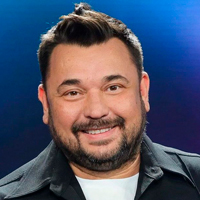
Sergey Evgenyevich Zhukov (born May 22, 1976, Dimitrovgrad, Ulyanovsk Region) is a Russian singer, composer, songwriter, music producer, entrepreneur and leader of the group Ruki Vverh!. His voice and songwriting style defined the sound of one of the most widely popular Russian-language pop projects of the late 1990s and early 2000s. Beyond his music career, Zhukov produced other artists, became one of the founders of the gaming company IT Territory, developed internet projects, restaurant and confectionery businesses, and later moved into film, television series and musical-theatre production.
Among the best-known songs associated with his name are Malysh, Student, Kroshka moya, Chuzhie guby, Pesenka, Alyoshka, Ay-yay-yay, 18 mne uzhe, On tebya tseluet, Kogda my byli molodymi, Zaberi klyuchi and other Ruki Vverh! recordings. In Zhukov’s solo discography, the albums Territoriya, Territoriya. Nezhnost and V poiskakh nezhnosti occupy a central place.
Dimitrovgrad: Music, Sport and the Band Vasya
Sergey Zhukov was born and raised in Dimitrovgrad. His father, Evgeny Zhukov, worked as a mechanic-adjuster, while his mother, Lilia Zhukova, was a music teacher. Sergey has a younger brother, Mikhail, with whom he also began recording collaborative songs many years later.
As a child, Zhukov studied music and played sports, attending a music school where he learned piano. His first notable stage experience came with the local band Vasya, in which he began singing around 1990. In 1991, the group won the competition Voskhodyashchaya zvezda estrady — 91. Some songs from this early period, including Devochka, later found a continuation in the repertoire of Ruki Vverh!.
After finishing school in 1993, Zhukov moved to Samara and enrolled at the Samara Academy of Culture and Arts. He completed his education in 1999 with a qualification in directing show programmes and organizing cultural and leisure activities for young people.
Europa Plus Samara and Meeting Alexey Potekhin
While studying, Sergey also began working at the radio station Europa Plus Samara, where he hosted the dance music programme Hit-Chas. There he met Alexey Potekhin. Their work together on the radio quickly developed into a musical partnership.
Zhukov and Potekhin began organizing discos and creating their own electronic music. In Tolyatti, they worked under the name Dyadyushka Rey i kompaniya — a reference to Ray Slijngaard from the popular Eurodance project 2 Unlimited. Their early recordings reflected a strong interest in European dance music of the first half of the 1990s, but the duo gradually shifted toward Russian-language material.
Moscow and the Birth of the Name Ruki Vverh!
On May 1, 1995, Zhukov and Potekhin moved to Moscow. Their first months there were spent searching for studios, creating arrangements and trying to secure radio airplay.
The name Ruki Vverh! emerged at the end of 1995 following an episode involving the radio station Maximum. The musicians delivered a cassette containing several songs and a phrase saying that the music would make listeners put their hands up. Presenters Olga Maksimova and Konstantin Mikhailov played the track Dobroe utro and introduced it as the work of a young group called Ruki Vverh!. The name remained, and in 1996 the project was formally established.
At the time, Zhukov and Potekhin worked at the Pavian Records studio, where they created arrangements for other performers and recorded their own material. Elizaveta Rodnyanskaya became a session vocalist for the project, and her voice can be heard on several early recordings.
Sergey Zhukov’s Songwriting Style
Although Ruki Vverh! was a creative partnership between Zhukov and Potekhin, Sergey gradually became the principal vocalist, the writer of a substantial part of the repertoire and the main public face of the group.
His songwriting language was built around highly accessible everyday situations: first love, jealousy, school, student life, separation and anticipation of a reunion. Instead of complex poetic imagery, Zhukov used conversational expressions and short phrases that could easily be transformed into memorable choruses.
This approach fitted naturally with the dance foundations of Eurodance and pop music. As a result, Ruki Vverh! songs could function simultaneously as club tracks and as emotional stories that listeners perceived as almost personal.
Dyshite ravnomerno and the Beginning of Mass Popularity
In May 1997, the debut album Dyshite ravnomerno was released. By that point, the songs Malysh and Student had already received significant radio rotation. Their success quickly took the group from the club environment to nationwide popularity.
In 1998, the collaborative project with Vyacheslav Dobrynin Ruki vverh, Doktor Shlyager! appeared, followed by one of the group’s key albums, Sdelay pogromche!. It included Kroshka moya, Chuzhie guby, Lish o tebe mechtaya and Pesenka. The group received its first Golden Gramophone award for Kroshka moya.
Pesenka and the International Success of Its Melody
Pesenka occupies a special place in Zhukov’s songwriting biography. In 2000, the German project ATC used its melodic foundation for the song Around the World (La La La La La). The international version became a major European hit and entered both the US and UK charts.
For Zhukov, this became one of the clearest examples of his songwriting finding an international life of its own. In the following decades, the melody continued to appear in new adaptations and interpretations.
Bez tormozov, Alyoshka and 18 mne uzhe
In 1999, the album Bez tormozov! was released, after which the group continued an almost uninterrupted cycle of recording new albums and touring. In 2000 came Zdravstvuy, eto ya…, featuring the songs Alyoshka and Ay-yay-yay.
In 2001, the album Ne boysya, ya s toboy! was released and included 18 mne uzhe. The song became one of Zhukov’s most recognizable works and gradually acquired an additional nostalgic meaning for listeners who first heard it during their teenage years.
The next major stage was connected with the 2002 album Konets popse, tantsuyut vse! and the song On tebya tseluet. Its video, featuring drag performer Anatoly Evdokimov, became one of the group’s most widely discussed clips of the early 2000s.
B-Funky Productions: Zhukov as a Music Producer
Sergey Zhukov’s production career began while Ruki Vverh! was still at the height of its popularity. In 1999, Zhukov and Potekhin ended their collaboration with their previous producer and created their own label and production centre, Plyashushchie chelovechki — B-Funky Productions.
The company released not only Ruki Vverh! recordings but also music by young performers. The group’s official history names Turbomoda, Patsany, Akula, Revoльvers, Aleksin and Murphy among B-Funky projects. Zhukov himself later also listed Turbomoda, Patsany, Revoльvers, Akula and Faktor-2 among the artists he had worked with as a producer.
Akula — Oksana Pochepa
One of the most notable production projects of this period was singer Akula — Oksana Pochepa. In the early 2000s, the project gained wide recognition through dance-pop aimed primarily at a young audience.
Zhukov and his production structure participated in developing the project, shaping the repertoire and promoting the singer. Zhukov later repeatedly named Akula among the performers he had produced. The collaboration lasted for several years before the parties went their separate ways and Pochepa continued her independent career.
When describing this part of his career, Zhukov’s role should not be reduced solely to songwriting. His production model included shaping the repertoire, working on the artist’s image, selecting material for radio, organizing releases and overseeing promotion.
Turbomoda, Patsany, Revoльvers and Other Projects
A whole range of performers from the turn of the 1990s and 2000s passed through B-Funky Productions. Among the most prominent were Turbomoda, Patsany and Revoльvers. Zhukov explained the development of this production branch simply: during the peak years of Ruki Vverh!, far more songs and ideas were being created than the group could physically release under its own name, so some of the material and production attention were redirected to other projects.
At the same time, Zhukov’s level of involvement varied from artist to artist. In some cases he worked directly as a songwriter and producer; in others, the role of the label, repertoire selection or promotion was more important. It is therefore more accurate to speak of Zhukov’s production circle and B-Funky Productions than to attribute all of these artists’ music directly to him.
Faktor-2: A Second Major Production Success
In 2004, Sergey Zhukov began working with the group Faktor-2. The project quickly became widely popular through songs such as Krasavitsa, Voyna, Klass, detka, klass! and other releases.
Unlike some fully constructed production projects, the members of Faktor-2 wrote a significant proportion of their own songs and created their own music. Zhukov’s role was connected with professionally packaging the material: selecting potential hits, promotion, working with radio and television, creating music videos and overall production management. The group’s members later specifically noted his ideas in the areas of videos and promotion.
Zhukov himself said that his work with Faktor-2 helped him achieve another major production success during a period when the popularity of the classic Ruki Vverh! format had begun to decline.
Skazka, Opium Project and Other Artists
Zhukov’s production activity continued after the main story of the classic duo had ended. Projects associated with him include Skazka, Opium Project and the R&B project K.U.K.L.A.. In the case of Skazka, Zhukov emphasized the musicians’ independence and said that his involvement was limited: for example, he wrote the song Den rozhdeniya for the group, while the band created most of its material independently.
In 2009, he worked as a producer for Opium Project. Zhukov later continued periodically writing and releasing music with other performers, although permanent management of a large roster of outside artists gradually ceased to be the main focus of his career.
Songs for Other Artists
Zhukov worked not only as a producer but also as a songwriter for other performers. The official Ruki Vverh! biography lists Mne ne bolno for MAKI, Vinovata for Jasmin and Odinokaya zvezda for Lena Lenina among such works.
His work in the music industry therefore extends far beyond his own repertoire: at different stages he acted as a songwriter, music producer, label manager, director of individual music videos and a person responsible for artist promotion.
The Solo Territoriya
In 2002, while Ruki Vverh! was still active as a duo, Zhukov released his first solo album, Territoriya. It included Territoriya, Omut, Neputyovaya and other songs.
The solo material allowed him to move away from the obligatory dance formula of Ruki Vverh! toward calmer and more personal pop songwriting. His vocal style and melodic language remained so recognizable, however, that his solo career never existed entirely separately from the main project.
In 2004, the second album Territoriya. Nezhnost was released. It included new songs, slower versions of selected tracks and the duet Polechu za toboyu with Eva Polna.
IT Territory: Sergey Zhukov in the Gaming Industry
Almost simultaneously with the musical Territoriya, an entirely different “territory” appeared in Zhukov’s life — internet business.
In the early 2000s, Sergey became deeply interested in browser-based online games. Together with entrepreneur Igor Matsanyuk and other partners, he participated in creating their own multiplayer game. This led to the establishment of IT Territory and its first major project, the browser game Territoriya. Contemporaries and the business press described Zhukov as one of the co-owners and creators of the project.
The origins of the business were unusual. Zhukov and Matsanyuk met through the then-popular browser game Boytsovskiy klub. After a conflict between some players and the administration, the idea emerged to create their own project, where the in-game economy and community development would be treated from the outset as a full-scale business.
IT Territory was not simply involved in celebrity music websites but in professional development of mass-market online games. The company gradually expanded and became one of the notable players in the early Russian market for MMORPGs and browser games.
In 2007, IT Territory became part of the Astrum Online Entertainment holding company. After that, Zhukov ceased participating in the company’s day-to-day management. Astrum and related gaming assets later became part of Mail.Ru Group.
Zhukov later said that after selling his stake, he did not lose interest in internet business but decided to move away from direct game development toward online services.
mp3.ru and Tut naydut
After IT Territory, Zhukov continued working on internet projects. Among the ventures associated with him during this period was the music service mp3.ru. In interviews, he explained that after his experience in the gaming industry, he wanted to work not with games but with internet services.
In 2010, Zhukov launched the classified advertising platform Tut naydut. IT entrepreneurship therefore proved to be more than a one-off experiment connected with Territoriya, although his main business focus gradually shifted toward entertainment, food service and content production.
The End of the Classic Ruki Vverh! Duo
In 2006, Alexey Potekhin left Ruki Vverh!, and the classic duo ceased to exist. Zhukov continued his solo career while maintaining a connection with the group’s catalogue.
In 2007, his third main solo album, V poiskakh nezhnosti, appeared, featuring Kapali slyozy, Devochka ne spit and other songs. In 2008, the material was reissued in an updated version associated with the song Zvyozdy padayut.
Zvezdopad. Pokhorony shou-biznesa
In February 2008, the AST publishing house released the book Zvezdopad. Pokhorony shou-biznesa, written by Sergey Zhukov together with journalist Maksim Petrenchuk. The book became another attempt to move beyond the conventional role of a pop performer and address the inner workings of the music industry in literary form.
The Return of the Ruki Vverh! Brand
By the end of the 2000s, Zhukov had arrived at a model in which his main concert activity once again developed under the name Ruki Vverh!. In 2009, he returned to active touring under the brand and became a regular participant in major nostalgia-oriented festivals.
In 2012, the album Otkroy mne dver! was released. From this period onward, the boundary between Sergey Zhukov’s solo activity and Ruki Vverh! became largely symbolic: most of his new mainstream music has since been released under the group’s name.
Kogda my byli molodymi and Turning Nostalgia into a New Career
One of the most important releases of Zhukov’s later period was Kogda my byli molodymi, released in 2016. The video featured figures from the Russian pop scene of the 1990s and 2000s, while the song itself consciously addressed themes of growing older and remembering youth.
From this period onward, nostalgia ceased to be merely a recollection of old Ruki Vverh! hits and became a fully developed contemporary concert concept. The classic songs were followed by new singles including Zaberi klyuchi, Plachesh v temnote, Tantsy, the Little Big collaboration Slemyatsya patsany and other releases.
From Crocus City Hall to Luzhniki
Throughout the 2010s, the scale of the project’s concerts continued to grow. In 2018, Ruki Vverh! played two major consecutive solo concerts at Moscow’s Olimpiyskiy. Later, the project’s principal venues became the largest arenas and stadiums.
During the 2020s, Sergey Zhukov repeatedly brought Ruki Vverh! to the stage of the Grand Sports Arena at Luzhniki Stadium. In July 2026, the anniversary programme 30 nam uzhe!, dedicated to the project’s 30th anniversary, was presented there.
Ruki Vverh! Bar
At the same time, Zhukov began transforming the musical brand into an independent business direction. In 2010, the first Ruki Vverh! Bar opened in Moscow, followed by a venue in Saint Petersburg in 2012. In subsequent years, the chain expanded to numerous Russian cities.
The concept is built around the aesthetics of the 1990s and 2000s: music from the era, themed interiors, karaoke and performances by artists associated with the period. In this way, Zhukov effectively commercialized the cultural environment in which his own hits had originally emerged.
Regina Burd and Lyubov i sladosti
In 2014, Sergey Zhukov and his wife Regina Burd launched the confectionery project Cupcake Story, later transformed into the Lyubov i sladosti brand.
Zhukov subsequently invested in other areas as well, including food products and the restaurant business. However, Ruki Vverh! Bar and the family confectionery business became the most enduring public ventures associated with his entrepreneurial biography.
Novaya Fabrika zvyozd
In 2024, Zhukov returned to systematic work with young performers, this time in a television format. Together with Sergey Shnurov, he became a mentor on TNT’s Novaya Fabrika zvyozd and was given his own team of contestants.
This stage naturally continued his earlier experience with B-Funky Productions and Faktor-2: two decades later, Zhukov once again found himself in the role of someone evaluating songs, stage material and the potential of emerging artists.
Ruki Vverh! Production and the Move into Film
During the pandemic, Zhukov and Vadim Bakunev began systematically developing their own film production operation. This led to the creation of Ruki Vverh! Production. According to Zhukov, the absence of touring gave the team time to begin work on scripts that had repeatedly been postponed.
The first notable television series was Evgenich, a comedy about a composer and producer from the 1990s returning to the modern music industry. Zhukov played the lead role and participated in creating the project.
The company later moved on to other film and television productions, including the series Kamera! Motor!, created specifically for TNT, and the musical teen drama Plaksa.
Plaksa
In the series Plaksa, the lead role was played by Sergey’s daughter Nika Zhukova. Zhukov himself served as music producer and was one of the screenplay writers. Music forms part of the drama itself, while the story focuses on teenage conflict, bullying and the creation of a band.
The project also continued on the theatre stage. In 2026, Sergey Zhukov became composer and music producer of the musical Plaksa at the Moscow Musical Theatre.
The Film Ruki Vverh!
In 2024, the feature film Ruki Vverh!, directed by Askar Uzabayev, was released theatrically. The film tells the story of Sergey Zhukov’s childhood, his meeting with Alexey Potekhin and the formation of the group.
Zhukov participated in the project in several capacities at once: as producer, composer, co-writer and performer playing himself. While preparing the film, the team returned to Samara, Tolyatti, Dimitrovgrad and other places connected with the group’s early history.
The Zhukov Brothers
A separate musical strand of Zhukov’s career is connected with his younger brother, Mikhail Zhukov. In the early 2010s, the brothers began regularly releasing songs together, including Uvidimsya v snakh, Serdtse, Ty moyo more and Glupaya.
In 2015, they released the collaborative album Zasypay, consisting of 14 tracks. Musically, the record is noticeably calmer than the main concert direction of Ruki Vverh! and is more focused on romantic pop songwriting.
Family
Sergey Zhukov’s first wife was Elena Dobyndo. Their daughter Alexandra was born during the marriage.
In 2007, Zhukov married former member of the group Slivki Regina Burd. They have a daughter, Nika, and sons Endzhel, Miron and Evan. Their youngest son was born in December 2023. Sergey Zhukov has five children in total.
Sergey Zhukov’s Solo Discography
- Territoriya — 2002;
- Territoriya. Nezhnost — 2004;
- V poiskakh nezhnosti — 2007;
- Zvyozdy padayut — 2008, a reissue of material from the V poiskakh nezhnosti period featuring the title track;
- Zasypay — 2015, a collaborative album by the Zhukov brothers.
After returning to active work under the Ruki Vverh! name, Zhukov began separating his music into solo material and group repertoire much less frequently. Most of his new mainstream releases now appear specifically under the Ruki Vverh! brand.
Vrubay na polnuyu! — the New Ruki Vverh! Album
In 2026, the year Sergey Zhukov turned 50 and Ruki Vverh! celebrated its 30th anniversary, the project released its first new full-length album in fourteen years. Vrubay na polnuyu! was released on July 24, 2026 and contains 15 tracks.
The album demonstrated that the later history of Ruki Vverh! is not limited to performing the classic catalogue in concert: Zhukov continues to record new songs and combine contemporary pop production with the project’s recognizable melodic formula.
Awards and Professional Recognition
Over the course of his career, Sergey Zhukov and Ruki Vverh! have repeatedly received Russian music awards and festival honours, including the Golden Gramophone, Pesnya goda and the MUZ-TV Awards. Recognition accompanied both the group’s classic period and its later return to major concert venues.
Why Sergey Zhukov Outlasted the Eurodance Era
It is easy to reduce Sergey Zhukov’s career to nostalgia for Kroshka moya and 18 mne uzhe, but such an assessment does not explain its longevity. His principal professional strength is the ability to work simultaneously as the author of simple mass-market songs and as an organizer capable of building an entire system around those songs.
At first, that system was Ruki Vverh!: music, touring, videos and an independent label. Then came outside artists and a production centre. As the music market began to change, Zhukov became one of the Russian performers who took an early interest in the internet and online games, becoming one of the creators of IT Territory. Later, the music brand expanded into a chain of venues, television-series production, cinema and theatrical projects.
Music, however, remains at the centre of all these activities. Even Zhukov’s business projects are most often connected with entertainment, performance or the cultural memory of the era that Ruki Vverh! helped shape.
Sergey Zhukov’s Place in Russian Pop Music
Sergey Zhukov belongs to the group of artists who influenced the language of mainstream Russian-language pop music at the end of the 20th century not through vocal virtuosity or complex arrangements, but through a precise understanding of their audience. His songs are deliberately simple: a short story, a recognizable situation, an emotional chorus and a melody that listeners can remember after a single hearing.
This principle turned Malysh, Student, Kroshka moya, Alyoshka, 18 mne uzhe and On tebya tseluet into part of the collective musical memory of several generations.
Yet Zhukov’s biography extends far beyond the role of frontman of a single successful pop project. His path has taken him from regional radio and club discos to his own music label, producing Akula, Turbomoda and Faktor-2, creating IT Territory, developing the Ruki Vverh! Bar chain, producing film and television projects, and staging major stadium programmes.
His place in Russian popular culture is therefore defined by much more than a collection of 1990s hits. Sergey Zhukov became one of the artists of his generation who managed to transform an initial musical breakthrough into a long-term songwriting, production and entrepreneurial system while keeping songs and a direct connection with a mass audience at the centre of his career.