 Сектор Газа
The Rolling Stones are a British rock band formed in London in 1962 and regarded as one of the key groups in the history of rock music. Their sound was initially rooted in American blues, rhythm and blues and rock and roll, especially the music of Muddy Waters, Chuck Berry, Jimmy Reed, Bo Diddley and other artists whose records had become almost collectible objects of fascination among young British musicians in the early 1960s. The Rolling Stones later worked freely with country, soul, gospel, funk, disco, reggae and psychedelic rock without losing their characteristic rhythm-and-blues foundation.
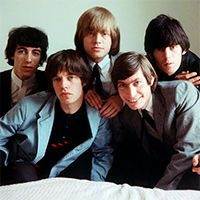
The central figures throughout the band’s history have been singer Mick Jagger and guitarist Keith Richards, who formed one of the most famous songwriting partnerships in popular music. However, multi-instrumentalist Brian Jones played an equally important role in the origins of The Rolling Stones: it was he who began assembling musicians for a new rhythm-and-blues band in 1962 and gave the group its name. The classic early lineup consisted of Jagger, Richards, Jones, bassist Bill Wyman and drummer Charlie Watts. Pianist Ian Stewart, one of the original members, continued to work and record with the band for many years after being removed from the official stage lineup.
After Brian Jones left, he was replaced by Mick Taylor, while from the mid-1970s Ronnie Wood became the band’s second permanent guitarist. Bill Wyman left in the early 1990s. Following Charlie Watts’s death in 2021, the core of The Rolling Stones has consisted of Jagger, Richards and Wood; longtime Keith Richards collaborator Steve Jordan has played drums in concert and on most new recordings.
London blues and the birth of The Rolling Stones
The band’s history grew out of the small but highly influential London blues scene of the early 1960s. One of its centers was Blues Incorporated, led by Alexis Korner and Cyril Davies, a loosely organized collective around which future members of several major British groups crossed paths. Brian Jones, Charlie Watts, Mick Jagger, Keith Richards, Jack Bruce and other musicians played there or regularly appeared around the group.
Brian Jones, who at the time also performed under the name Elmo Lewis, stood out in particular for his Elmore James-influenced slide guitar playing. In the spring of 1962, he decided to form his own rhythm-and-blues group and placed an advertisement seeking musicians. Pianist Ian Stewart was among the first to respond. Mick Jagger, Keith Richards and bassist Dick Taylor soon joined them.
The group’s name was also connected with the blues. During a conversation in which Jones was asked to name the still effectively unnamed band, his attention was drawn to a Muddy Waters record featuring the song «Rollin' Stone». The name was initially written as The Rollin' Stones; later, The Rolling Stones became the established form. Muddy Waters himself had recorded «Rollin' Stone» back in 1950, long before the British band existed.
On July 12, 1962, the group played its first concert under this name at London’s Marquee Club. The lineup was not yet definitive. Bill Wyman joined in December, and Charlie Watts became the permanent drummer in early 1963. This completed the first classic version of The Rolling Stones.
Andrew Loog Oldham, Decca and the first recordings
In the spring of 1963, the young Andrew Loog Oldham became the band’s manager. He quickly realized there was little point in copying the cleaner public image of The Beatles and instead emphasized the opposite reputation — provocative, rough-edged and defiantly independent. The image proved commercially effective, but the music of the early Rolling Stones was not an artificial marketing invention: the band was genuinely deeply immersed in American blues and rhythm and blues.
In 1963, The Rolling Stones signed with Decca Records. Their first single was not «As Tears Go By», as is sometimes incorrectly stated, but a version of Chuck Berry’s «Come On», released on June 7, 1963. It was followed by «I Wanna Be Your Man», written by John Lennon and Paul McCartney. At the beginning of their career, the Stones’ repertoire still consisted largely of songs written by others.
The first British album, The Rolling Stones, appeared in April 1964 and topped the UK chart. In the United States, it was released as England's Newest Hit Makers. Differences between British and American editions of the early Stones catalog continued for several years: track lists, titles and album sequences did not always match on the two sides of the Atlantic.
How Jagger and Richards became songwriters
Oldham understood that the band could not build a long-term career solely on interpretations of American material and persistently pushed Jagger and Richards to write their own songs. One of the first notable works by the partnership was «As Tears Go By». Marianne Faithfull recorded it first in 1964; The Rolling Stones released their own version later, in 1965.
The breakthrough came in the middle of the decade. «The Last Time», «Get Off of My Cloud», «19th Nervous Breakdown» and especially «(I Can't Get No) Satisfaction» established Jagger and Richards as an independent songwriting force. The «Satisfaction» riff devised by Richards became one of the most recognizable in rock music, while the song itself cemented the group’s international status in 1965.
The 1966 album Aftermath was the first Rolling Stones album composed entirely of Jagger-Richards material. By then, the band was no longer simply trying to reproduce its favorite American records. «Under My Thumb», «Mother's Little Helper», «Lady Jane» and other material from the same period demonstrated a much broader arranging palette. Brian Jones increasingly used not only guitar but also sitar, marimba, dulcimer and other instruments.
Psychedelia, scandals and a return to the roots
In 1967, The Rolling Stones, like many leading British groups of the time, turned toward psychedelia. The clearest result was the album Their Satanic Majesties Request. Its colorful orchestral and experimental music differed sharply from the band’s earlier rhythm-and-blues sound, but psychedelia proved to be only a brief direction for the group.
Beggars Banquet in 1968 already marked a return to harder and more roots-oriented music. «Sympathy for the Devil» combined rock with Afro-Latin rhythms, while «Street Fighting Man» reflected the political and social tension of the late 1960s. Jimmy Miller became the producer, and with him the band created several of its most highly regarded works. The period from Beggars Banquet through Let It Bleed and Sticky Fingers to Exile on Main St. is commonly regarded as one of the creative peaks of The Rolling Stones.
Brian Jones leaves the band and dies
By the end of the 1960s, Brian Jones’s position within the group had become increasingly difficult. Health and drug problems, legal troubles and declining involvement in recording made further collaboration almost impossible. In June 1969, Jones left The Rolling Stones. He was replaced by the young guitarist Mick Taylor, formerly of John Mayall’s band.
On July 3, 1969, Brian Jones was found dead in the swimming pool at his home in East Sussex. He was 27 years old. Two days later, The Rolling Stones played a previously scheduled free concert in London’s Hyde Park, which also became a farewell to one of the band’s founders.
At the end of the same year, Let It Bleed was released. Jones had participated only to a limited extent in its recording, while Taylor was already featured on some of the material. «Gimme Shelter», «Midnight Rambler» and «You Can't Always Get What You Want» captured the heavy, sometimes dark sound of the Stones at the end of the 1960s.
Mick Taylor and the classic early-1970s period
Mick Taylor’s arrival noticeably changed the guitar texture of the band. His fluid, technically accomplished lead guitar contrasted with Keith Richards’s rhythm-based approach. In concert, this combination allowed the group to stretch songs more freely and move into extended instrumental passages.
After the end of their Decca contract, the musicians created their own label, Rolling Stones Records. The first studio album they released through it was Sticky Fingers in 1971. It also firmly established the famous lips-and-tongue logo created by British designer John Pasche. The cover with a real zipper was developed with the involvement of Andy Warhol.
Sticky Fingers included «Brown Sugar», «Wild Horses», «Can't You Hear Me Knocking» and «Dead Flowers». Blues and rock sat alongside country, soul and looser studio forms.
In 1972, the double album Exile on Main St. was released. Much of the material was created in France, where the group had moved after leaving Britain for tax reasons, and was later completed in Los Angeles. The music blended rock and roll, blues, country, gospel and soul. Initial reviews were not universally enthusiastic, but over time Exile on Main St. became one of the most highly regarded albums in the Stones catalog.
It was followed by Goats Head Soup in 1973, featuring the ballad «Angie», and It's Only Rock 'n Roll in 1974. Mick Taylor left the band after its recording.
Ronnie Wood and a new guitar balance
The search for a new guitarist took place alongside work on the album Black and Blue. One of the musicians involved in the sessions was Ronnie Wood of Faces. He toured with The Rolling Stones in 1975 and then became established in the lineup.
With Wood, a different guitar model developed. Unlike the more distinct division between rhythm and lead guitar in the Taylor era, Wood and Richards often intertwined their parts, shifting from accompaniment to short solos within the same song. This approach became one of the defining features of the Stones’ concert sound in the decades that followed.
Some Girls, disco and punk
By the end of the 1970s, the musical environment around the band had changed. Punk challenged the status of wealthy rock stars from the previous generation, while disco had transformed club culture and the pop charts. The Rolling Stones responded with the 1978 album Some Girls.
Rather than ignoring the new styles, they incorporated them into their own music. «Miss You» was built around a disco rhythm, «When the Whip Comes Down» sounded much harder and more direct, while «Beast of Burden» represented a more traditional side of the Stones. The album became one of the group’s most important works since the early 1970s.
Some Girls was followed by Emotional Rescue in 1980 and Tattoo You in 1981. The latter produced another song that became a permanent fixture in the band’s concert repertoire: «Start Me Up».
The conflict between Jagger and Richards
In the mid-1980s, relations between the two principal members deteriorated significantly. Mick Jagger increasingly focused on his solo career, while Keith Richards insisted on maintaining The Rolling Stones as an active band. The tension was especially apparent around the period of Dirty Work in 1986.
By the end of the decade, the conflict had been overcome. In 1989, the album Steel Wheels appeared, followed by a major tour. That same year, The Rolling Stones were inducted into the Rock and Roll Hall of Fame.
Bill Wyman leaves
Bassist Bill Wyman, who had been a member since 1962, effectively stopped active work with the Stones after the Steel Wheels/Urban Jungle tour, and his departure was formally confirmed in 1993.
Darryl Jones became the group’s regular live and studio bassist. He was never made a full official member of The Rolling Stones, however. After Wyman’s departure, the official lineup was reduced for many years to Jagger, Richards, Watts and Wood.
Voodoo Lounge and the era of global stadium tours
The first Stones album without Bill Wyman was Voodoo Lounge in 1994. The record deliberately returned to a more traditional sound for the group and won a Grammy for Best Rock Album. It was followed by Bridges to Babylon in 1997, on which the Stones also engaged with a more contemporary studio aesthetic.
By this point, the band’s touring model had changed completely. The Rolling Stones had become one of the world’s largest stadium acts, building tours around enormous stage constructions and multi-month international itineraries. The concert core, however, remained unchanged: Jagger’s voice and physically expressive performance style, the guitar interplay between Richards and Wood, and Watts’s restrained precision.
A Bigger Bang and a return to the blues
In 2005, The Rolling Stones released A Bigger Bang, their first studio album of new material since Bridges to Babylon. The tour of the same name lasted for several years and confirmed the exceptional scale of the band’s concert audience for a group of its generation.
The next studio album did not appear until 2016. Blue & Lonesome was an almost demonstrative return to the group’s origins: the band recorded an album of blues standards, many by the same writers and performers whose music had taught its members how to play in the early 1960s.
It formed a kind of closed circle. More than half a century after becoming part of rock history themselves, the Stones were once again playing the music of Little Walter, Howlin' Wolf, Willie Dixon and other American blues musicians without trying to turn it into a modern pop product.
The death of Charlie Watts
Charlie Watts had been part of The Rolling Stones since early 1963 and remained the rhythmic foundation of the band for more than half a century. His playing differed noticeably from heavy or showy virtuoso rock drumming: it was strongly influenced by jazz and swing, while the characteristic interaction between Watts and Richards’s guitar became a fundamental element of the Stones sound.
In the summer of 2021, Watts withdrew from upcoming concerts because of a medical procedure. He was temporarily replaced by Steve Jordan. Charlie Watts died on August 24, 2021, at the age of 80. For the first time since January 1963, The Rolling Stones began touring without him.
The decision to continue after Watts’s death became one of the most important turning points in the band’s later history. Jordan remained behind the drum kit but did not attempt to imitate his predecessor literally.
Hackney Diamonds
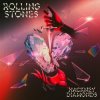
Hackney Diamonds was released on October 20, 2023, becoming the first Rolling Stones album of entirely new original material since A Bigger Bang, an interval of 18 years. The principal producer was Andrew Watt. Two tracks retained Charlie Watts drum parts recorded before his death, while Steve Jordan played on most of the remaining material.
The list of guests emphasized the group’s position across several generations of popular music. Paul McCartney, Elton John, Stevie Wonder and Lady Gaga all participated in the recordings. Bill Wyman also returned for one track.
The album closed with the band’s own version of Muddy Waters’s «Rolling Stone Blues», the very song associated with the group’s name. Jagger and Richards recorded it as a duo in a minimalist blues style. More than six decades after their first London performances, The Rolling Stones literally returned to the music with which their history had begun.
Hackney Diamonds topped the UK Albums Chart. In 2024, the band toured North America under the same name, and in 2025 the album won the Grammy Award for Best Rock Album.
The sound of The Rolling Stones
The Rolling Stones have never been a band confined to one strictly defined genre. Their foundation is blues, rhythm and blues and rock and roll, but their catalog covers a far broader territory. At different points, country, gospel, soul, funk, psychedelia, reggae and disco all entered their music.
The main principle, however, remained rhythmic. Keith Richards built many songs around short repeating guitar figures, often using open tunings and leaving more space in his parts than was typical in heavy rock. Charlie Watts’s drums did not compete with the guitars for attention but instead maintained the Stones’ characteristic slightly relaxed rhythmic motion.
Mick Jagger’s vocal style was shaped by American blues, soul and rock and roll, but gradually became an independent part of the band’s musical language. His stage movement was equally important: Jagger’s concert persona influenced several generations of rock singers.
The guitar side of the Stones changed with the lineup. Brian Jones expanded the palette with unusual instruments; Mick Taylor introduced long melodic solos; Ronnie Wood proved close to Richards in his more rhythmic and intuitive approach. As a result, the band’s different periods sound noticeably distinct despite their recognizable foundation.
Key studio albums
The early Rolling Stones catalog exists in different British and American versions, so the numbering of the first albums varies between discographies. Among the band’s main studio releases are:
- The Rolling Stones — 1964;
- The Rolling Stones No. 2 — 1965;
- Out of Our Heads — 1965;
- Aftermath — 1966;
- Between the Buttons — 1967;
- Their Satanic Majesties Request — 1967;
- Beggars Banquet — 1968;
- Let It Bleed — 1969;
- Sticky Fingers — 1971;
- Exile on Main St. — 1972;
- Goats Head Soup — 1973;
- It's Only Rock 'n Roll — 1974;
- Black and Blue — 1976;
- Some Girls — 1978;
- Emotional Rescue — 1980;
- Tattoo You — 1981;
- Undercover — 1983;
- Dirty Work — 1986;
- Steel Wheels — 1989;
- Voodoo Lounge — 1994;
- Bridges to Babylon — 1997;
- A Bigger Bang — 2005;
- Blue & Lonesome — 2016;
- Hackney Diamonds — 2023.
Among the songs that defined different stages in the history of The Rolling Stones are «(I Can't Get No) Satisfaction», «Paint It, Black», «Ruby Tuesday», «Jumpin' Jack Flash», «Sympathy for the Devil», «Gimme Shelter», «You Can't Always Get What You Want», «Honky Tonk Women», «Brown Sugar», «Wild Horses», «Tumbling Dice», «Angie», «It's Only Rock 'n Roll (But I Like It)», «Miss You», «Beast of Burden», «Start Me Up» and «Angry».
The Rolling Stones lineup
Main members of the later period:
- Mick Jagger — vocals, harmonica, guitar, keyboards; since 1962;
- Keith Richards — guitar, vocals; since 1962;
- Ronnie Wood — guitar, bass guitar, vocals; working with the band since 1975.
Key former members:
- Brian Jones — guitar, harmonica, keyboards and other instruments; 1962–1969;
- Ian Stewart — piano; founding member and longtime live and studio musician with the band;
- Bill Wyman — bass guitar; 1962–1993;
- Charlie Watts — drums; 1963–2021;
- Mick Taylor — guitar; 1969–1974.
Steve Jordan has played drums with The Rolling Stones since Charlie Watts ceased touring and also participated in the recording of Hackney Diamonds. Darryl Jones has worked with the group for decades as a live and studio bassist but is not an official member of The Rolling Stones.
Place in rock history
The Rolling Stones were inducted into the Rock and Roll Hall of Fame in 1989. Their significance is not limited to the number of hits or the length of their career. The group became one of the main conduits through which American blues and rhythm and blues reached British and then global mass audiences, and later became an influence in its own right for countless rock artists. The Rock & Roll Hall of Fame notes the Stones’ impact on artists ranging from Aerosmith, New York Dolls and The Pretenders to Guns N' Roses, The White Stripes and other bands from different generations.
The length of their creative history is equally unusual. The Rolling Stones traveled from small London blues clubs in the early 1960s to 21st-century stadium tours, surviving several changes of musical era and key members. At the same time, their later decades did not consist solely of performing an old catalog: Blue & Lonesome returned the group to its original blues material, while Hackney Diamonds demonstrated that Jagger and Richards were still writing and recording new music more than sixty years after the first Rolling Stones concert.