 Swedish House Mafia

Nôze are a French electronic duo from Paris formed by musicians Nicolas Sfintescu and Ezéchiel Pailhès. Established in 2003, the project carved out a distinctive place on the European club scene through its combination of house, minimal techno, jazz improvisation, chanson, cabaret, funk, psychedelic pop and live instrumentation.
The duo’s name is correctly written as Nôze, with a circumflex over the letter o. The simplified spelling Noze is also frequently used on digital platforms and in search queries.
Nôze were never a conventional production duo creating functional tracks solely for DJ sets. Their compositions could begin as minimalist club pieces before evolving into piano ballads, jazz improvisations, choral passages or almost folkloric songs. This unpredictability became the foundation of the project’s recognisable sound.
Two different musical paths
The creative energy at the heart of Nôze emerged from the meeting of two musicians with markedly different professional backgrounds.
Nicolas Sfintescu was closely connected to the Paris electronic scene. Performing under the name DJ Freak, he organised parties, produced experimental house music and became one of the founders of the independent label Circus Company. The label was conceived as a home for artists who felt restricted by the rigid boundaries of techno and minimal house.
Ezéchiel Pailhès came from an academic background. Classically trained, he studied piano before moving on to jazz. Pailhès was initially sceptical of electronic music, but his collaboration with Sfintescu helped him recognise club production as a space for composition and improvisation.
Sfintescu was primarily responsible for rhythm, samples, club energy and the duo’s deliberately rough-edged presentation. Pailhès contributed harmonic complexity, pianistic discipline and the freedom of jazz. Their music was built not by eliminating these differences, but through the constant interaction between two contrasting approaches.
The formation of Nôze
Nicolas Sfintescu and Ezéchiel Pailhès formed Nôze in Paris in 2003. The project’s earliest releases appeared through Karat, Trapez and Circus Company.
Even these first compositions demonstrated the musicians’ refusal to respect strict genre boundaries. Minimal electronic rhythms were joined by saxophone, prepared piano, acoustic noise, vocal exclamations and melodies reminiscent of music from a small travelling theatre.
One of their earliest releases, EP1, was presented by Circus Company as a new electronic interpretation of jazz. On tracks such as Canicule, Outamimonclic and Newlyn, dancefloor-oriented passages were placed alongside melancholic instrumental sketches.
During this early period, Nôze were associated with the Parisian microhouse and experimental techno scenes, although their music sounded considerably freer than most minimalist club releases of the era.
Circus Company
The history of Nôze is inseparable from Circus Company. Nicolas Sfintescu was involved in founding the label, while the duo itself became one of the projects that defined its artistic identity.
Circus Company brought house and techno together with jazz, funk, absurdist humour and experimental songwriting. The label later released music by Nicolas Jaar, dOP, Dave Aju, Portable, The Mole and other artists for whom club music represented a starting point rather than a creative limitation.
Nôze embodied this philosophy particularly clearly: in their understanding, an electronic producer could simultaneously be a composer, vocalist, improviser and stage performer.
Craft Sounds and Voices
The debut album Craft Sounds and Voices was released by Circus Company in 2005. It was a sharp, deliberately uneven record that combined experimental house, minimal techno, free jazz and improvisational music. Musicians from the Paris jazz and experimental scenes also took part in the recording.
The album title emphasised the project’s two central elements: handcrafted sound and the human voice. The musicians did not attempt to make their electronic production perfectly polished. Creaks, breathing, uneven beats, unusual vocal intonations and acoustic noise remained integral parts of the arrangements.
Electronic rhythm often served as a framework around which free instrumental performances could unfold. The piano could function as a percussion instrument, while the vocals were used not so much to tell a story as to create additional rhythmic accents.
Craft Sounds and Voices was not intended for mainstream radio. Its significance lay in the way Nôze opposed sterile digital precision with music that felt alive, physical and tangible.
The Sónar performance
An important milestone came when Nôze performed at the Sónar 2005 festival in Barcelona. It was through their live format that an international audience was able to fully understand the project’s intentions.
Onstage, Sfintescu and Pailhès did not reproduce their studio arrangements literally. They altered the duration of sections, restructured compositions, incorporated improvisation and responded directly to the audience. The same track could sound markedly different in a club, at a festival or in an intimate concert venue.
The Sónar performance attracted attention to Nôze beyond France and opened the way to further appearances at European festivals and clubs.
How to Dance
The second album, How to Dance, was released in 2006. Some of its material had previously appeared on vinyl, making the record both a new album and a collection of the duo’s most important early compositions.
The track listing included:
- Love Affair;
- Albert;
- Tulipschnaps;
- C;
- Kitchen;
- Gaïa;
- You Don’t;
- Pofamika;
- Outamimonclic;
- You Have to Dance.
While the debut had been predominantly experimental, How to Dance made the duo’s music more accessible to the dancefloor. The rhythms became more direct and the vocal phrases and choruses more prominent, although the jazz instrumentation and deliberate imperfections remained.
Love Affair and Kitchen proved particularly important. These tracks established Nicolas Sfintescu’s distinctive vocal persona: a hoarse, theatrical and seemingly slightly intoxicated baritone that hovered somewhere between Tom Waits, French cabaret and a nightclub master of ceremonies.
Kitchen
Kitchen is one of the early songs that most accurately captures Nôze’s sense of humour. An electronic groove is paired with flirtatious vocals and deliberately simple lyrics, transforming the everyday setting of a kitchen into a scene of absurd seduction.
The duo later recorded a slower, almost ballad-like version of the song for the album Songs on the Rocks. The contrast between the two interpretations illustrates how freely Nôze approached their own material.
You Have to Dance
On You Have to Dance, the very idea of club music is pushed almost to the point of parody. The voice orders the listener to dance, drink throughout the night and remember that they are alive.
Beneath the comic presentation lies one of Nôze’s fundamental principles: music should not merely be heard, but should provoke a physical and emotional reaction.
Remember Love
In 2007, Nôze released the Remember Love EP. Its title track became one of the duo’s best-known and most accessible works.
The track is built around a deep house groove, a repeating piano figure and a vocal refrain that sounds simultaneously romantic, ironic and slightly ridiculous.
Remember Love works equally convincingly in a club and during home listening. The voice is not simply layered over a completed instrumental, but functions as an integral part of the rhythmic structure.
The song marked Nôze’s transition from experimental microhouse towards a more complete vocal form, which would be developed further on their next album.
Songs on the Rocks
The third album, Songs on the Rocks, was released in 2008 through the German label Get Physical Music. Working with one of Europe’s leading house labels significantly expanded the project’s international audience.
The title can be understood as the musical equivalent of a drink served “on the rocks”, as well as a reference to the duo’s unstable, almost drunken performance style. On this album, Nôze completed their transformation from an experimental electronic project into an unconventional songwriting group.
Synthesisers and microhouse details moved slightly into the background. Piano, guitar, brass instruments, percussion, choral parts, theatrical vocals and more traditional verse-and-chorus structures took centre stage.
Danse Avec Moi
Some sources incorrectly spell the title as Dance Avec Moi, but the correct French form is Danse Avec Moi.
The track features Dani Siciliano and French singer David Lafore. It is a kind of electronic tango in which piano, club rhythm and vocal dialogue create a miniature theatrical scene.
L’Inconnu du Placard
The song begins with nervous percussion, a childlike xylophone melody and a choral passage. A hoarse voice then enters to tell an absurd story.
The composition is built around a collision of opposites characteristic of Nôze: beauty and ugliness, humour and anxiety, professional arrangement and deliberately careless delivery.
Childhood Blues
A lengthy composition driven by heavy piano, choir and free instrumental passages, Childhood Blues brings Nôze close to experimental blues rock and the theatre of the absurd.
Slum Girl
One of the duo’s most ambitious arrangements, Slum Girl combines brass, marching drums, strings and cinematic harmony with rough-edged vocals.
An instrumental version of the track appeared in Booka Shade’s contribution to the DJ-Kicks series, helping introduce Nôze to a broader electronic audience. The duo’s material was also used in DJ-Kicks editions compiled by Hot Chip and Booka Shade.
A stage method between the bar and the club
Nôze’s music was often described as occupying the space between a nightclub and a bar. Their compositions retained a steady pulse, but the musicians constantly disrupted the expected movement by changing metres, inserting acoustic pauses, shifting from singing to shouting and deliberately leaving rough edges in the arrangements.
During concerts, prerecorded material served only as a foundation. The duo used piano, synthesisers, saxophone, percussion, drums, guitar and vocals. The visual element was also part of the performance: the musicians changed costumes, entered the audience and transformed the stage into a form of controlled chaos.
This freedom, however, depended on a strong understanding of musical form. In order to dismantle a composition’s structure and return to its central groove at precisely the right moment, the performers needed an exact sense of harmony, tempo and each other’s actions.
Dring
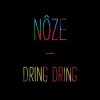
The fourth studio album, Dring, was released by Get Physical on April 4, 2011. Its title imitates the sound of a doorbell — “dring-dring”. According to Nicolas Sfintescu, the name emerged while the duo were working on a collaborative track with Riva Starr and was chosen without any elaborate underlying concept.
The album took approximately two years to complete. This time, the musicians deliberately rejected the pressure to record a major club hit. They rented a studio equipped with a real grand piano and invited musicians who had been involved with the project since its early years.
Compared with Songs on the Rocks, the new record was more instrumental and compositionally dense. It brought together classical music, jazz, reggae, Balkan brass, French chanson, international pop and cinematic arrangements.
However, the musicians did not begin the recording process by deciding to create a separate “reggae track” or “jazz song”. Genre elements appeared naturally as the compositions developed.
C’era Una Volta
The opening track is built around an unusual time signature, brass arrangements and the atmosphere of a carnival procession. It immediately establishes that Dring is not a collection of conventional house tracks.
Dring Dring
The song was created with Italian producer Riva Starr. Nôze were responsible for the brass and melodic elements, while the recurring doorbell sound eventually gave the entire album its title.
Collaboration with dOP
Members of the French group dOP, who were also associated with Circus Company, took part in the recording. Sfintescu described them as his younger musical brothers and noted that the two projects developed within the same studio environment.
An expanded live line-up
To promote Dring, Nôze planned to perform not only as a duo but also as an expanded six-piece group featuring a pianist and live drummer.
These concerts were intended to differ from conventional club sets. Their purpose was not merely to make the audience dance, but also to encourage listeners to follow the music’s development attentively.
This period marked Nôze’s transition from an electronic live act into a fully fledged concert ensemble.
Body Language Vol. 11
In 2012, Nicolas Sfintescu compiled the eleventh instalment of the Body Language series for Get Physical. It was his first official full-length DJ mix.
The series was designed to showcase the musical interests of its invited DJs. Sfintescu’s edition brought together house, techno, downtempo and jazz compositions.
The mix revealed a different side of the musician. While Nôze’s concerts were based on improvisation and theatrical chaos, Sfintescu’s DJ work allowed him to construct a more consistent and carefully developed club narrative.
Come With Us
The fifth album, Come With Us, was released by Circus Company in 2015. It marked the duo’s return to the label on which their album history had begun.
During the four years following Dring, their music became more intimate and contemplative. While the early Nôze had primarily sought to move the club on a physical level, the new material more frequently addressed the listener’s inner emotional state.
The album included:
- I Need to Know;
- Perdre son âme;
- Apache;
- Teardrops;
- The Crab Dance;
- Saint;
- Cherry Trees;
- Come With Me;
- Holding You;
- Supernova.
I Need to Know
The opening song features Dani Siciliano. Her vocals enter into a dialogue with Nicolas Sfintescu over a disco-oriented arrangement.
Apache
Apache makes Sfintescu’s development as a singer particularly apparent. His voice remains rough and theatrical, but it is now used not only for humour or club energy, but as a vehicle for genuine storytelling.
Saint
The track combines slow guitar phrases reminiscent of desert blues with a romantic atmosphere. The guitar was recorded by the group’s long-standing collaborator Thibault Frisoni.
Come With Me
The song features dOP vocalist JAW. It is a bittersweet ballad in which Nôze’s familiar theatricality becomes noticeably more restrained.
Live drums on the album were recorded by Emiliano Turi, who brought a more natural groove to the compositions.
Two versions of Come With Us
The CD edition of Come With Us was accompanied by an additional disc featuring club versions of every song. The musicians referred to them as remixes, although the extent of the reworking meant that some approached the status of independent compositions.
The main album emphasised Nôze’s intimate, song-oriented side. The additional version returned the material to the dancefloor through synthesisers, arpeggiators and mechanical percussion.
The double edition provided an effective summary of the project’s evolution: the same material could exist both as authored songcraft and as club music.
The suspension of the duo’s activities
After fifteen years of working together, Nôze announced that Ezéchiel Pailhès and Nicolas Sfintescu would concentrate on their respective projects. The official statement did not present the decision as a hostile split, although the duo have released no further studio albums since Come With Us.
As of July 2026, no confirmed return by Nôze with a new album or full-scale concert programme has been announced. It is therefore more accurate to say that the project has suspended its joint activities than to claim that the musicians have definitively brought it to an end.
Ezéchiel Pailhès’ solo career
Ezéchiel Pailhès began developing his solo discography while Nôze were still active. His debut album, Divine, appeared in 2013 and was followed by Tout va bien, Oh!, Mélopée, Ventas Rumba and SOL.
In his solo work, Pailhès has concentrated on piano, poetry, chamber electronics and the French songwriting tradition. He has composed music using texts by William Shakespeare, Victor Hugo, Pablo Neruda and Marceline Desbordes-Valmore.
The instrumental album Ventas Rumba, released in 2024, was built around the unusual Una Corda piano and warm layers of synthesisers. Part of the material was recorded in Latvia, while the title referred to the Ventas Rumba waterfall.
In June 2026, Pailhès released his sixth solo album, SOL, which draws on the heritage of Brazilian popular music, samba and bossa nova.
His solo records continue the melodic and intimate direction that was already present in Nôze’s music, but now develop without the need to preserve a club-oriented foundation.
Nicolas Sfintescu and DJ Freak
Even before Nôze, Nicolas Sfintescu was an active participant in Parisian club culture and released electronic music under the names Freak and DJ Freak. He was also involved in the creation of Circus Company.
Within the duo, Sfintescu was responsible for far more than rhythm programming. He became the project’s central stage character — a vocalist, provocateur and unconventional host of its electronic cabaret.
His voice deliberately avoided academic purity. Its rasp, French accent, shouts and uneven singing created a sense of immediate human presence within the electronic framework.
Nôze’s musical language and place within electronic music
Defining Nôze solely as a house duo would be inaccurate. Their catalogue includes elements of minimal house, microhouse, tech house, experimental jazz, funk, chanson, blues, reggae, psychedelic pop and downtempo.
Yet their music never sounds like a self-conscious catalogue of genres. Different influences emerged through improvisation and were shaped by the character of each individual composition.
Perhaps the most accurate description would be electronic cabaret built on a house rhythm. Electronics provide the forward motion, piano and brass create the dramatic structure, and the vocals transform each track into a miniature stage story.
Pailhès’ piano played a particularly important role. It could serve as the harmonic foundation, a percussion instrument, the source of a repeating loop or the central element of an intimate ballad. Sfintescu’s vocals, by contrast, were often treated as a physical and rhythmic sound: phrases moved between singing, whispering, shouting and almost meaningless improvisation.
Humour allowed Nôze to avoid excessive academic seriousness. The musicians could combine sophisticated harmony and live brass with an absurd exclamation or an everyday narrative without reducing the composition to pure parody.
For this reason, Nôze should not be grouped with the commercial wing of French touch. Their music developed closer to microhouse, experimental techno and the artists associated with Circus Company. Instead of polished disco samples, they used live improvisation, irregular rhythms, acoustic noise and theatrical vocals.
The duo’s influence was most visible in the development of live electronic music. Nôze demonstrated that an electronic performance could become a complete theatrical event, featuring flexible structures, risk, improvisation and direct interaction with the audience.
Nôze studio discography
Craft Sounds and Voices — 2005
An experimental debut combining free jazz, live instrumentation, minimal house and noise-based aesthetics.
How to Dance — 2006
A more dance-oriented and vocal-driven record featuring Love Affair, Kitchen and You Have to Dance.
Songs on the Rocks — 2008
A transition towards songwriting, cabaret and instrumental arrangements. The album includes Remember Love, Danse Avec Moi, Childhood Blues and Slum Girl.
Dring — 2011
An expansive album featuring grand piano, a live ensemble, jazz, classical music and international influences.
Come With Us — 2015
The duo’s final studio album: a more intimate and introspective record accompanied by a separate disc of club versions.
Conclusion
Nôze emerged during the height of digital minimalism but chose a more organic and unpredictable path. Instead of perfectly controlled electronic production, they used acoustic instruments, improvisation, rough vocals, humour and deliberately preserved imperfections.
From album to album, the duo consistently expanded their format, progressing from experimental microhouse and club tracks to electronic cabaret, large instrumental ensembles and intimate auteur songwriting.
Nôze did not invent a separate genre, but they offered a convincing model for an electronic group in which programming and live performance do not compete with one another. In their finest compositions, house music becomes the foundation for genuine musical theatre — strange, melodic and always slightly unpredictable.