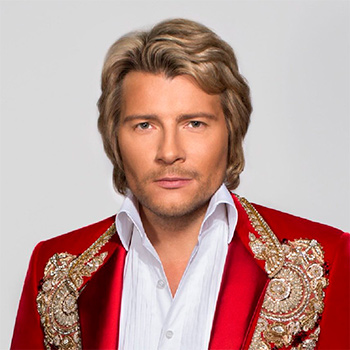
Nikolay Baskov (full name — Nikolay Viktorovich Baskov; born 15 October 1976) is a Russian opera and pop singer, tenor, television presenter and educator, and a People’s Artist of the Russian Federation. His career developed simultaneously in two directions: academic vocal performance and mainstream pop music. In the late 1990s, Baskov performed on the opera stage and made his debut at the Bolshoi Theatre, while in the early 2000s he gained widespread popularity with the songs «Памяти Карузо», «Шарманка», «Натуральный блондин» and later pop hits. This combination of classical vocal training and pop repertoire became the foundation of his stage image and allowed him to work within the classical crossover format.
Childhood and early music studies
Nikolay Baskov was born on 15 October 1976. His father, Viktor Baskov, was a military officer, so part of the future singer’s childhood was spent in East Germany, where the family lived during his father’s service. After returning to the Soviet Union, Baskov lived and studied in several cities, including Balashikha and Novosibirsk. He studied music from childhood; one of his earliest stage experiences was performing with the Young Actor’s Musical Theatre.
Baskov’s early interests were not limited to pop music. He received systematic musical training and gradually focused on vocal performance, which later determined a very different career path from that of most Russian pop singers of his generation.
Gnessin Russian Academy of Music
In 1996, Baskov entered the Gnessin Russian Academy of Music, where he studied chamber and operatic singing. His teachers included People’s Artist of the RSFSR Valentina Levko and Professor Vladimir Shcherbakov. He graduated from the Academy in 2001. The Gnessin Academy continues to list Baskov among the notable graduates of its Department of Solo Academic Singing.
After graduating, he continued his professional training in postgraduate studies at the Moscow State Tchaikovsky Conservatory in the class of Professor Pyotr Skusnichenko, completing his studies in 2003.
Thus, classical singing in Baskov’s biography is not merely a decorative element of his pop image. He received specialised higher education specifically as a chamber and opera singer and began his professional career in musical theatre.
Romansiada and opera competitions
An important stage in his early career was the young performers’ Russian romance competition «Романсиада». In 1997, Baskov became one of its first prizewinners. The following year, he won first prize at the All-Russian Competition for Young Opera Singers, and in 1999 he received second prize at the Grande Voce vocal competition in Spain.
These competitions preceded his mainstream pop success and strengthened his reputation as a young classical tenor.
Opera stage and the Bolshoi Theatre
In 1998, Baskov became a soloist with the Novosibirsk State Academic Opera and Ballet Theatre. The following year, he was invited to join the trainee company of the Bolshoi Theatre.
On 19 June 1999, Nikolay Baskov made his debut on the Bolshoi Theatre stage as Vladimir Lensky in Pyotr Tchaikovsky’s opera «Евгений Онегин». The performance is documented in the Bolshoi Theatre’s official electronic archive.
His work on the opera stage gave Baskov a professional foundation that he later used in his pop programmes as well: controlled breathing, classical vocal support, the ability to perform with a symphony orchestra and repertoire designed for the unamplified human voice.
«Памяти Карузо» and the move into pop music
Baskov achieved mainstream fame in 2000 after the release of the music video for «Памяти Карузо». That same year, his debut album «Посвящение» was released. Russkoye Radio identifies «Памяти Карузо» as the starting point of his broad pop popularity.
The choice of such a song was significant: Baskov did not abandon classical singing in favour of a conventional pop style, but instead made his powerful tenor voice the central element of his pop persona.
In the early 2000s, his repertoire expanded rapidly. Alongside romances, Neapolitan songs and opera arias appeared compositions designed for radio and television.
«Шарманка» and the formation of his pop image
One of Nikolay Baskov’s major early hits was «Шарманка». The song established the characteristic style of the first stage of his pop career: a broad melodic line, orchestral dramatic structure and a vocal delivery noticeably different from the conventional pop style of the early 2000s.
During the same period, «Силы небесные», «Я буду руки твои целовать», «Любовь не знает слова „нет“» and other songs appeared, gradually forming Baskov’s own pop repertoire.
«Натуральный блондин»
The song «Натуральный блондин» came to occupy a special place in the singer’s public image. The music was written by Kim Breitburg, the author of many major Russian pop hits. The Gnessin Academy officially lists «Натуральный блондин» among Breitburg’s best-known works.
The song played an important role not so much in Baskov’s vocal history as in his media persona. The phrase «natural blond» effectively became part of his public image and allowed him to combine serious classical training with a self-ironic pop personality.
Montserrat Caballé
One of the central figures in the classical direction of Baskov’s career was the celebrated Spanish soprano Montserrat Caballé. Baskov studied with her, took part in joint concert programmes and repeatedly appeared on stage with Caballé. The singer’s daughter, soprano Montserrat Martí, also performed with them.
For Baskov, this collaboration was significant not as a one-time encounter with a famous opera star. Work on classical repertoire and joint performances continued for several years, and Caballé became one of the singer’s important vocal mentors.
Their joint programmes included opera arias, romances, Spanish music and works of popular classical repertoire. One of the best-known concert episodes was a performance of Barcelona, written by Freddie Mercury and Mike Moran, which Baskov performed together with Montserrat Caballé and Montserrat Martí.
Classical music and pop
After launching his pop career, Baskov did not stop performing classical repertoire. His programmes continued to include arias by Tchaikovsky, Puccini, Verdi and Massenet, Russian romances, Neapolitan songs and classical tenor works.
It is precisely the combination of these two directions — opera and pop — that most accurately characterises his artistic profile. In international terminology, this format is generally classified as classical crossover: a classically trained voice is used not only in opera and chamber music, but also in popular repertoire. Apple Music likewise describes Baskov as an artist working at the intersection of classical music and pop.
Duet with Taisiya Povaliy
In the mid-2000s, collaboration with Taisiya Povaliy became an important part of Baskov’s career. Their duet «Отпусти меня» became a major radio hit and won a Golden Gramophone award. Their next joint song, «Ты далеко», also became one of the best-known recordings by both performers.
These songs noticeably changed Baskov’s pop repertoire. While his early hits often emphasised his classical vocal background, «Отпусти меня» and «Ты далеко» were fully contemporary pop duets.
«Тебе одной»
In 2007, one of Baskov’s major solo hits was «Тебе одной», which received a Golden Gramophone award. The song also gave its title to one of the singer’s principal album releases.
By this period, his pop model had fully taken shape: romantic ballads, duets, large-scale television performances and concert programmes existed alongside classical vocal work.
Other well-known duets
The duet format became a permanent part of Nikolay Baskov’s discography. In addition to Taisiya Povaliy, he recorded with Nadezhda Kadysheva, Oksana Fedorova, Valeria, Natali, Alina Avgust, the group Queens, Diskoteka Avariya and other performers.
With Nadezhda Kadysheva he recorded «Вхожу в любовь», with Oksana Fedorova — «Права любовь», and with Natali — the ironic hit «Николай». These songs represented different aspects of his pop style: from traditional lyricism to deliberately light and self-ironic pop music.
Romantic Journey
An important project in the classical direction of his career was Romantic Journey — a concert programme released on CD and DVD in 2011. It included classical arias, romances, Neapolitan and Spanish works. Montserrat Caballé and Montserrat Martí took part in the concert. A television version of the programme was broadcast in the United States on PBS.
The project particularly clearly demonstrates the difference between Baskov and an artist who merely uses operatic singing occasionally as a stage effect. In Romantic Journey, the classical repertoire was the programme’s main content.
Concert at the Vienna Musikverein
In April 2011, Baskov performed in the Golden Hall of the Vienna Musikverein with a programme of classical arias and romances. This concert became one of the notable episodes in the international classical part of his career.
«Альберт и Жизель»
In 2012, Nikolay Baskov performed the leading male role in Alexander Zhurbin’s new opera «Альберт и Жизель». The concert version premiered on 19 September in the Great Hall of the Moscow Conservatory. Baskov performed the role of Count Albert.
Zhurbin himself said that the idea for the work was directly connected with Baskov: the singer had asked the composer to write a new opera for him.
The album «Игра»
In the mid-2010s, Baskov’s main major pop release was the album «Игра». Its repertoire included «Я не одинок», the duet «Николай» with Natali, «Обниму тебя», «Сохранив любовь» with Valeria, «Ну кто сказал тебе» and other songs. The album later received an expanded digital edition.
The material of this period depended far less on the operatic aesthetic of his earliest recordings. Baskov worked primarily as a pop performer, reserving classical singing for selected concert projects.
«Верую»
In 2018, the singer released the album «Верую», devoted to spiritual themes. It included 17 works, among them «Да пребуду в Господе вовек», «Борюсь», «Всё забывается», «Всесильный Бог» and «Исповедь».
This release occupies a special place in Baskov’s discography: instead of a conventional collection of pop singles, it is built around religious and spiritual lyrics and brings a more restrained vocal style back to the foreground.
«Фантазёр», Ibiza and self-irony
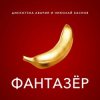
In the late 2010s, Baskov began actively using his own media image in more ironic pop projects. Together with Diskoteka Avariya, he recorded «Фантазёр», while with Philipp Kirkorov he released the single Ibiza.
These releases demonstrated an important aspect of his public career: Baskov did not seek to maintain an exclusively classical or solemn image and regularly worked with humour, parody and contemporary pop culture.
Music in the 2020s
In the 2020s, the singer’s discography continued to expand through individual singles. Releases from this period include «Зараза», «Дико тусим», «Ты красивая», «Лучший день», «Ты неотразима», «Без тебя нельзя» and «Туманы».
This format corresponds to the modern model of his career: instead of regularly releasing full-length pop albums, Baskov releases individual songs while continuing large-scale concert and television projects.
Television
Television became the second major part of Baskov’s public career. Over the years, he has hosted «Субботний вечер», the music show «Ну-ка, все вместе!», «Утренняя почта» and «Дуэты».
His work as a television presenter also influenced his musical image: Baskov established himself not only as a performer, but also as a versatile entertainment television personality capable of hosting major music programmes and concert broadcasts.
Teaching
Baskov’s academic training also continued into teaching. Since 2016, he has been associated with the Moscow Pedagogical State University, where he works as a professor in the Department of Musical Performance and gives masterclasses in classical singing.
His classes cover not only singing itself, but also breathing, voice control and stage performance — skills directly connected with his experience as both a classical and pop performer.
«Golden Voice of Russia»
The phrase «Golden Voice of Russia» has long been used as a stage epithet for Nikolay Baskov, but it is not an official state title. The expression is connected, among other things, with the national Ovation award, where Baskov received a corresponding designation. This distinction is important in an encyclopedic biography: the singer’s official state title is People’s Artist of the Russian Federation.
State and music awards
In 2001, Nikolay Baskov received the title of Honoured Artist of the Russian Federation, and on 12 May 2009 he was awarded the title of People’s Artist of the Russian Federation. In 2023, he received the Order of Honour for services to the development of national culture and art.
In his pop career, his numerous Golden Gramophone awards are particularly notable. The award has gone to «Отпусти меня», «Ты далеко», «Тебе одной», «Вхожу в любовь», «Права любовь», «Рядом с тобой», «Странник», «Ну кто сказал тебе», «Николай», «Обниму тебя», «Фантазёр» and other recordings. Russkoye Radio counts more than twenty Golden Gramophone statuettes in his career.
Main discography
Among Nikolay Baskov’s most significant full-length works are:
- «Посвящение» — 2000
- «Посвящение на бис» — 2000
- «Мне 25» — 2001
- «Никогда не говори прощай» — 2004
- «Тебе одной» — 2007
- Romantic Journey — 2011
- «Игра» — 2016
- «Верую» — 2018
His early albums and the main stages of his discography are documented in the Russkoye Radio catalogue, while Romantic Journey, «Игра» and «Верую» are also available in contemporary digital catalogues.
Key songs
Among Baskov’s most recognisable recordings are «Памяти Карузо», «Шарманка», «Натуральный блондин», «Я буду руки твои целовать», «Отпусти меня», «Ты далеко», «Тебе одной», «Рядом с тобой», «Странник», «Ну кто сказал тебе», «Николай», «Обниму тебя», «Фантазёр», «Ты сердце моё разбила» and «Зараза».
Musical style
The foundation of Nikolay Baskov’s professional technique is a classically trained tenor voice. However, his pop repertoire should not be defined as operatic: most of his popular songs follow the conventions of contemporary pop music — verse-chorus structures, electronic or orchestral pop arrangements, and studio recording with microphone-based vocal technique.
His operatic education is most evident in the way he uses his voice: breathing, long phrasing, a bright upper register and the ability to sustain broad melodic lines. As a result, even in pop compositions Baskov generally does not switch completely to a conversational or lightweight pop vocal style.
In classical programmes, the situation is reversed: there the singer works with arias, romances and traditional tenor repertoire, for which his academic training is not merely a stylistic element but the foundation of the performance. Baskov’s education at the Gnessin Academy and the Moscow Conservatory confirms this professional line.
Place in Russian popular music
The defining feature of Nikolay Baskov’s career is not simply the possession of a strong classical voice. Opera singers before him had already turned to popular repertoire, while pop artists regularly incorporated elements of classical music. Baskov made the combination of these two spheres the foundation of his entire public career.
In the late 1990s, he began as a young classical tenor, took part in vocal competitions and appeared on the stage of the Bolshoi Theatre. Within just a few years, he had become one of the most recognisable Russian pop performers. At the same time, the classical direction did not disappear: his collaboration with Montserrat Caballé, Romantic Journey, performances with symphony orchestras and the opera «Альберт и Жизель» continued alongside radio hits.
It is precisely this dual career that distinguishes Baskov from most artists of his generation on the Russian pop scene. His catalogue includes both material intended for the classical stage and mainstream pop hits, while his professional biography brings together the Bolshoi Theatre, formal musical education, television culture and decades of work in popular music.