

 Corina
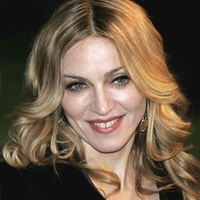
Madonna (full birth name — Madonna Louise Ciccone; born 16 August 1958, Bay City, Michigan, USA) is an American singer, songwriter, music producer, actress and director, and one of the most influential figures in the history of modern pop music. Over a career that began on New York’s club scene in the early 1980s, she has repeatedly reinvented her sound — from post-disco and synth-pop to house, R&B, electronica, disco and contemporary dance music. In 2008, Madonna was inducted into the Rock & Roll Hall of Fame.
Her importance is defined by more than record sales. Madonna changed perceptions of how much control a pop artist could exercise over songs, visual identity, music videos, concert productions and the public conversation surrounding her work. Religious symbolism, sexuality, gender roles, politics and club culture have repeatedly formed part of her artistic language. The Rock & Roll Hall of Fame highlights her ability to continually reshape her musical form — from synth-pop and R&B to house, electronica and EDM — while retaining a distinct authorial identity.
According to Guinness World Records, Madonna retains the status of the best-selling female recording artist in history. The Recording Academy credits her with seven Grammy Awards, while Billboard records 12 No. 1 singles and 38 Top 10 entries on the Hot 100, as well as a record 50 No. 1s on the Dance Club Songs chart.
Childhood in Michigan and the confirmation name Veronica
Madonna was born in Bay City and grew up in the suburbs of Detroit. Her father, Silvio “Tony” Ciccone, worked as an engineer; his family was of Italian descent. Her mother, Madonna Louise Fortin, came from a French-Canadian family and worked as an X-ray technician. The future singer was the third child in a family that eventually included six children. To distinguish daughter from mother, who shared the same name, the family called her Little Nonnie.
One of the defining events of her early life was her mother’s death from breast cancer in December 1963, when Madonna was five years old. The family was raised in the Catholic tradition. In 1966, during her confirmation, she chose the additional name Veronica. For this reason, the sometimes-used form “Madonna Louise Veronica Ciccone” refers to her religious confirmation name rather than her birth name.
Madonna did well at school and studied dance. Ballet teacher Christopher Flynn became especially important to her, encouraging her to take her abilities more seriously. After graduating from Rochester Adams High School, she received a dance scholarship to the University of Michigan and also trained at the American Dance Festival.
New York: first a dancer, then a musician
In 1978, Madonna left university and moved to New York with the intention of building a professional career as a dancer. She later recalled arriving in the city with about $35. It is more accurate to regard this as her own memory of beginning an independent life rather than turning it into a fully documented legend of poverty. In New York, she attended classes at the Alvin Ailey American Dance Theater and worked with choreographer Pearl Lang’s company while supporting herself through various temporary jobs.
Gradually, dance stopped being her only goal. Madonna began playing drums and guitar, writing songs and performing in bands. One of her first groups was Breakfast Club, formed around brothers Dan and Ed Gilroy, where she initially played drums before trying herself as a vocalist. After leaving the group, she worked with Stephen Bray and took part in the project Emmy.
This period is important for understanding her later career: Madonna did not enter pop music as a specially selected vocalist. Before receiving her first record contract, she had already passed through contemporary dance, punk and new wave circles, live bands, and only then focused on club-oriented electronic music.
Danceteria, Everybody and the contract with Sire Records
By the early 1980s, Madonna was increasingly focused on New York’s dance scene. Together with Stephen Bray, she prepared demos that included Everybody and personally tried to interest club DJs in the material. At Danceteria, her music was heard by Mark Kamins, who passed the recording to Sire Records executive Seymour Stein.
Stein was in hospital at the time, but invited the young singer to meet him there and signed her to a contract. Her first single, Everybody, produced by Kamins, was released by Sire in October 1982 and received significant club support. Its success allowed Madonna to move beyond standalone twelve-inch singles and begin work on a full album.
Madonna and the transformation from club singer to pop star
Her debut album, Madonna, was released on 27 July 1983. It included Holiday, Borderline, Lucky Star, Burning Up and Everybody. The record was not an immediate chart-topper in the United States, but gradually gained popularity and eventually reached No. 8 on the Billboard 200.
Several long-term elements of her music were already established here: a strong connection with the dancefloor, electronic rhythm sections, simple but powerful melodic hooks and the ability to turn visual identity into an extension of the song itself. The debut marked the beginning of Madonna’s long relationship with club culture, which she would revisit at almost every stage of her career.
Like a Virgin and the mid-1980s phenomenon
Her second album, Like a Virgin, was released in November 1984 and transformed Madonna into a global pop star. The title track became her first No. 1 single on the Billboard Hot 100. Material Girl, Dress You Up and Angel continued the album’s success.
One of the defining television moments of the era was her performance of Like a Virgin at the inaugural MTV Video Music Awards in 1984. Appearing in a wedding dress, Madonna demonstrated a principle she would continue to use throughout her career: song, clothing, choreography and provocation function as a single work.
In 1985, she appeared in the film Desperately Seeking Susan, while the associated song Into the Groove became another international hit. By this point, her clothes, hairstyles and jewellery were being widely copied, and Madonna’s influence had spread far beyond radio and music charts.
True Blue and the move towards more mature pop
Her third album, True Blue, was released in 1986. Songs including Live to Tell, Papa Don't Preach, Open Your Heart, La Isla Bonita and the title track True Blue demonstrated a much broader range than her earlier club music.
Live to Tell and Papa Don't Preach were especially important. The former showed Madonna’s strengths as a dramatic ballad singer, while the latter provoked public debate around pregnancy, religion and women’s choice. Controversy surrounding her work increasingly became not merely a side effect of promotion, but part of the construction of the work itself.
Like a Prayer: music, religion and conflict with mass culture
In 1989, Madonna released Like a Prayer, one of the central albums of her career. The songs contained more autobiographical material, while musically the record combined pop, rock, funk, gospel and dance. Key tracks included Like a Prayer, Express Yourself, Cherish, Oh Father and Keep It Together. The Rock & Roll Hall of Fame has also highlighted her evolution from early synth-pop towards R&B, rock and more complex pop music.
The video for Like a Prayer used Catholic imagery, burning crosses and scenes related to racial violence. The collision of religion, sexuality and commercial advertising turned the release into one of the most widely discussed episodes in late-1980s pop culture.
Vogue, Blond Ambition and a new standard for pop concerts
In 1990, Madonna released Vogue, based on the aesthetics of voguing — a dance form developed within New York ballroom culture. The song appeared on the soundtrack project I'm Breathless, connected with the film Dick Tracy, in which Madonna played Breathless Mahoney.
The Blond Ambition tour from the same period became one of the most influential concert productions of its era. The show was structured not as a simple sequence of separate songs, but as a series of thematic acts with carefully designed costumes, choreography, lighting and dramatic structure. This approach later became standard for major pop tours.
The documentary Madonna: Truth or Dare showed the tour from behind the scenes. It further reinforced Madonna’s image as an artist who deliberately kept the boundary between stage persona and public biography fluid.
Maverick, Erotica and Sex
In 1992, Madonna founded the entertainment company Maverick with Freddy DeMann and Veronica Dashev in partnership with Time Warner. Its structure included Maverick Records, which later released a number of commercially significant records by other artists, including Alanis Morissette’s Jagged Little Pill.
The first major creative phase of the Maverick era consisted of the album Erotica and the photography book Sex, both released in 1992. Their simultaneous appearance pushed Madonna’s exploration of sexuality and social taboos to the most radical point of her career.
At the same time, Erotica is much broader than its provocative reputation suggests. The album is closely connected with house, deep house and early-1990s New York club culture, and includes Erotica, Deeper and Deeper, Rain, Bad Girl and Fever. Over time, the record gained a more prominent place in assessments of her discography, particularly for its production and cohesive atmosphere.
Bedtime Stories and a change of tone
After the intense public reaction to the Erotica/Sex period, Madonna did not abandon experimentation, but changed its musical form. Bedtime Stories, released in 1994, was built around contemporary R&B, hip-hop and electronic music. Babyface, Dallas Austin, Nellee Hooper and Björk were among the contributors.
The main singles were Secret and Take a Bow. The latter spent seven weeks at No. 1 on the Billboard Hot 100 — longer than any other US No. 1 single of Madonna’s solo career.
Evita and recognition in film
In 1996, Madonna played Eva Perón in director Alan Parker’s film adaptation of Andrew Lloyd Webber and Tim Rice’s musical Evita. For the role, she worked with a vocal coach and used a significantly wider range than on most of her own pop recordings.
Madonna won the Golden Globe for Best Actress in a Motion Picture — Musical or Comedy for the role. The film itself also won the Golden Globe for Best Motion Picture — Musical or Comedy, while the new song You Must Love Me received the award for Best Original Song.
Ray of Light: electronic rebirth
In 1998, Madonna released Ray of Light, recorded primarily with British producer William Orbit. The album combined electronica, ambient, techno, trip-hop and pop, and became one of the most significant stylistic shifts of her career.
Frozen, Ray of Light, The Power of Good-Bye, Nothing Really Matters and Drowned World/Substitute for Love differed markedly from the American R&B sound of the previous album. The Recording Academy regards Ray of Light as an important electronic phase of Madonna’s work. At the 1999 Grammy Awards, the album cycle brought her several wins, including Best Pop Album and Best Dance Recording for the title track.
Music and working with Mirwais Ahmadzaï
After the success of Ray of Light, Madonna changed direction again. The 2000 album Music was created primarily with French producer Mirwais Ahmadzaï. Instead of William Orbit’s atmospheric electronics, the record used distorted vocals, synthesizers, electro and deliberately abrasive digital processing.
The title track Music became another US No. 1, while Don't Tell Me and What It Feels Like for a Girl continued the album’s success. This period made especially clear one of Madonna’s working principles: she sought out producers not to repeat an already successful formula, but to change her own musical language.
American Life: her most controversial album of the 2000s
In 2003, her collaboration with Mirwais continued on American Life. The album combined acoustic instruments, folktronica, electro and heavily processed vocals, while the lyrics addressed fame, consumption, American culture and Madonna’s own position within show business.
The release arrived during the politically tense period surrounding the beginning of the Iraq War and received a far more divided response than her previous two albums. Over time, however, American Life came to be regarded as one of the most conceptually cohesive and unusual works in her catalogue.
Confessions on a Dance Floor and the return to the continuous dancefloor
In 2005, Madonna recorded Confessions on a Dance Floor with Stuart Price. The album deliberately returned her music to the club roots of her career and was structured as an almost continuous dance mix.
The lead single Hung Up used an authorised ABBA sample from Gimme! Gimme! Gimme! (A Man After Midnight). It was followed by Sorry, Get Together and Jump. The Recording Academy awarded the album a Grammy for Best Electronic/Dance Album.
Confessions on a Dance Floor became such an important part of her later discography that two decades later Madonna and Stuart Price returned directly to its concept while creating Confessions II.
Hard Candy, MDNA and Rebel Heart
Hard Candy, released in 2008, shifted her sound towards American pop and R&B production. Timbaland, Justin Timberlake, Pharrell Williams and Nate “Danja” Hills contributed, while 4 Minutes became the lead single.
That same year, Madonna was inducted into the Rock & Roll Hall of Fame. The Hall’s official profile emphasises her role in breaking down boundaries between pop music, fashion, video, sexuality, religion and politics.
In 2012, Madonna released MDNA, which included Give Me All Your Luvin', Girl Gone Wild and Masterpiece. The latter was written for Madonna’s directorial film W.E. and earned her another Golden Globe — this time for Best Original Song.
Rebel Heart, released in 2015, became one of Madonna’s most extensive projects in terms of collaborators. Diplo, Avicii, Kanye West, BloodPop and other producers took part in its creation. The track list included Living for Love, Ghosttown, Bitch I'm Madonna and the title track Rebel Heart.
Madame X: Lisbon and music from different cultures
Madonna’s fourteenth studio album, Madame X, was released in 2019. Its development was influenced by the period she spent living in Lisbon. The recording combined pop, electronic music, reggaeton, trap and elements of Portuguese and African music.
Instead of a conventional stadium tour, Madonna chose relatively small theatres. The Madame X Tour was designed as an intimate theatrical production with narrative scenes and political themes, making it noticeably different from her previous large-scale arena shows.
Finally Enough Love: 50 club No. 1s
In 2022, Madonna released the remix anthology Finally Enough Love: 50 Number Ones. The title refers to her achievement on Billboard Dance Club Songs: Madonna became the first artist to collect 50 No. 1s on a single Billboard chart. The compilation included remixes spanning four decades, from early club hits to later recordings.
This statistic is especially revealing in the context of her career. Despite her enormous pop audience, Madonna’s connection with DJ and club culture was not simply a temporary feature of her debut years: it runs throughout her entire discography.
Serious illness and The Celebration Tour
In 2023, Madonna was preparing the retrospective The Celebration Tour, dedicated to four decades of recordings. The opening had to be postponed after she developed a serious bacterial infection in June and spent several days in intensive care.
The tour eventually began on 14 October 2023 in London and became Madonna’s first major show entirely structured as a journey through her own catalogue. The programme included songs from almost every key period — from the early Danceteria years to Ray of Light, Confessions on a Dance Floor and Madame X.
The ticketed portion of The Celebration Tour grossed around $225 million. It concluded with a free concert on 4 May 2024 at Copacabana Beach in Rio de Janeiro, attended by approximately 1.6 million people — the largest audience of Madonna’s own career. At the time, it was also a record for a standalone concert by a female performer; the figure was later surpassed.
Veronica Electronica: a project delayed for more than a quarter of a century
In July 2025, Madonna finally released Veronica Electronica — a project originally planned during the Ray of Light era in 1998, but postponed because of the main album’s prolonged success.
The eight-track release includes newly edited club remixes by Peter Rauhofer, William Orbit, Sasha, BT and Victor Calderone, as well as the previously unreleased demo Gone, Gone, Gone, created by Madonna and Rick Nowels. The project was released on 25 July 2025.
Bedtime Stories — The Untold Chapter
In November 2025, the archival series continued with Bedtime Stories — The Untold Chapter. It is not a separate studio album or a full demo anthology, but an eight-track EP prepared to mark the anniversary of Bedtime Stories.
It contains early demos, alternative versions and rare material that allows listeners to trace the development of the 1994 album’s R&B sound. The release arrived on 28 November 2025.
Return to Warner Records and Stuart Price
In autumn 2025, Madonna announced a new contract with Warner Records and a reunion with Stuart Price, with whom she had created Confessions on a Dance Floor twenty years earlier. It was also officially confirmed that her first studio album since Madame X would be released in 2026.
The project turned out not to be simply another dance album, but a direct conceptual continuation of one of Madonna’s most famous records.
Confessions II
On 3 July 2026, Madonna released her fifteenth studio album, Confessions II. It was her first new full-length studio project in seven years and continued the concept of Confessions on a Dance Floor. Stuart Price once again served as the principal co-writer and producer.
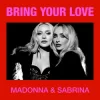
The standard edition contains 12 tracks, including I Feel So Free, Good for the Soul, One Step Away, Bring Your Love, Danceteria, Read My Lips, Everything, Love Without Words, Bizarre, School, Fragile and My Sins Are My Savior. Expanded editions increase the programme to 16 or 17 tracks. Bring Your Love features Sabrina Carpenter.
Madonna once again used the continuous dance-album principle associated with the first Confessions, but did not attempt to literally recreate the sound of 2005. The record became another return to the club foundation of her work — more than four decades after Everybody.
Confessions II debuted at No. 1 on the Billboard 200, becoming Madonna’s tenth No. 1 album in the United States. The record also topped the UK Albums Chart and the ARIA Albums Chart in Australia, where it became her thirteenth chart-topper.
Madonna in film
Madonna’s film career has always been less consistent than her musical one. Among her most significant roles are Desperately Seeking Susan, Dick Tracy, A League of Their Own and, above all, Evita.
Evita brought her the greatest professional recognition of her acting career — a Golden Globe. Madonna later moved into directing and made the films Filth and Wisdom and W.E.; the song Masterpiece from the latter won a Golden Globe.
Personal life and children
Madonna has been married twice: to actor Sean Penn and director Guy Ritchie. She has six children: daughter Lourdes Leon, son Rocco Ritchie, and four children adopted from Malawi — David Banda, Mercy James and twins Stella and Estere.
Her personal relationships, however, rarely remain completely separate from her art. Motherhood, divorce, family relationships, Catholic upbringing and her own ageing have repeatedly become material for songs and visual projects.
Raising Malawi
In 2006, Madonna founded the charity Raising Malawi, which works in healthcare and education for children in Malawi. Its major projects include support for paediatric medicine and educational programmes. The organisation continues to operate two decades after its foundation.
Madonna’s main discography
Studio albums
- Madonna — 1983
- Like a Virgin — 1984
- True Blue — 1986
- Like a Prayer — 1989
- Erotica — 1992
- Bedtime Stories — 1994
- Ray of Light — 1998
- Music — 2000
- American Life — 2003
- Confessions on a Dance Floor — 2005
- Hard Candy — 2008
- MDNA — 2012
- Rebel Heart — 2015
- Madame X — 2019
- Confessions II — 2026
Confessions II was officially released on 3 July 2026 and is Madonna’s fifteenth studio album.
Key soundtrack projects
- Who's That Girl — 1987
- I'm Breathless — 1990
- Evita — 1996
Major compilations and special releases
- You Can Dance — 1987
- The Immaculate Collection — 1990
- Something to Remember — 1995
- GHV2 — 2001
- Celebration — 2009
- Finally Enough Love: 50 Number Ones — 2022
- Veronica Electronica — 2025
- Bedtime Stories — The Untold Chapter — 2025
Veronica Electronica is an eight-track remix project originally conceived during the Ray of Light era, while Bedtime Stories — The Untold Chapter is officially classified as an eight-track EP containing archival material.
Madonna’s major songs
Among the most significant recordings from different stages of her career are Holiday, Lucky Star, Borderline, Like a Virgin, Material Girl, Into the Groove, Live to Tell, Papa Don't Preach, La Isla Bonita, Like a Prayer, Express Yourself, Vogue, Justify My Love, Erotica, Deeper and Deeper, Secret, Take a Bow, Frozen, Ray of Light, Music, Don't Tell Me, Hung Up, Sorry, 4 Minutes, Give Me All Your Luvin', Living for Love, Medellín, I Feel So Free and Bring Your Love.
On the Billboard Hot 100, Madonna has accumulated 38 Top 10 singles and 12 No. 1s. A separate part of her chart history is connected with Billboard’s club chart, where she reached a record 50 No. 1s.
Grammy Awards and other major achievements
The Recording Academy credits Madonna with seven Grammy wins. Award-winning works include Ray of Light and Confessions on a Dance Floor; the concert film The Confessions Tour also received a Grammy.
In film, she won a Golden Globe for her leading role in Evita and a second Golden Globe as the songwriter of Masterpiece. In 2008, Madonna was inducted into the Rock & Roll Hall of Fame.
Guinness World Records continues to identify her as the best-selling female recording artist in history. The precise total for worldwide sales varies according to the methodology used to count albums, singles and digital recordings, so for an encyclopaedic biography it is more accurate to use the confirmed Guinness status rather than present disputed figures such as “300”, “335” or “400 million” as an absolutely exact total.
Why Madonna’s influence extends beyond pop music
Madonna’s contribution lies above all in how significantly she expanded the possibilities available to an author and performer within mainstream pop culture. She used the music video not merely as advertising for a song, but as an independent work; transformed the large-scale concert into a theatrical production; consistently brought club producers and DJs into the creation of pop releases; and changed her public image alongside the sound of each new period.
Her influence is officially recognised by the Rock & Roll Hall of Fame, which names among the artists she has influenced Lady Gaga, Beyoncé, Britney Spears, Christina Aguilera, Rihanna, Katy Perry, Nicki Minaj and representatives of the next generation of pop performers.
At the same time, the ability to change does not mean the absence of a permanent foundation. From Everybody and Holiday to Vogue, Ray of Light, Hung Up and Confessions II, one thread runs through a large part of her catalogue — an interest in music designed for the dancefloor. It is precisely this connection with club culture that has allowed Madonna to work with successive generations of producers without turning her own history into a simple recreation of the sound of the 1980s.
Confessions II demonstrates this continuity especially clearly: more than forty years after her first club single, Madonna once again built a full album around a continuous dance format — and once again took it to No. 1 on the Billboard 200. Her career remains a rare example of how historical legacy and new music can exist within one ongoing project rather than being divided into separate periods of “the past” and “the comeback”.