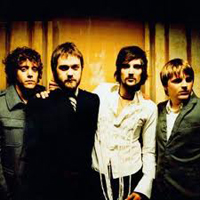
Kasabian are a British rock band from Leicester who have managed to combine heavy guitar riffs, psychedelia, hip-hop rhythms, synthesizers and the energy of club music. The group formed in 1997, initially performed under the name Saracuse, and gained widespread recognition following the release of Club Foot, L.S.F., Processed Beats and their self-titled debut album Kasabian in 2004.
For most of the band’s history, Tom Meighan was the lead vocalist, while Sergio Pizzorno wrote almost all of the material, handled the arrangements, played guitar and performed some of the vocal parts. After Meighan’s departure in 2020, Pizzorno became the frontman while retaining his role as the principal songwriter and producer. Kasabian’s current line-up also includes bassist Chris Edwards, drummer Ian Matthews and guitarist Tim Carter.
Kasabian are often described as indie rock or post-Britpop, but those labels capture only part of their music. On one song, the band may recall Oasis with their stadium-sized sweep; on another, they may evoke Primal Scream or The Chemical Brothers through a dancefloor groove, before moving into krautrock, dub, electronic music or psychedelic soundtrack territory. This internal contradiction became the defining feature that separated Kasabian from most British guitar bands of the early 2000s.
How the Band Saracuse Was Formed
The story of Kasabian began in the suburbs of Leicester. Sergio Pizzorno, Chris Edwards and Tom Meighan knew one another from Countesthorpe Community College. Pizzorno and Edwards learned guitar together and gradually arrived at the idea of forming their own band. Meighan stood out because of his powerful voice, unpredictable behaviour and habit of singing songs by Oasis even while playing football, so his friends decided that he should become the frontman. Local guitarist and keyboardist Chris Karloff later joined them.
The band’s first name, Saracuse, was deliberately or accidentally misspelled. The musicians had intended to use the name of the American city Syracuse, but settled on the unusual spelling. In the late 1990s, the group played small venues around Leicester, recorded early demos and had not yet developed the electronic sound that would later become their trademark.
At first, Saracuse’s music was closer to 1960s British rock and bands such as The Kinks and Small Faces. Everything changed when Pizzorno and Karloff gained access to a computer and music software. Rather than using the technology only to make conventional rehearsal recordings, they began chopping up audio fragments, programming rhythms and combining guitars with electronics. Pizzorno described his goal as an attempt to unite the atmospheric quality of Boards of Canada with songs powerful enough to work in front of an enormous audience.
That was when Kasabian’s core principle took shape: a rock band should affect listeners not only through guitar noise, but through rhythm. Bass, programmed drums and synthesizers often perform the same function in their music as the beat in a hip-hop or club track.
What the Name Kasabian Means
The name Kasabian is connected to Linda Kasabian, a member of Charles Manson’s so-called “Family” who later became a key prosecution witness at the trial. According to Chris Edwards, Chris Karloff came across the surname, liked the sound of the word itself, and the musicians decided to use it as the band’s name.
The choice did not imply support for Manson or any romanticisation of the crimes committed by his followers. The young musicians were looking for a short, unusual and slightly unsettling word that could not be confused with the name of another rock band.
The claim found in some biographies that Kasabian formed in 1999 is probably linked to the band’s early performances and Saracuse’s involvement in recordings from Leicester’s local scene during that period. However, the members themselves and authoritative British sources date the group’s formation to 1997.
Early Demos and the Road to a Record Deal
The early material was developed at Bedrock Studios in Leicester, where Chris Edwards had connections through his work. The band gradually circulated demo recordings among managers and industry representatives until they attracted the attention of people able to help them secure a professional contract. In the early 2000s, the musicians signed a deal and began preparing material for their debut album.
The often-repeated story that Kasabian sent RCA a single track, Processed Beats, in 2002 and immediately received a contract greatly oversimplifies a process that had taken years. By that point, the group had already been recording demos, playing live, working with management and developing its own sound.
An important stage involved the musicians temporarily moving into a house in the countryside, where they could work away from everyday life. That isolation suited the band’s early aesthetic: monotonous rhythms, dark synthesizers, repeated phrases and the feeling that the music was coming from an abandoned warehouse or underground club.
The Debut Album Kasabian
Kasabian’s first studio album, Kasabian, was released in September 2004. Producer Jim Abbiss, who had previously worked with DJ Shadow, UNKLE and Arctic Monkeys, assisted the band during the recording. The album reached number four on the UK Albums Chart, and its UK sales later exceeded one million copies.
The debut makes especially clear what distinguished Kasabian from most new British rock bands. The guitar rarely exists separately from the electronic rhythm. The songs are held together by repeated bass patterns, synthesizer noise, programmed beats and short vocal phrases.
Club Foot
The major breakthrough came with Club Foot. The song opens with an instantly recognisable bass riff, over which distorted guitar, electronic noise and militant vocals gradually emerge. The single reached number 19 on the UK chart, but its real cultural impact far exceeded that position: the track was used in sports broadcasts, video games, films and advertising campaigns.
Club Foot became the perfect Kasabian live song. It contains little complex narrative, but it has a rhythm capable of making a crowd of many thousands move in unison almost immediately.
L.S.F.
The title L.S.F. stands for Lost Souls Forever. The song reached number ten on the UK chart and became Kasabian’s first single to enter the national Top 10.
The track begins calmly but gradually turns into a collective chant. Its closing melody can easily be continued even after the band stops playing, which is why L.S.F. became one of the traditional final numbers at Kasabian concerts.
Processed Beats and Cutt Off
Processed Beats makes the band’s fascination with hip-hop and sampling particularly obvious. The guitar group effectively constructs the song like an electronic track, with Tom Meighan’s vocal functioning almost as a rhythmic element.
Cutt Off, which climbed to number eight in the UK, combined psychedelic lyrics, a mechanical groove and a melodic chorus. It marked the first time Kasabian entered the British Top 10 with a song that made no attempt to sound like conventional radio-friendly rock.
How the Band Worked Internally
Kasabian’s classic line-up was built around a clear division of roles. Tom Meighan was the physical centre of the live show: he moved around the stage, engaged directly with the crowd and delivered the songs with his characteristic raspy aggression.
Sergio Pizzorno remained the principal writer. He created the melodies, lyrics, guitar parts and electronic foundations, but for many years did not seek the position of lead performer. As the British press later observed, the strength of early Kasabian lay precisely in the contrast between the man who wrote the songs and the man who shouted them from the stage.
Chris Edwards provided the heavy, stable bass foundation. In Kasabian’s music, bass is often more important than traditional rhythm guitar because it is the element that connects rock with a dance groove.
After several temporary drummers, Ian Matthews joined the band. With him, the electronic foundations acquired the powerful live sound needed for large venues.
Empire and the Departure of Chris Karloff
The second album, Empire, was released in 2006 and became Kasabian’s first record to top the UK chart. The title single reached number nine, while the album confirmed the band’s transition from promising newcomers to one of the biggest British rock groups of their generation.
The music became broader and more theatrical. The industrial claustrophobia of the debut gave way to orchestral details, acoustic instruments and songs designed for stadium performance.
Empire
The title track is constructed like a military march. Meighan’s vocal sounds like an address to a crowd, while the arrangement gradually expands to an almost cinematic scale.
The lyrics do not tell a specific historical story. Here, the “empire” is instead an image of power, collective madness and the human desire to feel superior.
Shoot the Runner
On Shoot the Runner, Kasabian turned towards glam rock and funk. The song is noticeably looser than the mechanical tracks of their early period and shows that the band had no intention of simply repeating the debut.
Chris Karloff left the band during the recording of Empire. The split was initially explained as a result of musical differences, but Chris Edwards later said that Karloff had grown tired of endless touring, moved to the United States and gradually drifted away from the group.
The departure of one of the founders could have destroyed the band, as Karloff had made a major contribution to the electronic side of the early sound. Pizzorno, however, took on even greater responsibility for production, and Kasabian continued.
West Ryder Pauper Lunatic Asylum
The third album, West Ryder Pauper Lunatic Asylum, was released in June 2009. Its title referred to a real psychiatric institution in Yorkshire, although the band did not create a literal historical concept. Pizzorno imagined the record as a journey through a fictional space in which every song represented a different character or room.
The producer was Dan Nakamura, better known as Dan the Automator. He helped the group combine hip-hop production, vintage keyboards, psychedelia, electronic rhythms and heavy guitars in a deeper and more coherent way.
The album spent two weeks at number one on the UK chart and was shortlisted for the 2009 Mercury Prize. In 2010, Kasabian won the BRIT Award for Best British Group.
Fire
Fire became one of the defining songs in Kasabian’s history. The track begins with an almost blues-like verse, then suddenly shifts into an electronic rhythm before exploding into the chorus.
That structure demonstrates Pizzorno’s greatest skill: joining sections that seem incompatible on paper. The song simultaneously resembles psychedelic rock, a club track and a football chant.
Underdog
Underdog opens with a heavy guitar riff and quickly develops into a song about someone who appears destined to lose but refuses to accept defeat.
The track makes Kasabian’s social image especially clear. The band did not write realistic chronicles of British life in the manner of some Britpop artists, but repeatedly addressed the listener who feels trapped, underestimated or stuck in monotonous work.
Vlad the Impaler
Vlad the Impaler became one of the band’s most aggressive and absurd recordings. Comedian Noel Fielding appeared in the music video as a fictional cloaked killer.
The song combines a heavy rhythm, punk-like brevity and a deliberately excessive image. Kasabian were never afraid to appear dangerous and funny at the same time — a rare combination in stadium rock.
BRIT Awards and the Status of a Major British Band
Winning the British Group category at the 2010 BRIT Awards officially confirmed that Kasabian had moved beyond the position of Oasis successors or merely another band from the post-Britpop wave.
Their popularity, however, was built primarily on albums and live performances. Kasabian never reached number one on the UK Singles Chart and had only a handful of Top 10 songs, yet seven of their studio albums in succession became number-one records.
That balance reveals the nature of their audience: listeners did not treat Kasabian as the performers of a single fashionable hit, but as a complete rock band with a catalogue and a substantial live history.
Velociraptor!
The fourth album, Velociraptor!, was released in 2011 and also topped the UK chart. Pizzorno explained the title through the image of a predator that hunts as part of a pack: an individual member may be vulnerable, but the group can defeat a stronger opponent.
The album developed the psychedelic direction of West Ryder while offering clearer melodies and bigger choruses.
Days Are Forgotten
On Days Are Forgotten, a guitar riff sits beside a rhythm reminiscent of hip-hop production. Meighan almost shouts the verses, while Pizzorno’s vocal melody creates a softer contrast.
Re-Wired
Re-Wired is one of Kasabian’s most direct live anthems. The song is built around a sense of acceleration: the bass and drums continually push it forward, while the chorus seems designed for an enormous festival field.
Goodbye Kiss
The ballad Goodbye Kiss revealed a less aggressive side of the band. There is almost none of the usual electronic pressure; instead, the focus is on melody, acoustic guitar and the story of a relationship that has ended.
The ability to move between Switchblade Smiles and Goodbye Kiss helps explain how Kasabian avoided a stylistic trap. The group could make music for a mosh pit without depending on volume alone.
48:13 and the Peak of Their Live Career
The album 48:13 was released in 2014. Its title referred to the total running time of the record, while the artwork was deliberately reduced to a minimum: a bright background, the band’s name and the numbers.
Pizzorno produced the material himself and made the sound drier and more electronic. Instead of the elaborate psychedelic scenery of West Ryder, the band concentrated on short riffs, heavy bass and sharp synthesizers.
48:13 became Kasabian’s fourth consecutive album to top the UK chart.
Eez-Eh
The main single was Eez-Eh, an ironic dance track built around an almost primitive synthesizer motif. Some listeners interpreted the lyrics literally, but Pizzorno described them as the speech of a man delivering incoherent, self-confident nonsense early in the morning after a night out.
Bumblebeee and Stevie
Bumblebeee was designed as a physically overwhelming live song: heavy electronic hits, overloaded guitars and almost no pauses.
Stevie, by contrast, develops gradually and combines orchestral drama with electronic rock.
In June 2014, Kasabian headlined the Pyramid Stage at Glastonbury. For a band that had begun in pubs and small Leicester venues, the performance represented the symbolic peak of the first major phase of their career. The Official Charts history also notes that in just ten years, the group progressed from its first chart appearance to the headline slot at Glastonbury.
Why Kasabian Became Such a Major Live Band
Kasabian write songs with not only the recording but also the behaviour of the audience in mind. L.S.F. contains a section the crowd can sing on its own. Club Foot is recognisable within the first seconds of the bass line. Fire is built around a sudden transition after which the audience begins jumping in unison.
The physical contrast between the members was also important. Tom Meighan embodied raw energy and instinct. Sergio Pizzorno appeared more detached, but controlled the drama, added vocal parts and moved between guitar, synthesizers and percussion.
The stage model changed after the switch of frontman, yet the band’s live reputation survived. In 2024, Kasabian’s secret Glastonbury appearance drew a huge crowd, while the classic songs Club Foot, Shoot the Runner, L.S.F. and Fire once again formed the centre of the set.
For Crying Out Loud
The sixth album, For Crying Out Loud, was released in 2017. After the electronic severity of 48:13, Pizzorno wanted to restore more live guitars and the feeling of a band playing together in one room.
The record again topped the UK chart and became Kasabian’s fifth consecutive number-one studio album.
You’re in Love with a Psycho
The lead single You’re in Love with a Psycho combined a simple guitar riff, an almost pop melody and Kasabian’s characteristic mixture of romance and absurdity.
The video was presented as a story about patients in a psychiatric institution, visually connecting the song with the band’s longstanding love of surrealism and theatrical imagery.
Ill Ray (The King)
On Ill Ray (The King), Pizzorno adopted a mocking, self-assured character who declares himself king. Beneath the bravado lies a satire of rock-star confidence and the constant need to reaffirm one’s status.
Bless This Acid House
The title Bless This Acid House promises club music, although the song itself is closer to bright guitar-driven pop rock. That mismatch captures Kasabian’s humour: the band can name a song after acid house and then write what is almost a classic festival anthem.
Tom Meighan’s Departure
In July 2020, Kasabian announced that Tom Meighan was leaving the band. The following day, he pleaded guilty to assaulting his then-fiancée Vikki Ager and was sentenced to community service and rehabilitation measures. The remaining members of Kasabian later clarified that they had asked Meighan to leave after learning what had happened.
This was not an ordinary creative dispute or a voluntary decision by the singer to pursue a solo career. Domestic violence was the reason the band considered it impossible to continue working in the same line-up.
For Kasabian, the situation could have marked the end of the story. Meighan had been the face of the group and had performed almost the entire core repertoire for more than two decades. Pizzorno later compared the period to returning to a house destroyed by fire.
The musicians considered finding a new singer, but Pizzorno decided that handing his own lyrics to a stranger would feel wrong. He knew the circumstances behind every song and gradually accepted that he should become the lead vocalist himself.
Sergio Pizzorno Becomes the Frontman
Pizzorno’s move into the central role changed Kasabian’s stage dynamic. Previously, he could remain to one side, focus on instruments and join in selected vocal passages. Now he had to lead the entire concert, perform Meighan’s parts and preserve his own style at the same time.
Pizzorno admitted that he is not a classic extrovert by nature. Stage costumes and visual characters became a way for him to step into the role of frontman. He did not try to copy Meighan literally: his voice is softer in quieter passages, while the new songs were written with a different vocal timbre in mind.
Guitarist and producer Tim Carter, who had already spent many years performing with the band, also became part of the permanent modern line-up. He helped free Pizzorno from some of his guitar duties so that the new frontman could concentrate on engaging with the audience.
The Alchemist’s Euphoria
Kasabian’s first album after Meighan’s departure was The Alchemist’s Euphoria, released in August 2022. The record topped the UK chart, becoming the band’s sixth consecutive number-one album.
The release was perceived not simply as another record, but as a test of Kasabian’s viability. Pizzorno had to demonstrate that the band could continue without its former frontman without turning into a cover version of itself.
Alygatyr
The first single of the new era was Alygatyr. The song retained the aggressive electronic rhythm and heavy live structure, almost immediately answering the question of whether Kasabian would preserve their former energy.
Scriptvre
On Scriptvre, an electronic beat, spoken-word passages and sharp guitar are combined within a more experimental structure. The track underlines the influence of hip-hop and electronic music that had shaped Pizzorno’s work even before he learned to play guitar properly.
Chemicals
Chemicals became one of the most emotionally open songs of the period. Instead of the old frontman bravado, Pizzorno addresses his inner state, memory and the effort to hold himself together after a destructive experience.
The album received a mixed response from some long-standing fans, but it accomplished its main task: Kasabian continued to exist and found a new stage identity.
Happenings
The eighth album, Happenings, was released on July 5, 2024. It was considerably shorter than the band’s previous records: most songs run for less than three minutes, while the entire album lasts approximately 28 minutes.
Pizzorno and co-producer Mark Ralph placed the emphasis on bright choruses, dance rhythms and more compact pop structures. British critics noted influences from house music, synth-pop and Tame Impala while also acknowledging that the group had retained its familiar love of heavy bass lines and festival-sized climaxes.
The album’s main songs include:
- Call;
- Coming Back to Me Good;
- Darkest Lullaby;
- Passengers;
- Algorithms;
- How Far Will You Go.
Happenings became Kasabian’s seventh album to top the UK chart. That result placed the band level in terms of number-one albums with Blur, Muse, The Prodigy, Paul McCartney, Elton John and several other major artists.
In the summer of 2024, Kasabian also staged the large-scale Summer Solstice II concert in their hometown of Leicester and played a secret set at Glastonbury. These performances showed that audiences had accepted Pizzorno as the frontman and that the new line-up could succeed not only in the studio.
Act III and Kasabian’s Activities in 2026
Kasabian’s ninth studio album was titled Act III. It was initially expected in the summer of 2026, but the release was postponed until September 4, 2026. The band’s official store describes the record as ten guitar-driven psychedelic pop songs accompanied by three short interludes. It was produced by Sergio Pizzorno and Mark Ralph.
The title can be understood as the third act of the band’s modern history: The Alchemist’s Euphoria was the restart, Happenings consolidated the new model, and Act III is intended to combine the experience gained with a more pronounced guitar sound.
The following songs were released ahead of the album:
- Hippie Sunshine;
- Great Pretender;
- Superpowers;
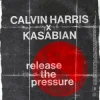
- Release the Pressure, a collaboration with Calvin Harris.
Pizzorno described the forthcoming record as a return to a guitar-based foundation and, at the same time, a collection of the elements that make up Kasabian’s musical DNA.
On July 4, 2026, the band played its largest standalone London concert at Finsbury Park. The set included songs from different periods, while the supporting artists included Razorlight, Miles Kane, The K’s, SOFY and Louis Dunford.
A UK arena tour with The Vaccines was also scheduled for the end of 2026.
The Role of Sergio Pizzorno
Sergio Pizzorno is Kasabian’s principal songwriter and sonic architect. Despite his image as the guitarist in a major British rock band, his earliest musical interests were connected above all with rave culture, DJing and electronic production.
As a child, he wanted to learn mixing, received his first turntables and then began working with a sampler and Atari Cubase. Pizzorno has stressed that he learned to produce electronic tracks before he became proficient on conventional musical instruments.
He initially learned guitar not in order to play complicated solos, but to gain the ability to write songs. That approach remained throughout his adult career: Kasabian’s parts are rarely designed to demonstrate technical skill. A riff needs to be instantly memorable, support the rhythm and function in front of a large audience.
His music includes elements of:
- rave and acid house;
- The Stone Roses and Primal Scream;
- Oasis and Britpop;
- hip-hop and sampling;
- Neu! and krautrock;
- Ennio Morricone and Italian film scores;
- psychedelic rock;
- dub and electronic music.
It is Pizzorno who enables Kasabian to remain recognisable despite changes in individual members and production methods.
Kasabian’s Musical Style
Kasabian are often called an indie-rock band, but their music is considerably closer to the idea of dance rock. Even their heaviest songs are usually built around a pulse and a repeated groove.
The main elements of their sound are:
- short bass riffs;
- distorted but rhythmic guitars;
- electronic drums and samples;
- synthesizer loops;
- spoken or semi-rapped verses;
- choruses designed for collective singing;
- psychedelic transitions;
- sudden changes in tempo and dynamics.
Unlike a traditional rock band, Kasabian do not draw a clear boundary between live and electronic sound. A programmed beat may develop into real drums, a synthesizer may merge with a guitar, and a vocal may become part of a rhythmic loop.
The term “lad rock”, which the British press used to describe music aimed largely at a male festival audience, captures only the outer layer. Behind songs suitable for a football stadium lies Pizzorno’s interest in experimental cinema, literature, electronic music and psychedelic culture. Critics have repeatedly noted the contrast between Kasabian’s noisy audience and the far stranger internal construction of the music itself.
Kasabian’s Current Line-Up
Sergio Pizzorno
Vocals, guitar, keyboards, programming, songwriting and production. A founding member and the band’s principal frontman since 2020.
Chris Edwards
Bass guitar. A founding member of Kasabian. His heavy, repeated bass parts are among the most important elements of the group’s signature sound.
Ian Matthews
Drums. Joined during the work on the debut album and helped translate the electronic rhythms into a powerful live format.
Tim Carter
Guitar, production and backing vocals. Worked with the group as a touring musician from 2013 and later became a permanent member.
The Official Charts biography and the band’s current pages identify these four musicians as Kasabian’s present-day line-up.
Former Key Members
Tom Meighan
Lead vocalist from the band’s formation until 2020. His voice and stage behaviour played an important role in turning Kasabian into a major live act. He was removed after the band learned that he had committed domestic violence.
Chris Karloff
Guitar, keyboards and electronic production. Contributed to the development of the early sound and the first two albums, but left the band during the Empire period.
Jay Mehler
Performed with Kasabian as a touring guitarist after Karloff’s departure. In 2013, he joined Liam Gallagher’s band Beady Eye, after which Tim Carter took his place.
Kasabian’s Essential Songs
Club Foot
The band’s most recognisable early riff. The song combined rock, electronic music and a marching rhythm and became a permanent part of the live repertoire.
L.S.F.
A festival anthem whose closing melody can be continued by the audience without instrumental accompaniment.
Processed Beats
One of the songs that most clearly demonstrates the hip-hop and electronic foundations of Kasabian’s early sound.
Empire
A large-scale, march-like rock track that opened the period of the band’s stadium popularity.
Shoot the Runner
A mixture of funk, glam rock and psychedelia featuring one of Tom Meighan’s most distinctive vocal performances.
Fire
A song built around a sudden dynamic shift that became the band’s principal live anthem and one of the central tracks on West Ryder Pauper Lunatic Asylum.
Underdog
A heavy riff and a theme of resisting adverse circumstances made the song especially popular in sporting and festival settings.
Days Are Forgotten
A fusion of hip-hop rhythm, psychedelic rock and a large-scale chorus.
Goodbye Kiss
A melodic ballad that showed Kasabian could succeed without their usual aggression or electronic pressure.
Eez-Eh
A deliberately simple and ironic dance track that defined the minimalist style of the album 48:13.
You’re in Love with a Psycho
One of the band’s most accessible pop-rock songs, while retaining their fascination with strange characters and surreal imagery.
Algorithms
A song about the difference between human emotion and machine logic that closes the album Happenings.
Kasabian Studio Discography
- Kasabian — 2004
- Empire — 2006
- West Ryder Pauper Lunatic Asylum — 2009
- Velociraptor! — 2011
- 48:13 — 2014
- For Crying Out Loud — 2017
- The Alchemist’s Euphoria — 2022
- Happenings — 2024
The forthcoming ninth album, Act III, is scheduled for release on September 4, 2026 and, at the time this biography was updated, was not yet included among the band’s officially released studio albums.
Chart Achievements
Kasabian’s debut album peaked at number four on the UK Albums Chart. Each of the following seven studio records reached number one in the UK:
- Empire;
- West Ryder Pauper Lunatic Asylum;
- Velociraptor!;
- 48:13;
- For Crying Out Loud;
- The Alchemist’s Euphoria;
- Happenings.
In total, the band spent eight weeks at number one on the UK Albums Chart and more than 260 weeks in the Top 75. On the singles chart, Kasabian achieved four Top 10 entries and thirteen Top 40 songs.
Major Awards and Achievements
- BRIT Award in the British Group category — 2010;
- Mercury Prize nomination for West Ryder Pauper Lunatic Asylum;
- multiple NME and Q awards for live performances;
- headline performance at Glastonbury — 2014;
- seven consecutive number-one albums in the UK;
- major standalone concerts in Leicester, London and at British stadium venues.
Why Kasabian Have Remained Popular
Kasabian emerged during a period when the British press regularly declared the latest guitar band to be “the new Oasis”. Most of those groups disappeared after one or two albums because a provocative image and several riffs were not enough to sustain a long career.
Kasabian survived because they were never only a traditional rock band. Electronic music allowed them to change their production methods with the times, while Pizzorno’s songs retained a simple melodic core.
The band also understood the importance of the live show. Their biggest songs are structured so that thousands of strangers can move and sing as one. That does not necessarily make the music complex in an academic sense, but it requires a precise understanding of rhythm, anticipation and collective reaction.
Even the severe crisis of 2020 did not end Kasabian’s story. Instead of searching for a copy of their former singer, Pizzorno changed his own role and gradually built a new version of the group. The Alchemist’s Euphoria was an album about survival, Happenings was an attempt to move more freely, and Act III is intended to consolidate the new era.
Conclusion
Kasabian began as a school band from the outskirts of Leicester, inspired by Oasis, rave culture and the dream of escaping the limitations of ordinary life. Instead of simply repeating the formula of British guitar rock, however, the musicians introduced computers, samples, synthesizers and the rhythms of club culture.
That is why their best songs did not age with the post-Britpop wave. Club Foot still sounds threatening, L.S.F. turns an audience into a choir, Fire can transform the mood of an enormous venue within seconds, and Underdog retains its sense of resistance against circumstance.
For the first decades of Kasabian’s career, the group was held together by the creative contrast between Sergio Pizzorno and Tom Meighan. One designed the music; the other transformed it into a physical event on stage. After Meighan’s dramatic departure, it seemed that the mechanism could no longer function.
Kasabian did not, however, search for someone who could imitate the former frontman. Pizzorno stepped out from behind the guitar, accepted responsibility for his own words and created a different version of the band — less predictable, at times more pop-oriented, but still devoted to rhythm, psychedelia and large-scale live moments.
Kasabian’s history shows that the true longevity of a rock band is not determined by an unchanging line-up. It depends on the ability to survive its own success, the loss of a familiar identity and the moment when it must answer the question again: why does this band still exist?