

 Баста
Баста
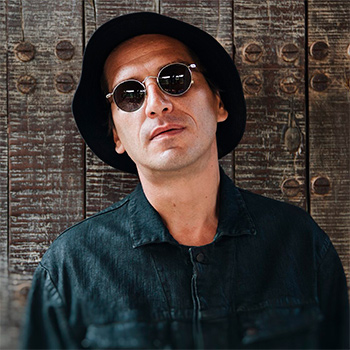
Gio Pika (real name — Georgy Vladimirovich Dzhioev; born May 8, 1978, in Tbilisi, Georgian SSR) — is a Russian rapper, songwriter and actor of Ossetian origin. His music exists at the intersection of hip-hop and Russian chanson and is known for its dark stories about the Russian North, prisons, the Gulag, the criminal underworld and life in post-Soviet cities.
Over the years, the artist himself has described his music as «beat chanson» and «Russian prison literature». At the same time, Gio Pika has never served a prison sentence and does not present his songs as autobiographical accounts of an inmate. For him, criminal and prison-camp themes are closer to literary and journalistic material based on history, documentary sources, stories from people he knew and the street environment he observed from childhood.
He gained wide recognition through «Фонтанчик с дельфином», «Буйно голова», «Ад-Колыма», «Отечество казённое» and the «Сборник север» series. In the 2020s, his audience expanded significantly thanks to collaborative albums with Kravts, the song «Где прошла ты», projects with Slovetsky, MIRAVI and other artists.
Childhood in Tbilisi
Georgy Dzhioev grew up in Tbilisi in an Ossetian family. Music was part of everyday life at home: his father played string instruments and performed, while Georgy himself attended music school and vocal classes as a child. At the same time, he also practiced wrestling.
However, the street had a much stronger influence on him as a teenager than formal music lessons. In later interviews and in his authorized biography, Dzhioev described in detail the courtyard culture of Tbilisi in the 1980s and early 1990s — with its own rules, older friends, fights, card games and the visible influence of criminal culture.
It was during this period that the nickname later transformed into his stage name first appeared.
One of Georgy's older friends, Gela Tsiklauri, once jokingly compared the boys in their group to playing cards. Dzhioev called himself the king of spades, only to be told that there was already a king and that he would be the «jack of spades». Georgy was around thirteen years old. The nickname «Pikovy» stuck with him long before he began a music career.
Later, when he needed a name for performances, he combined the shortened form Gio with his old street nickname — and Gio Pika was born.
Addiction and a Difficult Period in His Youth
Dzhioev's teenage years were connected not only with music and street life. He encountered drugs at an early age.
According to the artist's own recollections, at around thirteen or fourteen he suffered a severe overdose. His addiction then continued for several more years.
As an adult, Gio Pika spoke about this period quite openly and without trying to turn it into part of his stage image. He saw how drugs were gradually destroying both his own life and the lives of people around him, and at around the age of 22 he stopped using completely without going through a rehabilitation center.
Addiction later rarely became a direct subject of his songs, but the experience of living close to drugs, illness and death clearly influenced the overall tone of his lyrics.
Family, Relocations and Medicine
One of the most difficult events of his youth was his father's illness. To pay for treatment, the family sold their apartment in Tbilisi and moved to Vladikavkaz. After his father's death, Georgy had to think much more seriously about earning money and supporting his family.
His parents wanted him to pursue a medical profession. Popular biographies often mention a medical institute in Moscow, but a later authorized biography gives different information: in 2003, Dzhioev received a higher medical education through a division of Tbilisi Medical University operating at a Russian military hospital.
He remained connected with medicine for more than ten years. During that time, he worked as a nurse, paramedic and ambulance worker, and after additional training, in anesthesiology.
This part of his life remained almost unknown to listeners for a long time. Only after Gio Pika became a popular artist did the story of a medical worker who left the profession at nearly thirty and began writing rap regularly appear in interviews.
Dzhioev himself explained that he did not leave medicine because he disliked it, but because he did not feel he possessed the calling the profession required. Constant exposure to other people's pain and severe medical conditions became increasingly difficult for him.
Moving North
In the second half of the 2000s, Georgy moved to Syktyvkar. Sources mention both 2006 and 2008; a later authorized biography dates his final move to the summer of 2008.
At first, music brought in no money. Dzhioev worked as a taxi driver, at a shashlik café, in logistics and took other available jobs.
Syktyvkar became the city where his musical ideas finally took concrete shape. There he met beatmaker DRZ (Drozd), as well as DJ Shmel and other participants in the local underground scene.
According to Gio's recollections, DRZ once played him one of his beats. That same evening, the first lines of what would become «Сыктывкар-кварталы» appeared.
After that, Dzhioev began writing lyrics systematically. He sent recordings to rap communities, took part in battles, arranged collaborations and performed at small venues.
The phrase «Сыктывкар underground», which later appeared regularly in his tracks, was not a fabricated marketing concept but a direct reference to the city where his career as a songwriter effectively began.
How «КомиКрайм» Emerged
In the North, Gio Pika began taking a much deeper interest in the history of the Soviet prison camp system, the Komi region and the Gulag. He watched documentaries, read historical materials and spoke with people who had personally gone through prison.
Gradually, these subjects formed an entire world of songs: prisoner transports, penal colonies, taiga, state institutions, northern cities, criminal slang and characters existing somewhere between documentary chronicle and fictional storytelling.
This aesthetic came to be called «КомиКрайм» — a combination of the Komi Republic and criminal themes.
At the same time, Dzhioev never claimed that he himself had been imprisoned. On the contrary, in interviews he separated his own life from the characters in his songs and described himself more as an observer and storyteller.
This distinction is important because the realistic delivery and detailed writing created a persistent myth that the artist himself had a prison past.
«Фонтанчик с дельфином»
The major breakthrough of Gio Pika's early career was the song «Фонтанчик с дельфином».
Its story is connected with Special Regime Correctional Colony No. 6 in Sol-Iletsk, better known as the «Black Dolphin», which houses, among others, prisoners serving life sentences.
The song title refers to the sculpture of a black dolphin located near the institution.
The release history has two dates. According to people involved in Gio Pika's early career, the track already existed and was circulating around 2013. The official music video and digital release date from 2016; the song was included on «Сборник север, Часть 4».
It was «Фонтанчик с дельфином» that first brought Gio Pika mass attention beyond the local underground scene.
The track later became one of the artist's most recognizable songs and received several new versions and remixes.
«Сборник север» and Буйно голова
In 2016, Gio Pika's main early catalog took shape.
The «Сборник север» series brought together the songs that would define his image for years to come. They included «Буйно голова», «Ад-Колыма», «Фонтанчик с дельфином», «Дом» and other works.
«Буйно голова» appeared on the third part of the series and gradually developed into a separate line within his discography. The artist repeatedly returned to the title, releasing new installments.
The same period also brought «Этнос» and «Чёрный цветок, Часть 1». The latter was also associated with the name «КомиКрайм» and reinforced the musician's characteristic dark visual and lyrical language.
Unlike traditional rap built around dense flow, Dzhioev often delivers his lyrics slowly, almost speaking them. Pauses, repeated formulas and individual lines functioning like refrains play an important role.
Синие камни, Хроники and New Projects
After the success of the northern series, the artist continued releasing music almost every year.
In 2017 came «Синие камни» and the EP «Хроники».
In 2018, he released «Великан» with TRUEтень and «Провинция Эльзас» with the project «Пиковый & Бэнд».
The 2019 album «Синий камень» continued the criminal and northern themes, although the music gradually became more diverse. More and more songs appeared that were not directly connected with prison or the Gulag.
By this point, Gio Pika's touring geography already included Moscow, St. Petersburg, Yekaterinburg, cities in Siberia and other regions. His audience was also growing beyond the original circle of listeners interested in criminal rap.
Memento Mori, Мацони and Пикабидзе
In 2020, Gio Pika released several major projects at once.
Memento Mori was recorded together with TRUEтень. The same year also brought the solo album «Мацони».
Another notable release was «Пикабидзе» featuring DJ Puza TGK. The title itself combined Pika's surname with a reference to Georgian singer Vakhtang Kikabidze and emphasized the Caucasian side of the artist's musical biography.
At the same time, individual tracks were also released, including «Отечество казённое», «На Цветном Бульваре», the SLIMUS collaboration «Холодное лето» and other recordings.
Acting in «Ваша честь»
In 2021, Gio Pika appeared in a major drama series for the first time.
In the Russian adaptation of the crime drama «Ваша честь», he played Kharman, a character from the criminal underworld.
The atmosphere of the role was close to his musical image, but acting itself was a new experience for Dzhioev: he had to work within a script, follow directorial instructions and repeat scenes several times.
His work received recognition within the professional acting community, although he did not go on to develop a full-scale film career.
Kravts and 1000 лет весны
A new stage of his discography began after he met Kravts.
Their joint album «1000 лет весны» was released in 2022.
In character, the music was noticeably different from «Сборник север». Relationships, memories, breakups, travel and calmer urban lyrics moved to the center.
The collaboration showed another side of Gio Pika: his hoarse, unhurried delivery worked not only for criminal chronicles but also for conventional lyrical songwriting.
Kravts and Gio continued working together, and their collaborative projects gradually developed into a major separate branch of both artists' discographies.
17 мгновений осени and «Где прошла ты»
In 2023, the next joint album appeared — «17 мгновений осени».
The material was written unusually quickly. Gio Pika said that while working together in Goa, the musicians prepared around nineteen songs in 17 days.
The album's biggest hit became «Где прошла ты».
The song was released in spring 2023 and climbed into the upper reaches of Russian streaming charts. It brought a large number of listeners to Gio Pika's music who previously may have had no interest at all in «КомиКрайм» or prison-related themes.
The success was fundamentally important: an artist who for years had been perceived as a representative of a specific underground rap style achieved one of the biggest mainstream hits of his career through a simple lyrical song.
60 секунд до зимы
On November 24, 2023, Kravts and Gio Pika released another joint album — «60 секунд до зимы».
It contained nine tracks, including «Лишь о тебе», «Маяк», «Твоя планета», «Если», «Успеть найти» and «От любви».
This release firmly established their collaborative material as an independent part of Gio Pika's creative work, existing in parallel with his northern and criminal themes.
MUZ-TV and a Broader Audience
In 2024, Gio Pika received several nominations for the MUZ-TV Awards for the first time.
He was nominated in the categories «Breakthrough of the Year», «Best Song» and «Best Collaboration», with the latter two connected to «Где прошла ты».
Some biographies mistakenly state that the artist won the «Breakthrough of the Year» award. In fact, he was nominated; XOLIDAYBOY won the category.
The very fact that Gio Pika appeared among the nominees of a major televised music award was more significant than the result itself: an artist who had spent years working almost separately from the Russian pop industry had entered its mainstream agenda.
«Мир», «Позвони» and Фисташка
In 2024, Gio Pika continued moving away from the idea that his repertoire had to revolve around criminal stories.
With MIRAVI, he recorded «Мир», released the solo track «Позвони» and other lyrical songs.
On November 29, the collaborative album «Фисташка» with Slovetsky was released.
Its ten tracks included «Красиво», «Клавиша», «Лес», «Завтра рассвет», «Баския», «Бабкин внук», «Первый дождь», «Якутск» and other songs. MACAN also took part in «Звонил тебе».
Slovetsky and Gio Pika complement each other well as storytellers: both use conversational recitative, street vocabulary and long chains of imagery without tying themselves to a classic verse-chorus pop structure.
Одна минута лета
In 2025, the collaboration with Kravts continued with the two-part project «Одна минута лета».
The first part was released on April 18, the second on June 6.
In these recordings, almost nothing remained of the early prison-camp aesthetic. The central themes became relationships, travel, women, memories and adult lyricism.
The project included songs such as «На руках», «Текли реки», «Увёз туда» and «Кто ты? Откуда?».
By this period, it had become clear that Gio Pika now existed simultaneously in several musical spaces: he could return to heavy northern themes, record street rap with Slovetsky and at the same time release almost pop-oriented lyrical material with Kravts.
Authorized Biography
A separate milestone was the book by journalist and writer Vladimir Yerkovich, «Гио Пика: с юга на север».
The author worked directly with the artist and people close to him, making the book the most detailed source on Dzhioev's childhood, family, drug addiction, medical career and early years in Syktyvkar.
The biography also made it possible to clarify several details that websites had copied from one another for years — including the circumstances behind the nickname Pikovy and certain stages of his relocations.
Коми АССР
On February 27, 2026, Gio Pika released the solo album «Коми АССР».
After several years in which lyrical collaborations had been especially prominent, the title of the new record directly returned him to Syktyvkar and the northern part of his musical history.
The album consists of ten tracks:
- «Снова в игре (intro)»;
- «Северный ветер»;
- «Доброе утро, лагерь»;
- «Царь гора»;
- «Где сидел»;
- «Смузи из хвои»;
- «Выключат свет»;
- «Фартовый»;
- «Буйно голова 6»;
- «Этап на кортах (outro)».
«Коми АССР» does not attempt to reproduce «Сборник север» literally, but deliberately returns to the earlier vocabulary, images of taiga, camps and prisoner transport, while also continuing the «Буйно голова» series.
New singles followed the album, including «Белая баллада».
Musical Style
Gio Pika's music is difficult to describe precisely with a single genre term.
Formally, it is hip-hop: recitative, programmed beats, samples and rap structure. Yet his manner of delivery is much closer to Russian chanson, singer-songwriter tradition and oral storytelling than to technically complex rap.
Dzhioev himself used the term «beat chanson». Another of his expressions was «Russian prison literature».
His early period is characterized by:
- slow, hoarse recitative;
- minimalist, dark beats;
- northern and industrial landscapes;
- stories about prisons, prisoner transports and camps;
- criminal and street vocabulary;
- repeated lines and phrases instead of a traditional pop chorus.
In his later music, the lyrical side became much more prominent. Songs with Kravts, MIRAVI and other artists showed that Dzhioev's characteristic voice also works in compositions about love, separation and memories.
Prison as a Theme, Not a Biography
Because of Gio Pika's repertoire, listeners regularly assume that the artist himself spent time in prison.
This is not supported by his biography.
Dzhioev does not hide the fact that in his youth he spent time around people from criminal circles, but he does not present himself as a former prisoner.
Prison in his music is primarily an object of study and an artistic world. He was interested in the history of the Gulag, the Soviet and post-Soviet penal system, prison folklore and the lives of specific people.
For this reason, his early songs are better understood not as memoirs, but as a form of criminal narrative song transferred into hip-hop.
Major Albums and Projects
- 2016 — Этнос;
- 2016 — Чёрный цветок, Часть 1;
- 2016–2017 — Сборник север — series of releases;
- 2017 — Синие камни;
- 2017 — Хроники — EP;
- 2018 — Великан — with TRUEтень;
- 2018 — Провинция Эльзас — with Пиковый & Бэнд;
- 2019 — Синий камень;
- 2020 — Memento Mori — with TRUEтень;
- 2020 — Мацони;
- 2020 — Пикабидзе — featuring DJ Puza TGK;
- 2022 — 1000 лет весны — with Kravts;
- 2023 — 17 мгновений осени — with Kravts;
- 2023 — 60 секунд до зимы — with Kravts;
- 2024 — Фисташка — with Slovetsky;
- 2025 — Одна минута лета, Pt. 1 — with Kravts;
- 2025 — Одна минута лета, Pt. 2 — with Kravts;
- 2026 — Коми АССР.
Creative Journey
Gio Pika came to music considerably later than most rap artists. Before writing his first original songs, he had already received a medical education, spent years working in healthcare, gone through a difficult period of addiction and moved several times.
Syktyvkar gave his music not only its setting but also its own language. Northern cities, penal colonies, taiga and prison-camp history became the world of «КомиКрайм», while «Фонтанчик с дельфином» and «Буйно голова» made that world recognizable far beyond the Komi Republic.
Later, it became clear that Gio Pika's voice and manner were not dependent on a single theme. His work with Kravts brought love and everyday lyricism to the foreground, «Фисташка» returned to a more street-oriented conversational rap style, while «Коми АССР» in 2026 once again connected the modern Gio Pika with the northern period in which his career as a songwriter had begun.