










 Alyona Alyona
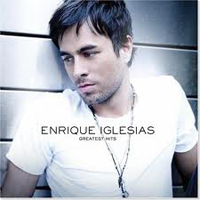
Enrique Iglesias is a Spanish singer, songwriter and music producer who has built one of the most successful international careers in the history of Latin pop music. His full name is Enrique Miguel Iglesias Preysler. He was born on May 8, 1975, in Madrid.
In the mid-1990s, Iglesias became a star of the Spanish-language market with the romantic songs Si Tú Te Vas, Experiencia Religiosa and Enamorado por Primera Vez. At the end of the decade, he entered the English-language market with Bailamos and then consolidated his international success with the albums Enrique and Escape. In the years that followed, the artist moved freely between Spanish and English, pop ballads, dance music, Latin rhythms and collaborations with reggaeton and Latin urban performers.
Iglesias holds the Billboard Hot Latin Songs record for the highest number of chart-topping tracks, with 27 number-one hits. In 2020, Billboard ranked him first on its historical Greatest of All Time Latin Artists list.
Key facts
Full name: Enrique Miguel Iglesias Preysler
Date of birth: May 8, 1975
Place of birth: Madrid, Spain
Occupations: singer, songwriter, producer
Performance languages: Spanish and English
Main genres: Latin pop, pop, dance-pop, soft rock
Career began: 1995
First label: Fonovisa Records
Other major labels: Interscope, Universal, Sony Music Latin
Debut album: Enrique Iglesias — 1995
Latest studio album: Final (Vol. 2) — 2024
Number of studio albums: 12
Grammy Awards: 1
Latin Grammy Awards: 5
Major songs: Bailamos, Hero, Escape, Be with You, Bailando, El Perdón, Duele el Corazón, Súbeme la Radio
Family and childhood in Madrid
Enrique was born into the family of Spanish singer Julio Iglesias and journalist and socialite Isabel Preysler. His older full siblings are Julio José Iglesias and Chábeli Iglesias.
His parents divorced when the children were young. Enrique spent his early years in Spain with his mother, but after the kidnapping of his grandfather, physician Julio Iglesias Puga, the family became concerned about the children’s safety. Enrique and his brother moved to Miami, where their father lived.
Julio Iglesias toured extensively, so Enrique’s nanny, Elvira Olivares, played a major role in raising him. The singer later dedicated his first album to her and repeatedly spoke about her support at the beginning of his career.
Moving to the United States placed the future artist in a dual cultural environment. At home, he maintained a connection with the Spanish language and Latin music, while at school and in everyday life he was immersed in American pop culture. His later ability to exist naturally between those two worlds became the foundation of his international career.
University and a secret passion for music
After finishing school, Iglesias enrolled at the University of Miami, where he studied business administration. He spent around a year there before gradually realising that he wanted to pursue music professionally.
As the son of one of the world’s most famous Spanish-language singers, he could have attracted industry attention on the strength of his surname alone. Enrique, however, wanted to find out whether record companies would be interested in his songs without any connection to Julio Iglesias.
He secretly recorded a demo using money borrowed from Elvira Olivares and contacted Fernán Martínez, who had previously worked with his father. The material was circulated under the name Enrique Martínez. As part of the promotional story, the emerging performer was presented as an unknown singer from Central America.
This approach allowed him to reduce the influence of his surname, at least to some extent. Only after receiving an offer from the Mexican label Fonovisa did Enrique openly tell his family that he intended to become a singer.
Contract with Fonovisa
Fonovisa specialised in Spanish-language music and was not one of the major American pop labels. For Iglesias, this meant an opportunity to begin his career not as “Julio Iglesias’s son”, but as a new artist in the Latin music market.
His first album was recorded in Canada, away from Miami, Spain and intense media attention. Its musical foundation consisted of pop-rock ballads and romantic songs in Spanish.
Debut album Enrique Iglesias
The album Enrique Iglesias was released in 1995. It included the songs:
- Si Tú Te Vas;
- Experiencia Religiosa;
- Por Amarte;
- No Llores por Mí;
- Trapecista.
Several singles topped the US Latin charts. The debut demonstrated that Iglesias could attract an audience without English-language material and without directly relying on his father’s repertoire.
In 1997, the record earned him a Grammy Award for Best Latin Pop Performance. It remains his only victory at the Recording Academy’s main awards.
Iglesias’s early style was built around accessible melodies, dramatic chorus climaxes and lyrics about separation, longing and the inability to forget a loved one. This formula was traditional within romantic Latin pop, but the young performer presented it with more contemporary visuals and studio production.
Vivir
The second album, Vivir, was released in 1997. It consolidated the success of his debut and turned Iglesias into a major touring artist.
Its main tracks included:
- Enamorado por Primera Vez;
- Sólo en Ti;
- Miente;
- Revolución;
- Lluvia Cae.
Sólo en Ti is a Spanish-language version of Yazoo’s song Only You. The choice reflected Iglesias’s interest in combining European pop classics with the Latin ballad tradition.
The album was supported by an extensive tour. By this stage, the singer had developed a strong following not only in Spain and Latin America, but also among Spanish-speaking listeners in the United States.
Cosas del Amor
His third Spanish-language album, Cosas del Amor, appeared in 1998. Its key songs were Esperanza and Nunca Te Olvidaré.
Compared with his previous work, the production became larger in scale and more polished. The songs retained their romantic foundation, but the arrangements increasingly approached international adult contemporary and pop-rock.
The first three albums created a Spanish-language catalogue substantial enough to support a major independent career. Moving into English was not an attempt to save an unsuccessful project: Iglesias entered the English-language market as an already established star.
Bailamos and the beginning of the English-language era
The breakthrough into the broader American market came with Bailamos. The song was recorded in English and Spanish and featured in the film Wild Wild West.
Latin pop was experiencing an international surge at the time. Ricky Martin, Jennifer Lopez, Marc Anthony and other performers connected with Spanish-language culture were entering the American charts simultaneously.
Bailamos topped the Billboard Hot 100 and became Iglesias’s first US number-one single. Its success allowed him to sign with Interscope Records and record a full English-language album.
Enrique
The English-language album Enrique was released in 1999. It was aimed at the international pop market while retaining Latin rhythms and Spanish-language versions of selected tracks.
The album included:
- Bailamos;
- Rhythm Divine;
- Be with You;
- Could I Have This Kiss Forever;
- Sad Eyes;
- You’re My #1.
Be with You became Iglesias’s second number-one hit on the Billboard Hot 100. In total, he has five US Top 10 singles, including two chart-toppers.
Whitney Houston appeared on Could I Have This Kiss Forever. The duet broadened Iglesias’s audience and emphasised his transition from a regional Latin star to an artist in the international pop market.
Escape
The album Escape, released in 2001, became the defining work of his English-language period.
Its main songs included:
- Hero;
- Escape;
- Don’t Turn Off the Lights;
- Love to See You Cry;
- Maybe;
- To Love a Woman.
The album combined dance-pop, soft rock and romantic ballads. The producers made Iglesias’s voice sound more intimate and conversational, while the choruses were designed for large concert venues.
Hero
Hero became one of the best-known ballads of the early 2000s and one of the defining songs of Iglesias’s career. It reached number three on the Billboard Hot 100.
The song is structured as a direct promise of protection and emotional closeness. Its restrained opening gradually develops into a sweeping chorus, allowing it to work equally well on radio and in stadium concerts.
After the terrorist attacks of September 11, 2001, Iglesias performed Hero during televised charity events. The song gained additional meaning as a composition about support in a time of fear and loss.
Escape
The title track, Escape, represented the album’s lighter and more dance-oriented side. Russian tennis player Anna Kournikova appeared in the music video.
Iglesias and Kournikova met while working on the video. Their relationship began in 2001 and subsequently became the longest-lasting relationship in the singer’s personal life.
Quizás
In 2002, Iglesias returned to entirely Spanish-language material with the album Quizás.
Its main songs included:
- Mentiroso;
- La Chica de Ayer;
- Quizás;
- Para Qué la Vida.
The title track addressed the singer’s complicated relationship with his father. However, it would be incorrect to interpret the entire album as an autobiographical narrative: most of the material continued the tradition of romantic songwriting.
Quizás was important because it confirmed that international English-language success did not mean abandoning Spanish-speaking audiences. Iglesias would continue to alternate between languages and release parallel versions of songs.
Album 7
His seventh studio album, titled 7, was released in 2003.
Its best-known singles were:
- Addicted;
- Not in Love featuring Kelis.
The record continued the English-language pop-rock style of Escape, but failed to match its commercial scale. After years of releasing albums almost continuously, Iglesias took an extended break.
This period revealed the limitations of his early formula. Romantic pop from the beginning of the 2000s was changing, and the performer needed to find a way to adapt to the age of digital sales, club-oriented electronic music and the growing influence of urban sounds.
Insomniac
The album Insomniac was released in 2007. Its title reflected Iglesias’s habit of working at night and his difficulties with sleep.
The record included:
- Do You Know? (The Ping Pong Song);
- Somebody’s Me;
- Tired of Being Sorry;
- Push;
- Can You Hear Me.
On Do You Know?, the sound of a table-tennis ball was used as a rhythmic element. This unusual production technique helped the song stand out among conventional pop singles.
Tired of Being Sorry was based on a song by the French band Ringside. Iglesias also recorded a Spanish-language version titled Amigo Vulnerable.
Insomniac did not become the biggest album of his career, but it returned him to active international rotation and prepared the way for his next stylistic transition.
Euphoria
The album Euphoria was released in 2010 and became Iglesias’s first fully bilingual record. English and Spanish tracks were not separated into different projects, but appeared together on a single release.
Its main songs included:
- I Like It featuring Pitbull;
- Cuando Me Enamoro featuring Juan Luis Guerra;
- Tonight (I’m Lovin’ You);
- Heartbeat featuring Nicole Scherzinger;
- Dirty Dancer featuring Usher;
- No Me Digas Que No featuring Wisin & Yandel.
I Like It reached number four on the Billboard Hot 100 and returned Iglesias to the US Top 10.
Cuando Me Enamoro represented another side of the project: a traditional romantic composition featuring Dominican singer-songwriter Juan Luis Guerra.
Euphoria established the model Iglesias continued to use during the 2010s: English-language dance-pop was released alongside Spanish-language tracks rooted in bachata, reggaeton and Latin pop.
Sex and Love
The album Sex and Love was released in 2014. It featured Pitbull, Jennifer Lopez, Kylie Minogue, Flo Rida, Marco Antonio Solís, Romeo Santos, Descemer Bueno and Gente de Zona.
Its main songs included:
- I’m a Freak;
- Heart Attack;
- El Perdedor;
- Loco;
- Bailando;
- There Goes My Baby.
The record did not follow a single genre concept, but accurately reflected the international pop industry of the early 2010s: electronic club tracks existed alongside bachata, lyrical ballads and Spanish-language dance music.
Bailando
The album’s biggest hit was Bailando, recorded with Cuban songwriter Descemer Bueno and the group Gente de Zona.
The song existed in Spanish and mixed English-Spanish versions. Sean Paul also appeared on the international version.
Bailando spent 41 consecutive weeks at number one on the Billboard Hot Latin Songs chart. At the time, this was an all-time chart record.
The song won the Latin Grammy Award for Song of the Year. Iglesias has five Latin Grammy victories from eleven nominations.
The success of Bailando became one of the signs of a changing global pop market. Spanish was ceasing to be a barrier to international distribution, while collaborations between traditional pop artists and Latin urban performers were becoming a new industry standard.
El Perdón
In 2015, Iglesias released El Perdón with Puerto Rican performer Nicky Jam.
The song spent 30 weeks at number one on Hot Latin Songs, second only to Bailando among Iglesias’s own hits.
El Perdón continued his movement towards Latin urban while preserving the romantic subject matter characteristic of the singer. The song’s protagonist experiences separation not as a calm memory, but as a physically felt loss.
The standalone singles period
After Sex and Love, Iglesias did not release another full album for a long time. Instead, he focused on standalone tracks and collaborations.
The most notable releases included:
- Duele el Corazón featuring Wisin;
- Súbeme la Radio featuring Descemer Bueno and Zion & Lennox;
- El Baño featuring Bad Bunny;
- Move to Miami featuring Pitbull;
- Después Que Te Perdí featuring Jon Z;
- Me Pasé featuring Farruko.
This approach reflected the development of the streaming economy. Artists no longer needed to assemble new material into an album every two or three years: an individual single could enjoy a long life on radio, video platforms and digital services.
Iglesias adapted particularly successfully to this system thanks to his large network of collaborators and his ability to work across different forms of Latin pop.
Final (Vol. 1)
The first part of the Final project was released in 2021.
It included new compositions as well as previously released hits from the period after Sex and Love. The songs included:
- Pendejo;
- Me Pasé;
- Te Fuiste featuring Myke Towers;
- Duele el Corazón;
- El Perdón;
- Súbeme la Radio.
The title prompted speculation that Iglesias was ending his music career, but he clarified that he was not leaving the stage or stopping writing music. Instead, he had decided that he would no longer release traditional full-length studio albums.
Final (Vol. 2)
Final (Vol. 2) was released on March 29, 2024. It is Enrique Iglesias’s twelfth studio album and was announced as his final one.
The record includes ten tracks, among them:
- Así Es la Vida featuring María Becerra;
- Fría featuring Yotuel;
- Space in My Heart featuring Miranda Lambert;
- Llórame un Río featuring Belinda;
- La Botella featuring El Alfa.
Its sound combines pop, bachata, cumbia, dembow, ska and elements of country. This choice was consistent with Iglesias’s entire career: rather than closing with a return to one classic style, he assembled material from several musical directions.
Final (Vol. 2) completed his album discography, but not his activity as a songwriter and live performer. Iglesias has repeatedly emphasised that he will continue creating and releasing individual songs.
Live career
Iglesias has toured actively since his first albums. His programmes are built around a combination of romantic ballads and dance tracks.
At concerts, Hero, Experiencia Religiosa, Cuando Me Enamoro and El Perdedor usually become emotional pauses, while Bailamos, I Like It, Escape, Bailando and Súbeme la Radio are designed for mass audience participation.
Iglesias frequently leaves the stage, invites audience members to the microphone and intentionally reduces the distance between artist and crowd. This distinguishes his concerts from strictly staged pop productions in which every movement is fully governed by choreography.
The singer did not stop performing after the release of his final album. In 2025, he continued to give selected international concerts, including appearances in Spain and two sold-out shows in India.
Musical style
The foundation of Enrique Iglesias’s work remains the romantic pop song. Even in his dance tracks, the central subject is usually relationships: falling in love, jealousy, separation, longing or an attempt to restore intimacy.
His catalogue can broadly be divided into several directions:
- Spanish-language pop ballads: Si Tú Te Vas, Experiencia Religiosa, Nunca Te Olvidaré.
- English-language romantic pop: Hero, Maybe, Somebody’s Me.
- Dance-pop: Bailamos, Be with You, I Like It.
- Latin urban and reggaeton: Bailando, El Perdón, Duele el Corazón, Súbeme la Radio.
- Bachata and tropical music: Loco, El Perdedor, Así Es la Vida.
Iglesias rarely tries to dominate a new genre completely. He generally preserves his own melodic and romantic style while inviting a performer or producer associated with the relevant musical scene.
Voice and performance style
Enrique Iglesias does not build his reputation around virtuosic vocal ornamentation or an exceptionally wide range. His main strength is his recognisable, intimate delivery.
In the verses, his voice often approaches conversational speech. He uses breathiness, a slight rasp and restrained dynamics before opening up into a broader chorus.
This approach is particularly effective in songs structured as personal addresses. The listener perceives the lyrics not as a theatrical monologue, but as a conversation with a specific person.
In studio-produced dance tracks, the voice is more heavily processed and integrated into electronic arrangements. Even there, however, Iglesias retains his characteristic pronunciation, making him easy to recognise after only a few words.
Songwriting
Iglesias has written or co-written a substantial part of his repertoire. He took part in the creation of Bailamos, Hero, Escape, Be with You, Bailando and many other songs.
His songwriting process usually begins with a central emotional idea and a chorus. The lyrics do not aim for complex literary imagery; instead, they use direct phrases that are easy to understand for listeners with different levels of language proficiency.
This simplicity helped his songs work in translation and parallel versions. Iglesias frequently recorded the same composition in English and Spanish, changing not only individual words but also the phrasing to suit the sound of each language.
The role of duets
Collaborative recordings became one of the most important tools in the development of his career.
Over the years, he worked with:
- Whitney Houston;
- Lionel Richie;
- Juan Luis Guerra;
- Pitbull;
- Usher;
- Nicole Scherzinger;
- Jennifer Lopez;
- Romeo Santos;
- Marco Antonio Solís;
- Nicky Jam;
- Wisin;
- Bad Bunny;
- Descemer Bueno;
- Gente de Zona;
- Farruko;
- María Becerra;
- Miranda Lambert.
During the early period, duets helped Iglesias enter the English-language market. In the 2010s, they connected him with reggaeton and Latin urban, while on his final album they allowed him to broaden his sound into bachata, dembow and country.
A bilingual career
One of Iglesias’s main achievements is his ability to maintain two parallel audiences.
After the success of Bailamos, he could have moved entirely into English, but he continued to release Spanish-language material regularly. His Spanish songs were not treated as secondary versions for a regional market.
The albums Quizás, Euphoria, Sex and Love and the Final project demonstrate several different approaches to bilingualism:
- a separate Spanish-language album;
- English and Spanish songs within one record;
- parallel versions of the same single;
- multilingual collaborations.
This model helped Iglesias survive several transformations of the music market. He began in the era of compact discs and radio, continued through the age of digital downloads and later adapted to streaming and a singles-driven culture.
Billboard records
Enrique Iglesias has scored 27 number-one hits on the Hot Latin Songs chart — more than any other artist in the history of the ranking.
He has placed 25 songs on the main US Billboard Hot 100. Two of them reached number one:
- Bailamos;
- Be with You.
Three further tracks entered the Top 10.
In 2020, Billboard named him the greatest Latin artist in the history of its genre-specific charts. In 2021, he also topped the Greatest Hot Latin Songs Artists of All Time ranking.
When assessing these achievements, it is important to consider Billboard’s methodology: this is not an abstract claim that Iglesias is the “best singer”, but a cumulative measurement of his songs’ long-term performance on US charts.
Grammy and Latin Grammy Awards
Iglesias received a Grammy Award for his debut album in the Best Latin Pop Performance category.
He has also won five Latin Grammy Awards. Among the most significant was Song of the Year for Bailando in 2014.
In addition, he holds the record among solo artists for the highest number of Billboard Latin Music Awards. Guinness World Records has separately documented his achievements at the awards and on the Billboard charts.
Film and television work
Screen acting never became a separate professional direction for Iglesias, although he appeared several times in films and television series.
In 2003, the singer played the musician Lorenzo in Robert Rodriguez’s film Once Upon a Time in Mexico. He also made guest appearances in the television series Two and a Half Men and How I Met Your Mother.
Most of Iglesias’s television appearances, however, have been connected with music awards, concert programmes and appearances as himself.
Sale of his music catalogue
In 2023, Iglesias entered into an agreement with Influence Media Partners. The deal included rights to his recorded catalogue through 2021 and a number of related assets. The full financial terms were not officially disclosed.
The sale of the catalogue did not mean that he had given up performing the songs or writing new material. Deals of this kind concern the distribution of future income from recordings, licensing and other forms of music use.
For Iglesias, the agreement became part of his transition from a regular album cycle to a more flexible model involving standalone songs and concerts.
Charitable work
Iglesias works with Save the Children, an organisation that supports children affected by poverty, conflict and natural disasters.
In 2019, the organisation named him a Changemaker for Children in recognition of his fundraising efforts and his work in drawing public attention to humanitarian programmes.
He has also taken part in charity concerts and campaigns supporting victims of natural disasters.
Relationship with Anna Kournikova
Enrique Iglesias met Anna Kournikova in 2001 during the filming of the Escape music video. They have remained together since then while avoiding regular joint interviews and high-profile public events.
The couple have not made an official wedding part of their public biography. Iglesias and Kournikova have repeatedly appeared wearing rings, prompting marriage rumours, but have preferred not to clarify the legal status of their relationship.
They welcomed twins Lucy and Nicholas in 2017 and a daughter, Mary, in 2020. Their fourth child, a son named Romeo, was born in December 2025.
Iglesias rarely uses his family life to promote his music. After becoming a father, he gave fewer interviews and increasingly emphasised his desire to spend time at home.
Relationship with Julio Iglesias
Enrique’s relationship with his father was complicated for many years. His decision to begin his career in secret reflected not only a desire to avoid favouritism, but also a need to establish an independent identity.
Musically, their careers developed in different directions. Julio Iglesias became an international star through traditional romantic songs and adult contemporary music. Enrique began with a similar ballad-oriented foundation but later moved into electronic pop, club music and reggaeton.
They were rarely seen together at public events and never released a joint musical project. At the same time, Enrique did not deny his father’s influence as an example of professional discipline and an international approach to audiences.
Essential Enrique Iglesias songs
Si Tú Te Vas
Iglesias’s first major single. The song defined the emotional and musical language of his early career: direct lyrics about separation, a restrained opening and a sweeping chorus.
Experiencia Religiosa
One of the most dramatic tracks on his debut album. Romantic emotion is described through religious imagery.
Enamorado por Primera Vez
A key hit from Vivir that confirmed Iglesias’s position as one of the leading young performers of Spanish-language romantic pop.
Bailamos
Enrique’s first song to top the Billboard Hot 100. It opened the English-language stage of his career and became one of the symbols of Latin pop’s international rise in the late 1990s.
Be with You
Iglesias’s second and, so far, final single to reach number one on the Billboard Hot 100.
Hero
The singer’s defining English-language ballad. The song became a permanent part of his concert repertoire and one of the most recognisable romantic hits of the early 2000s.
Escape
A dance-pop single that gave its title to the central album of Iglesias’s English-language period. The video also played an important role in the artist’s personal life.
Cuando Me Enamoro
A duet with Juan Luis Guerra that connected contemporary Latin pop with traditional romantic melody.
I Like It
A collaboration with Pitbull that returned Iglesias to the Billboard Hot 100 Top 10 and opened a new dance-oriented stage of his career.
Bailando
The singer’s biggest Spanish-language hit. The song spent 41 weeks at number one on Hot Latin Songs and won the Latin Grammy Award for Song of the Year.
El Perdón
A collaboration with Nicky Jam that demonstrated how naturally Iglesias could integrate his romantic style into Latin urban.
Duele el Corazón
A dance track with Wisin that became one of the biggest Spanish-language radio hits of the period between Sex and Love and Final.
Súbeme la Radio
A song that combined Iglesias’s pop melodies with Caribbean rhythm and the atmosphere of a street celebration.
Studio discography
- Enrique Iglesias — 1995
- Vivir — 1997
- Cosas del Amor — 1998
- Enrique — 1999
- Escape — 2001
- Quizás — 2002
- 7 — 2003
- Insomniac — 2007
- Euphoria — 2010
- Sex and Love — 2014
- Final (Vol. 1) — 2021
- Final (Vol. 2) — 2024
Final (Vol. 2) was officially presented as his twelfth and final studio album, but not as the end of his musical or live career.
Enrique Iglesias’s significance for pop music
Enrique Iglesias was not the first Spanish-language artist to achieve international success, nor did he single-handedly create the Latin pop wave of the late 1990s. His importance is connected with the longevity and structure of his career.
He successfully moved through several musical eras:
- Spanish-language romantic albums of the 1990s;
- English-language crossover;
- dance-pop of the early 2010s;
- the rise of reggaeton and Latin urban;
- the streaming-era model of standalone singles.
During every transition, Iglesias preserved a recognisable foundation: direct romantic songwriting and an intimate vocal delivery.
His bilingual strategy also became an important example for the industry. The singer did not abandon Spanish after achieving success in the United States and did not treat English-language material as the only measure of international status.
As a result, one artist became part of the history of the Billboard Hot 100 while also becoming the all-time record-holder on Hot Latin Songs. That balance remains rare even in an era when Spanish-language music occupies a far more prominent place in the global market.
Conclusion
Enrique Iglesias began his career in circumstances where a famous surname could simultaneously help him and deprive him of independence. He therefore circulated his first demos under another surname and informed his family about his musical plans only after receiving a record contract.
His first three albums made him a major Spanish-language star. Bailamos, Enrique and Escape opened the English-language market, while Hero became one of the defining pop ballads of its generation.
During the next stage, Iglesias avoided becoming a nostalgia-oriented performer. He began working with Pitbull, Wisin, Nicky Jam, Bad Bunny, Descemer Bueno and Gente de Zona, integrating his own romantic style into contemporary Latin dance music.
His greatest achievement lies not in one hit or record. Iglesias created a catalogue in which Spanish ballads, English-language pop and Latin urban all belong to the same creative biography. By completing his traditional album discography with the Final project, he did not bring his music career to an end — he merely stepped away from the format around which the industry had built his career for almost three decades.