


 Время и стекло

Dua Lipa (born August 22, 1995, London, United Kingdom) is a British singer and songwriter of Kosovar Albanian heritage. Her music combines pop, dance-pop, disco, house, synth-pop and contemporary electronic music. She gained international recognition with Be the One, New Rules, IDGAF, One Kiss, Don't Start Now, Physical, Levitating, Cold Heart, Dance the Night, Houdini, Training Season and Illusion. Dua is the recipient of three Grammy Awards and seven BRIT Awards.
She was born in the United Kingdom to a Kosovar Albanian family, spent part of her teenage years in Pristina and returned to London on her own at the age of fifteen to pursue a music career. This dual connection with the United Kingdom and Kosovo later became an important part of her public and cultural identity. In 2022, Lipa received Albanian citizenship, and in 2025 she became a citizen of the Republic of Kosovo.
London, Kosovo and a musical family
Dua Lipa was born on August 22, 1995, in London to Anesa and Dukagjin Lipa, ethnic Albanians from Kosovo. Her parents left the region in the early 1990s and settled in the United Kingdom. The name Dua was suggested by the future singer's grandmother; in Albanian it is associated with the word «love».
Music was always present at home thanks to her father Dukagjin Lipa, who was the vocalist and guitarist of the Kosovar rock band Oda. Dua grew up listening to David Bowie, Bob Dylan, Radiohead, The Police and other artists from her parents' record collection, while developing her own interest in pop music and R&B.
In London, she attended Fitzjohn's Primary School, studied cello and, from the age of nine, took Saturday classes at the Sylvia Young Theatre School. Her musical education was not limited to classical training: Lipa gradually became increasingly interested in singing and contemporary popular music.
In 2008, the family returned to Pristina. Dua attended Mileniumi i Tretë school, improved her Albanian and became directly involved with the musical and cultural life of Kosovo. She later repeatedly spoke about how the years spent between London and Pristina shaped her sense of belonging to two cultural spaces at once.
Returning to London at fifteen
At the age of 15, Dua decided to return to the United Kingdom without her parents. She persuaded her family to allow her to move to London with the daughter of family friends, who was also planning to study in the city. The main reason was her desire to gain more opportunities for a professional music career.
In London, she continued her education at Parliament Hill School and resumed attending Sylvia Young Theatre School. At the same time, Lipa began uploading cover versions to YouTube, including If I Ain't Got You by Alicia Keys and Beautiful by Christina Aguilera, as well as posting her own recordings online.
To support herself, she worked in restaurants and bars and also spent some time modelling. Modelling was more a way to enter a professional environment and earn money than an independent long-term career.
In 2013, Lipa signed with TaP Management, and the following year secured a full recording contract with Warner Bros. Records UK. Warner Music later directly identified 2014 as the beginning of its collaboration with the singer.
New Love and Be the One
Dua Lipa's first official single was New Love, released in August 2015. However, the following release — Be the One — proved far more significant.
The song achieved success across continental Europe before Lipa became a major star in the United Kingdom. Be the One reached number one in several European countries and entered the Top 10 in more than ten territories. In the United Kingdom itself, the song later also reached the Top 10.
At the beginning of her career, her music combined dark pop, electronic pop and R&B. Lipa's low vocal register noticeably distinguished her from many young pop singers of the mid-2010s, while her songs were increasingly built around rhythm and basslines rather than the traditional large-scale vocal ballad.
Her next important releases were Hotter than Hell and Blow Your Mind (Mwah). At the same time, she featured on No Lie by Sean Paul and Scared to Be Lonely by Martin Garrix. By February 2017, three tracks featuring Lipa were simultaneously in the UK Top 15.
Dua Lipa and New Rules
On June 2, 2017, her debut studio album Dua Lipa was released. The record combined dance-pop, electropop and R&B and initially reached number five on the UK Albums Chart; its popularity continued to grow in the years that followed.
The album included Be the One, Hotter than Hell, Blow Your Mind (Mwah), Lost in Your Light with Miguel, IDGAF and the track that ultimately transformed the scale of her career — New Rules.
In August 2017, New Rules became Dua Lipa's first UK number one. She also became the first British female solo artist since Adele to top the UK Singles Chart. A major role in the song's breakthrough was played by Henry Scholfield's music video, built around a visual concept of mutual support among women.
New Rules transformed Dua from a promising new artist into an international pop star. It was followed by the major success of IDGAF, while her debut album continued to remain on the UK chart for many years.
One Kiss, Electricity and the first Grammys
In 2018, Dua Lipa recorded One Kiss with Calvin Harris. Its house rhythm, concise melody and Lipa's vocal performance made the track one of the biggest British dance hits of the year. It became her second number one on the UK Singles Chart and remains one of her most successful recordings in the United Kingdom.
That same year, Electricity by Silk City — Mark Ronson and Diplo — was released featuring vocals by Dua Lipa. The track continued her movement toward house and dance culture.
At the 2018 BRIT Awards, Lipa won two major honours: British Female Solo Artist and British Breakthrough Act.
The next major milestone came at the 2019 Grammy Awards. Dua Lipa won Best New Artist, while Electricity received Best Dance Recording. These were her first two Grammy Awards.
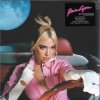
Future Nostalgia
At the end of 2019, Don't Start Now was released — the first single from her second album and the beginning of a completely new phase in her sound.
While her debut album was modern electronic pop with R&B elements, Future Nostalgia deliberately turned toward disco, funk and dance-pop from previous decades, combining them with contemporary electronic production.
The album was released in March 2020. Although it entered the UK chart at number two in its first week, it climbed to the top of the UK Albums Chart a week later and eventually spent four weeks at number one. It was the first UK number-one album of Lipa's career.
Its central songs included Don't Start Now, Physical, Break My Heart, Hallucinate, Love Again and Levitating.
Don't Start Now reached number two both in the United Kingdom and on the US Billboard Hot 100. Physical peaked at number three in the UK, while Levitating proved especially enduring: in the United States it reached number two, but thanks to its longevity on the charts it became the number-one song on Billboard's 2021 year-end Hot 100.
The release of Future Nostalgia coincided with the beginning of the COVID-19 pandemic, making a conventional touring campaign impossible. Nevertheless, the record became one of the most successful pop releases of the period and one of the albums that contributed to the major return of disco aesthetics to mainstream pop in the early 2020s. Official Charts has highlighted Future Nostalgia as one of the key albums of that revival.
Grammy for Future Nostalgia
At the 2021 Grammy Awards, Future Nostalgia received six nominations, including Album of the Year. Don't Start Now was simultaneously nominated for Record of the Year, Song of the Year and Best Pop Solo Performance.
The album won Best Pop Vocal Album, becoming Dua Lipa's third Grammy Award.
At the BRIT Awards that same year, she also won British Female Solo Artist, while Future Nostalgia received the British Album of the Year award.
Cold Heart with Elton John
Another major recording arrived in 2021: Cold Heart (PNAU Remix), created together with Elton John and Australian project PNAU.
The track combined fragments of several Elton John songs, including Sacrifice and Rocket Man, with new vocals by Dua Lipa and contemporary dance production. The song became her third UK number one.
For Lipa's career, Cold Heart clearly reflects a principle already evident on Future Nostalgia: rather than simply copying retro sound, she uses familiar disco, funk and pop codes from the past within contemporary club production.
Future Nostalgia Tour
After a lengthy pandemic delay, the full Future Nostalgia Tour began in 2022.
The concert version of the album marked another stage in Dua Lipa's development as a live performer. While she had sometimes been criticised in her early years for a comparatively static stage presence, by the Future Nostalgia era her show was built around complex choreography, large-scale visual production and almost continuous dance-driven staging.
The music on stage also emphasised the record's club-oriented character: songs flowed into one another through interludes and extended arrangements, while Physical, Levitating, Hallucinate and Don't Start Now formed the core of the concert's major dance section.
Dance the Night and Barbie
In 2023, Dua Lipa recorded Dance the Night for Greta Gerwig's film Barbie and also appeared in the movie as Mermaid Barbie.
The song was produced by Mark Ronson, and its disco direction connected naturally with Future Nostalgia. After the film's release, the track's popularity steadily increased, and in August it reached number one on the UK Singles Chart, becoming Dua Lipa's fourth UK number one after New Rules, One Kiss and Cold Heart.
Dance the Night was nominated for Grammy Awards in the categories Song of the Year and Best Song Written for Visual Media.
Her acting work continued in the spy film Argylle, in which Lipa appeared alongside Henry Cavill and other actors. Cinema, however, remained a parallel part of her career, while music continued to be her main focus.
Radical Optimism
Her third studio-album cycle began in November 2023 with the single Houdini.
Musically, the new era was not a direct continuation of Future Nostalgia. Her central studio collaborator became Kevin Parker of Tame Impala; together with long-time collaborators Caroline Ailin, Danny L Harle and Tobias Jesso Jr., Lipa turned toward psychedelia, trip-hop and some elements of British pop and rock music of the 1990s.
The next single was Training Season, followed by Illusion. All three tracks reached the UK Top 10; Houdini peaked at number two, Training Season at number four, while Illusion debuted at number nine.
The album Radical Optimism was released on May 3, 2024 and contains 11 tracks. In addition to the three main singles, it includes End of an Era, These Walls, Whatcha Doing, French Exit, Falling Forever, Anything for Love, Maria and Happy for You.
The record became Dua Lipa's first album to debut directly at number one on the UK Albums Chart. Future Nostalgia had also reached number one, but only climbed to the top in its second week.
Glastonbury and the Royal Albert Hall
In the summer of 2024, Dua Lipa reached another major live milestone by headlining the Pyramid Stage at Glastonbury Festival.
In the autumn, she presented a completely different interpretation of the new material at the Royal Albert Hall.
On October 17, 2024, songs from Radical Optimism were performed with the 53-piece Heritage Orchestra, conductor Ben Foster, a 14-member choir and the singer's main band. Elton John also appeared on stage to perform Cold Heart with her.
The concert recording was released on December 6, 2024 as her first live album, Dua Lipa Live from the Royal Albert Hall. The entire Radical Optimism material received orchestral arrangements, while the second half featured Love Again, Levitating, Be the One, Dance the Night, Don't Start Now and other hits.
The project also became the basis for the television film An Evening with Dua Lipa, broadcast in the United Kingdom and the United States.
Radical Optimism Tour
The major Radical Optimism Tour began in Asia in November 2024, and in 2025 expanded to Australia, New Zealand, Europe, the United Kingdom, North America and Latin America. Among its biggest shows were two concerts at London's Wembley Stadium, both of which sold out immediately after tickets went on sale.
During this tour, Lipa developed an unusual concert tradition: in different cities, she performed a specially selected song by a local artist or by an artist closely associated with that country. In Latin America, the programme included songs by Shakira, Maná, Selena and other performers.
The tour's final concerts took place in Mexico City in December 2025. Three performances at Estadio GNP Seguros brought the entire Radical Optimism cycle to a close.
Live From Mexico
Material from the final Mexican concerts was given a separate release.
On May 22, 2026, the live album Dua Lipa — Live From Mexico was released. The expanded digital version contains 42 tracks with a total running time of more than two and a half hours.
The album documents the finale of the Radical Optimism Tour and brings together songs from all three studio eras. Among its special performances is Oye Mi Amor with Fher Olvera of Maná. Dua Lipa's official store describes the recording as material captured during three completely sold-out shows in Mexico City.
A concert film dedicated to the Mexican finale of the tour was released at the same time. Thus, following Live from the Royal Albert Hall, Lipa's live discography gained two completely different documents of the same era within a short period: an orchestral chamber interpretation of Radical Optimism and a large-scale stadium show.
Kosovo, Albania and Sunny Hill
Dua Lipa's connection with Kosovo goes far beyond her family background.
Together with her father, she founded the Sunny Hill Foundation, which supports youth, educational and cultural initiatives in Kosovo and other Balkan countries. The foundation's work eventually led to the creation of the Sunny Hill Festival in Pristina.
The festival launched in 2018 and over time began bringing international artists to Kosovo alongside performers from the region. For Lipa herself, the project is connected with memories of her teenage years in Pristina, when major international tours rarely visited the country.
In 2022, Albanian president Bajram Begaj granted her Albanian citizenship for her contribution to representing Albanian culture internationally.
In July 2025, Kosovo president Vjosa Osmani granted Dua Lipa citizenship of the Republic of Kosovo by special decree. Her official citizenship status thus came to reflect three major parts of her biography — the United Kingdom, Albania and Kosovo.
That same year, Lipa once again headlined Sunny Hill Festival and performed her father's old Oda song Era with him on stage.
Service95
Outside music, Dua Lipa runs her own cultural platform, Service95.
The project brings together editorial material about culture, books, travel and social issues. Lipa also hosts the Service95 Book Club, through which she regularly selects books and speaks with their authors.
Service95 allows her to work not only as a pop artist but also as an editor and curator. The project's themes range from literature and cinema to local cultural scenes and humanitarian issues. In 2024, TIME separately highlighted Service95 as an important part of her work beyond the music industry.
Voice and musical style
One of Dua Lipa's most recognisable characteristics remains her low mezzo-soprano voice with a dense, slightly husky tone.
On her debut album, her voice was most often placed within electronic pop and R&B. Be the One and New Rules were built around minimalist rhythm and vocal hooks, while IDGAF relied more heavily on pop-rock dynamics.
Future Nostalgia radically strengthened her connection with dance music. Disco basslines, funk guitars, synthesizers, house rhythms and 1970s–1980s aesthetics were reworked through contemporary pop production.
On Radical Optimism, the palette changed again: Kevin Parker's contribution brought psychedelic pop, a more organic rhythm section and less mechanical instrumentation, while Danny L Harle added a contemporary electronic framework. Lipa herself connected the album with her interest in psychedelia, trip-hop and Britpop.
Across all three periods, one feature remains constant — rhythm occupies almost as important a place as melody. That is why even her most traditional pop songs adapt easily to club remixes and concert dance arrangements.
Awards
Dua Lipa's most significant awards are connected with the BRIT Awards and the Grammys.
At the 2018 BRIT Awards, she won British Female Solo Artist and British Breakthrough Act. In 2021, she added Female Solo Artist and Album of the Year for Future Nostalgia, and by 2024 her total number of BRIT Awards had reached seven.
The Recording Academy lists three Grammy wins: Best New Artist and Best Dance Recording for Electricity in 2019, and Best Pop Vocal Album for Future Nostalgia in 2021. In later years, she received further nominations, including Song of the Year for Dance the Night.
Dua Lipa discography
- 2017 — Dua Lipa
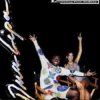
- 2020 — Future Nostalgia
- 2024 — Radical Optimism
- 2024 — Dua Lipa Live from the Royal Albert Hall — live album
- 2026 — Dua Lipa — Live From Mexico — live album
Dua Lipa's place in contemporary pop music
The first years of Dua Lipa's career were not built around instant international success. Before New Rules, she had already spent several years releasing singles, touring and gradually expanding her audience. Even her debut album did not initially top the UK chart, but it went on to enjoy an unusually long commercial life.
Future Nostalgia changed her position far more dramatically. The album helped return disco and funk to the centre of mainstream pop, produced several global hits and shaped a stage identity built around a fully realised dance show. Levitating became the biggest US song of 2021 on Billboard's year-end Hot 100, despite never reaching number one on the weekly chart.
Radical Optimism continued her career without attempting to reproduce the exact formula of the previous album. Working with Kevin Parker, Danny L Harle and other musicians introduced psychedelic and alternative pop elements while retaining Lipa's characteristic dance foundation. The album became her second UK number-one record and the first to debut directly at the top of the chart.
At the same time, Sunny Hill, Service95 and her work with cultural projects in Kosovo expanded her public role beyond the pop industry. The live albums from the Royal Albert Hall and Mexico City, meanwhile, documented two opposite sides of her stage identity — orchestral and stadium-scale.
From the early Be the One and the minimalism of New Rules to the disco-pop of Future Nostalgia and the more psychedelic aesthetic of Radical Optimism, Dua Lipa has consistently changed her production and visual language while preserving her distinctive voice and focus on strong pop songwriting. It is this ability to refresh her form without abandoning her dance foundation that defines her place in contemporary British and international pop music.