Showbiz News | Page: 9
Hardcore — the sound that breaks walls.
Hardcore — an extreme form of electronic music that tears up the dancefloor with sheer speed, aggression, and power. The genre emerged on the 1990s rave scene and has since become a symbol of absolute freedom, anarchy, and energy.
History of Hardcore
Early 1990s — origins in the Netherlands, Belgium, and Germany First tracks push 160+ BPM, drum machines, distorted kicks
Dutch Hardcore (Gabber) — Rotterdam, 1992–1996: Mokum Records, Paul Elstak, Rotterdam Terror Corps
Happy Hardcore — a UK branch with melodies and vocals
Industrial Hardcore — fused with noise and techno (The Outside Agency)
2000s — popularized by festivals: Thunderdome, Masters of Hardcore
2020s — the old-school hardcore revival; crossover with hard techno and EDM
...
Funk — the rhythm you can’t resist.
Funk is a rhythmic, energetic, and sensual music born at the crossroads of soul, jazz, and R&B. From the first chords, you want to move, nod your head, and sink into the groove. Funk isn’t just a genre—it’s a mood, a style, and a way of life.
A Brief History of Funk
1960s — the birth of funk in the U.S. Pioneer James Brown; his track Papa’s Got a Brand New Bag (1965) is often cited as the starting point.
1970s — the golden era: Parliament-Funkadelic, Sly & the Family Stone, Earth, Wind & Fire
1980s — fusion with disco, pop, and early hip-hop
1990s–2000s — funk’s influence across R&B, rap, and electronic music
2020s — a comeback via Nu Funk, Future Funk, and the Funk Revival (e.g., in the music of Br...
Folk is the voice of the land, the people, and time.
Folk (folk music) is a musical art form that conveys the culture, traditions, and spirit of a nation. It combines simple melodies with deep meaning, rooted in traditional songs and reflected in contemporary music — from acoustic ballads to indie folk and folktronica.
History and Origins
Folk music emerged naturally in all cultures around the world as a way to tell stories, express beliefs, and share emotions. Before the recording era, it was transmitted orally from generation to generation.
Key milestones:
19th century — collection and transcription of folk songs (England, Ireland, Scandinavia, Ukraine, etc.)
1930s–50s — the American folk revival (Woody Guthrie, Pete Seeger)
1960s — the rise of protest folk (Bob Dylan, Joan Baez)
1970s–90s — folk ...
Experimental is music beyond genres and conventions.
Experimental (experimental music) is not a genre in the classic sense but an approach. It is a sonic laboratory where rules are broken in the search for new forms. Trends, standards, or BPM don’t matter here — only one thing does: experimenting with sound, structure, and perception.
History and Roots
Experimental music has existed for as long as music itself, but as a distinct movement it took shape in the 20th century.
Key milestones:
1950s — avant-garde art music (John Cage, Karlheinz Stockhausen)
1960s–70s — minimalism, tape music, musique concrète, free jazz
1980s — industrial and noise experiments (Throbbing Gristle, Nurse With Wound)
1990s–2000s — electronic avant-gardists: Autechre, Aphex Twin, Oval
2020s — fusio...
Electro — music of the future with roots in the past
Electro is one of the most influential and instantly recognizable electronic music genres. Cold synthetic textures, robotic vocals, sci-fi samples and precise mechanical beats laid the foundation for hip-hop, techno and EDM. Electro is the sound of the future imagined back in the 1980s.
History of Electro
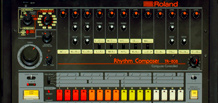
The genre emerged in the early 1980s in the USA, at the crossroads of funk, hip-hop and electronic music. Inspired by the work of Kraftwerk, producers began using drum machines (especially the Roland TR-808) and synthesizers to design a completely new sound.
Key early anthems include:
Afrika Bambaataa & The Soulsonic Force – “Planet Rock” (1982)
Hashim – “Al-Naafiysh (The Soul)” (1983)
Newcleus – “Jam on It” (1984)
Main cha...
EDM — the sound of festivals, clubs and the digital age
EDM (Electronic Dance Music) is a global musical phenomenon. It’s not just a style, but an entire culture that unites hundreds of subgenres and millions of listeners. EDM sounds on stadiums, in headphones, TikTok trends and video games. It is music of energy, impact and electronic freedom.
Brief history of EDM
The term “EDM” became widely used in the 2000s–2010s, but electronic dance music appeared much earlier:
1980s — the rise of house and techno in Chicago and Detroit
1990s — growth of trance, electro, hardcore, drum & bass in Europe
2000s — explosion of rave culture, development of progressive house, electro house, dubstep
The real global breakthrough came after 2010 with the rise of festivals like Tomorrowland, Ultra, EDC and super...
Dub is the music of echo, bass and sonic ghosts.
Dub is a music style where the focus is not on the notes, but on the space between them. It’s not just reggae without vocals – it’s an experiment, a sound that dissolves into reverb and deep bass. Dub creates a feeling of slow, psychedelic immersion: in the speakers you hear nothing but vibrations, echoes, delays and droplets of sound.
Brief history of Dub
Dub emerged in Jamaica in the late 1960s. At first, these were instrumental versions of reggae tracks, recorded specifically for DJs – so they could “toast” over them (toasting, the ancestor of rap).
The main pioneers of the genre:
King Tubby – the inventor of dub sound
Lee "Scratch" Perry – a sonic genius and visionary
Scientist, Mad Professor, Prince Jammy, Augustus Pablo
They tur...
Drum & Bass — a rhythm that never stops
Drum & Bass (or DnB / D&B) is an electronic music genre where the drums and the bassline don’t just play the lead role – they’re racing at breakneck speed. It’s all about energy, rhythm and pressure that you can’t mistake for anything else. DnB has long moved beyond raves: you’ll hear it in games, movies, clubs, festivals and even commercials.
History of Drum & Bass
The genre emerged in the early 1990s in the UK as an evolution of rave, hardcore and breakbeat. The legendary London club "Rage" became one of the first venues where fast, aggressive rhythms with jungle-style samples started to take over.
Drum & Bass grew out of jungle – reggae, funk and dub samples layered over fast, chopped-up breakbeats. Over time the sound became mor...
Downtempo – music of slowing down and deep emotions
Downtempo is a genre that sounds like an evening after a hectic day. It’s music where feelings matter more than dancing. It doesn’t call you to the dancefloor — it invites you to relax, reflect and daydream. Atmospheric grooves, soft beats and flowing harmonies — that’s the sound of downtempo.
History of the style
Downtempo emerged in the late 1980s and early 1990s in Europe as a response to the speed of the club scene. It was a kind of antidote to rave: music for chillout, rest and contemplation. It was in the chillout areas of iconic clubs like Café del Mar in Ibiza that the first downtempo began to play.
The genre absorbed elements of trip-hop, ambient, jazz, dub and lo-fi, creating a unique, relaxing atmosphere where the focus is not on action, but ...
Fire at Tomorrowland festival: main stage burns down two days before opening
On 16 July 2025, a major fire broke out on the grounds of one of the world’s most anticipated music events — the Tomorrowland festival in Belgium. Two days before the official opening, the blaze destroyed the festival’s main stage, known as the Orbyz Mainstage, which had been designed as a massive ice-themed installation.
The fire started at around 6:00 p.m. local time in the municipality of Boom, where the festival traditionally takes place. According to local media, the ignition occurred during technical setup of the stage, most likely while the pyrotechnic systems were being tested.
What is known so far:
There were about 1,000 staff members on site, but no visitors at the time — no casualties or injuries have been reported.
The fire engulfed most of the main ...
Disco: the music that taught the world to dance
Disco — is not just music. It’s an era. It’s mirror balls, glittering outfits, a passion for dancing and a feeling of freedom. From 1970s New York to 2020s TikTok, disco has left its mark on every generation. Its rhythms are the pulse of nightlife, the drive and endless energy of the dancefloor.
The history of disco: from underground to the top of the charts
Disco was born in the 1970s in the USA as a blend of soul, funk, Latin music and electronic music. At first it played in underground gay clubs in New York and Chicago, where people were looking for a space of freedom — musical, sexual, racial.
The first disco tracks often had no vocals — they were extended instrumental mixes created for DJs. Later, vocals became a key part of the genre.
The real explosion ...
Breaks: the broken beat that rocks the dancefloor
Breaks, or breakbeat, is a style where every hit feels like it’s literally “breaking” the rhythm. It’s music born at the crossroads of hip hop, rave and funk, and it still remains the backbone of many dance genres — from big beat and dubstep to drum & bass and Florida breaks.
The history of Breaks: from funk to rave
The roots of breakbeat go back to the 1970s, when Bronx DJs like DJ Kool Herc started “breaking” tracks — isolating short instrumental sections (breaks) that hit the dancers the hardest. These very “breaks” became the foundation of hip hop and dance battles.
In the ’90s, UK producers breathed new life into breaks by speeding up the tempo and adding rave energy. This gave rise to subgenres such as:
Nu Skool ...
Ambient: music where silence speaks
Ambient is more than just a genre. It’s a sound environment you immerse yourself in. No strong beat, no vocals, no verses or choruses — but an atmosphere that can carry you into another dimension. It’s music that’s perfect for meditation, sleep, reflection and focused work.
The history of ambient: from Brian Eno to outer space
The genre we now call ambient (literally “surrounding”) took shape in the 1970s thanks to legendary British musician Brian Eno. After spending time in hospital and listening to a barely audible piano outside his window, he formulated a concept: music that doesn’t demand your full attention, but creates a mood like light or scent.
His album “Ambient 1: Music for Airports” (1978) became the manifesto of the genre an...
Acid music – history, 303 sound, classics and the modern era
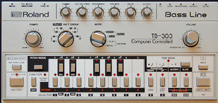
The acid wave is once again rolling over the electronic scene: the legendary Acid is returning to clubs, festivals and the top of playlists. Born from Chicago DJs experimenting with the Roland TB-303 synthesizer, the genre is now experiencing a new renaissance — from underground raves to performances by global headliners. Its trademark “liquid” sound is back in fashion, and the cult elements of Acid are finding their way both to young producers and to those who seek real rawness, boldness and protest in music.
The birth of the style is usually attributed to the mid-1980s, when Chicago DJs began experimenting with the Roland TB-303 synthesizer. Originally designed to imitate a bass guitar, this machine, when “misused”, started producing strange sounds: liquid, ...
Music in 8-bit style: how pixels became sound
8-bit music is more than nostalgia for old video games — it is a full-fledged musical genre with a rich history, its own culture, and modern trends. From classic Nintendo soundchips to contemporary EDM tracks with retro flavor, 8-bit is confidently stepping into the future.
The History of 8-bit Music
8-bit music emerged in the 1980s with the rise of home gaming consoles and personal computers: the Nintendo Entertainment System (NES), Commodore 64, Game Boy, Atari, and more. These devices used 8-bit sound chips capable of generating simple waveforms — square, triangle, noise, etc.
To save memory and processing power, composers had to “do more with less,” pushing the hardware to its limits. This gave birth to iconic melodies that almost everyone recognizes today: Supe...