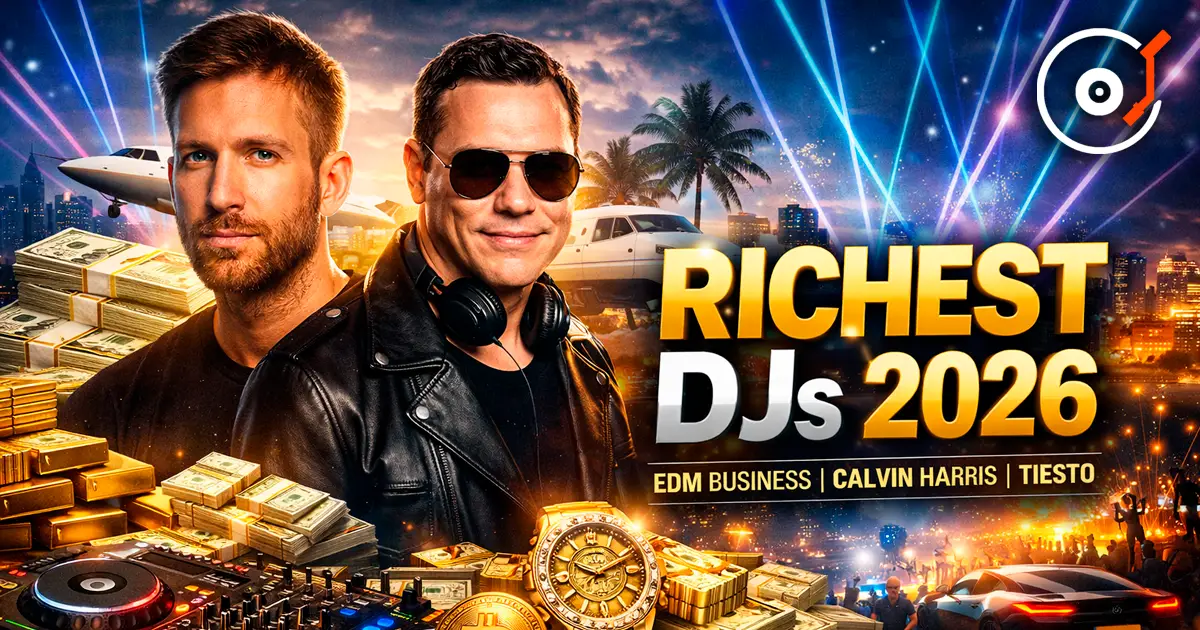
Who are the richest DJs in the world in 2026? A detailed breakdown of the earnings of Calvin Harris, Tiësto, David Guetta, Steve Aoki, and other EDM leaders.
By 2026, the electronic music scene has definitively outgrown its niche status — it is now a global industry where artists earn hundreds of millions of dollars not only from music, but also from strategic decisions beyond the stage.
The modern DJ is: an artist, a media brand, an investor, and an owner of intellectual property.
That is why the list of the world’s richest DJs increasingly resembles a ranking of entrepreneurs.
Top 10 Richest DJs in the World 2026
1. Calvin Harris — $300–320 million
Calvin Harris is a rare example of an artist who has turned a DJ career into a structured financial system. His income is diversified across multiple streams, each generating tens of millions of dollars annually.
Key revenue sources:
- long-term residencies in Las Vegas (among the most lucrative contracts in the industry)
- production and royalties (income from global hit records)
- partial sale of his music catalog (deals worth tens of millions of dollars)
Harris was among the first to understand that music is an asset that can be monetized for decades. This is what keeps him at the top of the ranking.
2. Gianluca Vacchi — ~$200 million
Gianluca Vacchi is more of a modern media phenomenon than a traditional DJ. His wealth was built not through music, but through industrial business and investments.
Key income sources:
- stake in the family-owned IMA corporation (packaging machinery manufacturing)
- investments and dividends
- monetization of his personal brand
In his case, music and DJ sets are part of a lifestyle strategy. Vacchi demonstrates how EDM can serve as a tool for personal branding rather than a primary income source.
3. Tiësto — $170–190 million
Tiësto is a symbol of longevity in an industry where most artists quickly lose relevance. His financial success is built on consistency and adaptability.
How he earns:
- annual global tours
- performances at major festivals
- streaming and catalog revenue
Tiësto’s greatest strength is his ability to adapt his sound to the market, remaining relevant for over two decades — a rare case of long-term career monetization.
4. David Guetta — $150–200 million
David Guetta is one of the first producers to turn EDM into a mainstream pop product. His wealth is the result of strategic decisions made as early as the 2000s.
Financial drivers:
- sale of master recordings (deal with Warner Music worth around $100 million)
- global hits and radio rotation
- festival contracts and club residencies
Guetta proved that mass appeal equals money, becoming one of the most commercially successful producers in history.
5. Steve Aoki — ~$120 million
Steve Aoki is an example of an artist who has built a business beyond music.
His income comes from:
- Dim Mak label
- investments in startups and technology
- NFTs, Web3, and esports
Even with reduced touring activity, Aoki remains in the top ranks thanks to smart asset diversification.
6. The Chainsmokers — $100–120 million
The Chainsmokers represent a new type of EDM artist: musicians + investors.
Their income model includes:
- hit records and streaming
- tours and festivals
- Mantis venture fund
They actively invest in tech companies, making them some of the most forward-thinking players in the industry.
7. Martin Garrix — ~$100 million
Martin Garrix represents the new generation of EDM millionaires.
Income sources:
- festival performances
- streaming
- his own label STMPD RCRDS
He demonstrates how quickly a career can scale in the era of digital platforms.
8. Skrillex — $80–90 million
Skrillex is one of the most influential producers of the 2010s.
Main income sources:
- production for other artists
- royalties
- streaming
He relies less on touring than other DJs, compensating with behind-the-scenes industry work.
9. Deadmau5 — $70–80 million
Deadmau5 is a technological innovator in EDM.
His income includes:
- live shows with unique stage production
- software and music tools sales
- mau5trap label
He was among the first to integrate technology as a core part of the music business.
10. Marshmello — $50–120 million
Marshmello is one of the most commercially driven EDM projects.
Main revenue sources:
- collaborations with pop and hip-hop artists
- integration into games (Fortnite, Roblox)
- branding and merchandise
This is a clear example of how an anonymous brand can become a global revenue machine.
Armin van Buuren — why he is not in the Top 10 richest DJs of 2026
Despite being one of the most influential DJs in the world, the net worth of Armin van Buuren is estimated at around $55 million, significantly lower than the current Top 10. His popularity remains massive — the radio show A State of Trance reaches millions of listeners, and his touring activity is consistently high. However, the key reason he ranks lower financially is a different business model. Unlike Calvin Harris or David Guetta, Armin focuses primarily on music, the development of the trance scene, and his label Armada Music, rather than on mainstream pop hits, large catalog deals, or aggressive investments outside music. Additionally, trance remains a more niche genre compared to commercial EDM, which limits revenue scale. As a result, Armin van Buuren remains a cultural leader and one of the key figures in the industry, but does not rank among the richest DJs in the world.
Minatrix.FM Editorial Opinion
The 2026 ranking clearly shows:
DJs no longer just play music — they manage capital.
The winners are those who:
- invest
- sell rights
- build long-term assets
The world’s richest DJs are no longer just artists, but business architects of a new music economy.
If current trends continue, the EDM industry could become the first in music to produce true billionaire DJs.