 Sak Noel
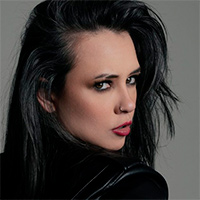
Mariana BO is a Mexican DJ, music producer, violinist, and electronic music composer. The artist’s full name is Sandra Mariana Borrego Robles. She was born on October 27, 1990, in Culiacán, the capital of the Mexican state of Sinaloa.
Mariana BO became known for a live format in which her DJ sets are complemented by performances on electric violin and drum pads. Her musical journey began with trance, big room house, psy-trance, and festival EDM before leading her toward hard techno, hard dance, and neo-rave. In her contemporary sound, heavy club rhythms are combined with classical melodies, choral parts, and violin themes.
Childhood and Musical Education
Mariana grew up in a family connected with art and music. As a teenager, she played drums in several bands before choosing the violin as her main instrument. In 2008, she entered the music department of the Sinaloa Institute of Culture and completed her training as a classical violin performer in 2012.
Her classical education later became not a separate chapter of her biography, but the foundation of her entire stage project. The violin is not used in Mariana BO’s performances as a brief decorative feature: she integrates live parts into transitions, breakdowns, and the climactic moments of electronic compositions.
Alongside her studies, she became interested in club music and music production. Around 2011, Mariana began performing as a DJ, gradually combining academic technique with festival-oriented electronic music. Her early direction was influenced by Tiësto, KSHMR, Timmy Trumpet, and other major figures in international EDM.
First Performances and Releases
Mariana BO’s professional career developed on the Mexican club scene. Even at that stage, her defining feature was the combination of a DJ set with live violin, a format that allowed her to stand out among the large number of EDM performers.
One of her first notable releases was Lights & Love, recorded with Melissa Galindo in 2015. It was followed by Opium, CEIBA, and the collaboration Kalopsia with Mino Safy and Zaa.
Kalopsia was released in September 2016 and received support on Armin van Buuren’s radio show. The composition was included on the compilation A State of Trance Year Mix 2016 and later received a separate extended version featuring a more prominent violin part by Mariana BO.
Kolkata and the International Breakthrough
In July 2017, Mariana BO joined KSHMR and Australian producer JDG to release Kolkata through the Dharma Music label.
The track combined festival-oriented big room, heavy percussion, and stylized Eastern musical elements. It appeared on KSHMR’s EP Materia and became one of Mariana BO’s most recognizable early works.
Kolkata expanded the artist’s international audience and connected her name with the major festival EDM scene. The composition remained part of live sets in the following years, and in October 2024 KSHMR, JDG, and Mariana BO presented a new Techno Version, reflecting the stylistic evolution of all three artists.
First Entry into the DJ Mag Ranking
In 2017, Mariana BO entered the DJ Mag Top 100 DJs ranking for the first time, placing 84th. She rose to number 68 in 2018 and number 49 in 2019.
At the time, she was described as a performer combining EDM, big room, psy-trance, dubstep, hardstyle, and bass house. The violin remained a constant feature, with Mariana using the instrument during her live performances.
She ranked 44th in 2020, 40th in 2021, and achieved the highest result of her career in 2022, rising to number 34. DJ Mag described her style at the time as a combination of hard dance, psy-trance, and hardstyle.
Festivals and the Development of Her Live Show
Mariana BO has performed at EDC Mexico, Ultra Music Festival, Ultra Europe, Tomorrowland, Parookaville, and other major electronic music festivals.
Her performance at Ultra Music Festival in Miami in 2018 was preserved in the festival’s official set archive. In 2019, the artist appeared on the lineup of Tomorrowland in Belgium for the first time.
In the following years, she returned to Tomorrowland several times, performed at EDC Mexico, and toured across Europe, Asia, North America, and Latin America. In 2024, Mariana BO played on the main stage of Tomorrowland Brasil and presented an official DJ mix recorded at Parookaville.
Her live presentation is based on more than the selection of energetic tracks. During performances, Mariana BO switches between DJ equipment, electric violin, and percussion controllers, creating additional rhythmic parts directly onstage.
In 2024, she began to use finger drumming more actively, performing rhythms with her fingers on pads. Her sets also began to include Gregorian chants, male choirs, and classical themes adapted to tempos ranging from 135 to 150 beats per minute.
Mantra, Durga, and the Festival Period
In the late 2010s, Mariana BO released a series of tracks that strengthened her position on the festival scene.
Works from this period include:
- Durga;
- Mantra;
- Shankara;
- Ciuri Ciuri;
- Mambara with Daddy’s Groove;
- Gypsy with MR.BLACK and Futuristic Polar Bears;
- Feeling Good;
- Mariachi;
- Queen of the Desert with 22Bullets.
These works covered big room house, psy-trance, bass house, hardstyle, and other forms of festival electronic music. Ethnic and classical motifs were already present, although it would be an exaggeration to claim that nature sounds or improvisation were consistently used in every track.
Drop It and Dreams
In 2021, Mariana BO released Drop It with Dubdogz, Flakkë, and vocalist LUISAH. The song combined pop vocals, festival house, and a dense bass drop.
The same year brought Dreams, also recorded with LUISAH. These works demonstrated a more song-oriented side of the artist and became a transitional stage between her early big room sound and her later experiments with future rave and techno.
Vivaldi with Timmy Trumpet
One of the central compositions in Mariana BO’s career was Vivaldi, created with Australian DJ and trumpeter Timmy Trumpet.
The release appeared on January 28, 2022, through Tomorrowland Music. The composition was built around a virtuosic violin theme inspired by the legacy of Antonio Vivaldi and a heavy festival rhythm.
The collaboration was a natural fit: both artists combine electronic music with live instrumental performance. Vivaldi became the most popular work in Mariana BO’s catalog and one of her principal live compositions.
The joint performance on the Tomorrowland 2022 Mainstage was particularly significant, with Mariana BO playing the violin part during Timmy Trumpet’s set. This moment became one of the most visible international highlights of her career.
The Shift Toward Techno
By the beginning of the 2020s, the artist had gradually begun moving away from the traditional EDM formula. Elements of techno, hard dance, future rave, and neo-rave became increasingly prominent in her music.
Her 2023 releases included:
- Huna with Zafrir and Ravid Kahalani;
- Hello Techno with Bonka;
- Deep in Your Mind;
- Flush It with STRIO;
- Cantus;
- WOLFGANG with Timmy Trumpet and Junkie Kid;
- Avalanche with Dimatik.
Cantus marked the new direction particularly clearly. The composition combines choral chants and classical dramatic development with fast festival techno. By 2023, DJ Mag was already describing Mariana BO’s style as EDM and hyper techno, noting her movement toward heavier material.
Voices, Kotodama, and the Techno Version of Kolkata
In 2024, the change in sound became definitive.
Together with Italian techno producer T78, Mariana BO released Voices through the HILOMATIK label. The composition develops at a high tempo and uses hard rhythms, choral voices, and tense synthesizer parts.
It was followed by:
- Boys Choir;
- Smoke Music;
- Kotodama with Naeleck and LNY TNZ;
- an updated techno version of Kolkata.
By 2024, DJ Mag was identifying the artist’s primary style simply as techno. Mariana herself explained that she had begun using acid techno, hard groove, and hard techno while preserving classical and violin-based elements.
Memento Mori
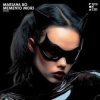
On November 22, 2024, Mariana BO released the three-track EP Memento Mori through Reinier Zonneveld’s label Filth on Acid.
The release included:
- Memento Mori;
- Aura;
- Cristo.
It is one of the hardest releases in her discography. The compositions are built around fast industrial percussion, acid synthesizers, gothic vocal elements, and a heavy rave atmosphere.
Memento Mori marked the transition from an artist who occasionally experimented with techno into a fully developed hard-techno project. Mariana described the release as a reflection of her new, darker, and more mature direction.
Keep It Real and the Releases of 2025
In February 2025, Mariana BO returned to Filth on Acid with the EP Keep It Real.
It included two compositions:
- Handel;
- Keep It Real.
Handel combines a heavy techno groove with a trance-like melody and choral fragments, while the title track is built around dark vocals, sharp synthesizers, and direct club rhythms.
In December 2025, the artist released Put Your Hands Up through Kontor Records. The release continued the hard, peak-time direction of her sets and further distanced the modern Mariana BO from the electro house with which the international stage of her career began.
Concert with the Querétaro Philharmonic Orchestra
On September 18, 2025, Mariana BO performed with the Querétaro State Philharmonic Orchestra at the Teatro Metropolitano.
More than 70 orchestral musicians took part in the concert, while the audience exceeded 1,300 people. The program combined symphonic arrangements, electronic rhythms, and Mariana BO’s live violin.
This project became the fullest realization of the idea on which her career is based. Classical music was not used merely as a brief introduction before a DJ set: the electronic and orchestral elements were integrated within a single concert program.
Releases of 2026
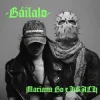
In February 2026, Mariana BO and Krach released Báilalo. The composition continued her hard dance and neo-rave direction while introducing a prominent Latin American vocal hook.
The single 911 followed in May and was classified within contemporary hardcore and hard-dance music.
On July 31, 2026, her discography expanded with the composition Ta Cabrón. The modern period of Mariana BO’s career is therefore associated primarily with fast, heavy club music rather than the traditional EDM of her early international years.
DJ Mag Top 100 DJs
Mariana BO has appeared in the DJ Mag Top 100 DJs since 2017.
Her main results are:
- 2017 — number 84;
- 2018 — number 68;
- 2019 — number 49;
- 2020 — number 44;
- 2021 — number 40;
- 2022 — number 34;
- 2023 — number 43;
- 2024 — number 51;
- 2025 — number 91.
Her highest position remains number 34, achieved in 2022. The decline in 2025 coincided with the restructuring of the project and its transition from mass-oriented festival EDM toward a more specialized hard-techno and neo-rave audience.
The ranking itself is based on open listener voting and mainly reflects popularity, international touring activity, and the strength of an artist’s fan community.
Musical Style
Mariana BO’s work has passed through several stages:
Early period: trance; big room house; electro house; festival EDM.
Period of international growth: psy-trance; hardstyle; bass house; future rave; hard dance.
Contemporary period: hard techno; acid techno; hard groove; neo-rave; hardcore; classical and choral music adapted into electronic production.
In 2025, Mariana BO described her sound as hard techno, neo-rave, and classical fusion. This description is considerably more accurate than the general term EDM, although her early discography was indeed closely connected with festival electronic music.
The Violin in Mariana BO’s Music
Mariana BO’s main distinction is not simply the presence of the violin, but the way the instrument is integrated into electronic music.
In her early works, it was used primarily for melodic introductions and festival climaxes. In Kalopsia, Kolkata, and Vivaldi, the violin part became the central recognizable element.
In her later techno releases, the instrument’s role changed. The violin may create an anxious recurring theme, imitate a rave synthesizer, or contrast with distorted percussion. The choral and orchestral elements in Cantus, Voices, Memento Mori, and Handel expanded this classical side of the project.
Significance
Mariana BO is one of the leading international representatives of the Mexican electronic music scene and one of the most recognizable instrumentalists in contemporary dance music.
Her career is not limited to the striking combination of a DJ booth and a violin. Over the course of several years, the artist moved from trance and big room house to hard techno and neo-rave while preserving her own musical identity.
Kalopsia introduced her to the audience of A State of Trance, Kolkata opened the way to international EDM festivals, Vivaldi became her main streaming and live hit, and the EP Memento Mori marked her mature transition toward darker techno.
Her performance with the Querétaro Philharmonic Orchestra demonstrated that the fusion of classical and electronic music is not a stage gimmick for Mariana BO, but a complete creative concept. It is precisely her ability to change genres without abandoning live instrumental performance that defines her position in contemporary electronic music.