


 Fly Project
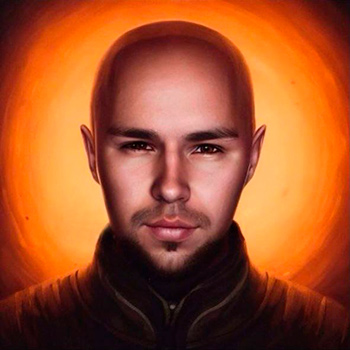
LISOVSKIY, whose real name is Yuriy Lisovskiy, is a Ukrainian rapper, songwriter, producer and media creator who became known for provocative songs addressing political and urgent social issues. His work exists at the intersection of protest hip-hop, internet satire, political commentary and musical responses to current events.
LISOVSKIY’s songs address war, mobilisation, corruption, bureaucracy, freedom of speech, language policy, information propaganda and the relationship between citizens and the state. The artist transforms news stories, public conflicts and real-life experiences into short, direct compositions that spread actively through YouTube, Telegram, Instagram and vertical-video platforms.
LISOVSKIY’s music provokes polarised reactions. Some listeners regard him as an independent artist who speaks about problems rarely discussed in the official information space. Others criticise him for provocation, harsh satire and oversimplifying complex social processes. The artist himself views his work as a form of freedom of speech and a musical chronicle of events in contemporary Ukraine.
Early years
Yuriy Lisovskiy comes from Brovary in Kyiv Oblast. He developed an interest in music and hip-hop culture while still young. He listened to rap, studied the techniques of rhythmic delivery, wrote his first lyrics and rhymes, and drew inspiration from urban life, street aesthetics and stories about people in his surroundings.
Conversational language, social observation, irony and a desire to speak about current events without elaborate artistic masks became the basis of his writing style. The defining characteristics of the future LISOVSKIY project were already present in his early lyrics: topicality, sarcasm, directness and attention to subjects that provoke public debate.
In addition to music, Lisovskiy was interested in acting, video creation and visual production. This experience later helped him independently develop imagery for music videos and covers, take part in filming, create characters and organise the promotion of releases without the support of a major record label.
The formation of the LISOVSKIY project
LISOVSKIY developed as an independent platform combining music, political satire, blogging and direct interaction with the audience.
Instead of following the traditional model of spending long periods preparing albums, the artist chose the format of quickly released singles. Many of his compositions are created as reactions to particular events: statements by politicians, changes in legislation, high-profile public conflicts, actions by state institutions or stories that have circulated on social media.
This approach brings LISOVSKIY closer not only to rap performers, but also to writers of political pamphlets, satirists and contemporary internet commentators. His songs document events almost as they unfold, making his discography feel like a musical chronology of Ukrainian social and political life in the 2020s.
LISOVSKIY does not separate his stage persona from his personal statements. The protagonist of his songs, the figure appearing in his music videos and the person speaking during live broadcasts are all parts of a single public project. The music continues on social media, where the artist explains the meaning of his compositions, responds to criticism and discusses current events with listeners.
First notable releases
Wider attention towards LISOVSKIY’s work began to emerge in 2023. During this period, he released several compositions dedicated to the political system, patriotism and the language issue.
One of his first notable works was “Патриот”, recorded with the singer Askaniya. In the song, the authors take an ironic look at the concept of patriotism and demonstrate how differently it can be understood by the state, society and the individual.
LISOVSKIY contrasts unconditional support for an official position with his own understanding of love for one’s country. In his interpretation, patriotism does not exclude criticism of the authorities, disagreement with particular decisions or a citizen’s right to ask uncomfortable questions.
The composition began circulating actively on social media and attracted an audience interested in an alternative perspective on the Ukrainian public agenda.
Collaboration with Neon 29.0
Collaboration with the rapper Neon 29.0 played an important role in the development of the project. Together, the musicians recorded several of the most widely discussed compositions from LISOVSKIY’s early period.
One of their first collaborative works was “Слуга народа.” In the song, the performers addressed political power, broken promises, bureaucracy and citizens’ disappointment with state institutions.
The title simultaneously referred to the well-known television series and the political party of the same name. This immediately gave the song a clearly defined social and political context.
The music video, filmed in central Kyiv, generated additional attention. LISOVSKIY and Neon 29.0 criticised representatives of the authorities, the use of patriotic rhetoric for political purposes and restrictions on the space available for public disagreement.
The authors emphasised that criticism of state institutions did not amount to rejecting Ukraine. On the contrary, they presented their songs as a form of civic participation and a way to draw attention to problems that, in their view, received insufficient coverage in the official media.
“Чому не державною?” and the language debate
The next controversial work by LISOVSKIY and Neon 29.0 was “Чому не державною?”, devoted to the language issue.
In the song, the musicians examine conflicts surrounding the use of Russian and Ukrainian, pressure on Russian-speaking citizens and attempts to judge a person’s patriotism by the language used in everyday communication.
The track’s title is written in Ukrainian, while the lyrics combine Russian and Ukrainian speech, colloquial expressions and elements of Surzhyk. This linguistic mixture became part of the song’s artistic concept.
For LISOVSKIY, language is not merely a tool for conveying lyrics but an independent subject in its own right. His songs reflect a reality in which many Ukrainians move freely between languages without regarding this as a rejection of their national identity.
“Чому не державною?” strengthened the artist’s reputation as an author willing to discuss subjects that provoke strong and contradictory reactions openly.
“Фак войне”
In February 2024, LISOVSKIY released the solo single “Фак войне”, a direct anti-war statement built around the rejection of violence, human loss and the destruction of normal life.
The song presents war not as an abstract political process but as a reality that interferes with people’s lives, destroys families, forces them to leave their homes and deprives individuals of the ability to control their own futures.
The composition became important for understanding the artist’s public position. LISOVSKIY opposes Russian aggression while maintaining the right to criticise decisions and methods employed by Ukrainian state institutions.
This combination of views became one of the reasons for the constant debate surrounding his work. The performer stresses that supporting Ukraine should not eliminate freedom of speech or a citizen’s right to discuss the actions of the authorities, mobilisation policy and respect for human rights.
“Ухилянт”: an internet breakthrough
The defining composition of LISOVSKIY’s career became “Ухилянт,” recorded with Neon 29.0. The official release took place on May 29, 2024.
The song is dedicated to men who do not want to participate in combat and face public condemnation. The word “ухилянт,” usually used as an accusatory label, was transformed by the musicians into an ironic self-description for someone seeking to preserve his own life.
The composition spread widely through TikTok, YouTube Shorts, Telegram, Instagram and other social networks. Users incorporated it into videos about document checks, the actions of employees of territorial recruitment centres, border crossings and the lives of Ukrainian men abroad.
“Ухилянт” became more than a popular single; it developed into a fully fledged internet phenomenon. The song established LISOVSKIY’s image as an artist expressing the sentiments of a part of society rarely represented in official cultural and television narratives.
The production is built around a minimalist beat, conversational rap delivery and an easily remembered chorus. This format proved particularly effective for short videos and helped the track achieve viral distribution.
“Тиса”
The theme of men leaving Ukraine continued in the composition “Тиса.”
The title refers to the river running along the country’s western border. During the full-scale war, the Tysa became a symbol of the dangerous illegal route used by some men attempting to reach neighbouring European countries.
In the song, real geography becomes a metaphor for the border between coercion and freedom, fear and hope, familiar life and an uncertain future.
LISOVSKIY combines the tragic subject with black humour and grotesque imagery. The author portrays a person faced with a difficult choice: submit to the system, attempt to hide or risk his life while crossing the border.
The composition generated intense debate because it addressed one of the most painful subjects in Ukrainian society during wartime.
“Полюбила ухилянта”
In August 2024, the artist continued the storyline of “Ухилянт” by releasing “Полюбила ухилянта” with Askaniya.
The subject of mobilisation was presented as a satirical love story. The female vocal part complemented LISOVSKIY’s rap delivery and turned the song into a dialogue between a man carrying a socially condemned status and a woman who accepts his choice.
The composition combined elements of hip-hop and ironic pop music. Thanks to its memorable chorus and recognisable subject, it spread actively on social media and strengthened the project’s connection with a mass internet audience.
“Я ж не лох”
The song “Я ж не лох” became a satirical statement about the relationship between citizens and the state.
The title is built around a colloquial phrase expressing a person’s unwillingness to be deceived, exploited or forced into actions against his own will.
LISOVSKIY examines political promises, official propaganda and public pressure from the perspective of an ordinary citizen who analyses current events and does not want to accept every piece of information without critical reflection.
The protagonist does not present himself as a revolutionary leader or an ideal fighter. He is a person who seeks to preserve dignity, freedom of choice and the ability to make independent decisions.
“Моя історія”
In October 2024, LISOVSKIY released “Моя історія,” which became one of the most personal works in his discography.
Unlike satirical tracks built around a particular social problem, the song turns towards the performer’s own biography and inner world. The author talks about the path he has travelled, difficult experiences, misunderstanding from those around him and his decision to continue speaking out even when his position causes irritation.
The recording was created independently in a home environment. The artist demonstrated the process of organising an improvised studio, emphasising that releasing music does not necessarily require expensive equipment or support from a major production centre.
This approach reflects LISOVSKIY’s creative philosophy: the song’s idea, relevance and sincerity remain fundamental, while technical possibilities perform a supporting role.
“Скрябин”
The composition “Скрябин,” recorded with Neon 29.0, was dedicated to Andriy Kuzmenko, known as Kuzma Skryabin.
For LISOVSKIY, Kuzma represents an artist who combined popularity, humour, love for Ukraine and a willingness to speak critically about the authorities and social problems.
Skryabin’s name is used in the composition as a symbol of an independent musician who does not limit himself to entertainment. Through this song, LISOVSKIY expressed his desire to continue the tradition of socially engaged Ukrainian music, in which the performer becomes a full participant in public discussion.
“Тцкашник”
At the end of 2024, the artist presented “Тцкашник,” dedicated to employees of territorial recruitment centres and conflicts surrounding mobilisation.
The main character is portrayed in grotesque form. Through this figure, LISOVSKIY criticises forcible detentions, compulsory delivery of military summonses, abuses of authority and the absence of respectful dialogue between representatives of the state and citizens.
The composition became one of the artist’s most widely discussed works. It circulated actively on social media alongside videos of conflicts on the streets of Ukrainian cities.
“Тцкашник” continued the conceptual line of “Ухилянт” but changed the point of view. While the earlier song centred on a man avoiding mobilisation, attention now shifted to a representative of the system responsible for enforcing mobilisation requirements.
Other controversial compositions
LISOVSKIY’s discography contains numerous songs devoted to political and social conflicts.
“Похеру” conveys the emotional exhaustion of a person tired of news, propaganda, social pressure and the constant need to justify personal decisions.
“ИПСО” is a satirical response to information and psychological operations and the habit of declaring any uncomfortable opinion the result of outside influence. The artist depicts a situation in which the concept of an information operation becomes a universal label that makes it unnecessary to discuss the actual substance of criticism.
“НАБУ” is devoted to Ukraine’s anti-corruption institutions, political conflicts surrounding them and public demand for fair investigations into corruption offences.
“Є-БАЛИ” is built around wordplay, internet vocabulary and criticism of digital bureaucracy. In the song, modern government services and slogans about technological development are contrasted with the real needs of citizens.
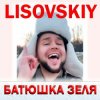
“Батюшка зеля” is a work of political satire in which the image of the president is viewed through the prism of a personality cult, exaggerated expectations and the disappointment of part of society.
“Мій бус” refers to the image of a minibus, which in the public imagination became associated with mobile groups from territorial recruitment centres and checks on men in the streets.
“Русь” addresses historical memory, origins, national identity and the use of a shared past in contemporary political propaganda.
“Вожди,” recorded with Neon 29.0, is devoted to political leaders, the cult of power and society’s tendency to seek simple solutions in the image of a strong ruler.
Leaving Ukraine and life in Europe
At the beginning of 2024, Yuriy Lisovskiy left Ukraine through the Transnistrian section of the Ukrainian-Moldovan border. He crossed the border outside an official checkpoint, entered the territory of Transnistria and continued from there towards Europe.
The artist described the story of his departure in detail in a separate interview. He connected his decision to leave the country with his unwillingness to participate in combat, the risk of forced mobilisation and the desire to preserve the ability to determine the course of his own life.
LISOVSKIY later settled in Bulgaria, where he continued his musical, production and blogging activities. While outside Ukraine, he records new compositions, films music videos, conducts live broadcasts and comments on social and political events.
The relocation broadened the range of subjects in his work. His songs began to include the experiences of Ukrainian emigrants, pressure on men living outside the country, accusations of lacking patriotism and the conflict between personal self-preservation and public expectations.
His personal experience of leaving strengthened the documentary dimension of LISOVSKIY’s music. Songs about the border, draft evaders, the Tysa River and life outside Ukraine are perceived as a continuation of the performer’s own story.
Despite periodic account blocks and restrictions on the distribution of particular posts, the project’s audience continued to grow. New songs find listeners through reposts, user-generated videos, Telegram channels and alternative pages.
Musical style
LISOVSKIY’s work exists at the intersection of several directions:
- political hip-hop;
- protest rap;
- internet satire;
- journalistic songwriting;
- meme rap;
- conversational street rap.
His compositions are generally short. Most songs last between two and three minutes and are constructed around a single central subject.
The arrangements are usually based on minimalist trap or hip-hop beats. The instrumental section does not attempt to compete with the lyrics but creates a rhythmic foundation for a direct statement.
LISOVSKIY uses a conversational and intentionally unpolished performance style. His delivery resembles a public address, argument or emotional commentary. The artist does not rely primarily on rapid-fire rap or complex rhyme structures because the song’s content remains its main element.
Choruses are often built around short phrases, political slogans, memes and repeated formulas. This allows the songs to be remembered quickly and easily adapted for short videos.
Language of his work
LISOVSKIY records songs in Russian and Ukrainian and also uses mixed conversational speech and Surzhyk.
Linguistic duality is part of both his biography and his artistic method. Russian reflects the environment in which he grew up and began writing, while Ukrainian is used increasingly often in new compositions and public statements.
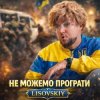
In “Чому не державною?”, “Моя історія”, “Мій бус”, “Не можемо програти” and other works, the interaction between languages helps portray the complex cultural reality of contemporary Ukraine.
LISOVSKIY opposes judging a person’s civic position solely by language. For him, patriotism is determined by actions, attitudes towards other people, a desire for justice and a willingness to speak openly about problems.
Writing method and production work
Yuriy Lisovskiy participates in almost every stage of the project’s development. He works on lyrics and song concepts, records vocals, takes part in creating music videos and covers, handles promotion and communicates directly with the audience.
The project operates independently of major music companies. Instrumentals are purchased or created with independent beatmakers, vocal parts are recorded at home or in accessible studio conditions, and social networks serve as the principal means of promotion.
LISOVSKIY’s main production principle is speed of response. A composition may be written and released shortly after the event to which it is dedicated. This responsiveness allows the artist to remain a direct participant in current discussion.
Among the most notable collaborators and participants in the project are Neon 29.0, Askaniya and beatmaker Fy Snow.
Visual image and parody transformations
LISOVSKIY’s main public image is built around emphasised brutality. A shaved head, sunglasses, dark clothing, a large build, restrained facial expressions and an abrasive speaking style create the character of an independent street rapper who speaks directly and does not seek to meet the expectations of a mass audience.
At the same time, the artist deliberately undermines the excessive seriousness of this image. In music videos, short clips and satirical sketches, LISOVSKIY frequently appears wearing a wig and transforms into a comic or grotesque character.
The contrast between the performer’s brutal appearance and the deliberately expressive wig became an independent artistic device. The wig is used not as a random costume element but as a visual counterweight to the main stage persona.
Through these transformations, LISOVSKIY parodies representatives of the authorities, media figures and composite social types. He changes his voice, facial expression, behaviour and speech patterns, creating a character capable of entering into dialogue with the artist’s primary persona.
This technique performs several functions at once. It strengthens the satirical effect, makes difficult social themes more accessible to the audience and demonstrates that the performer is capable of mocking not only politicians and state institutions, but also himself.
In such videos, LISOVSKIY acts simultaneously as a rapper, actor and author of an internet sketch. The combination of brutality and comic transformation has become one of the most recognisable features of his visual concept.
The project’s videos are often filmed in streets, cars, residential spaces and other real locations. Instead of elaborate sets, they use everyday details, wigs, satirical costumes, political symbols and visual references to current events.
Public reaction
LISOVSKIY’s work provokes polarised reactions.
Supporters value the artist for his directness, independence, anti-war position and willingness to address problems avoided by many popular performers and national media outlets. For this audience, he became a voice for citizens dissatisfied with corruption, mobilisation practices, political manipulation and restrictions on freedom of speech.
Critics accuse the musician of excessive provocation, simplifying complex social issues and creating a negative image of state institutions. His songs about mobilisation, territorial recruitment centres and men leaving the country provoke particularly intense debate.
The performer himself views music as a space for free expression. He stresses that songs should reflect real life, including subjects that are uncomfortable for the authorities, official institutions and part of society.
LISOVSKIY does not seek to occupy a neutral position. His compositions are authorial statements with an explicitly expressed point of view. It was precisely this openness that brought him recognition, a loyal audience and constant attention from critics.
Online presence
Social networks are the artist’s main space for interaction with listeners.
YouTube — @LISOVSKIY_News. The main channel featuring music videos, interviews, live broadcasts, music premieres and social and political commentary.
Telegram — @LISOVSKIY_PRO. A platform for new songs, statements, announcements, video materials and direct communication with the audience.
Instagram — @lisovskiy_production. Project news, stories, filming excerpts and behind-the-scenes material from the creation of music videos.
LISOVSKIY regularly conducts live broadcasts, answers listeners’ questions, talks about the creation of his songs and comments on socially important events. As a result, the project is perceived not only as a music career but also as a constantly developing author-driven media platform.
Selected discography
2023
- “Слуга народа” — with Neon 29.0;
- “Патриот” — featuring Askaniya;
- “Чому не державною?” — with Neon 29.0.
2024
- “Фак войне”;
- “Я ж не лох”;
- “Ухилянт” — with Neon 29.0;
- “Тиса”;
- “Полюбила ухилянта” — featuring Askaniya;
- “Моя історія”;
- “Скрябин” — with Neon 29.0;
- “Тцкашник.”
2025
- “Похеру”;
- “ИПСО”;
- “Русь”;
- “Вожди” — with Neon 29.0;
- “НАБУ”;
- “Батюшка зеля”;
- “Мій бус”;
- “Є-БАЛИ.”
2026
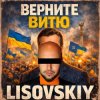
- “Верните Витю”;
- “Не можемо програти”;
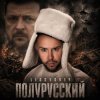
- “Полурусский”;
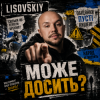
- “Може досить?”.
Significance of his work
LISOVSKIY occupies a distinctive place in the Ukrainian music internet. His career was built not through television talent shows, major radio stations or traditional record labels, but through direct interaction with his audience.
The artist transformed conflicts surrounding mobilisation, territorial recruitment centres, men leaving the country, language policy and freedom of speech into a distinct direction within Ukrainian internet rap.
The songs “Ухилянт,” “Тиса,” “Тцкашник,” “Чому не державною?” and “ИПСО” became musical documents of a period in which social contradictions appear every day in the news, on social media and in the personal stories of citizens.
LISOVSKIY portrays contemporary Ukraine without official celebratory decoration. His protagonists face bureaucracy, fear, political manipulation, public pressure and the need to defend their right to make their own choices.
The artist’s music does not attempt to reconcile opposing sides. Its purpose is to identify a problem, provoke a reaction and make listeners formulate their own attitudes towards current events.
Conclusion
LISOVSKIY is a Ukrainian rapper, songwriter and producer who transformed political satire and social protest into a recognisable musical project.
Yuriy Lisovskiy progressed from his first lyrics inspired by hip-hop culture and the urban life of Brovary to becoming one of the most widely discussed independent artists in the Ukrainian online space.
His discography reflects the central conflicts of contemporary Ukraine: war, mobilisation, corruption, language policy, information confrontation, emigration and a crisis of trust between the individual and the state.
By combining direct rap delivery, political satire, documentary observation and comic transformations, LISOVSKIY developed his own recognisable style. His music became a challenge to the system, a reflection of contradictory reality and the voice of an audience searching for truth, justice and freedom of speech.