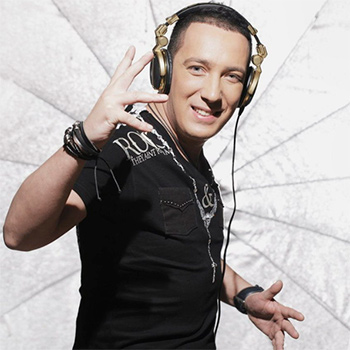
Real name: Alexey Sergeyevich Tsvetkov
Date of birth: October 21, 1978
Place of birth: Leningrad, USSR
Stage name: DJ TsvetkoFF
Professions: DJ, composer, producer, radio host
Main styles: electro house, progressive house, progressive trance, dance
Status: one of the key figures of the Russian dance and radio scene of the late 1990s–2000s
DJ TsvetkoFF and “Radio Record”: at the origins of dance radio
DJ TsvetkoFF is a figure inseparably linked to the history of “Radio Record”.
He stood at the origins of the station from its founding in 1995, at a time when dance music in Russia was only beginning to take shape as an independent cultural environment.
It was his author’s show “Dancefloor”, launched in 1995, that became one of the first regular platforms for electronic music on FM radio. For Saint Petersburg in the 1990s and early 2000s, this program effectively shaped the understanding of what a modern dance scene is — energetic, Western-oriented, and club-driven in spirit.
From 1995 to 2005, DJ TsvetkoFF worked at Radio Record as the host of “Dancefloor,” an on-air DJ, and a key music selector during the station’s formative years.
For many listeners, his broadcasts became their very first encounter with club culture.
Commercial breakthrough and mainstream success
In the early 2000s, DJ TsvetkoFF found himself in a unique position: he was both a club DJ and one of the most commercially successful electronic producers in the CIS.
A pivotal moment was his collaboration with Tatiana Bulanova — “My Dream” (2000).
The track became a massive hit and proved that electronic production and club-oriented thinking could be mainstream without losing energy or dancefloor appeal.
It is important to emphasize that the project “TsvetkoFF & Bulanova — My Dream” was not limited to a single track. It was a full collaborative album in which a major pop star, for the first time in CIS history, fully entrusted her sound to a club producer.
This move became a landmark precedent for the Russian show business, demonstrating that the electronic scene could not only serve the pop format, but completely reinterpret it. In many ways, this project opened the door to later collaborations between pop artists and DJs.
Later, TsvetkoFF worked as a composer and producer with major pop artists of the early 2000s, including:
This stage cemented his reputation as a DJ who knew how to translate electronic aesthetics into a language accessible to a wide audience.
Radio as a system: “Dynamite FM” and management experience
In 2002, DJ TsvetkoFF expanded his role in the industry and became:
- Program Director of the radio station “Dynamite FM” (Moscow)
- Host of the music shows “Poleteli” (“Let’s Fly”)
At this stage, he proved himself not only as an artist but also as an architect of radio formats, responsible for music policy, rotations, and the overall development of the station.
Later, he also launched a school of electronic music and radio in Saint Petersburg, passing his experience on to the next generation of DJs and radio hosts.
Clubs, festivals, and the era of the big dancefloor
Since 1995, DJ TsvetkoFF has actively performed at leading clubs in Saint Petersburg, including Mad Wave, Plaza, Magrib, Aquatoria, Konyushenny Dvor, and others.
He also took part in major events and festivals:
- Love Parade (Germany, 2000)
- “Samsung. White Nights”
- “Vspyshka” (Radio Record)
- “Dynamika” (Dynamite FM / Dance Planet)
These performances secured his status as a DJ of national and international level.
Musical style and signature
In his sets, DJ TsvetkoFF consistently adhered to an energetic, straightforward, yet melodic sound: electro house, progressive house, and progressive trance.
His style was built around recognizable hook lines, powerful rhythms, and hit-driven dramaturgy.
This was the sound of the big dancefloor, focused on emotion, movement, and instant audience response.
DJ TsvetkoFF was one of the first DJs in Russia with a clearly defined stage image. Wireless headphones, bright costumes, and active interaction with the crowd turned the DJ into a full-fledged stage performer — someone people came not only to dance to, but also to watch.
At a time when DJs were often seen merely as “people behind the decks,” TsvetkoFF set a new standard for visual presence, anticipating the EDM show format that would become the norm much later.
Where he is now
Since 2022, Alexey Tsvetkov has been living in Israel, where he changed his main professional focus and entered the hospitality business.
At the same time, he has not completely left music: he retains his status as a producer, occasionally releases tracks and remixes, and works with modern artists and labels (including those associated with Black Star).
His involvement in the industry has become selective and deliberate, without constant media presence.
Despite changing countries and his main field of activity, DJ TsvetkoFF maintains a special relationship with Record Club. He remains an honorary resident and periodically appears in special broadcasts dedicated to the station’s history and dance culture.
Thus, his presence on the radio has become not regular, but symbolic — as a figure who stood at the origins of the format.
DJ TsvetkoFF discography
The discography of DJ TsvetkoFF reflects his dual role in the industry:
a club DJ and a pop producer working with the mainstream scene during the peak era of dance music in Russia.
CD compilations and the pre-streaming era
In the 2000s, DJ TsvetkoFF was one of the country’s best-selling DJs in physical formats. His CD compilations — particularly the “Dancefloor” and “Poleteli” series — were sold in large numbers in music stores and kiosks across Russia.
In the pre-streaming era, these compilations played the same role that playlists do today: shaping taste, introducing audiences to electronic music, and making club sound part of everyday life.
Special mention should be made of the track “CSKA Anthem”. A little-known fact: DJ TsvetkoFF is the author of one of the most recognizable musical versions of the football club’s anthem. This project demonstrated him not only as a DJ and producer, but also as a composer working with mass identity and emotion.
Original compositions
- Megamove (2002)
- Friends (2003)
- CSKA Anthem (2004)
Remixes
- Tatiana Bulanova — “My Dream” (2000)
- Diskoteka Avariya — official remix (2000s)
- Elena Rodnyanskaya (“MeliSSa”) — “I Dance” (2016)
Producer and composer works
- Tatiana Bulanova — “My Dream” (2000)
- Katya Lel — “Goroshiny” (2001)
- Filipp Kirkorov — “Will You Believe” (2001)
- Filipp Kirkorov — “I Will Die for You” (2001)
- Filipp Kirkorov — “Technosila” (2001)
- Irina Saltykova — “I Miss You” (2001)
Radio projects and mixes
- “Dancefloor” — author’s radio show (1995–2005)
- DJ TsvetkoFF Radio Show on Record Club (since 2015)
The discography of DJ TsvetkoFF includes both official releases and significant remixes and radio works that played an important role in the development of Russian dance culture in the late 1990s–2000s.
Conclusion
DJ TsvetkoFF is a DJ of the FM radio and big dancefloor era — a person who helped make electronic music mainstream in Russia without destroying its club essence. His path is the story of dance culture moving from the underground to the mainstream, at the moment when the DJ first became a media and cultural figure.