 daKooka

Alla Borisovna Pugacheva is a Soviet and Russian singer, composer, actress, stage director and music producer. She was born on 15 April 1949 in Moscow. Pugacheva’s professional career began in the 1960s, while nationwide fame came after her victory with the song «Арлекино» at the Golden Orpheus festival in 1975. By the end of the decade, she had become one of the central figures of Soviet popular music. In 1991, she was awarded the title of People’s Artist of the USSR.
Over several decades, Pugacheva created a repertoire spanning Soviet estrada, pop music, elements of rock, synth-pop, romance and theatrical musical performance. Her interpretations of «Арлекино», «Всё могут короли», «Этот мир», «Маэстро», «Старинные часы», «Миллион алых роз», «Айсберг», «Паромщик», «Две звезды», «Позови меня с собой», «Любовь, похожая на сон» and many other songs became widely known. Pugacheva wrote a significant part of her own music while also collaborating with composers Raimonds Pauls, Igor Nikolaev, Alexander Zatsepin, Igor Krutoy and other authors.
Childhood and musical education
Alla Pugacheva was born into the family of Boris Mikhailovich Pugachev and Zinaida Arkhipovna Odegova. The family did not belong to the professional music world, but the future singer began receiving musical training in childhood. She studied piano and graduated from music school.
In 1964, Pugacheva entered the conducting and choral department of the Moscow State M. M. Ippolitov-Ivanov Music College. From the very beginning, she combined her studies with recordings and touring, so her professional career effectively started before she received her diploma. Pugacheva graduated from the college in 1969 with a qualification related to choral conducting.
She later also received training in stage directing. In 1976, Pugacheva entered the directing faculty of GITIS and graduated in 1981. Her final project was the concert programme «Монологи певицы», in which she served both as performer and stage director.
Her directing education became directly connected with her later career: Pugacheva treated a concert not simply as a sequence of songs, but as a performance in which dramaturgy, movement, costume, lighting, character and the order of the numbers all mattered.
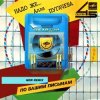
First recording — «Робот»
In 1965, at the age of 16, Pugacheva recorded her first song, «Робот», for the All-Union Radio programme «С добрым утром!». The music was written by Levon Merabov and the lyrics by Mikhail Tanich. This recording is generally regarded as the beginning of her professional discography.
After her first radio recordings, Pugacheva took part in touring trips across Western Siberia with an agitprop team from the Yunost radio station. She also recorded songs by Vladimir Shainsky and gradually gained experience performing for large audiences.
However, «Робот» did not yet make Pugacheva famous across the country. Nearly another decade of work in various estrada ensembles lay ahead before her real breakthrough.
First ensembles
After graduating from the music college, Pugacheva briefly worked as an accompanist at the State College of Circus and Variety Arts. She then followed the professional path typical for a Soviet estrada musician of the time, working in various ensembles and orchestras.
In the early 1970s, she was a soloist with the ensemble «Новый электрон», performed with «Москвичи» and collaborated with Oleg Lundstrem’s estrada orchestra.
These years helped Pugacheva develop a stage style that differed significantly from the more academic Soviet estrada tradition. Instead of delivering uniformly polished performances, she increasingly treated each song as a small role, changing timbre, intonation, facial expression and manner of delivery depending on the lyrics.
«Весёлые ребята» and «Арлекино»
In 1974, Pugacheva became a soloist with the vocal-instrumental ensemble «Весёлые ребята», led by Pavel Slobodkin. That same year, at the Fifth All-Union Competition of Variety Artists, she won third prize with performances of «Посидим, поокаем» and «Ермолова с Чистых прудов».
The decisive year was 1975.
At the international Golden Orpheus festival in Bulgaria, Pugacheva performed «Арлекино», a song by Bulgarian composer Emil Dimitrov. Pavel Slobodkin reworked the musical material for the new version, while the Russian lyrics were written by Boris Barkas. Pugacheva won the festival Grand Prix.
It was after «Арлекино» that her voice and name became known to an audience across the Soviet Union.
The distinctive quality of the performance lay not only in her unusual timbre. Pugacheva transformed the song into a stage role: Harlequin’s laughter gradually shifted into dramatic intonation, while what initially appeared to be an entertaining number acquired a tragic undertone. This principle — treating a song as a miniature theatrical performance — became the foundation of her later performing method.
«Ирония судьбы»
In the same year, 1975, Pugacheva’s voice was featured in Eldar Ryazanov’s television film «Ирония судьбы, или С лёгким паром!».
For the film, she recorded the female vocal parts, including «Мне нравится, что вы больны не мной» to a poem by Marina Tsvetaeva and «По улице моей который год» to a poem by Bella Akhmadulina.
The film became part of Soviet mass culture, and even before the release of her first solo album, Pugacheva’s voice was already heard regularly in one of the best-known television films of its time.
Beginning of her solo career
In 1976, Pugacheva left «Весёлые ребята» and worked for a time with Konstantin Orbelyan’s orchestra. Later, the ensemble «Ритм» became her accompanying group.
By this point, it had become clear that her future career would be built primarily around her own name rather than membership in a vocal-instrumental ensemble.
Independent concert programmes and regular solo tours followed. At the same time, Pugacheva became increasingly involved in repertoire selection, arrangement decisions and the staging of her own numbers.
«Зеркало души»
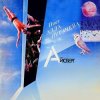
In May 1978, the Melodiya label released Pugacheva’s debut full-length solo album, «Зеркало души».
The double LP contained 16 tracks, including «Всё могут короли», songs by Alexander Zatsepin and compositions for which Pugacheva herself wrote the music. The album was released in millions of copies and became one of the major titles in her early discography.
An important feature of Pugacheva was already evident here: she was not merely an interpreter of other people’s material.
Some of her own early compositions were initially credited under the pseudonym Boris Gorbonos. Her music also appeared under this name in the credits of the film «Женщина, которая поёт».
Intervision and Sopot
In August 1978, Pugacheva took part in the international Intervision-78 competition in Sopot, Poland.
For her performance of «Всё могут короли», she received the competition’s top prize — the Amber Nightingale.
Her victories at Golden Orpheus and in Sopot firmly established her status as one of the leading Soviet estrada performers and enabled her to expand her international touring activity considerably.
«Женщина, которая поёт»
One of the major cultural events of her early period was the musical film «Женщина, которая поёт».
Filming took place in the second half of the 1970s, and the film received a wide theatrical release in 1979. Pugacheva played the singer Anna Streltsova, a character built in many respects around her own stage persona. The film attracted more than 60 million viewers in Soviet cinemas.
Pugacheva not only played the leading role, but also wrote part of the music. In the credits, her compositions were listed under the pseudonym Boris Gorbonos. Another part of the musical material was written by Alexander Zatsepin.
The title of the film became so closely associated with the artist herself that the phrase «the woman who sings» became one of the enduring descriptions of Pugacheva in the press and popular culture.
Pugacheva as a composer
In the early 1980s, her work as a composer became particularly prominent.
The 1980 album «Поднимись над суетой» was built almost entirely around music written by Pugacheva herself. This authorial direction included «Звёздное лето», «Ленинград», the title track and other works.
Pugacheva was never an artist completely dependent on a single composer. Throughout her career, periods of active songwriting alternated with collaborations with major authors, to whose material she effectively brought her own performance dramaturgy.
This is why her repertoire is difficult to reduce to a single compositional school.
Raimonds Pauls: «Маэстро», «Старинные часы», «Миллион алых роз»
One of the most important creative partnerships of the early 1980s was her collaboration with Latvian composer Raimonds Pauls.
Pauls offered Pugacheva material that combined melodic estrada with jazz harmony and his characteristic piano style.
This collaboration produced «Маэстро» and «Старинные часы» with lyrics by Ilya Reznik. «Старинные часы» was first performed in late 1981 and quickly became a permanent part of the singer’s concert repertoire.
Another major work by Pugacheva and Pauls was «Миллион алых роз». However, the commonly repeated description of the song as a product of the trio «Pauls — Reznik — Pugacheva» is incorrect: the lyrics to «Миллион алых роз» were written by Andrei Voznesensky.
Together, these songs created one of the most recognisable layers of Pugacheva’s early-1980s repertoire.
«Как тревожен этот путь»
In 1982, the double album «Как тревожен этот путь» was released — 16 tracks reflecting the transition from the estrada sound of the 1970s to more complex arrangements of the following decade.
By this period, Pugacheva could simultaneously exist in several musical roles: dramatic singer, composer of her own songs, interpreter of mainstream hits and director of concert material.
This diversity would become one of the reasons for the unusual longevity of her career.
Igor Nikolaev
The next major songwriter in her career was Igor Nikolaev.
In the early 1980s, the young musician worked as a keyboard player and arranger in «Рецитал», the ensemble accompanying Pugacheva. In 1983, she recorded his «Айсберг» and «Расскажите, птицы».
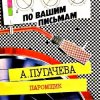
These were later followed by «Паромщик», «Сто друзей», «Прости, поверь» and other songs.
The collaboration became so extensive that the 1986 album «Счастья в личной жизни!» was built around songs by Igor Nikolaev.
For Nikolaev himself, working with Pugacheva became one of the most important stages of his early professional career.
«Пришла и говорю»
At the same time, Pugacheva devoted increasing attention to concert direction.
In 1984, the theatrical concert programme «Пришла и говорю» appeared, later becoming the basis for a musical film and an album project of the same name.
By this point, her famous loose stage silhouette — wide dresses and flowing robes — had already become part of Pugacheva’s visual language. However, the artist herself constantly changed her image, so reducing her stage style to this one feature would be inaccurate.
She experimented with rock aesthetics, trouser suits, movement, grotesque performance and theatrical characters.
The Swedish album Watch Out
In the mid-1980s, Pugacheva made one of her most serious attempts to enter the Western music market.
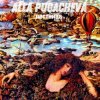
The English-language album Watch Out was recorded in Sweden and released in 1985. It contained 12 English-language tracks and was created with producer Lennart Sjöholm.
In the Soviet Union, the material was released under the title «Алла Пугачёва в Стокгольме».
In terms of sound, the project differed noticeably from Pugacheva’s earlier Soviet estrada material: synthesizers, Western pop and mid-1980s AOR were much more prominent.
Rock and Vladimir Kuzmin
The second half of the 1980s became one of the most experimental periods of her career.
Rock elements became more pronounced in the arrangements, while one of her major creative partners was Vladimir Kuzmin. Their joint «Две звезды» became one of Pugacheva’s best-known duets.
During this period, she also performed with Udo Lindenberg, the Swedish group Herreys and other international artists.
This work demonstrates that Pugacheva did not remain exclusively within the traditional Soviet estrada model, but regularly tested the boundaries of her own sound.
Concert for the Chernobyl clean-up workers
After the Chernobyl nuclear disaster, Pugacheva took part in the charity concert «Счёт 904», organised to raise funds for those affected.
On 8 September 1986, she also performed for clean-up workers in the settlement of Zelyony Mys near the disaster zone. According to RIA Novosti, the concert drew around nine thousand people.
The trip became one of the best-known non-musical episodes of her Soviet-era biography.
«Театр песни»
By the end of the 1980s, Pugacheva had effectively evolved from a solo performer into the head of an independent creative organisation.
In 1988, she founded and headed the theatre studio «Театр песни». The project organised concerts and tours and allowed Pugacheva to work not only on her own programmes, but also with other artists.
It was specifically as artistic director of the Song Theatre that she was later listed in the official decree awarding her the title of People’s Artist of the USSR.
«Рождественские встречи»
Another key project appeared in 1988 — «Рождественские встречи Аллы Пугачёвой».
The first concerts were recorded at the Olimpiysky sports complex and broadcast on television in early 1989.
The format combined a large television concert with a creative laboratory. Alongside major stars, Pugacheva introduced performers who were only beginning to gain recognition.
With interruptions, «Рождественские встречи» existed for more than two decades and became one of the most recognisable musical television brands associated with her name.
People’s Artist of the USSR
Pugacheva’s professional status was repeatedly recognised with state titles.
In 1980, she became an Honoured Artist of the RSFSR, and in 1985 a People’s Artist of the RSFSR.
On 20 December 1991, by decree of Soviet President Mikhail Gorbachev, Alla Pugacheva was awarded the title of People’s Artist of the USSR «for outstanding achievements in the development of Soviet estrada and stage art».
The decree was signed only a few days before the Soviet Union ceased to exist.
«Не делайте мне больно, господа»
After the collapse of the Soviet Union, Pugacheva retained her status as one of the leading performers in the newly emerging Russian music industry.
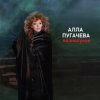
In 1995, she released the album «Не делайте мне больно, господа» — 18 songs including «Любовь, похожая на сон», «Настоящий полковник», «Сильная женщина» and the title track.
The material of the mid-1990s differed noticeably from her Soviet recordings: studio technology changed, arrangements became oriented towards contemporary pop music, but Pugacheva’s dramatic performing style remained intact.
Eurovision 1997
In 1997, Alla Pugacheva represented Russia at the Eurovision Song Contest in Dublin.
She performed «Примадонна», a composition she wrote herself, and finished in 15th place with 33 points.
The result was modest in competitive terms, but the song reinforced the title «Prima Donna», which was already firmly associated with her stage status.
«Позови меня с собой» and the album «Да!»
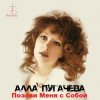
The late 1990s brought one of Pugacheva’s biggest later hits — «Позови меня с собой».
The song was written by Tatiana Snezhina. Pugacheva recorded it after the songwriter’s death, and the composition became enormously popular in her interpretation.
In 1998, the album «Да!» was released, marking another renewal of her repertoire. During this period, works by a new generation of composers and lyricists appeared alongside Pugacheva’s own material.
Her ability to accept material from younger writers became one of the mechanisms that prevented her repertoire from remaining confined to the aesthetics of the 1970s and 1980s.
The 2000s: a new pop sound
In the early 2000s, Pugacheva continued to release studio material regularly.
The album «Речной трамвайчик» included «Девочка секонд-хенд», «Не обижай меня», the title track and the duet with Maxim Galkin «Будь или не будь».
It was followed by «Живи спокойно, страна!» and «Приглашение на закат».
The latter, released in 2008, included «Опять метель», «Ты там, я там» and other material from her late studio period.
Producing and television
By this point, Pugacheva had long been working not only as a singer.
She supported young performers through «Рождественские встречи» and collaborated with music festivals and television competitions.
In 2004, Pugacheva became artistic director of «Фабрика звёзд-5». For many years, she was associated with the New Wave contest, where she presented her own award to young performers.
From 2011 to 2013, she headed the jury of the television competition «Фактор А».
These projects continued the principle established in «Рождественские встречи»: Pugacheva’s fame was used as a platform for presenting new estrada performers.
«Радио Алла»
In 2007, the radio station «Радио Алла» was launched jointly with Prof-Media.
Pugacheva served as its artistic director and personally participated in creating programmes, including interviews and on-air communication with listeners. The Russian version of the station ceased operations in 2011.
The project became one of her most notable experiments outside concert performance and recording.
End of regular touring
On 5 March 2009, Pugacheva announced that she would stop regular concert activity after her anniversary tour.
She explained the decision by referring to her health and changes in her voice following several operations, while stressing that she did not intend to stop creative work completely.
Her final major touring programme was titled «Сны о любви». After it, solo concerts ceased to be a regular part of her career.
This was specifically a withdrawal from regular touring, not a complete departure from music.
Return with P.S.
Ten years after ending her touring career, Pugacheva gave another full-scale solo concert.
On 17 April 2019, the anniversary programme P.S., prepared for her 70th birthday, took place at the State Kremlin Palace. A significant part of the set list consisted of material that had not previously been widely presented to the public.
The concert was filmed as a separate musical film, «Алла Пугачёва. Тот самый концерт», and released in cinemas.
In 2024, a recording of the programme was released as the live album P.S. (Live) — 20 tracks with a total duration of about an hour and a half.
Thus, P.S. was not a revival of her touring career, but an independent retrospective concert project.
Music after leaving the stage
After ending regular concert activity, Pugacheva did not stop recording music.
In addition to the live P.S., individual new songs appeared in digital catalogues, including «Ложный стыд», «Жизнь слишком хороша», «Не высовывайся, дочка», «Мама», «Поцелуи войны» and «Давай просто жить».
These releases appeared outside the traditional album-and-tour cycle: Pugacheva records songs selectively and does not support them with regular concert tours.
Personal life
Alla Pugacheva has been married five times.
Her first husband was circus performer Mykolas Orbakas. Their daughter Kristina Orbakaite was born in 1971 and later established an independent career as a singer and actress.
Her second husband was director Alexander Stefanovich, and her third was concert director and producer Yevgeny Boldin.
From 1994 to 2005, Pugacheva was married to singer Philipp Kirkorov.
In 2011, her fifth husband became Maxim Galkin. In 2013, the couple became parents to twins, Harry and Elizaveta.
Pugacheva’s personal relationships often intersected with her professional life — Boldin served as her director for many years, Kirkorov performed with her and took part in musical projects, while with Galkin she recorded songs and worked on television.
After 2022
After the beginning of Russia’s full-scale invasion of Ukraine in February 2022, Pugacheva and her family began spending a significant part of their time outside Russia.
In September 2022, after Maxim Galkin was added by the Russian Ministry of Justice to the register of foreign agents, Pugacheva publicly expressed solidarity with her husband and spoke in favour of an end to the loss of life and a peaceful existence.
This period significantly changed her position in Russia’s public sphere, but hardly changed the model of her musical activity that had already developed after 2009: occasional recordings and appearances instead of regular touring.
Musical style and performance technique
Defining Pugacheva only as an estrada or pop singer is insufficient to describe her catalogue.
In the 1970s, Soviet estrada song formed the basis of her repertoire, but even then she transformed vocal numbers into miniature theatrical scenes.
In the 1980s, singer-songwriter material, pop, rock, synth-pop, European estrada and large-scale ballads all coexisted in her music. The Swedish Watch Out differed significantly from the material by Raimonds Pauls, while her work with Vladimir Kuzmin differed from the songs of Igor Nikolaev.
In the 1990s and 2000s, Pugacheva adapted to contemporary studio pop music without abandoning her dramatic vocal style.
Therefore, the constant element of her style is not a specific genre, but interpreting a song through a character.
Pugacheva could deliberately shift her timbre from almost conversational and husky to high and open, use laughter, pauses, recitative, shouts or an almost theatrical whisper. This dramaturgy allowed her to transform material by different composers into a recognisably personal repertoire.
Songwriter and interpreter
One important distinction between Pugacheva and many major estrada singers of her generation is her own work as a composer.
She wrote the music for a number of her songs and participated in creating material from the late 1970s onward. During the early period, some of her works were released under the pseudonym Boris Gorbonos.
However, much of her best-known repertoire was created in collaboration with professional songwriters.
Alexander Zatsepin, Raimonds Pauls, Igor Nikolaev, Igor Krutoy and other composers represented different generations and musical schools. As a result, Pugacheva’s catalogue does not belong to a single songwriting system — it is united primarily by the performer herself.
Main albums
Among her most important album releases are:
- «Зеркало души» — 1978
- «Поднимись над суетой» — 1980
- «То ли ещё будет...» — 1980
- «Как тревожен этот путь» — 1982
- Watch Out / «Алла Пугачёва в Стокгольме» — 1985
- «Счастья в личной жизни!» — 1986
- «Пришла и говорю» — 1987
- «Не делайте мне больно, господа» — 1995
- «Да!» — 1998
- «Речной трамвайчик» — 2001
- «Живи спокойно, страна!» — 2003
- «Приглашение на закат» — 2008
- P.S. (Live) — live album, 2024
Key songs
Among the best-known works from different stages of her career are:
- «Арлекино»
- «Всё могут короли»
- «Женщина, которая поёт»
- «Звёздное лето»
- «Этот мир»
- «Маэстро»
- «Старинные часы»
- «Миллион алых роз»
- «Айсберг»
- «Паромщик»
- «Две звезды»
- «Прости, поверь»
- «Не делайте мне больно, господа»
- «Любовь, похожая на сон»
- «Позови меня с собой»
- «Не обижай меня»
- «Опять метель»
Awards
Alla Pugacheva’s professional career has been recognised with a number of state awards.
She received the following titles:
- Honoured Artist of the RSFSR — 1980
- People’s Artist of the RSFSR — 1985
- People’s Artist of the USSR — 1991
Pugacheva is also a laureate of the State Prize of the Russian Federation and has been awarded the Order «For Merit to the Fatherland», 2nd, 3rd and 4th classes. The 4th class was awarded in 2014 for her contribution to the development of culture and estrada art.
Her international competition achievements include the Grand Prix at Golden Orpheus in 1975 and the Amber Nightingale Grand Prix at the Sopot festival in 1978.
Place in the history of popular music
Alla Pugacheva’s significance cannot be measured solely by the number of hits or the length of her career.
In the second half of the 1970s, she changed the very image of the leading Soviet estrada singer. Instead of a perfectly controlled and distant performer, the central figure became an artist with a strongly defined personality who could be ironic, sharp, tragic, grotesque and almost conversational within a single concert programme.
In the 1980s, Pugacheva achieved a degree of creative independence that was almost unique for a Soviet pop artist: she wrote music herself, staged concerts, defined her own visual identity and selected songwriters. Later, «Театр песни» and «Рождественские встречи» expanded this role from performer to organiser of a broader musical environment.
After the collapse of the Soviet Union, she managed to retain a mass audience by incorporating new generations of songwriters and contemporary pop production into her repertoire. «Позови меня с собой», «Любовь, похожая на сон», the material from «Речной трамвайчик» and other later recordings belonged to an entirely different industry from «Арлекино» and «Зеркало души», yet they continued to be perceived first and foremost as Pugacheva songs because of her distinctive performing personality.
It was precisely her ability to change both music and stage form over decades without dissolving into any single genre or songwriting school that made Alla Pugacheva one of the most significant figures in Soviet and post-Soviet popular culture.