

 Серебро
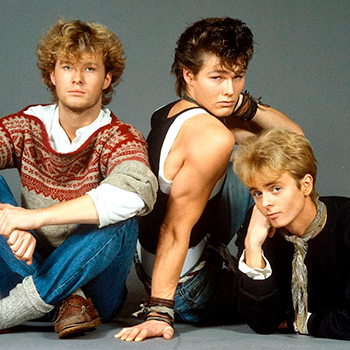
a-ha is a Norwegian pop-rock band formed in 1982 that has retained its classic lineup for more than four decades: Morten Harket on vocals, Magne Furuholmen on keyboards and guitar, and Pål Waaktaar-Savoy on guitar, keyboards and as the principal songwriter behind much of the group’s early material. The trio achieved its international breakthrough in 1985 with Take On Me and the debut album Hunting High and Low. In the years that followed, a-ha proved far more enduring than the original wave of synth-pop, releasing eleven studio albums and going through several breakups and reunions.
The band’s best-known songs include Take On Me, The Sun Always Shines on T.V., Hunting High and Low, I've Been Losing You, Cry Wolf, Manhattan Skyline, The Living Daylights, Stay on These Roads, Crying in the Rain, Move to Memphis, Dark Is the Night for All, Summer Moved On, Forever Not Yours, Analogue (All I Want), Foot of the Mountain and I'm In. Take On Me became not only a-ha’s biggest commercial hit, but also one of the most recognizable pop songs of the 1980s: by 2024, its famous music video had surpassed two billion views on YouTube.
From Bridges to a-ha
The story of the band began before Morten Harket joined. Pål Waaktaar and Magne Furuholmen met when they were young and played together in the Norwegian band Bridges. In 1980, the group released the album Fakkeltog, but Pål and Magne were far more focused on building an international career and soon decided to try their luck in the United Kingdom.
In 1982, they travelled to London for the first time, but returned to Norway after roughly six months. In September of that year, they were joined by Morten Harket, who had previously sung in the soul and blues band Souldier Blue. The official a-ha archive regards this moment as the beginning of the future trio’s work together.
At the beginning of 1983, the musicians returned to London and began systematically recording demos. They lived modestly, worked on songs almost every day and tried to attract the attention of British record companies. By the end of 1983, a-ha had signed a contract with Warner Bros.
The long story of Take On Me
Take On Me did not become a hit on its first attempt. An early version already existed under the title Lesson One and was recorded in Norway at the end of 1982. In 1983, the band made a new demo at London’s Rendezvous Studios and later recorded the song with producer Tony Mansfield.
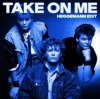
The first UK release of Take On Me in 1984 went almost unnoticed. Warner allowed the band to try again, and the definitive version was created with producer Alan Tarney. That recording became a worldwide hit in 1985 and reached No. 1 on the Billboard Hot 100.
The music video directed by Steve Barron was no less important. It combined live-action footage with rotoscoped pencil animation created by Michael Patterson and Candace Reckinger. The story of a young woman entering a drawn comic-book world became one of the most famous music videos of the MTV era.
At the 1986 MTV Video Music Awards, the Take On Me video won six awards, including prizes for direction, concept, special effects and Viewer’s Choice. The video for The Sun Always Shines on T.V. won another two, bringing a-ha’s total for the ceremony to eight awards.
Hunting High and Low
The debut album Hunting High and Low was released in 1985 and sold more than eight million copies. In addition to Take On Me, it included The Sun Always Shines on T.V., Hunting High and Low, Train of Thought and other songs.
The Sun Always Shines on T.V. became another major international success and reached No. 1 on the UK chart. Combined with the popularity of Take On Me, the debut almost instantly transformed the Norwegian trio into an international pop act.
In June 1986, a-ha embarked on their first major world tour. By the time it ended in August 1987, the band had performed in 113 cities across sixteen countries. What makes this especially remarkable is that before the American breakthrough of Take On Me, the trio had almost no experience with full-scale touring of that magnitude.
Scoundrel Days: the darker side of a-ha
The second album, Scoundrel Days, was released on October 6, 1986 and deliberately moved away from the brighter pop sound of the debut. The music became darker and more dramatic, relying more heavily on guitars, unusual harmonies and atmospheric keyboards.
The key songs included I've Been Losing You, Cry Wolf, Manhattan Skyline, The Swing of Things and the title track Scoundrel Days. Harket later described the album as particularly close in spirit to the band’s original demos.
The album sold more than five million copies and confirmed that a-ha were much more than Take On Me. Scoundrel Days became one of the strongest arguments against viewing the band merely as a bright mid-1980s synth-pop act.
The Living Daylights and Stay on These Roads
In 1987, a-ha recorded the title song for the James Bond film The Living Daylights, starring Timothy Dalton. The song was created with Bond composer John Barry and became one of the band’s best-known works. The franchise’s official website lists a-ha as the performers of the film’s main theme.
A year later, the third studio album Stay on These Roads was released. It included The Living Daylights, the title ballad, The Blood That Moves the Body, Touchy! and You Are the One. The album reached No. 2 on the UK Albums Chart.
By this point, a-ha’s characteristic contrast had fully formed: the electronic precision of the arrangements coexisted with romantic melodies, guitar-driven rock and Harket’s exceptionally high, emotionally intense vocals.
East of the Sun, West of the Moon and Rock in Rio
On their fourth album, East of the Sun, West of the Moon from 1990, the band continued moving away from pure synth-pop. The music featured more live instrumentation, piano and guitar. The best-known tracks included Crying in the Rain, Early Morning, I Call Your Name and Sycamore Leaves.
A special place in the band’s live history belongs to their performance at Rock in Rio II on January 26, 1991. According to the festival’s official history, a-ha’s concert at Maracanã Stadium drew around 198,000 paying spectators, a festival record at the time.
The achievement is especially telling: although the band never repeated the American commercial success of Take On Me, its audience remained enormous in South America, continental Europe and several other markets.
Memorial Beach and the first major hiatus
The album Memorial Beach was released in 1993 and became the heaviest and darkest record of a-ha’s early period. Much of the material was recorded at Paisley Park, Prince’s studio complex in Minnesota. Key tracks included Dark Is the Night for All, Move to Memphis, Angel in the Snow and the eight-minute Cold as Stone.
After a concert in St. Petersburg in June 1994, the band effectively stopped working together. Attempts to prepare new material did not lead to an album, and the musicians focused on their own projects.
Morten Harket developed his solo career, Pål Waaktaar-Savoy concentrated on the band Savoy, while Magne Furuholmen increasingly worked as a composer and visual artist.
The return and Summer Moved On
The opportunity for a reunion came with an invitation to perform at the Nobel Peace Prize Concert 1998 in Oslo. On December 11, a-ha appeared together on stage for the first time in several years and performed the new song Summer Moved On alongside The Sun Always Shines on T.V.
The performance developed into a full-scale comeback. In April 2000, the sixth studio album Minor Earth Major Sky was released, featuring Summer Moved On, the title track, Velvet and The Sun Never Shone That Day. The album reached No. 1 in Norway and Germany.
In Summer Moved On, Harket holds one note for approximately 20.2 seconds. Guinness World Records officially recognized the feat as the longest sustained note in a song that entered the UK singles chart.
Lifelines, Analogue and Foot of the Mountain
Following the successful comeback, a-ha released Lifelines in 2002. Its best-known songs include Forever Not Yours and the title track Lifelines. At this stage, all three members played a more visible role in songwriting rather than Waaktaar-Savoy carrying most of the writing alone.
The next album, Analogue, was released in 2005. Its leading songs included Celice, Cosy Prisons and Analogue (All I Want). The latter reached No. 10 on the UK chart and became a-ha’s first single since 1988 to return to the British Top 10.
In 2009, the band returned in many ways to a synthesizer-driven aesthetic on Foot of the Mountain. The title track, Nothing Is Keeping You Here, Shadowside and other songs combined a-ha’s recognizable melodic style with more contemporary electronic production.
The first official farewell
In 2009, the musicians announced that they would bring the band’s story to an end after the next tour. The farewell tour was called Ending on a High Note.
The final concert took place on December 4, 2010 at Oslo Spektrum. In official statements at the time, the members emphasized that this was intended as a genuine breakup, not a temporary promotional pause.
However, it did not prove to be the final chapter.
Cast in Steel and another return
After almost five years working separately, Harket, Furuholmen and Waaktaar-Savoy began recording together again. Cast in Steel was released on September 4, 2015. According to the musicians themselves, the reunion developed gradually, without an initial plan to formally restore the band.
The main songs included Under the Makeup, Cast in Steel, The Wake and Forest Fire. More concerts followed, including a Rock in Rio appearance and an international tour.
MTV Unplugged — Summer Solstice
One of the most successful projects of the band’s later period was MTV Unplugged — Summer Solstice from 2017. It is not a conventional studio album but a live acoustic recording, so it is more accurate to treat it separately from the main studio discography.
The band radically rearranged many older songs. The slowed-down acoustic version of Take On Me became especially well known, transforming the familiar energetic synth-pop hit into a melancholic ballad. The musicians themselves noted that this interpretation better revealed the sadness already present in the original song.
True North
The eleventh studio album, True North, was released on October 21, 2022. It was created in Bodø, Norway, around 90 kilometres north of the Arctic Circle, in collaboration with the Arctic Philharmonic. A film of the same name, directed by Stian Andersen, was made at the same time.
Its main songs include I'm In, You Have What It Takes, Forest for the Trees, As If and True North. The project was conceived as a musical and visual reflection on northern nature, humanity’s relationship with the environment and ecological responsibility.
True North became the band’s first album of new songs since Cast in Steel and remains its latest studio work.
Morten Harket and the band’s status after 2025
On June 4, 2025, a-ha’s official website announced that Morten Harket was living with Parkinson’s disease. The singer revealed that he had undergone treatment, including deep brain stimulation, but that the condition had also affected his control over his voice.
Harket openly acknowledged that at the time he did not know whether he would be able to sing and perform fully again. He continued writing lyrics and working on his own songs, although he was unsure whether he would be able to complete them for release.
For that reason, the future of a-ha is best left open. After several breakups and reunions, the group has repeatedly shown that its activity does not follow a conventional album cycle, but following Harket’s announcement, the prospects for new concerts and studio work became uncertain.
Musical style
The best-known period of a-ha is associated with synth-pop, new wave and pop music, but the band’s catalog is considerably broader than that description suggests. Scoundrel Days was already darker and closer to alternative pop-rock, East of the Sun, West of the Moon increased the use of live instruments, Memorial Beach moved toward a heavier guitar sound, while Foot of the Mountain once again brought synthesizers to the foreground.
Morten Harket’s voice remains one of the band’s defining features. His high register, ability to move quickly between soft and powerful delivery, and capacity for sustaining notes became some of the most recognizable elements of a-ha’s sound. Yet the songwriting is equally important: many of the group’s best-known songs were written by Pål Waaktaar-Savoy, either alone or in collaboration with Magne Furuholmen and Harket.
a-ha’s influence gradually extended far beyond 1980s synth-pop. In particular, Coldplay have repeatedly spoken publicly about their admiration for the band, while a-ha’s distinctive combination of electronic textures, sweeping melodies and melancholy later became an important part of the musical language of several generations of European pop and rock.
a-ha studio albums
| Year | Album | Key songs |
|---|---|---|
| 1985 | Hunting High and Low | Take On Me, The Sun Always Shines on T.V., Hunting High and Low |
| 1986 | Scoundrel Days | I've Been Losing You, Cry Wolf, Manhattan Skyline |
| 1988 | Stay on These Roads | Stay on These Roads, The Living Daylights, Touchy! |
| 1990 | East of the Sun, West of the Moon | Crying in the Rain, Early Morning, I Call Your Name |
| 1993 | Memorial Beach | Dark Is the Night for All, Move to Memphis, Angel in the Snow |
| 2000 | Minor Earth Major Sky | Summer Moved On, Minor Earth Major Sky, Velvet |
| 2002 | Lifelines | Forever Not Yours, Lifelines |
| 2005 | Analogue | Analogue (All I Want), Celice, Cosy Prisons |
| 2009 | Foot of the Mountain | Foot of the Mountain, Nothing Is Keeping You Here, Shadowside |
| 2015 | Cast in Steel | Under the Makeup, Cast in Steel, The Wake |
| 2022 | True North | I'm In, You Have What It Takes, Forest for the Trees |
MTV Unplugged — Summer Solstice from 2017 is a separate live acoustic release and is therefore not counted among the eleven studio albums.
Awards and achievements
- 1985 — Spellemannprisen: Hunting High and Low won in the pop category, while a-ha received the Årets Spellemann title as one of the year’s leading artists.
- 1986 — MTV Video Music Awards: eight wins for Take On Me and The Sun Always Shines on T.V.; the Take On Me video itself received six awards.
- 1986 — Spellemannprisen: Scoundrel Days won in the Pop category; the band also received the jury’s honorary award, while the Hunting High and Low video was named music video of the year.
- 1991 — Rock in Rio: around 198,000 paying spectators attended a-ha’s concert at Maracanã, a festival record at the time.
- 2000 — Spellemannprisen: an honorary award and a prize for the Velvet music video.
- 2006 — Q Awards: Q Inspiration Award for influence and longevity.
- 2010 — Spellemannprisen: honorary award of the year.
- 2000 — Guinness World Records: Morten Harket’s 20.2-second sustained note in Summer Moved On.
Take On Me and the legacy of a-ha
a-ha’s historical importance is often associated with a single music video, but that view significantly underestimates the scale of the band. Take On Me truly became a global symbol of the MTV era, yet Scoundrel Days soon revealed a much darker and more complex side of the trio, The Living Daylights connected them with the history of James Bond, and the comeback with Minor Earth Major Sky proved that their audience had remained intact even after a long break.
The fate of Take On Me itself is particularly revealing. In February 2020, the official video passed one billion views on YouTube, and in September 2024 it became the first music video from the 1980s to reach two billion views. By that time, the song had also surpassed two billion streams on Spotify.
At the same time, a-ha’s musical legacy is not limited to nostalgia for the 1980s. The band deliberately changed its sound several times, broke up, reunited, reworked old songs in acoustic form and, 37 years after its debut album, released True North, a new studio project featuring an orchestra and its own visual concept.
That history is what makes a-ha far more than a band with one worldwide hit. Take On Me opened the door to the global stage, but the group’s longevity was secured by the melodic songwriting of Pål Waaktaar-Savoy and Magne Furuholmen, Morten Harket’s unmistakable voice, and the trio’s ability to return to making music together at completely different stages of their lives.