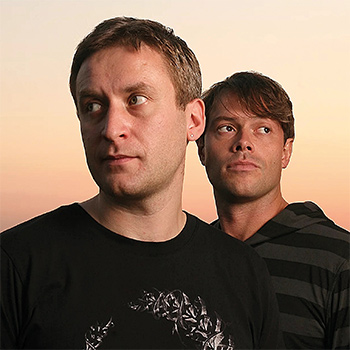
Plump DJs are a British electronic duo from London, widely regarded as one of the key driving forces behind the Nu Skool Breaks movement and the broader breaks culture of the 2000s. For producers, they are more than hitmakers — they are a benchmark of sound design: dense bass, sharp broken drums, futuristic “technological” precision, and a groove that works just as confidently in a club as it does on a festival stage.
Quick facts
-
Origin: London, United Kingdom
-
Core genres: Nu Skool Breaks / Breakbeat / Electro Breaks
-
Members: Andy Gardner, Lee Rous
-
Key ecosystem / label: Finger Lickin’ Records
-
Years active: 1999 — present
Andy Gardner and Lee Rous: the formation of Plump DJs
The project took shape at the turn of the late 1990s and early 2000s — a moment when big beat was losing its mainstream momentum, while club crowds were craving something harder, bassier, and more intelligently produced. Plump DJs hit that demand perfectly: they kept the raw energy of rave culture but reshaped it into something more futuristic and “metallic,” with a strong focus on engineering-level control of bass and drums.
Sound and production: “Plump Sound” and why it became legendary
Within producer circles, their signature style is often referred to as “Plump Sound” — a sound that feels “plump,” maximally full, yet extremely tight and controlled.
Its defining traits include:
-
maniacal attention to detail (micro-dynamics, transitions, noise layers, groove cohesion);
-
bass as the architecture of the track — not just low-end, but the main character;
-
early adoption of advanced low-end thickening techniques (multi-layered dynamic processing and compression) to ensure the bass sounds fat and stable on any system — from clubs to car stereos;
-
signature broken drums: hard, springy, and “elastic,” with no empty space.
This production “meat” explains why the word Plump (“fat,” “full”) is not perceived as a joke, but as a clear description of their sonic philosophy.
Nu Skool Breaks: from big beat to futuristic breaks
Plump DJs are often described as the fathers of Nu Skool Breaks (alongside Rennie Pilgrem). This style replaced the more “playful” big beat and redefined breaks as:
-
more technological,
-
more bass-driven,
-
more club-aggressive,
-
with a strong lean toward electro/bass aesthetics.
If big beat was about wide, rock’n’roll swagger, Nu Skool Breaks — as shaped by Plump DJs — became about machine precision paired with dirty energy.
Finger Lickin’ Records: more than a label — an era
The connection between Plump DJs and Finger Lickin’ Records is important not only symbolically. It was a full-fledged ecosystem around which the breaks industry revolved: releases, parties, tours, community, and a shared aesthetic.
A telling fact of its status: Finger Lickin’ Records was repeatedly voted Best Label at dedicated breaks awards and polls (including the International Breakbeat Awards / Breakspoll ecosystem). This underscores that Plump DJs were leaders not of a single “project,” but of an entire movement within the scene.
Where to start listening: essential tracks (must-have)
If you want to quickly understand why they’re so revered, start with these tracks — they showcase the full Plump DJs range, from raw aggression to pure groove:
-
Scram — their calling card and a genre benchmark: density, drive, and iron-clad groove.
-
The Push — a defining track of the era; in 2003 it was played by virtually every breaks DJ.
-
Big Groovy Fucker — the essence of their aggressive side: fatness, pressure, and attitude.
-
Donna Kebab — a classic with humor and heavy swing, where a smile doesn’t stop the sub from hitting hard.
Connection to Acid Breaks
In their productions, the duo often incorporated elements of Acid Breaks, weaving squealing synth lines into dense bass structures — a perfect example of how the acid aesthetic of the TB-303 can live inside a heavy, club-oriented breaks framework.
Albums: where to begin
As entry points, listeners most often start with:
-
A Plump Night Out — an early showcase of their raw club energy;
-
Eargasm — a concentrated dose of pure “Plump Sound”;
-
The Dirty Weekend — a more mature, harder, and bass-heavy continuation;
-
their jazz-funk and club-oriented side is best explored through DJ mixes and compilations (if you want, I can compile a separate list of their best mix releases).
Plump DJs — complete discography
Studio albums
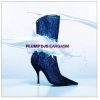
2002 — Eargasm
A Nu Skool Breaks classic. This album is most often cited as the quintessence of Plump Sound: fat bass, aggressive groove, and highly technological production.
2005 — The Dirty Weekend
A darker, tougher album. Less funk, more pressure and club aggression.
Mix albums and DJ compilations
1999 — A Plump Night Out
An early mix release that cemented the duo’s reputation as top-tier club DJs.
2001 — Finger Lickin’ Thang
A showcase of the Finger Lickin’ Records ecosystem and the early-2000s breaks scene.
2007 — Global Underground: Sydney
One of the most renowned Plump DJs mixes, stepping beyond pure breaks into a broader global club aesthetic.
2010 — FabricLive (DJ mix)
A modern take on breaks, electro, and bass music in the context of the legendary London club.
Key singles and tracks (must-have)
This is the core of the catalogue — the usual starting point:
-
Scram — signature track, a Nu Skool Breaks benchmark
-
The Push — a defining 2003 anthem, played in virtually every club
-
Big Groovy Fucker — uncompromising, aggressive Plump Sound
-
Donna Kebab — a humorous classic with a powerful funky groove
-
Soul Vibrate — an example of their mastery of swing and rhythmic hypnosis
-
Snake Eyes — dense, dark club instrumental
-
Electric Disco — a bridge between breaks and electro
Remixes (selected)
Plump DJs have always been in high demand as remixers — their versions are instantly recognizable by their bass and dynamics:
-
Stanton Warriors
-
Freestylers
-
Krafty Kuts
-
Fatboy Slim (remix projects / DJ edits)
-
Rennie Pilgrem
Their remixes are often harder and more club-focused than the originals, which made them favorites among DJs.
Compilations and appearances
-
Finger Lickin’ Records compilation series
-
early-2000s breaks compilations (UK / EU / Australia)
-
DJ mixes for club brands and festivals
Plump DJs frequently appeared not just as “guests,” but as curators of sound for compilations.
How to navigate the catalogue (editor’s recommendation)
If your goal is to grasp the duo quickly:
-
Eargasm →
-
tracks Scram / The Push / Donna Kebab →
-
the mix Global Underground: Sydney
If your goal is to study Plump Sound as production:
-
The Dirty Weekend
-
later mix releases and remixes
The discography of Plump DJs is not just a collection of releases — it is a map of the evolution of Nu Skool Breaks:
from funky rave beginnings to a dense, engineering-driven club sound that remains relevant and continues to be reinterpreted by new bass generations.
Update: 2025 and the “second wave”
In 2025, Plump DJs remain active with performances and releases: they appear regularly in club schedules and DJ setlists, while classic tracks are gaining a second life — largely because the modern bass wave is once again embracing broken grooves, remasters, and remixes from the “golden era” of breaks.
A quote that perfectly fits the duo’s spirit
Breaks will never die.
Plump DJs are true “groove engineers” who turned breaks into the sound of the future: fat, technological, and uncompromisingly club-focused. Their influence extends far beyond the breaks niche — into electro breaks, UK bass, and modern bass music, where broken rhythms and heavyweight low-end are once again highly valued.