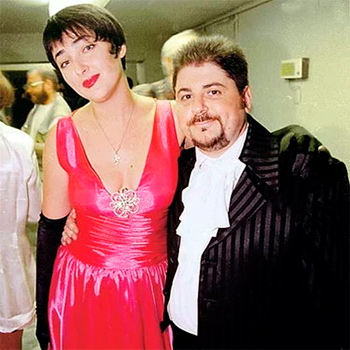
The cabaret duo “Academy” was a musical-comedy project that became a cult phenomenon of post-Soviet pop entertainment in the 1990s. A fusion of satire, cabaret, theatre, and pop song, the duo pushed beyond the usual “pop act” and turned every performance into a mini stage play. The creators and only members of the project were Lolita Milyavskaya and Aleksandr Tsekalo—a strikingly precise onstage partnership where irony and dramaturgy mattered more than surface gloss.
Early years: from theatre to television
The duo emerged in the late 1980s at the crossroads of theatre culture and pop performance. Their first numbers were a synthesis of vocals, pantomime, and ironic sketches about everyday life, relationships, and the backstage realities of show business.
From the very beginning, “Academy” rejected the academic pop canon: the artists deliberately worked with grotesque exaggeration, conversational intonation, and characters “from real life.” This approach quickly brought the project to television—the key media platform of the early 1990s—and secured regular invitations to concert shows and festivals.
Concept and style: musical theatre on the pop stage
“Academy” can’t be reduced to a single genre. It was a hybrid of:
- cabaret and satirical couplets
- pop songs and musical theatre
- stage dialogue and performance art
The musical simplicity of many songs was a deliberate artistic device: the melody served as a framework for text, intonation, and acting. Their pieces were built as complete scenes—with a setup, conflict, and resolution. In an era dominated by backing tracks and standardized hits, the duo bet on live vocals, direction, costumes, and the chemistry between the performers, which sharply distinguished them from mainstream pop acts.
Peak years and popularity
The early 1990s became the period of maximum success. “Academy’s” eccentric shows combined absurdity, drama, and subtle irony, while television turned the duo into a recognizable cultural code of the era. They regularly took part in major TV projects and concert cycles, including Alla Pugacheva’s “Christmas Meetings,” and also hosted entertainment programs.
Crucially, television for “Academy” was not just a showcase but part of their artistic language—the camera captured nuances of facial expression and pauses, amplifying the theatrical effect.
Discography
Studio albums:
- A Little Coup (1992)
- Non-Ballroom Dances (1994)
- You Want It, But You Keep Silent (1995)
- Wedding (1997)
- Fingerprints (1998)
- Tu-tu-tu, Na-na-na (1999)
Signature songs of the duo:
- “Toma”
- “Baden-Baden”
- “You Want It, But You Keep Silent”
- “Infection”
- “Tu-tu-tu, Na-na-na”
- “I’m Offended”
- “For Beer”
These tracks became cultural markers of the decade—quoted, parodied, and instantly recognizable from the first bars.
Images and roles within the duo
The success of “Academy” was largely built on the contrast between their personas.
Lolita crafted the image of an emotionally open, sharp, and intentionally “uncomfortable” heroine—an uncommon archetype for female pop performance of that time, which later became the foundation of her solo career.
Tsekalo acted as both partner and architect of form: his restrained irony, sense of timing, and producer mindset gave structure to the numbers and balanced the duo’s expressive energy.
The end of the project and what came next
In 2000, the cabaret duo “Academy” officially ceased to exist. The reasons included creative exhaustion of the format and the artists’ personal divorce. The project ended without loud conflicts or revival attempts, which helped preserve its integrity and reputation as a complete artistic statement.
After the breakup, Lolita Milyavskaya successfully continued her career as a solo singer and TV host, while Aleksandr Tsekalo became one of the most influential producers and showmen in the entertainment industry.
Significance and legacy
Today, “Academy” is seen as:
- a symbol of 1990s freedom and irony
- one of the first examples of musical theatre within mass pop entertainment
- a forerunner of today’s ironic pop and comedy performance formats
The duo proved that a popular stage can be intelligent, provocative, and still widely loved. “Academy” hasn’t aged—because honesty, self-irony, and theatricality remain a universal language that audiences understand in any era.